
The stages of sleep, a fascinating journey through the night, unveil a world of physiological and mental activity. From light slumber to the vibrant realm of REM, each stage plays a crucial role in our overall health and well-being. This exploration will delve into the science behind these stages, examining the different brainwave patterns, physiological changes, and the importance of each phase.
We’ll look at how these stages differ across the lifespan, from childhood to old age, and explore individual variations in sleep patterns. Furthermore, we’ll discuss common sleep disorders and how they affect the natural progression of sleep cycles, providing insights into sleep hygiene practices to promote healthy sleep habits.
Introduction to Sleep Stages
Sleep, a fundamental human need, isn’t a uniform state. Instead, it progresses through distinct stages, each characterized by unique brain activity, muscle tension, and eye movements. Understanding these stages provides valuable insight into the restorative and crucial role sleep plays in our overall health and well-being. A deeper comprehension of the sleep cycle empowers us to better address sleep disorders and optimize our sleep quality.The various stages of sleep represent distinct physiological processes, reflecting the dynamic interplay between the brain and body.
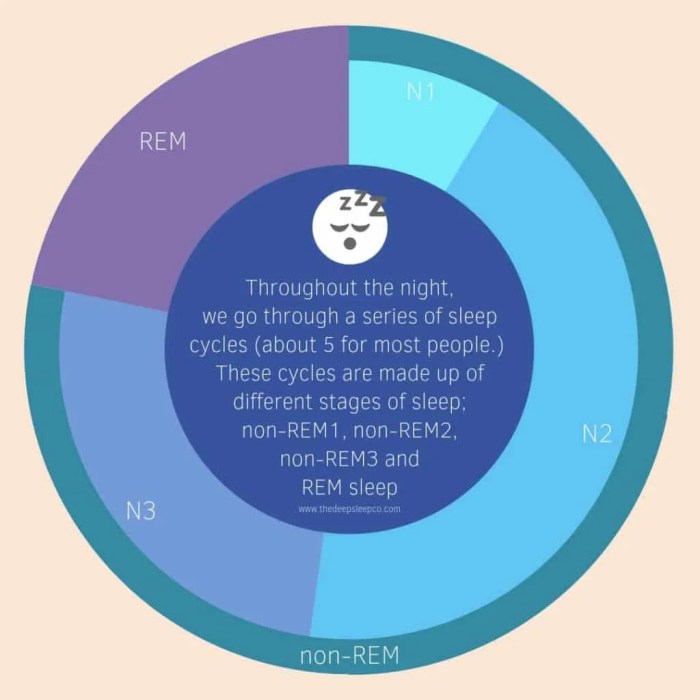
These stages aren’t simply separate entities but are interconnected parts of a continuous cycle that repeats approximately every 90 minutes throughout the night. This cyclical pattern ensures the body and mind undergo necessary restorative processes, from physical repair to cognitive consolidation.
Sleep Stage Characteristics
The sleep cycle is typically divided into five stages, each with varying levels of brainwave activity, muscle activity, and eye movement. These stages are essential for various bodily functions and cognitive processes.
- Stage 1: This is the transitional phase between wakefulness and sleep. Light sleep, it is characterized by slow, irregular brain waves, called theta waves, accompanied by a decrease in heart rate and muscle tension. Eye movements are slow and rolling. The individual may experience brief, fleeting images or sensations, often described as a feeling of falling or floating.
This stage typically lasts only a few minutes.
- Stage 2: During this stage, brain waves become more rhythmic, characterized by sleep spindles (bursts of rapid brain activity) and K-complexes (large, slow brain waves). Muscle activity decreases further, and eye movements cease. This stage accounts for approximately half of the total sleep time and is considered important for restoring the body and mind.
- Stage 3 and 4: These stages are collectively known as slow-wave sleep (SWS), marked by the presence of delta waves, the slowest and largest brain waves. Muscle activity is minimal, and eye movements are absent. These stages are crucial for physical restoration and growth hormone release. Stage 3 is typically a transition to Stage 4, characterized by an increasing prevalence of delta waves, and is often described as the deepest part of non-REM sleep.
SWS plays a significant role in consolidating memories and promoting physical recovery.
- REM (Rapid Eye Movement) Sleep: This stage is characterized by rapid, jerky eye movements, increased brain activity resembling that of wakefulness, and vivid dreams. Muscle activity is significantly inhibited, a phenomenon known as muscle atonia. This stage is vital for consolidating memories, processing emotions, and promoting cognitive function. REM sleep is often associated with dreaming and plays a crucial role in learning and memory consolidation.
Sleep Stage Sequence
The sequence of sleep stages unfolds in a cyclical manner throughout the night. A typical sleep cycle progresses through the stages in a specific order: Stage 1, Stage 2, Stage 3, Stage 4, and then back to Stage 2 before entering REM sleep. This cycle typically repeats 4 to 6 times during a night’s sleep, with REM sleep periods becoming progressively longer as the night progresses.
| Stage Name | Brainwave Activity | Eye Movement | Muscle Activity | Typical Duration |
|---|---|---|---|---|
| Stage 1 | Theta waves | Slow, rolling | Decreased | 1-7 minutes |
| Stage 2 | Sleep spindles and K-complexes | Absent | Decreased | 10-25 minutes |
| Stage 3 | Delta waves | Absent | Decreased | 20-40 minutes |
| Stage 4 | Predominantly delta waves | Absent | Decreased | 20-40 minutes |
| REM | Rapid brain activity | Rapid, jerky | Atonia (muscle paralysis) | 10-60 minutes |
Brainwave Activity During Sleep
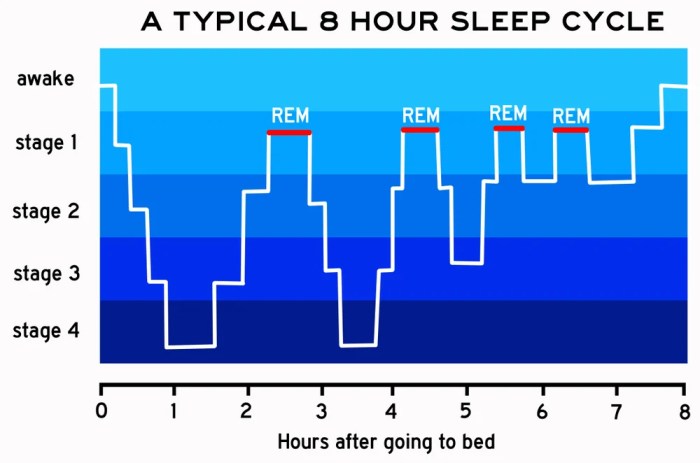
Our brains are incredibly active even when we’re asleep, exhibiting a fascinating interplay of electrical signals known as brainwaves. These brainwaves, categorized by their frequency and amplitude, provide valuable insights into the different stages of sleep. Understanding these fluctuations in brainwave activity helps us better grasp the intricacies of the sleep cycle and the restorative processes that occur during slumber.The types of brainwaves generated by our brains change throughout the night, reflecting the shifting states of consciousness.
These electrical patterns, measured by electroencephalography (EEG), are essential in identifying and classifying the different sleep stages. Different brainwave types correlate with varying levels of brain activity, which in turn are associated with different cognitive and physiological functions.
Types of Brainwaves and Their Characteristics
Brainwaves are categorized by their frequency, measured in Hertz (Hz), and amplitude, measured in microvolts (µV). Higher frequency corresponds to faster oscillations, and greater amplitude suggests stronger electrical activity. The relationship between frequency and amplitude is not static; rather, it dynamically changes during the sleep cycle.
Brainwave Activity Across Sleep Stages
The following table summarizes the different types of brainwaves and their characteristics across the various sleep stages:
| Sleep Stage | Brainwave Type | Frequency (Hz) | Amplitude (µV) | Description |
|---|---|---|---|---|
| Awake/Alert | Beta | 13-30 | 5-20 | Associated with active thinking, concentration, and problem-solving. High frequency and low amplitude indicate high brain activity. |
| Awake/Relaxed | Alpha | 8-12 | 5-10 | Characterized by a more relaxed state of mind, often experienced before sleep. The slower frequency and moderate amplitude reflect a less intense state of brain activity. |
| Stage 1 Sleep | Theta | 4-7 | 20-50 | Transitional stage between wakefulness and sleep, marked by slower brainwaves. The increased amplitude signifies a shift towards a more deeply relaxed state. |
| Stage 2 Sleep | Theta | 4-7 | 20-50 | Characterized by sleep spindles and K-complexes, which are bursts of higher frequency activity interspersed with slower theta waves. The increased amplitude of the theta waves compared to alpha waves indicates a deeper state of relaxation. |
| Stages 3 & 4 Sleep (Slow-Wave Sleep) | Delta | 0.5-4 | 50-200 | Deepest sleep stages, characterized by slow, large-amplitude delta waves. The extremely slow frequency and high amplitude reflect a very low level of brain activity, allowing for significant physiological restoration. |
| REM Sleep | Beta | 13-30 | 5-20 | Rapid Eye Movement sleep, marked by rapid eye movements and vivid dreams. Surprisingly, the brainwaves are similar to those seen in wakefulness. This suggests that the brain is highly active during REM, processing information and consolidating memories. |
The transition from wakefulness to sleep is gradual, with brainwaves shifting from beta to alpha, then theta, and finally delta during deep sleep. During REM sleep, the brainwave activity resembles that of wakefulness, further highlighting the complex interplay of brain functions during the sleep cycle. The table above provides a general overview, and individual variations can exist.
Physiological Changes During Sleep Stages: The Stages Of Sleep
Sleep isn’t just a period of inactivity; it’s a dynamic process marked by significant physiological changes across different stages. These shifts in heart rate, breathing, body temperature, and other vital functions are crucial for maintaining our overall health and well-being. Understanding these changes allows us to appreciate the importance of quality sleep and the potential consequences of sleep disruption.
Heart Rate and Breathing Rate Variations
Heart rate and breathing rate naturally fluctuate throughout the night, reflecting the body’s shifting needs during different sleep stages. These changes are intricately linked to the brain’s activity, which in turn dictates the level of bodily functions required for each phase.
Understanding the different stages of sleep is crucial for overall well-being, but did you know that healthy skin can also be linked to sleep quality? Many find that incorporating natural remedies like coconut oil for skin hydration can contribute to a more restful sleep cycle. Coconut oil for skin can be a fantastic addition to your routine, and this might even improve the quality and duration of your sleep.
Ultimately, the right skincare regimen can significantly impact the stages of sleep you experience.
- During non-REM sleep stages, particularly the deeper stages 3 and 4, heart rate and breathing slow considerably. This reduced activity conserves energy and allows the body to repair and restore tissues. This is an important time for physical recovery. Examples include reduced blood pressure and oxygen consumption, aiding in the repair and rebuilding of muscles and tissues.
- In contrast, REM sleep is characterized by a more rapid heart rate and breathing pattern. This pattern mimics wakefulness, reflecting the brain’s heightened activity and increased metabolic demands during this active dreaming phase. This heightened activity supports cognitive processes and memory consolidation.
Body Temperature Regulation
Body temperature naturally decreases during sleep, reflecting the body’s reduced metabolic activity. This decrease is more pronounced in deeper stages of sleep, aiding in promoting relaxation and restorative processes.
- The drop in body temperature during sleep is a vital physiological indicator of the body’s restorative processes, influencing hormone release, cell repair, and other critical functions.
- Conversely, an elevated body temperature during sleep may be indicative of underlying health issues. Consistent deviations from the normal sleep-related temperature decline should be monitored and discussed with healthcare professionals.
Hormonal Shifts
Hormonal fluctuations during sleep are crucial for regulating various bodily functions, including growth, metabolism, and stress response. These changes are tightly coupled with sleep stages and contribute significantly to overall well-being.
- Growth hormone is predominantly released during deep sleep stages, promoting tissue repair and growth, particularly in children and adolescents.
- Cortisol, a stress hormone, tends to be lowest during sleep, while other hormones like melatonin are secreted in higher quantities to regulate sleep-wake cycles.
Table of Physiological Changes Across Sleep Stages
| Sleep Stage | Heart Rate | Breathing Rate | Body Temperature | Hormonal Activity |
|---|---|---|---|---|
| Wakefulness | Variable, typically elevated | Variable, typically faster | Normal, but can fluctuate with activity | Various hormones active, cortisol levels typically higher |
| Non-REM Stage 1 | Decreases slightly | Decreases slightly | Starts to decrease | Melatonin secretion begins, cortisol levels lower |
| Non-REM Stage 2 | Decreases further | Decreases further | Decreases further | Melatonin levels increase, growth hormone secretion minimal |
| Non-REM Stage 3/4 | Slows significantly | Slows significantly | Decreases significantly | Growth hormone secretion increases, other hormones at lower levels |
| REM Sleep | Increases | Increases, becomes more irregular | May fluctuate slightly | Hormonal changes related to dreaming and memory consolidation |
Importance of REM Sleep
REM sleep, or rapid eye movement sleep, is a fascinating and crucial stage of the sleep cycle. While we may not be consciously aware of its happenings, REM sleep plays a vital role in our cognitive function, emotional well-being, and overall health. It’s characterized by unique brainwave activity and physiological changes, setting it apart from other sleep stages.REM sleep is not just a passive period of rest; it’s an active period of brain processing.
This stage is essential for consolidating memories, learning new skills, and even processing our emotions. Its unique characteristics contribute significantly to our overall mental and physical well-being.
Unique Characteristics of REM Sleep
REM sleep is distinguished by its characteristic rapid eye movements, which are the reason for the stage’s name. The brain is highly active during this stage, exhibiting a pattern of brainwaves similar to those seen when we are awake. This heightened brain activity is also associated with vivid dreams, often filled with elaborate narratives, imagery, and emotions. These dreams, though often seemingly random, are believed to play a crucial role in processing information and emotions.
Understanding the different stages of sleep is crucial for overall well-being. While getting enough quality sleep is vital, incorporating gentle yoga poses, like those found in yoga for back pain , can significantly improve your sleep quality. These stretches can alleviate back pain, a common culprit for sleep disruption, promoting a more restful night’s sleep.
This, in turn, allows your body to progress through the various stages of sleep effectively.
Importance for Memory Consolidation
The brain actively processes and consolidates memories during REM sleep. This process helps in transferring short-term memories to long-term storage, strengthening neural connections and making the learned information more readily accessible. For example, if you study for a test, the REM sleep following your study session will likely contribute to better retention of the material.
Importance for Learning and Skill Acquisition
REM sleep also plays a critical role in learning and acquiring new skills. By actively processing information and strengthening neural pathways, REM sleep contributes to our ability to master new tasks. This is particularly relevant in activities requiring complex motor skills, such as learning to play a musical instrument or mastering a new sport.
Importance for Emotional Processing
REM sleep is thought to play a role in emotional regulation and processing. By allowing the brain to review and re-evaluate experiences, particularly emotionally charged ones, REM sleep may help in integrating and understanding complex emotions. This process can lead to a better understanding of ourselves and our responses to different situations.
Potential Consequences of Inadequate REM Sleep
Insufficient REM sleep can have negative consequences for cognitive function, emotional regulation, and overall well-being. A lack of adequate REM sleep may lead to difficulty concentrating, impaired memory, and mood swings. In extreme cases, a persistent lack of REM sleep can contribute to more significant mental health issues, such as depression and anxiety.
Differences from Other Sleep Stages
REM sleep differs significantly from other sleep stages in its physiological characteristics and cognitive functions. While other sleep stages, like deep sleep, are crucial for physical restoration, REM sleep is more closely associated with cognitive processes, memory consolidation, and emotional processing. The rapid eye movements, vivid dreams, and heightened brain activity that characterize REM sleep distinguish it from the other stages, underscoring its unique role in our overall well-being.
Sleep Disorders and Sleep Stages
Understanding sleep disorders requires an awareness of how these conditions disrupt the natural progression of sleep stages. Sleep, far from being a passive state, is a dynamic process with distinct phases, each critical for physical and mental restoration. Interruptions in this cycle can manifest in various ways, impacting not only the duration but also the quality of each sleep stage.Sleep disorders can significantly alter the normal sleep-wake cycle, impacting the duration and quality of each sleep stage.
This disruption can lead to a cascade of physical and psychological consequences, highlighting the importance of recognizing and addressing these conditions.
Impact of Sleep Disorders on Sleep Stages
Sleep disorders often manifest as disruptions in the typical progression of sleep stages. For instance, some disorders lead to an overabundance of light sleep, while others might result in an inability to reach deeper sleep stages. These deviations can have substantial consequences on overall health and well-being.
Common Sleep Disorders and Their Effects on Sleep Stages
Numerous sleep disorders can affect the normal progression of sleep stages. Each disorder presents a unique challenge, impacting specific sleep stages differently. This section Artikels common sleep disorders and their impact on the sleep cycle.
Understanding the different stages of sleep is crucial for overall well-being, but sometimes life throws curveballs, like vertigo. If you’re starting Brandt-Daroff exercises for vertigo, remember that consistency is key. Just as sleep cycles have stages, these exercises are a journey to regaining balance. Getting through these steps, and getting back to feeling better will help you sleep better too! A good night’s sleep is essential, and managing vertigo is a key step in achieving it.
starting brandt daroff exercises for vertigo This process, like the stages of sleep, requires patience and a structured approach.
- Insomnia: Characterized by difficulty falling asleep, staying asleep, or experiencing restful sleep. This can lead to a reduced amount of time spent in deep sleep stages, like stage 3 and REM, as the individual’s sleep cycle is fragmented and interrupted. Consequently, the individual may experience daytime fatigue and impaired cognitive function.
- Sleep Apnea: A condition where breathing repeatedly stops and starts during sleep. Sleep apnea can lead to frequent awakenings, preventing the individual from achieving deeper stages of sleep, including slow-wave sleep. The repeated arousals disrupt the natural progression of sleep stages, resulting in sleep deprivation and potential health issues. Individuals with sleep apnea may experience a significant reduction in REM sleep, which is essential for memory consolidation and emotional processing.
- Narcolepsy: A neurological disorder characterized by excessive daytime sleepiness and sudden episodes of falling asleep. Narcolepsy often disrupts the normal sleep-wake cycle, making it difficult for individuals to achieve sufficient REM sleep. The disruption of REM cycles can lead to a variety of sleep-related symptoms, including hallucinations and cataplexy (sudden muscle weakness).
Table of Common Sleep Disorders and Their Impact on Sleep Stages
The following table provides a summary of common sleep disorders and their impact on sleep stages.
| Sleep Disorder | Impact on Sleep Stages |
|---|---|
| Insomnia | Reduced time in deep sleep stages (stages 3 and REM). Fragmented sleep cycle. |
| Sleep Apnea | Frequent awakenings, disrupted progression to deeper sleep stages (including slow-wave sleep). Reduced REM sleep. |
| Narcolepsy | Disruption of normal sleep-wake cycle. Difficulty achieving sufficient REM sleep. Potential for sleep paralysis and hallucinations. |
Sleep Stages and Age
Sleep, a fundamental human need, isn’t a monolithic experience. Its quality and structure change significantly across the lifespan, from the blissful unawareness of infancy to the often-fragmented slumber of old age. Understanding these shifts is crucial for appreciating the importance of sleep at each stage of life and for recognizing potential sleep-related issues.
Changes in Sleep Across the Lifespan
Sleep patterns are not static; they evolve with age, reflecting developmental changes in the brain and body. Infants, for example, spend a considerable portion of their sleep in REM sleep, essential for brain development. As we age, the proportion of REM sleep decreases, while the duration of non-REM sleep, especially deep sleep, often declines.
Sleep Stages in Childhood
Infants and toddlers experience highly variable sleep patterns, characterized by frequent awakenings and a need for multiple naps. This is largely due to their developing brains and the need for regular restorative periods. The proportion of REM sleep is high, contributing to their rapid brain development. As children grow older, their sleep patterns become more consolidated, with fewer night wakings and a decrease in the frequency of naps.
The transition to a more consistent sleep schedule occurs during the pre-adolescent years.
Sleep Stages in Adolescence
Adolescence is a period of significant physical and hormonal changes. Sleep patterns in adolescents are often characterized by a delayed sleep phase, meaning they tend to fall asleep and wake up later than adults or younger children. This phase delay is often attributed to hormonal shifts and is a crucial factor in understanding sleep problems during this period.
This delayed sleep phase can result in difficulty with school schedules and overall well-being. The need for sleep duration remains relatively high during this period.
Sleep Stages in Adulthood
In adulthood, sleep patterns are generally more stable than in childhood or adolescence. Adults typically experience a consistent sleep-wake cycle, although individual variations exist. Sleep duration may decrease slightly as adults age, and the proportion of deep sleep decreases further. This decrease in deep sleep can lead to feelings of fatigue or difficulty concentrating. Maintaining a regular sleep schedule and establishing healthy sleep hygiene practices remain crucial for adults.
Sleep Stages in Old Age
As individuals enter old age, sleep patterns often become more fragmented. Sleep quality tends to decline, characterized by more awakenings during the night, and a decrease in the total sleep duration. There’s a further decrease in deep sleep, leading to a higher prevalence of sleep disorders in older adults. Maintaining a consistent sleep schedule, engaging in regular physical activity, and managing any underlying medical conditions are essential for improving sleep quality in older adults.
Comparative Table of Sleep Patterns Across Age Groups
| Age Group | Sleep Duration (hours) | REM Sleep (%) | Deep Sleep (%) | Night Wakings | Naps |
|---|---|---|---|---|---|
| Infancy (0-1 year) | 16-18 | High | Moderate | Frequent | Multiple |
| Childhood (2-12 years) | 10-12 | Decreasing | Decreasing | Less frequent | Occasional |
| Adolescence (13-18 years) | 8-10 | Moderate | Moderate | Less frequent | Rare |
| Adulthood (19-64 years) | 7-9 | Decreasing | Decreasing | Occasional | Rare |
| Old Age (65+ years) | 7-8 (or less) | Decreasing | Low | Frequent | Rare |
Sleep Stages and Individual Differences
Our sleep patterns are as unique as our fingerprints. While the general stages of sleep remain consistent across individuals, the duration spent in each stage, and even the order in which these stages occur, can vary significantly. Understanding these individual variations is crucial for recognizing potential sleep problems and tailoring interventions effectively.Individual differences in sleep patterns are influenced by a complex interplay of genetic predispositions, lifestyle choices, and environmental factors.
These factors collectively shape our sleep experience, making personalized approaches to sleep hygiene and management essential.
Individual Variations in Sleep Stage Duration
Sleep stage durations can differ significantly between individuals. Some might spend a longer period in REM sleep, while others may experience more time in light sleep. This variability isn’t necessarily cause for concern, but it’s essential to understand that what’s considered “normal” sleep can be quite subjective. A critical aspect of this understanding is acknowledging that variations within a healthy range are perfectly normal.
Factors Influencing Individual Sleep Patterns
Several factors contribute to the wide spectrum of individual sleep patterns. Genetic predispositions play a significant role, influencing our natural sleep-wake cycles. Lifestyle factors, such as diet, exercise, and work schedules, significantly impact our sleep. Environmental factors, like noise, light, and temperature, can also affect our sleep quality and duration.
Significance of Considering Individual Differences in Sleep Analysis
Recognizing individual differences in sleep stages is paramount in assessing sleep health accurately. A standardized approach to sleep analysis might overlook crucial variations in individual sleep patterns. For instance, a person who naturally experiences shorter periods of deep sleep might not be considered to have a sleep disorder, even if they feel fatigued. Considering individual differences is vital for developing targeted interventions.
Table of Potential Factors Influencing Individual Sleep Patterns
| Factor | Description | Potential Impact on Sleep Stages |
|---|---|---|
| Genetics | Inherited predispositions to sleep patterns and sleep disorders. | May influence sleep duration, sleep stage distribution, and susceptibility to sleep disorders. |
| Lifestyle (Diet) | Dietary habits, including caffeine and alcohol intake. | Can disrupt sleep patterns, affect sleep stage durations, and cause sleep disturbances. |
| Lifestyle (Exercise) | Regularity and intensity of physical activity. | Physical activity can improve sleep quality, but excessive exercise or timing close to bedtime may negatively impact sleep onset and sleep maintenance. |
| Lifestyle (Work Schedule) | Work patterns and shift work. | Irregular schedules can disrupt the circadian rhythm, impacting sleep stage duration and quality. |
| Environment (Noise) | Exposure to noise levels. | High noise levels can interfere with sleep onset and maintenance, affecting sleep stages and quality. |
| Environment (Light) | Exposure to light, particularly at night. | Exposure to bright light at night can suppress melatonin production, leading to shorter sleep duration and altered sleep stages. |
| Environment (Temperature) | Temperature of the sleep environment. | Optimal sleep temperature varies among individuals, but an uncomfortable temperature can hinder sleep onset and duration. |
| Medical Conditions | Underlying medical conditions. | Certain medical conditions, such as sleep apnea or restless legs syndrome, can disrupt sleep stages. |
Sleep Hygiene and Sleep Stages
Sleep hygiene encompasses a set of practices and habits that promote healthy sleep patterns. These habits, when consistently followed, contribute significantly to the quality and duration of sleep stages, allowing individuals to experience restorative rest and optimal cognitive function during waking hours. Understanding the connection between sleep hygiene and the different sleep stages is crucial for maximizing the benefits of sleep.Consistent sleep hygiene directly impacts the duration and quality of sleep stages.
A well-established sleep routine, coupled with a supportive sleep environment, can significantly improve the transition between different sleep stages, leading to deeper and more restorative sleep.
Promoting Healthy Sleep Stages
Healthy sleep hygiene isn’t just about going to bed at a specific time; it’s about creating a holistic sleep environment and adopting consistent habits that optimize the body’s natural sleep-wake cycle. A predictable sleep schedule, combined with regular physical activity, can significantly enhance the quality of sleep stages.
Establishing a Regular Sleep Schedule
Maintaining a consistent sleep-wake schedule, even on weekends, helps regulate the body’s natural circadian rhythm. This regularity reinforces the body’s internal clock, promoting smoother transitions between sleep stages and leading to more efficient sleep. For instance, going to bed and waking up at the same time each day, including weekends, can significantly improve sleep quality and the overall experience of sleep stages.
Creating a Conducive Sleep Environment
A comfortable and conducive sleep environment is essential for healthy sleep stages. A cool, dark, and quiet room promotes relaxation and facilitates the transition into deeper sleep stages. Optimizing the sleep environment can involve using blackout curtains, earplugs, or a white noise machine to minimize distractions and create a relaxing atmosphere.
Managing Stress and Anxiety
Stress and anxiety can significantly disrupt sleep patterns and hinder the body’s ability to progress through healthy sleep stages. Implementing stress-reducing techniques, such as meditation or deep breathing exercises, can promote relaxation and improve sleep quality. For example, incorporating relaxation techniques before bed can ease the transition into sleep and potentially lead to a more restful sleep cycle.
Healthy Diet and Exercise
A balanced diet and regular exercise are crucial for overall health and can positively influence sleep stages. Avoiding large meals or caffeine and alcohol close to bedtime can promote better sleep quality. Regular physical activity, but not too close to bedtime, is beneficial for sleep, as it can help regulate the body’s natural sleep-wake cycle.
Sleep Hygiene Recommendations, The stages of sleep
- Establish a Regular Sleep Schedule: Aim for a consistent sleep and wake time, even on weekends, to regulate your body’s natural sleep-wake cycle. This consistency helps your body anticipate sleep and transition through sleep stages more efficiently.
- Create a Relaxing Bedtime Routine: Develop a calming bedtime routine that signals to your body that it’s time to sleep. This could include taking a warm bath, reading a book, or listening to relaxing music. Avoid stimulating activities before bed, such as using electronic devices or engaging in intense conversations.
- Optimize Your Sleep Environment: Ensure your bedroom is dark, quiet, and cool. Use blackout curtains, earplugs, or a white noise machine to minimize distractions. A comfortable mattress and pillows are also important for a restful sleep experience.
- Manage Stress and Anxiety: Practice stress-reducing techniques, such as meditation, yoga, or deep breathing exercises. If stress is persistent, consider seeking professional help.
- Maintain a Healthy Diet and Exercise Regularly: Avoid large meals or caffeine and alcohol close to bedtime. Regular physical activity, but not too close to bedtime, can improve sleep quality. Ensure your diet is balanced to support overall health and well-being.
Final Summary
In conclusion, understanding the stages of sleep is key to appreciating the complex interplay between our bodies and minds. The intricate dance of brainwaves, physiological changes, and the unique characteristics of REM sleep all contribute to a complete picture of our nightly journeys. By understanding these stages and their importance, we can better cultivate healthy sleep habits and address potential sleep disorders, ultimately improving our overall health and well-being.


