
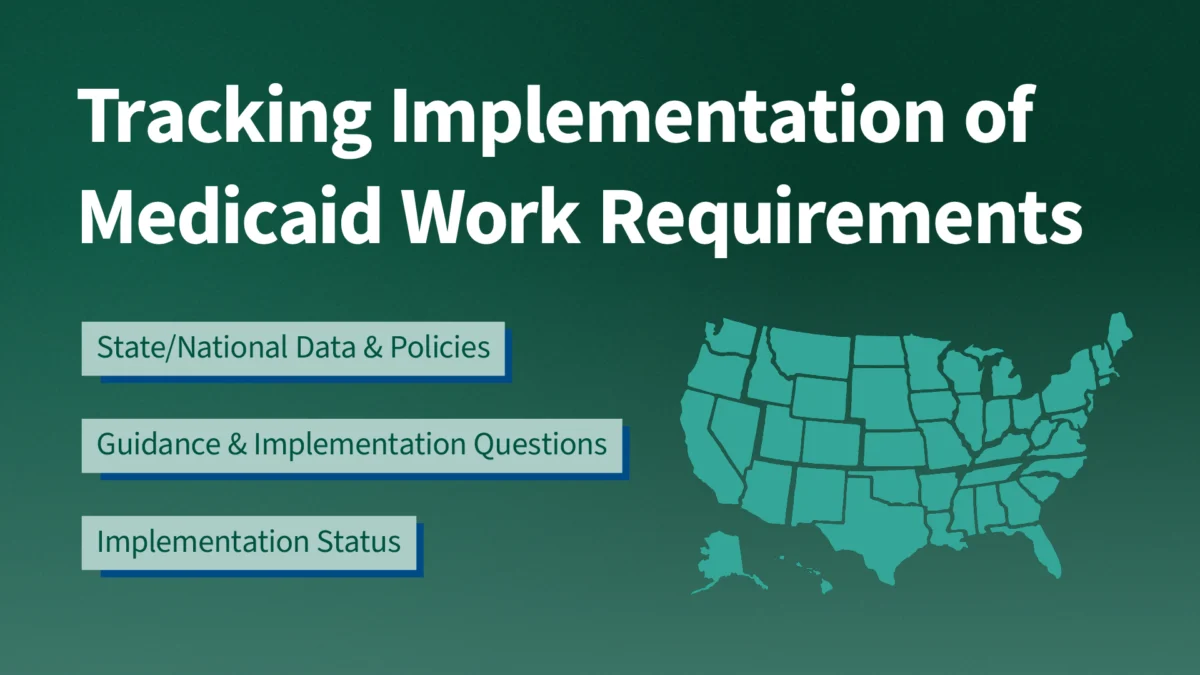
Beginning January 1, 2027, 44 states, including the District of Columbia, will be required to condition Medicaid eligibility on proof of employment or community engagement. The law targets the Affordable Care Act (ACA) Medicaid expansion group and specific enrollees within Section 1115 waiver programs. As the 2027 deadline approaches, states are now entering a frantic period of administrative preparation, policy drafting, and systemic restructuring to comply with the federal directive.
n
Main Facts: The New Landscape of Medicaid Eligibility
n
The 2025 Reconciliation Act marks the first time in the history of the Medicaid program—established in 1965—that the federal government has mandated work requirements as a condition of eligibility across the majority of the United States. Under the new law, "able-bodied" adults who gained coverage through the ACA’s expansion or through specific state-level waivers must document a set number of work hours, job training, or volunteer service to maintain their health insurance.
n
The scope of the mandate is vast. Currently, 41 states and the District of Columbia have expanded their Medicaid programs to cover nearly all adults with incomes up to 138% of the Federal Poverty Level (FPL). In 2025, this income threshold sits at $21,597 for an individual. For these millions of Americans, the "One Big Beautiful Bill" introduces a new layer of bureaucratic compliance that has not existed on a federal scale before.
n
A critical component of the law is the "hold harmless" provision. Recognizing the immense logistical challenge of implementation, the law allows states the option to adopt a grace period of up to six months, extending through June 30, 2027. During this window, states can refrain from denying applications or disenrolling individuals for non-compliance with work requirements while they finalize their reporting systems and outreach efforts.
n
Chronology: The Road to 2027
n
The path toward this monumental change began shortly after the 2024 election, as the incoming administration prioritized "fiscal responsibility" and "the dignity of work" as central pillars of their legislative agenda.
n
- n
- July 4, 2025: President Trump signs the 2025 Reconciliation Act into law. The choice of Independence Day was symbolic, intended to represent "independence from government dependency," according to White House statements.
- June 2026: The Centers for Medicare and Medicaid Services (CMS) releases a definitive list of states and specific 1115 waiver programs subject to the new requirements. This list clarifies that the mandate extends beyond expansion states to include specific programs in non-expansion states.
- Late 2026: States are expected to submit their "Work Requirement Implementation Plans" to CMS, detailing how they will track hours, verify exemptions, and handle appeals.
- January 1, 2027: The federal mandate officially takes effect. States that have not opted for the "hold harmless" period begin requiring documentation from enrollees.
- June 30, 2027: The optional "hold harmless" period expires. By July 1, 2027, every affected state must have a fully functional enforcement mechanism in place, potentially leading to the first wave of large-scale disenrollments for non-compliance.
n
n
n
n
n
n
Supporting Data: Who is Affected?
n
The June 2026 CMS report provided the first clear map of the impact zone. While the mandate primarily hits the 41 expansion states (plus DC), it also reaches into non-expansion territories through Section 1115 waivers.
n
The CMS data identifies three non-expansion states—Georgia, Tennessee, and Wisconsin—that operate waiver programs covering populations now subject to the work mandate. Additionally, five expansion states—Hawaii, Massachusetts, New York, Oregon, and Utah—were identified as having specific waiver enrollees who will fall under the new requirements alongside their general expansion populations.
n
The demographic data highlights the stakes:
n
- n
- Income Thresholds: The mandate affects those earning up to 138% FPL ($21,597/year for an individual; approximately $44,370 for a family of four in 2025).
- Geographic Reach: 44 jurisdictions are impacted, leaving only a handful of states (mostly those that have neither expanded Medicaid nor sought specific waivers) exempt from the federal requirement.
- The "Paperwork Effect": Historical data from the 2018 Arkansas work requirement pilot suggests that "administrative churn"—where eligible people lose coverage because they cannot navigate the reporting system—could account for a significant percentage of coverage losses, rather than a lack of actual employment.
n
n
n
n
Official Responses: A Divided Political Front
n
The implementation of the "One Big Beautiful Bill" has elicited starkly different reactions from across the political and professional spectrum.
n
The Administration’s Perspective:nSeema Verma, a key architect of healthcare policy within the administration, defended the law as a necessary evolution of the social contract. "Medicaid was never intended to be a permanent way of life for able-bodied adults," Verma stated. "By requiring community engagement, we are not just saving taxpayer dollars; we are helping individuals find the path to self-sufficiency and the private insurance market."
n
The Gubernatorial Divide:nRepublican governors, particularly in states like Georgia and Utah, have welcomed the mandate, viewing it as a federal backing of policies they have long sought to implement. Governor Brian Kemp of Georgia noted that the federal law "aligns with our state’s vision of a limited safety net that encourages active participation in the workforce."
n
Conversely, Democratic governors in states like New York and California have expressed deep concern over the administrative burden and the potential for a "public health crisis." New York officials have already indicated they will utilize the full six-month "hold harmless" period, with some state legislators exploring legal avenues to challenge the federal mandate’s authority over state-run programs.
Healthcare Advocacy Groups:
The American Medical Association (AMA) and the American Hospital Association (AHA) have issued joint warnings regarding "uncompensated care." If millions lose Medicaid coverage due to reporting errors, hospitals—particularly rural facilities—may see a surge in ER visits by uninsured patients who can no longer pay for services, threatening the financial stability of the healthcare infrastructure.
Implications: The Administrative and Human Cost
As states move toward the 2027 deadline, the implications are twofold: administrative and humanitarian.
1. The Bureaucratic Mountain:
States are currently facing a massive operational challenge. To comply, they must:
- Upgrade IT Systems: Most current Medicaid eligibility systems are not designed to track monthly work hours or interface with state labor department databases.
- Staffing and Training: Thousands of caseworkers must be trained to evaluate exemptions (such as disability, caregiving responsibilities, or pregnancy) and process complex work documentation.
- Outreach: States must reach a population that is often transient or lacks reliable internet access to explain the new rules and prevent accidental loss of coverage.
2. The Risk of "Administrative Churn":
Policy analysts warn of the "churn" phenomenon. In previous state-level experiments, many individuals who were actually working lost their insurance because they failed to upload pay stubs to a confusing online portal or did not receive the notification mail in time. This leads to a cycle where individuals cycle on and off Medicaid, disrupting the management of chronic conditions like diabetes or hypertension.
3. Economic Impact:
Proponents argue the law will bolster the labor force at a time of demographic shifts. However, critics point out that the majority of Medicaid expansion enrollees are already working in low-wage sectors (like retail or hospitality) that offer irregular hours, making it difficult to meet a rigid weekly or monthly "hours worked" requirement.
4. Legal Challenges:
Legal experts anticipate a flurry of lawsuits before the January 1, 2027, start date. The primary legal question will likely center on whether the 2025 Reconciliation Act exceeds federal authority by fundamentally altering the nature of a program that states voluntarily participate in.
Conclusion
The 2025 Reconciliation Act represents a gamble on the transformative power of work mandates. For the administration and its supporters, it is a long-overdue correction to an overextended welfare state. For critics and healthcare providers, it is a risky experiment that threatens to undo a decade of gains in the national insured rate.
As 2026 approaches, the focus shifts from the halls of Congress to state capitals. The success or failure of this policy will not be determined by the rhetoric of the "One Big Beautiful Bill," but by the ability of 44 state governments to build the infrastructure necessary to manage the most complex eligibility change in the history of American public health. The "hold harmless" period through June 2027 may offer a temporary reprieve, but the countdown to a new era of Medicaid has officially begun.

