

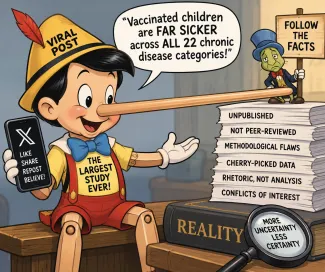
A recent viral post on the social media platform X (formerly Twitter) has ignited widespread concern by claiming that the "largest vaccinated vs. unvaccinated birth cohort study ever" has found vaccinated children to be "far sicker across every category of chronic disease." While the presented numbers may appear alarming at first glance, a deeper examination of their origins reveals a narrative driven by scientific uncertainty amplified into social media certainty, rather than robust, peer-reviewed evidence. This article delves into the claims, tracing them back to their source and scrutinizing the methodology and interpretation of the data.
n
H2: The Genesis of a Viral Claim: From X to Unpublished Drafts
n
The controversy originated with an X post by an epidemiologist, which boldly declared: "The LARGEST vaccinated vs. unvaccinated birth cohort study EVER done shows vaccinated children are FAR SICKER across ALL 22 chronic disease categories." This assertion quickly gained traction, resonating with a segment of the public already skeptical of childhood vaccinations.
n
However, even within the comments section of the original X post, an AI analysis from Grok, X’s own artificial intelligence, offered a crucial counterpoint: "No, the post is not fully truthful or reliable as scientific evidence. It accurately relays numbers and claims from a specific reanalysis of an unpublished draft, but presents them as definitive proof while ignoring major, well-documented methodological flaws that undermine the conclusions." This early caution from an AI highlights the critical need for independent verification and a thorough understanding of the underlying research before accepting such sweeping claims.
n
To understand the genesis of these viral claims, it’s essential to follow the thread back to its original source material. The "study" referenced by the X post’s author is not a standalone, independently conducted research project. Instead, it is a reanalysis based on research conducted at Henry Ford Hospital in Detroit. While this underlying research was presented to the U.S. Senate in September 2025, it is crucial to note that it has not undergone peer review nor has it been formally published in a scientific journal. The reanalysis itself, which forms the basis of the viral X post, can be found in a publication titled "International Journal of Vaccine Theory, Practice, and Research."
n
H3: A Preconceived Narrative: Examining the Study’s Introduction
n
Even before delving into the data, the introductory paragraphs of the reanalysis publication reveal a clear bias and a departure from scientific neutrality. The authors immediately frame their work with strong, emotionally charged language: "This review article focuses on the disastrous outcomes of childhood vaccines as documented in the landmark study by Lamerato… The effort undertaken by those authors was, in our view, courageous."

n
The language employed continues to betray a predetermined conclusion. The authors refer to vaccine supporters as belonging to the "I-believe-in-vaccines!" congregation, while those who question the prevailing vaccine consensus are labeled as "backsliders from that religious faith." This rhetoric, framing scientific inquiry as a matter of religious adherence, immediately signals a lack of objectivity. The introduction also touches upon the historical context of vaccine manufacturer immunity from lawsuits, further embedding a critical perspective on the vaccine industry within the narrative. Such framing suggests a clear conflict of interest and a predisposition to find fault with vaccines, rather than an impartial pursuit of scientific truth.
n
H2: Chronology of Claims and Misinterpretations
n
The viral post on X is part of a broader dissemination of information that often begins with preliminary research or reanalyses, which are then presented as definitive findings. The timeline of these claims can be traced as follows:
n
- n
- September 2025: The foundational research from Henry Ford Hospital, a birth cohort study examining childhood vaccination impacts on chronic health outcomes, is presented to the U.S. Senate. At this stage, the study has not been peer-reviewed or published.
- Undated: An epidemiologist, Mr. Hulscher, authors a reanalysis of the Henry Ford Hospital data. This reanalysis is published in the "International Journal of Vaccine Theory, Practice, and Research."
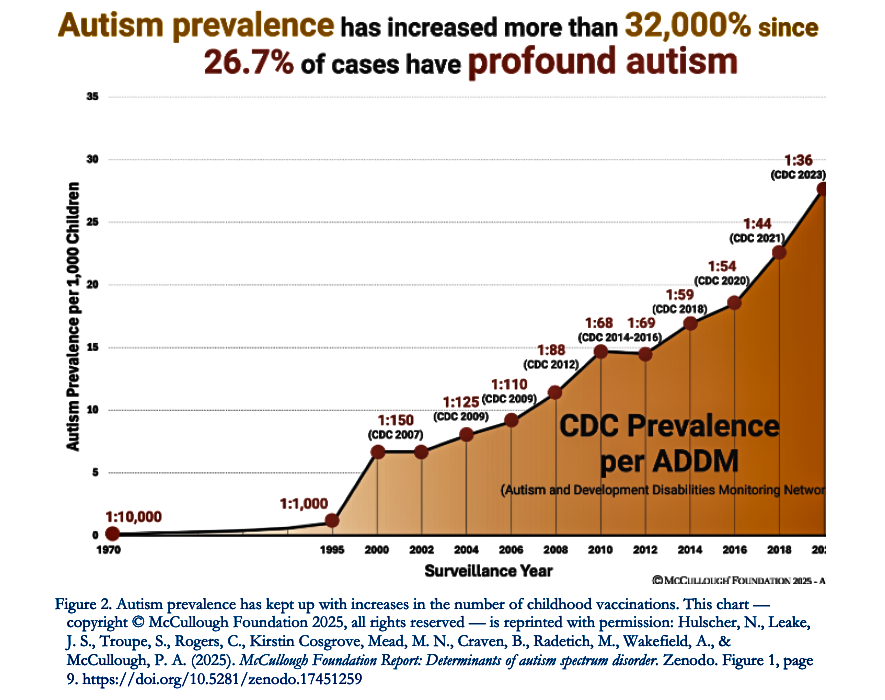
- Undated: Mr. Hulscher also compiles a separate report, which includes graphs and claims about the rising tide of chronic childhood diseases, including autism. One such graph, presented as "Figure 2" in his report, illustrates these purported growth trends.
- Recent Past: A viral post appears on X, citing Mr. Hulscher’s reanalysis and presenting its findings as conclusive evidence of widespread harm from childhood vaccines. This post, characterized by its sensationalist headline, ignites public debate and concern.
n
n
n
n
n
This chronological breakdown illustrates how preliminary, un-peer-reviewed data and subsequent reanalyses can be amplified and presented to the public as established scientific fact, bypassing crucial steps in the scientific process.
n
H3: Deconstructing the Data: Autism and the "Money Machine" Claims
n
Two specific areas within Mr. Hulscher’s reanalysis warrant closer examination: the link between vaccines and autism, and the assertion that vaccines constitute a "money machine" for the pharmaceutical industry.
n
H3: The Autism Allegation: Misinterpreting the Underlying Study
n
The claim that vaccines cause autism is a persistent and damaging one. Mr. Hulscher’s report prominently features a graph, purportedly illustrating a rising trend in autism. However, the article points out that this graph does not originate from the Lamerato study (the Henry Ford Hospital research) but from Mr. Hulscher’s own separate report. He claims this graph "emphatically confirm[s] growth trends in chronic childhood diseases that were just beginning to be detected 50 years ago."
n
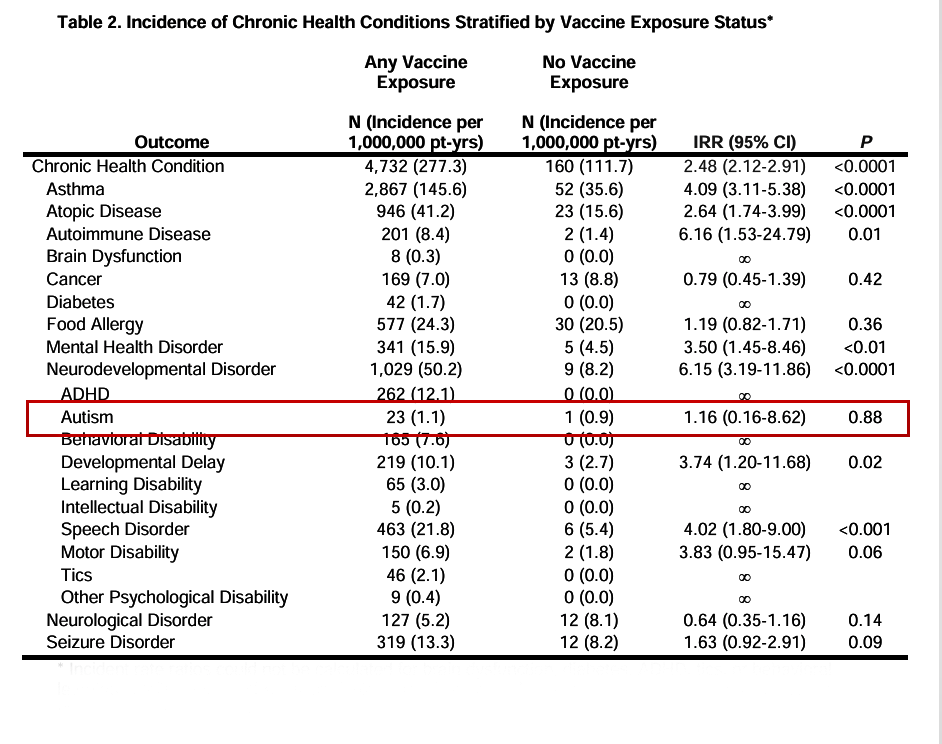
Crucially, when one examines the underlying Henry Ford Hospital study itself, the findings regarding autism are starkly different from the conclusions drawn by Mr. Hulscher. A table presented from the Lamerato study shows that the incidence of autism in vaccinated children was 1.05%, while in unvaccinated children, it was 1.18%. This data, presented within the original research, suggests no significant association between vaccination and autism. The article highlights the peculiar omission of this finding by Mr. Hulscher in his broader narrative.
n
H3: The "Money Machine" Rhetoric: Financial Analysis or Misdirection?
n
Another significant claim made in the reanalysis is that the childhood vaccination schedule represents the "money machine at the center of the pharmaceutical industry." This statement, while hinting at potential financial motivations, is presented as a definitive economic analysis without supporting evidence.
n
To counter this assertion, the article directs readers to the financial disclosures of pharmaceutical companies like Merck. A review of Merck’s Securities and Exchange Commission (SEC) filings reveals that while vaccine products like Gardasil and ProQuad contribute to their revenue, they represent a relatively modest portion of the company’s overall income. Keytruda, a cancer drug, generates significantly more revenue. This factual comparison suggests that the "money machine" rhetoric is an oversimplification, bordering on misrepresentation, of the complex financial landscape of the pharmaceutical industry.
n
H2: Supporting Data and Methodological Flaws
n
The core of Mr. Hulscher’s viral claims rests on his reanalysis of the Henry Ford Hospital study. However, the article meticulously details significant methodological flaws that undermine the credibility of his conclusions.
n
H3: The "Apples and Oranges" Comparison: Unvaccinated vs. Vaccinated Cohorts
n
The primary issue identified is the flawed methodology of comparing vaccinated and unvaccinated groups. The article suggests that the underlying Henry Ford study, and by extension Mr. Hulscher’s reanalysis, attempts to compare "apples to oranges." This implies that the groups being compared are not truly equivalent, meaning any observed differences in health outcomes could be due to factors other than vaccination status. This could include differences in socioeconomic status, access to healthcare, lifestyle choices, or pre-existing genetic predispositions, all of which can influence chronic disease development.
n
H3: The Hannah Poling Case: A Misconstrued Legal Finding
Mr. Hulscher also attempts to bolster his argument by referencing the case of Hannah Poling, a child who was awarded compensation by the federal Vaccine Court. He presents this as definitive proof that vaccines cause autism, stating, "The null hypothesis that autism cannot be caused by vaccines was disproved in a dramatic empirical court case decided on September 15, 2010, when a federal Vaccine Court (formerly the People’s Court) awarded more than $20 million dollars to Hannah Poling’s family, acknowledging that her diagnosis of severe autism was caused by vaccines."
However, the article provides a nuanced explanation of the Hannah Poling case, drawing on contemporary reporting from the New England Journal of Medicine. It clarifies that Hannah Poling suffered from a mitochondrial enzyme deficit, a pre-existing condition. The court’s decision did not conclude that vaccines caused autism, but rather that the vaccination had significantly aggravated her underlying mitochondrial disorder, leading to encephalopathy with features of autism spectrum disorder. This is a critical distinction between causation and aggravation.
Furthermore, the article explains that the compensation was awarded under a "Table Claim" within the National Vaccine Injury Compensation Program (VICP). This program has a built-in mechanism where proving specific vaccines, injuries, and time intervals presumes causation, eliminating the need for scientific proof of the claim. Therefore, the Vaccine Court’s decision was a legal finding for compensation purposes, not an affirmative scientific conclusion that vaccines cause autism. While subsequent cases have followed this "Table Claim" pathway, attempts to extend the court’s findings to a broader conclusion that vaccines cause autism have not succeeded.
H2: Official Responses and Scientific Consensus
While there isn’t a direct "official response" to every viral social media post, the broader scientific and medical community has consistently addressed the concerns surrounding vaccine safety.
H3: The Weight of Evidence: Decades of Research
Numerous large-scale, peer-reviewed studies conducted globally have consistently demonstrated the safety and efficacy of vaccines. Major health organizations, including the Centers for Disease Control and Prevention (CDC), the World Health Organization (WHO), and the American Academy of Pediatrics (AAP), all affirm that the benefits of childhood vaccination far outweigh the risks. These organizations rely on the overwhelming body of scientific evidence, which has not found a causal link between vaccines and autism or a widespread increase in chronic diseases among vaccinated children.
The viral post’s reliance on an unpublished, non-peer-reviewed reanalysis stands in stark contrast to this established scientific consensus, which is built upon rigorous methodology, replication, and scrutiny by independent experts.
H2: Implications and the Dangers of Misinformation
The proliferation of viral claims like the one discussed has significant implications for public health and individual decision-making.
H3: Eroding Trust and Public Health Risks
When unverified and misleading information about vaccine safety spreads rapidly on social media, it can erode public trust in established medical institutions and scientific consensus. This erosion of trust can lead to vaccine hesitancy and refusal, resulting in lower vaccination rates. Declining vaccination rates can, in turn, lead to the resurgence of preventable infectious diseases, posing a serious threat to both individual and community health, particularly for vulnerable populations such as infants and those with compromised immune systems.
H3: The Triumph of Certainty Over Evidence
The article concludes by highlighting a fundamental problem: the certainty of the claims made by Mr. Hulscher repeatedly outruns the evidence. The underlying Henry Ford data, when analyzed impartially, do not support the alarming conclusions presented in the viral post. The article posits that when rhetoric outweighs data, the most important finding may not be about vaccines, but about the interpreters of the evidence. In the age of social media, where sensationalism can easily overshadow scientific rigor, it is paramount for individuals to critically evaluate information, seek out credible sources, and understand the scientific process before accepting sweeping claims as fact. The transformation of scientific uncertainty into social media certainty, as seen in this case, poses a significant challenge to informed public discourse and public health.

