
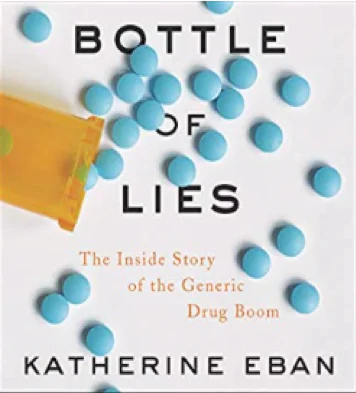
Washington D.C. – The pharmaceutical landscape, often perceived as a bastion of scientific rigor and stringent regulation, harbors a darker underbelly, particularly within the booming generic drug industry. A groundbreaking investigative work, "Bottle of Lies: The Inside Story of the Generic Drug Boom" by Katherine Eban, has ripped open this veiled world, exposing a pervasive and frightening lack of effective oversight and integrity that has compromised the global medicine supply chain. What reads like a true-to-life thriller reveals a systemic failure, where profit often trumped patient safety, leading to potentially ineffective or even harmful medications reaching millions worldwide.
n
The book’s revelations have resonated deeply with individuals like Lisa Morrise, a reviewer who candidly shared her family’s likely impact from poor-quality generics. Her experience underscores the personal cost of this systemic breakdown, transforming abstract regulatory failures into tangible health concerns for ordinary people. While patient advocacy has begun to chip away at some of these deeply entrenched issues, the consensus, amplified by Eban’s exhaustive reporting, is clear: much remains undone, particularly for vulnerable populations outside the United States. The urgent call to action from Morrise – "If you are taking a generic medicine and it is not as effective as the name brand, talk to your provider" – serves as a stark reminder of the individual vigilance now required in a system designed to protect without question.
n
Main Facts: Unveiling a Global Health Betrayal
n
Katherine Eban’s "Bottle of Lies" is not merely a critique; it is a meticulously researched indictment of the generic drug industry’s darkest secrets. The core thesis of the book posits that the rapid expansion of the generic market, driven by promises of affordability and accessibility, inadvertently created fertile ground for widespread fraud, data manipulation, and alarming quality deficiencies. Eban, an investigative journalist with a formidable track record, spent years delving into internal company documents, interviewing whistleblowers, former executives, and regulators, to paint a chilling picture of how some of the world’s largest generic drug manufacturers systematically gamed regulatory systems, particularly those of the U.S. Food and Drug Administration (FDA).
n
The book’s central revelation revolves around the fabrication of critical quality data and the deliberate falsification of drug testing results. Generic drug manufacturers are legally required to demonstrate that their products are bioequivalent to their brand-name counterparts, meaning they deliver the same amount of active ingredient to the bloodstream over the same period. Eban’s investigation uncovered instances where companies would substitute ingredients, manipulate test samples, or even create entirely fictitious data to pass regulatory muster. This deception meant that millions of patients could be receiving medications that were either significantly less potent, riddled with impurities, or simply ineffective, undermining the very foundation of modern medicine.
n
The impact of these findings extends far beyond mere economic concerns; it strikes at the heart of public health and trust. For Lisa Morrise, the book crystallized a nagging suspicion about her family’s experiences, transforming anecdotal concerns into a validated systemic problem. "This reads as a true to life thriller," she notes, highlighting the dramatic and often covert nature of the fraud. While Eban acknowledges the vital role of patient advocacy in initiating some reforms, her work powerfully argues that the battle for genuine integrity in the generic drug supply chain is far from over, especially given the globalized nature of manufacturing and the unevenness of regulatory enforcement worldwide. The book has garnered significant critical acclaim for its journalistic rigor and its profound implications for global health policy, forcing a re-evaluation of how generic drugs are manufactured, regulated, and consumed.
n
Chronology: From Promise to Peril in the Generic Drug Boom
n
The journey of generic drugs from an innovative solution to a compromised industry is a complex narrative spanning decades, marked by legislative intent, economic pressures, and ultimately, ethical failures.
n
The Rise of Generics: A Vision of Affordability and Access
n
The modern era of generic drugs truly began in the United States with the passage of the Drug Price Competition and Patent Term Restoration Act of 1984, commonly known as the Hatch-Waxman Act. This landmark legislation aimed to balance the incentives for pharmaceutical innovation with the public’s need for affordable medications. It streamlined the approval process for generic drugs by allowing manufacturers to demonstrate bioequivalence to brand-name drugs rather than requiring full, costly clinical trials. This dramatically reduced the time and expense required to bring generics to market, leading to an explosion in their availability.
n
The intent was noble: to make essential medicines accessible to a broader population, thereby reducing healthcare costs. For years, the system largely functioned as intended, saving consumers and healthcare systems billions of dollars annually. Generic drugs quickly became the backbone of pharmaceutical care, particularly in the U.S., where they now account for approximately 90% of all prescriptions filled, while representing only about 25% of total drug spending. This success story was predicated on the fundamental assumption that a generic drug was, for all intents and purposes, identical to its brand-name counterpart in terms of safety, efficacy, and quality.
n
Seeds of Deception: The Global Shift and Regulatory Strain
n
As the generic market matured, intense price competition spurred manufacturers to seek ever-lower production costs. This economic pressure led to a significant shift in manufacturing operations, particularly during the late 20th and early 21st centuries, from established Western facilities to burgeoning pharmaceutical hubs in countries like India and China. These nations offered vast manufacturing capacities, lower labor costs, and a less stringent regulatory environment, making them attractive bases for generic drug production.
n
However, this globalization introduced unprecedented challenges for regulatory bodies like the FDA. The sheer volume of overseas facilities, coupled with geographical distance and cultural barriers, made effective oversight incredibly difficult. Early warning signs of potential problems began to emerge. Whistleblowers, often courageous employees within these overseas manufacturing plants, started to report disturbing practices: shoddy manufacturing processes, inadequate quality control, and, most critically, the systematic falsification of data submitted to regulatory agencies. These initial reports were often dismissed or slow to be acted upon, allowing the problems to fester and expand. The global supply chain, once seen as an economic advantage, became an opaque network susceptible to exploitation.
n
Eban’s Investigation Unveiled: Exposing the Systemic Fraud
n
Katherine Eban’s "Bottle of Lies" meticulously chronicles her multi-year investigation into these growing concerns. Her work particularly highlights the case of Ranbaxy Laboratories, a major Indian pharmaceutical company that became a poster child for generic drug fraud. Eban, through unprecedented access to internal documents and key informants, revealed how Ranbaxy executives deliberately lied to the FDA, fabricated drug test results, and knowingly shipped adulterated medications to markets around the world, including the United States.
n
The types of fraud uncovered were shocking in their scope and audacity. They included:
n
- n
- Data Fabrication: Manufacturing data and quality control results were routinely invented or manipulated to meet specifications.
- "Testing-the-Best-Batch": Instead of testing drugs from routine production runs, companies would create "gold standard" batches specifically for regulatory testing, while mass-produced drugs often fell far short of quality requirements.
- Ingredient Substitution: In some cases, active pharmaceutical ingredients (APIs) were substituted with cheaper, less effective, or even dangerous alternatives.
- Cross-Contamination: Facilities often lacked proper hygiene and separation, leading to cross-contamination of different drugs.
n
n
n
n
n
Eban’s narrative is populated by brave individuals, such as Dinesh Thakur, a former Ranbaxy executive turned whistleblower, whose tireless efforts and personal sacrifice were instrumental in bringing these illicit practices to light. Her book details how these fraudulent practices were not isolated incidents but often sanctioned at high levels within certain companies, driven by intense pressure to meet aggressive production targets and maintain competitive pricing.
n
Regulatory Backlash and Slow Progress
n
The initial response from regulatory bodies, particularly the FDA, was often characterized by skepticism and a lack of resources to adequately investigate the scale of the problem. However, as the evidence mounted, largely due to whistleblowers and persistent journalistic inquiry, the FDA was compelled to act. The revelations led to significant enforcement actions, including import bans on specific generic drugs and manufacturing facilities, and substantial financial penalties. Ranbaxy, for example, eventually pleaded guilty to felony charges and paid a record $500 million in fines and civil penalties in 2013, for manufacturing and distributing adulterated drugs and making false statements to the U.S. government.
n
Despite these actions, progress has been slow and uneven. Eban’s book underscores that while some egregious offenders faced consequences, the underlying systemic vulnerabilities that allowed such fraud to flourish — inadequate overseas inspection regimes, a fragmented global supply chain, and immense economic pressure — largely persisted. The saga of generic drug fraud became a wake-up call, forcing regulators to re-evaluate their strategies for ensuring the quality and integrity of medications produced abroad.
n
Supporting Data: The Tangible Evidence of Compromise
n
The concerns raised by "Bottle of Lies" are not merely anecdotal; they are supported by a substantial body of evidence, including regulatory reports, scientific studies, and numerous documented incidents of quality failures.
n
The Scale of the Generic Market: A Global Dependence
The sheer volume of generic drugs consumed globally highlights the critical importance of their quality. In the United States alone, generic drugs account for approximately 9 out of every 10 prescriptions filled, underscoring the population’s profound reliance on these affordable alternatives. Globally, this reliance is even more pronounced, particularly in developing nations where generic medications are often the only accessible treatment option for life-threatening diseases. The economic savings generated by generics are immense, estimated to be hundreds of billions of dollars annually in the U.S. healthcare system alone. This vast market, while beneficial in principle, also creates a colossal opportunity for malfeasance when oversight is weak.
Documented Quality Failures and Recalls
Eban’s book provides a narrative framework for numerous real-world incidents that have plagued the generic drug industry. These include:
- Contamination Incidents: Several high-profile recalls have involved generic drugs contaminated with carcinogenic impurities. A notable example is the widespread recall of valsartan and other "sartan" blood pressure medications, which began in 2018, due to contamination with N-nitrosodimethylamine (NDMA) and other nitrosamines – probable human carcinogens. These contaminants were traced back to manufacturing changes in generic API facilities, primarily in China and India.
- Efficacy Concerns: Beyond outright contamination, there have been documented instances where generic drugs failed to deliver the expected therapeutic effect. This can stem from subtle differences in inactive ingredients affecting absorption, or, as Eban extensively details, from manufacturers cutting corners on the active pharmaceutical ingredient itself. Patients reporting that a generic version of their medication "just doesn’t work as well" as the brand name, like Lisa Morrise’s family, often find their concerns dismissed, when in fact, there may be legitimate biochemical reasons or even fraudulent manufacturing practices at play.
- Data Integrity Violations: FDA inspection reports from overseas generic manufacturing facilities frequently cite "data integrity violations," which include deleting, manipulating, or backdating laboratory records, failing to investigate out-of-specification results, and using unvalidated testing methods. These are not minor infractions; they fundamentally undermine the scientific basis of drug approval. From 2013 to 2017, the FDA issued over 70 warning letters citing data integrity issues, with a significant proportion targeting foreign manufacturers.
Economic Drivers of Fraud: The Race to the Bottom
The generic drug market is characterized by fierce price competition. Once a brand-name drug’s patent expires, numerous generic manufacturers rush to market, driving prices down dramatically. While beneficial for consumers, this intense pressure can create perverse incentives for manufacturers to cut corners on quality to maintain profit margins. The globalized supply chain further complicates this, with multiple layers of suppliers for raw materials and active pharmaceutical ingredients, making it challenging to trace origins and ensure quality throughout the entire manufacturing process. This "race to the bottom" on price often translates into a "race to the bottom" on quality and ethical standards when not adequately policed.
Impact on Patients: The Human Cost
The ultimate consequence of compromised generic drugs is borne by patients. Ineffective medications can lead to:
- Prolonged Illness and Suffering: Patients may not receive the intended therapeutic benefit, leading to worsening conditions, prolonged symptoms, and delayed recovery.
- Adverse Events: Contaminated or improperly manufactured drugs can cause unexpected side effects, allergic reactions, or even severe health complications.
- Loss of Trust: When patients lose faith in the efficacy or safety of their medications, it erodes their trust in the healthcare system, their providers, and the regulatory bodies meant to protect them. This loss of trust can lead to medication non-adherence, further compromising health outcomes. Lisa Morrise’s account of her family being impacted is a powerful testament to this profound human cost.
Official Responses: A Slow but Necessary Awakening
The revelations brought forth by investigative journalism and whistleblower accounts, notably "Bottle of Lies," have forced regulatory bodies and the pharmaceutical industry into a reckoning, albeit a gradual one.
FDA’s Evolving Stance: From Reactive to Proactive?
For years, the FDA faced criticism for its perceived inability to adequately oversee the burgeoning generic drug industry, particularly its vast overseas manufacturing footprint. Prior to Eban’s book and similar exposures, the agency’s inspection regime was often reactive and less frequent for foreign facilities compared to domestic ones. The sheer logistical challenge of inspecting thousands of plants in distant countries with varying legal frameworks and languages was immense.
However, the weight of evidence compelled the FDA to significantly enhance its oversight:
- Increased Inspections: The FDA has incrementally increased the number of inspections of foreign drug manufacturing facilities. While still not at parity with domestic inspections, there has been a concerted effort to conduct more unannounced inspections and target facilities with higher risk profiles.
- Data Integrity Guidances: Recognizing the pervasive issue of data fabrication, the FDA has issued specific guidances on data integrity for industry, emphasizing the importance of accurate, complete, and consistent data in all pharmaceutical manufacturing.
- Hiring and Training: The agency has invested in hiring more foreign inspection staff and providing specialized training to address the unique challenges of overseas oversight.
- International Collaboration: The FDA has sought to strengthen collaborations with international regulatory counterparts, such as the European Medicines Agency (EMA), to share information, coordinate inspections, and harmonize standards where possible. This includes participation in initiatives like the Pharmaceutical Inspection Co-operation Scheme (PIC/S).
- Warning Letters and Import Alerts: The agency has become more assertive in issuing warning letters and placing foreign manufacturing sites on "import alert," effectively banning their products from entering the U.S. market until deficiencies are rectified.
Despite these efforts, challenges persist, including funding limitations, the difficulty of enforcing U.S. law in foreign jurisdictions, and the constant evolution of fraudulent practices.
Global Regulatory Landscape: Disparities and Joint Efforts
Other global regulatory bodies have also grappled with these issues. The European Medicines Agency (EMA), for instance, has its own rigorous inspection program and has also issued warnings and taken action against manufacturers found to be in violation of Good Manufacturing Practices (GMP). However, the capacity and stringency of regulation vary significantly across the globe. Many developing nations, heavily reliant on imported generics, possess far fewer resources to conduct their own robust inspections or enforce quality standards, making their populations particularly vulnerable to substandard products.
There is a growing recognition of the need for greater international cooperation and harmonization of standards to create a truly global safety net for pharmaceutical products. Initiatives aimed at mutual recognition of inspections and sharing of intelligence are vital, but their implementation is often slow and complex.
Industry Accountability: Fines, Consent Decrees, and Corporate Responsibility
The exposure of fraud has led to significant consequences for some generic manufacturers. Beyond the Ranbaxy case, other companies have faced substantial fines, consent decrees (legally binding agreements to correct deficiencies), and damage to their reputation. These punitive measures aim to deter future misconduct and force companies to invest in robust quality systems.
However, the broader industry response has been mixed. While some companies have genuinely committed to improving their quality control and data integrity, the relentless pressure to reduce costs remains a powerful driver. There’s an ongoing debate about the extent of corporate responsibility versus regulatory oversight, with calls for greater transparency throughout the supply chain and a culture shift within pharmaceutical companies that prioritizes quality over expediency.
Implications: Rebuilding Trust in a Compromised System
The revelations from "Bottle of Lies" and the subsequent regulatory actions have profound implications for public health, trust in medicine, and the future of pharmaceutical regulation.
Erosion of Trust: A Foundation Shaken
Perhaps the most significant long-term implication is the erosion of public trust. When patients discover that the medications they rely on for their health or even their lives might be fraudulent or ineffective, it undermines their faith in the entire healthcare ecosystem – doctors, pharmacists, regulators, and pharmaceutical companies. This distrust can manifest in various ways, from questioning prescriptions to self-medication or even abandoning treatment, all of which can have dire health consequences. Lisa Morrise’s advice to "talk to your provider" is a crucial immediate step, but it also highlights the burden placed on individual patients to be vigilant in a system that should ideally be inherently trustworthy.
The Unfinished Battle: Global Vulnerabilities Persist
Despite increased regulatory scrutiny, the battle for uncompromised generic drug quality is far from over. Eban’s book rightly emphasizes that "Much remains to be done, especially for patients that live outside of the United States." The challenges are multifaceted:
- Enforcement Difficulties: Prosecuting and penalizing foreign entities for fraud committed abroad remains legally and logistically complex.
- Evolving Fraud Tactics: As regulators close one loophole, unscrupulous manufacturers often find new ways to circumvent oversight.
- Continued Price Pressure: The economic drivers that incentivized fraud in the first place are still very much present, meaning the temptation to cut corners persists.
- Fragmented Supply Chains: The complexity of global supply chains makes it incredibly difficult to track every ingredient from its origin to the final pill, creating blind spots for quality control.
Recommendations for the Future: A Path Towards Integrity
Addressing these deep-seated issues requires a multi-pronged approach involving governments, industry, healthcare providers, and patients:
- Enhanced Regulatory Funding and Authority: Regulatory agencies like the FDA need substantially more resources, legal authority, and international reach to effectively monitor and enforce standards globally.
- Global Harmonization and Collaboration: Stronger international agreements and shared standards for manufacturing practices, data integrity, and inspection protocols are essential to create a truly robust global safety net.
- Supply Chain Transparency: Innovative technologies, such as blockchain, could be explored to create immutable records of drug ingredients and manufacturing processes, enhancing traceability and accountability.
- Stricter Penalties and Whistleblower Protection: Deterrents for pharmaceutical fraud must be significant enough to outweigh potential profits. Robust protections and incentives for whistleblowers are critical to bringing hidden misconduct to light.
- Empowering Healthcare Providers and Patients: Healthcare providers need better tools and information to identify potential issues with generic drugs. Patients, in turn, need to be educated about the possibility of efficacy differences and encouraged to report any concerns to their doctors, as Lisa Morrise rightly advises.
A Call to Vigilance: Ensuring Medicine’s Integrity
"Bottle of Lies" serves as an enduring call to vigilance. It reminds us that the integrity of our medicines is not a given but a constant struggle requiring sustained effort from all stakeholders. The generic drug boom, while a triumph of accessibility, has also been a crucible for ethical failings. Ensuring that every pill, regardless of its price or origin, meets the highest standards of quality and efficacy is paramount not just for individual health, but for the credibility of the entire pharmaceutical enterprise. The conversation initiated by Eban’s book and underscored by the experiences of individuals like Lisa Morrise must continue, driving the reforms necessary to guarantee that the promise of affordable medicine does not come at the cost of public trust and patient safety.

