
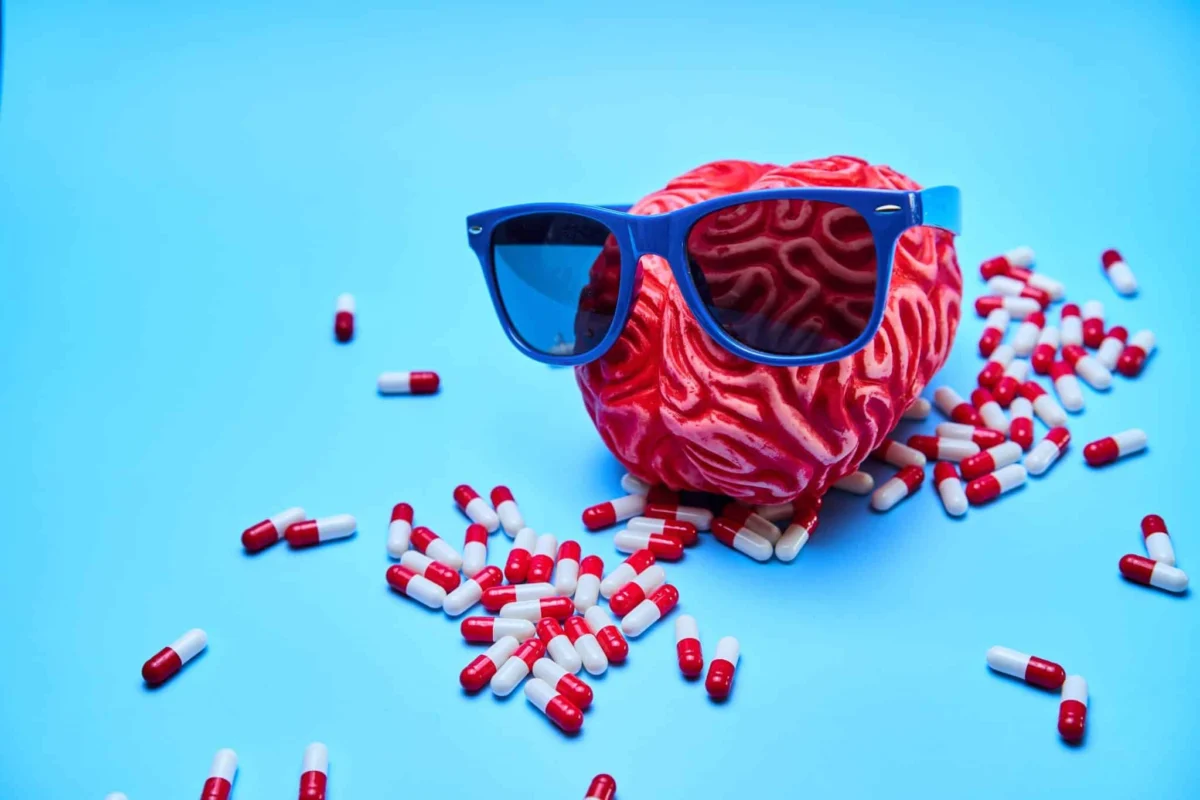
The human brain is often described as the most complex machine in the known universe, a biological marvel capable of near-infinite adaptation. Yet, this very capacity for learning—the hallmark of our intelligence—may also be the engine of our most profound struggles. Recent discourse in neuroscience and artificial intelligence suggests a startling parallel between the way a human brain descends into addiction and the way a generative AI model collapses under the weight of its own data.
n
At the heart of this intersection is the theory of "pathological overlearning." It suggests that addiction is not necessarily a foreign disease that hijacks the brain, but rather the brain performing its primary function—learning and adapting—too well, and in response to the wrong stimuli. As we enter an era where more than half of the digital content we consume is artificially generated, the implications for human cognition, memory, and recovery are becoming increasingly urgent.
n
Main Facts: Addiction as a Function of Learning
n
For decades, the dominant narrative surrounding addiction has been the "disease model," which posits that substance use disorders are chronic brain diseases characterized by fundamental physiological malfunctions. However, a growing cohort of neuroscientists and psychologists are proposing a more nuanced alternative: the Learning Model.
n
Central to this perspective is the work of Marc Lewis, PhD, a neuroscientist and professor of developmental psychology. In his seminal work, The Biology of Desire, Lewis argues that addiction is the result of the brain reacting to a motivating experience exactly the way it was evolved to do. The brain identifies a reward, creates a neural pathway to seek that reward, and through repetition, strengthens that pathway until it becomes a dominant, self-reinforcing feedback loop.
n
This process, termed "pathological overlearning," suggests that addiction is a "habit that becomes hard to break" because the brain’s plasticity—its ability to rewire itself—is working against the individual’s long-term interests. Crucially, Lewis notes that the measurable brain changes associated with addiction often vanish once the behavior stops, suggesting that the brain is not "broken," but has simply adapted to a specific, albeit destructive, environment.
n
However, the learning itself is rarely the starting point. The "Unified Theory of Addiction" posits that all addictions, whether to substances like alcohol or behaviors like gambling, are rooted in a response to emotional distress. This is known as "displacement"—the act of diverting the pain of social isolation, trauma, or chronic stress into a repetitive, rewarding activity.
n
Chronology: From Biological Imperative to Digital Echo Chambers
n
The evolution of our understanding of addiction has moved in tandem with our technological advancement, leading us to a point where biological and artificial systems are beginning to mirror one another’s flaws.
n
1. The Era of Reward (20th Century): Early research focused heavily on dopamine and the "reward circuit." Addiction was seen as a simple hijack of the brain’s pleasure centers.
n
2. The Shift to Neuroplasticity (Early 21st Century): Researchers began to realize that the brain’s physical structure changes in response to addiction. This gave rise to the "pathological overlearning" theory, moving the focus from the substance itself to the brain’s innate learning mechanisms.
n
3. The Rise of Generative AI (2020–2023): Artificial intelligence models, specifically Large Language Models (LLMs), were trained on vast swaths of human-generated internet data. These models learned to mimic human thought and communication with startling accuracy.
n
4. The 2024-2025 "Slop" Plateau: By 2025, reports from outlets like Futurism and Axios estimated that over 50% of online content was AI-generated. This created a new phenomenon: "AI Model Collapse." When AI models are trained on synthetic data (content created by other AI) rather than original human data, they begin to lose nuance, forget "edge cases," and eventually produce "slop"—degraded, repetitive, and nonsensical output.
n
5. The Convergence (2026 and Beyond): We now see a feedback loop where human brains, already prone to overlearning and displacement, are consuming "synthetic" information that can further distort perception and memory.
n
Supporting Data: The Mechanics of Collapse
n
The parallels between a brain in the throes of addiction and an AI model in collapse are supported by recent empirical studies.
n
The Ouroboros Effect in AInA 2024 study published in Nature titled "AI models collapse when trained on recursively generated data" detailed how generative models degrade when they "eat their own tail." Much like a brain that focuses solely on a single addictive reward to the exclusion of all other life stimuli, an AI model that consumes only its own output becomes narrow and dysfunctional. The study found that as synthetic data crowds out human-made material, the model’s "intelligence" plateaus and then plummets, losing the ability to understand complex associations.
n
Synthetic Memories and Human CognitionnThe danger to humans is not just theoretical. A September 2024 experiment published on Arxiv titled "Synthetic Human Memories" demonstrated that AI-generated images and videos have the power to implant false memories. Researchers found that AI-edited visuals significantly increased the frequency of "false recollections" in human subjects. For an individual already struggling with addiction—where the brain is already in a state of "pathological overlearning"—the introduction of synthetic, AI-driven stimuli could potentially entrench addictive behaviors or even trigger psychosis.
n
The Displacement MetricnData from the Unified Theory of Addiction suggests that the "initiating motivation" for addiction is relief rather than pleasure. In a digital world saturated with "AI slop," the potential for social isolation increases as human-to-human connection is replaced by human-to-chatbot interaction. This digital isolation acts as a primary stressor, driving the "displacement" activities that lead to addiction.
n
Official Responses and Expert Perspectives
n
The scientific community remains divided on whether addiction should be officially declassified as a disease, but there is a growing consensus that the "learning" framework offers better avenues for treatment.
n
Marc Lewis, in his critiques of the traditional medical model, emphasizes that if addiction is a learned behavior, it can be "unlearned." This perspective empowers the individual, suggesting that the brain’s plasticity—the very thing that allowed the addiction to form—is also the key to recovery. "The brain is doing what it is built to do," Lewis argues. Therefore, treatment should focus on neuroplasticity-based therapies rather than just pharmaceutical intervention.
n
On the technological front, AI researchers are sounding the alarm about the "echo chamber of learning." Many are calling for "Data Provenance" standards—a way to certify that data used to train future AI is "organic" (human-made) rather than synthetic. They argue that just as a human needs a diverse "diet" of experiences to remain mentally healthy, an AI needs a diverse diet of human creativity to remain functional.
n
In the 2025 Axios report, tech analysts noted that while the influx of AI slop appeared to be plateauing, the damage to the "information ecosystem" was already significant. The official response from many tech firms has been to develop "AI filters," yet critics argue this only adds another layer of synthetic processing between the human and reality.
n
Implications: A New Framework for Mental Health
n
The convergence of addiction theory and AI behavior suggests that we are entering a period where "cognitive hygiene" is as important as physical health.
n
1. Rethinking Addiction Treatment
If addiction is pathological overlearning triggered by emotional suffering (displacement), then treatment must move beyond abstinence. It must address the underlying "stress displacement" by fostering real-world social connections and emotional resilience. We must treat the "suffering" that makes the overlearning a necessary escape.
2. The Risk of "Digital Addiction"
AI chatbots and algorithmically driven content are designed to trigger the brain’s reward systems. As these systems become more adept at implanting false memories and preferences, the risk of "digital addiction" grows. For the brain, there may be little difference between the hit of dopamine from a drug and the hit of dopamine from a perfectly tailored, AI-generated interaction.
3. Preserving the Human "Edge"
The "AI model collapse" teaches us that nuance, randomness, and "edge cases" are what make intelligence valuable. In human terms, these are our individual quirks, our unique traumas, and our creative leaps. Pathological overlearning in addiction strips these away, reducing a complex human to a singular, repetitive urge.
4. Policy and Regulation
Governments and health organizations may soon need to regulate AI interactions for vulnerable populations. If AI-generated content can distort memory and entrench pathological learning, it may need to be treated with the same caution as addictive substances.
In conclusion, the story of addiction is not just a story of drugs or alcohol; it is a story of the brain’s incredible, and sometimes dangerous, power to learn. As we surround ourselves with artificial mirrors of our own intelligence, we must be careful not to fall into a collective feedback loop—an Ouroboros of our own making—where we forget how to learn from the real world in favor of the relief found in a synthetic one.

