
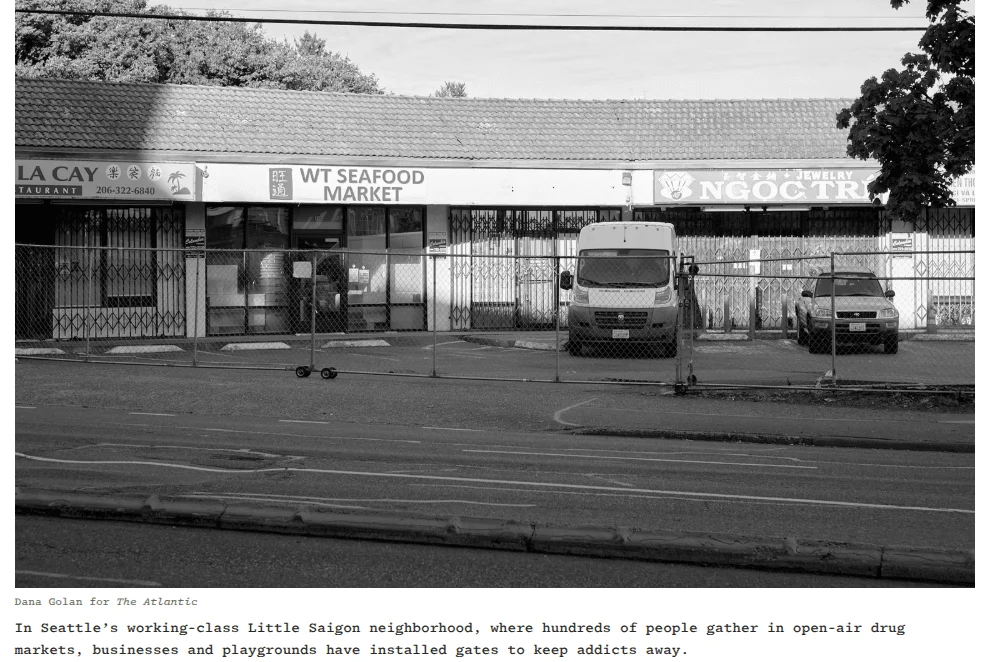
The American public health landscape is currently embroiled in a fierce ideological battle over how to address the most devastating drug crisis in the nation’s history. At the center of this firestorm is a recent, widely circulated long-form essay in The Atlantic by Michael Powell, titled "The Cities That Said Yes to Drugs." The article posits that harm reduction policies—strategies designed to minimize the negative consequences of drug use rather than strictly enforcing abstinence—have transformed major American metropolitan areas into "zombie apocalypses."
n
However, a closer examination of public health data, local law enforcement reports, and success stories from cities like Baltimore suggests that Powell’s narrative may be an oversimplification that ignores the complexities of the fentanyl crisis and the socio-economic realities of homelessness. Critics argue that blaming harm reduction for the rise in overdose deaths is not only disingenuous but ignores the biological and supply-side realities of the modern drug market.
n
Main Facts: Challenging the ‘Zombie’ Narrative
n
The crux of the current debate rests on whether harm reduction—providing clean needles, smoking kits, naloxone, and supervised injection sites—encourages drug use or saves lives. Powell’s article argues the former, claiming that overdose rates climbed most sharply in cities with the most robust harm-reduction frameworks.
n
Public health experts counter this with a critical distinction: overdose death rates have climbed sharply across the entire United States, regardless of local policy. The common denominator is not the availability of clean foil or naloxone; it is the total saturation of the illicit drug supply with fentanyl.
n
Fentanyl, a synthetic opioid 50 to 100 times more potent than morphine, became the dominant street drug after the federal government successfully curtailed the over-prescription of OxyContin and other pharmaceutical opioids. Millions of Americans, already physically dependent on opioids, were pushed toward a volatile and deadly black market. In this context, harm reduction advocates argue that their policies are not "saying yes to drugs," but rather "saying no to death."
n
Chronology: From Prescription Pads to the Fentanyl Surge
n
To understand the current state of urban drug use, one must look at the timeline of the opioid epidemic, which has evolved through three distinct waves:
n
- n
- The Prescription Wave (1990s–2010): The crisis began with the aggressive marketing of prescription opioids. By the time the CDC issued stricter guidelines in 2016, millions were already addicted.
- The Heroin Wave (2010–2013): As prescriptions became harder to obtain and more expensive, users migrated to heroin, which was cheaper and more readily available.
- The Fentanyl Wave (2013–Present): Synthetic opioids began contaminating the heroin supply, eventually replacing it almost entirely in many regions. Because fentanyl is so potent, the margin for error is nearly zero, leading to the "spike" in deaths cited by critics of harm reduction.
n
n
n
n
By 2024 and 2025, data began to show a slight "bending of the curve." In Maryland, for instance, overdose deaths reached a 10-year low in 2025, decreasing by 26% in a single year. This decline coincides with the most aggressive period of naloxone distribution and harm-reduction outreach in the state’s history, suggesting that the policies Powell critiques may actually be the primary drivers of the recent recovery.
n
Supporting Data: The Science of Harm Reduction
n
One of the most contentious points in Powell’s critique is the distribution of "smoking kits" in King County, Washington. Powell characterized these kits—containing tinfoil and glass pipes—as instructions on how to use fentanyl. However, medical literature suggests a much more pragmatic purpose.
n
Shifting from Injection to Smoking
n
A 2023 study published in Drug and Alcohol Dependence Reports focused on Seattle users and found that providing access to safer smoking equipment significantly reduced the frequency of drug injection. This is a critical public health victory because injection drug use is the primary driver of HIV transmission, Hepatitis C, and endocarditis (a life-threatening heart infection). By "stepping down" users from needles to smoking, health officials reduce the burden on the healthcare system and keep users alive long enough to consider treatment.
n
The Hydromorphone Myth
n
Powell also claimed that the distribution of hydromorphone (Dilaudid) pills—often used in "safe supply" programs—expanded the circle of addiction. Data from the British Columbia Coroners Service contradicts this. In 2023, the coroner reported that hydromorphone was detected in only 3% to 5% of unregulated toxic drug deaths. The overwhelming culprit remains fentanyl. Safe supply programs aim to provide a regulated alternative to the poisoned street supply, preventing the very overdoses Powell laments.
n
The Burlington Misconception
n
In Burlington, Vermont, Powell linked the presence of "drug zombies" in parks to a fatal beating. However, further investigation by local journalists and police revealed the incident was not a random act of drug-fueled "zombie" violence. It was a targeted dispute over a $400 debt involving a theft from a family member. While drug culture was the backdrop, the incident was a failure of social safety nets and poverty rather than a direct consequence of harm-reduction supplies.
n
Official Responses and the Political Climate
n
The debate over harm reduction is becoming increasingly politicized at the federal level. While local officials in cities like Baltimore and Juneau, Alaska, are doubling down on these programs, federal leadership may be shifting.
n
The SAMHSA Factor
n
The Substance Abuse and Mental Health Services Administration (SAMHSA) has been instrumental in funding the distribution of naloxone (Narcan) and training first responders. Powell’s article notes a drop in overdose deaths but fails to credit this federal support. Conversely, health advocates are expressing alarm over the potential "gutting" of SAMHSA services under proposed shifts in federal health leadership, including figures like Robert F. Kennedy Jr., who has expressed skepticism toward traditional public health frameworks.
n
The Baltimore Model: A Success Story
n
In contrast to the "zombie apocalypse" narrative, the city of Baltimore offers a blueprint for success through the Charm City Care Connection (CCCC). Instead of focusing solely on the act of drug use, the CCCC treats the user as a whole person.
n
- n
- Integrated Services: They offer safe sex kits, wound care, showers, and laundry facilities.
- Employment and Dignity: In 2024, the program achieved 100% staff retention, with half of the organization’s employees being former clients.
- The Result: Maryland’s governor’s office reported that fentanyl-related deaths dropped by 31% in 2025.
Baltimore’s health department maintains that "treating people with respect and providing for their basic needs is the first step toward clinical recovery."
Implications: Housing vs. Harm Reduction
The most visible aspect of the "zombie apocalypse"—the sight of people nodding off in public parks or living in tents—is often a symptom of the national housing crisis rather than harm reduction policy.
The Visibility Trap
Powell and other critics often conflate homelessness with drug addiction. While the two are frequently linked, the presence of tents in Burlington or Seattle is a sign of a lack of affordable housing and shelter beds. When cities like Juneau, Alaska, have integrated harm reduction with "Housing First" initiatives, they have seen a marked decrease in public drug use.
If a person has a private room, they are not using drugs in a public park. By focusing on the "look" of the park rather than the lack of the room, critics of harm reduction may be misdiagnosing the problem.
The Future of Recovery
The ultimate goal of harm reduction is to keep people alive. You cannot treat a dead person. By providing "safe use kits," cities are ensuring that users don’t contract sepsis or HIV, and that they have Narcan on hand when a batch of drugs is unexpectedly potent.
The move toward Medicine-Assisted Treatment (MAT), such as Methadone or Buprenorphine, is the "gold standard" for opioid recovery. However, MAT is most effective when the patient is stable. Harm reduction provides that stability.
Conclusion
The "zombie apocalypse" narrative is a powerful rhetorical tool, but it fails to withstand the scrutiny of data. The rise in overdose deaths was a national phenomenon driven by a toxic, fentanyl-heavy supply, not by the local distribution of clean needles or naloxone. In fact, the most recent data from 2025 suggests that where harm reduction is most robust, deaths are finally beginning to decline.
As cities like Baltimore have shown, the path forward involves more than just "saying no" to drugs; it involves saying yes to housing, yes to medical care, and yes to the human dignity of those struggling with addiction. To characterize these efforts as a failure is to ignore the thousands of Americans who are alive today only because a harm-reduction specialist handed them a kit instead of a pair of handcuffs.
Sources:
- “The Cities That Said Yes To Drugs,” The Atlantic, July 30, 2026.
- “High levels of interest in access to free safer smoking equipment,” Drug and Alcohol Dependence Reports, May 2, 2023.
- “Hydromorphone playing no ‘significant’ role in toxic drug deaths,” Global News/B.C. Coroner, June 5, 2023.
- “Community Spotlight: Charm City Care Connection,” Johns Hopkins University, July 30, 2026.
- “Overdose deaths reach 10-year low in Maryland,” CBS News, January 30, 2026.

