

The global map of clinical research is undergoing a profound and rapid transformation. Once primarily perceived as an attractive destination for cost-efficient clinical trials, the Asia-Pacific (APAC) region has decisively emerged as a powerhouse of innovation, actively driving advancements across the pharmaceutical industry. This paradigm shift is the direct result of sustained government investment, progressive regulatory reforms, and the vigorous growth of sophisticated biotech ecosystems. At the forefront of this evolution are China, Japan, and South Korea, whose strategic approaches are not only reshaping global drug development but also offering invaluable frameworks for other regions aspiring to bolster their clinical research infrastructures and remain globally competitive.
n
Main Facts: APAC at the Forefront of Innovation
n
The sheer scale of this transformation is vividly illustrated by clinical trial activity across the region. APAC now contributes an estimated 43% of the world’s innovative treatment pipeline, a figure that underscores its pivotal role in bringing novel therapies to patients worldwide. Specific therapeutic areas, such as metabolic and cardiovascular diseases, are experiencing particularly rapid expansion within the region. The APAC market for cardiovascular drugs, for instance, is valued at an estimated USD 12.60 billion, while its metabolic therapeutics sector boasts a robust growth rate exceeding 8% CAGR.
n
A critical clinical understanding, solidified by 2026, highlights that Asian populations develop metabolic and cardiovascular risk factors at a lower body mass index (BMI) than their Western counterparts. This physiological distinction has accelerated local screening and early intervention protocols, cementing APAC’s role as a major hub for early-phase and multi-regional clinical trials (MRCTs). This momentum is further bolstered by modernised regulatory pathways that streamline approvals and expansive local patient demographics, which facilitate efficient recruitment and diverse study populations.
n
Beyond these specific disease areas, demand for clinical research across a broad spectrum of therapies is surging throughout APAC. Key countries are diligently strengthening the foundational elements necessary for globally competitive trials. These include comprehensive regulatory reform, the standardisation of clinical protocols, the establishment of advanced testing infrastructure, the development of robust national data systems, the cultivation of skilled talent pools, and the nurturing of vibrant innovation ecosystems. This article delves into the rise of China, Japan, and South Korea as preeminent clinical research hubs, dissecting their unique strategies and the lessons they offer to the broader global scientific community.
n
Chronology: From Cost-Efficiency to Innovation Leadership
n
The journey of the APAC region in clinical research has been one of remarkable evolution. In the early 21st century, the region gained prominence largely due to its capacity for conducting clinical trials at a lower cost compared to North America and Europe. This initial appeal drew international pharmaceutical companies seeking to optimize their research budgets. However, over the past decade, a deliberate and concerted effort by governments and private sectors alike has shifted this narrative dramatically.
n
Rather than merely serving as execution sites for trials conceived elsewhere, APAC nations have systematically invested in the entire drug development lifecycle. This investment has focused on enhancing scientific expertise, building world-class research infrastructure, and implementing forward-thinking regulatory frameworks designed to foster domestic innovation. The transition has been gradual but relentless, moving from a focus on cost-arbitrage to an emphasis on scientific leadership and proprietary drug development. This shift is evident in the increasing number of novel drug candidates originating from APAC, the growing volume of intellectual property generated, and the region’s rising contribution to global drug pipelines. The emphasis has moved from simply executing trials to conceiving, designing, and leading them, often with a unique understanding of regional disease prevalence and patient characteristics.
n
China: From Fast Followers to Global Innovators

n
China’s transformation in the pharmaceutical landscape is nothing short of revolutionary. Today, it stands as the world’s second-largest pharmaceutical market and one of the fastest-growing globally, providing both the immense scale and the substantial investment required to accelerate innovation. This conducive environment has led to remarkably swift drug development cycles; the path from early discovery to Investigational New Drug (IND) applications is typically 50% to 70% faster than in many other parts of the world. Furthermore, trial recruitment for later stages of development often proceeds two to five times faster than in the EU or the US, a significant advantage driven by its vast and accessible patient population.
n
Supporting Data and Official Responses:nThe country’s supportive policy environment has evolved considerably, shedding its earlier reputation for complexity. Key regulatory reforms, spearheaded by the National Medical Products Administration (NMPA), now allow overseas clinical trial data to support submissions, significantly reducing duplication and accelerating global market access. The introduction of breakthrough therapy and conditional approval pathways has further streamlined the regulatory process, drastically cutting time to market for truly innovative medicines. These proactive measures signal China’s commitment to fostering a dynamic research ecosystem.
n
This momentum is tangibly reflected in commercial success and investment trends. China currently leads the world in outlicensing deals, accounting for more than 75% of private equity and venture capital funding in the APAC region since 2019. This influx of capital fuels further innovation and expands the capacity for cutting-edge research. GlobalData forecasts underscore this trajectory, predicting that China-headquartered pharmaceutical sales will surge from US$12.6 billion in 2025 to an impressive US$36.8 billion by 2031. This growth is predominantly driven by sustained demand for biologics and other innovative therapies, indicating a shift towards high-value, complex medicines.
n
Figure 1: China company sales forecast: Small molecule versus biologic sales, 2025-31 ($bn)n(Image of Figure 1 would be inserted here)nSource: GlobalData, Chinese Company Drug Sales Forecast to Triple to $36.8 Billion Driven by Biologics Demand.
n
Figure 1 clearly illustrates the projected dominance of biologic sales, highlighting China’s strategic pivot towards advanced biopharmaceuticals, a sector requiring substantial R&D investment and sophisticated manufacturing capabilities.
n
Cardiovascular research, in particular, benefits immensely from China’s large patient pool and deep local clinical expertise. The country sees significant real-world study activity across a spectrum of related conditions, including heart disease, atrial fibrillation, and heart failure. This demonstrates that China is not merely a market for conventional interventional trials but also an increasingly crucial geography for large-scale cardiovascular evidence generation, safety monitoring, and outcomes research. These collective developments have unequivocally transformed China from a destination for efficient clinical studies into one of the world’s leading sources of pharmaceutical innovation, challenging established global norms.
n
Japan: First for First-in-Class Innovation
n
Japan, the world’s third-largest pharmaceutical market with an estimated value exceeding US$85 billion in 2025, combines commercial scale with a deeply mature and sophisticated research environment. This unique blend makes it an exceptionally attractive destination for innovation-led clinical development. Between 2015 and 2023, Japan accounted for the highest number of FDA novel drug approvals in Asia, including 24 new molecular entities (NMEs), a testament to its consistent output of groundbreaking therapies.
n
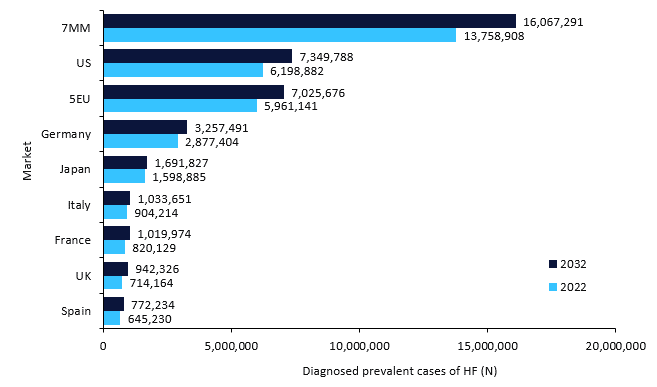
Supporting Data and Official Responses:nJapan’s distinctive clinical research environment is significantly shaped by its rapidly aging population, which naturally increases the importance of therapeutic areas associated with age-related diseases, particularly cardiovascular conditions. GlobalData estimates that Japan’s diagnosed prevalent cases of heart failure, for example, will reach approximately 1.69 million by 2032. The sheer scale and persistent nature of this disease burden underscore the urgent need for continuous cardiovascular treatment innovation and robust clinical research within the country.

n
Figure 2: Diagnosed prevalent cases of heart failure across the 7MM, 2022 and 2032n(Image of Figure 2 would be inserted here)nSource: GlobalData, Heart Failure: Epidemiology Forecast to 2032.
n
Figure 2 highlights the growing burden of heart failure, emphasizing the demographic imperative driving Japan’s focus on age-related diseases and the innovation required to address them.
n
Similar to China, Japan’s success is anchored in a highly supportive ecosystem and strategic government funding. The Agency for Medical Research and Development (AMED) plays a crucial role by providing substantial funding and practical support for biotech and pharmaceutical innovation, fostering a collaborative environment between academia, industry, and government.
n
A cornerstone of Japan’s accelerated innovation is the Sakigake designation system, administered by the Ministry of Health, Labour and Welfare and the Pharmaceuticals and Medical Device Agency (PMDA). Broadly akin to the FDA’s Breakthrough Therapy Designation, Sakigake offers prioritised consultations and accelerated reviews for promising new medicines. Depending on the product and assessment outcome, this designation may also support premium pricing at reimbursement, providing a powerful incentive for developing truly novel therapies. Between April 2015 and August 2020, seven new medicines achieved first-in-world approvals under the Sakigake scheme, showcasing its effectiveness in bringing cutting-edge treatments to patients rapidly.
n
Alongside its established and rigorous regulatory framework, Japan is experiencing renewed momentum in clinical research. Recent GlobalData analysis ranked the country among the world’s top five for clinical trial growth between Q2 2024 and Q2 2025. This surge is further supported by continued government incentives designed to encourage research investment and attract international collaborations. Increased funding for regenerative medicine and advanced biomanufacturing is additionally strengthening Japan’s position, expanding its capacity for complex cell and gene therapies and supporting the next generation of innovative treatments.
n
South Korea: A Reputation for Accelerated Innovation
South Korea distinguishes itself with a nationalised healthcare system that covers 97% of its population under a single payer. This integrated system provides unparalleled access to expansive healthcare data and a readily available trial participant population, encompassing both healthy individuals and those with specific medical conditions. Like its APAC neighbours, South Korea confronts a significant cardiometabolic disease burden. GlobalData estimates that the diagnosed prevalence of Type 2 diabetes in South Korea was 6.98% in 2025, underscoring the critical importance of metabolic disease research alongside the country’s broader strengths in innovative drug development.
Supporting Data and Official Responses:
South Korea’s robust healthcare infrastructure has been instrumental in positioning it as one of Asia’s fastest-growing biopharmaceutical innovation hubs. A potent combination of aggressive government and industry investment, coupled with highly efficient regulatory processes, continues to attract both domestic and international sponsors. As a result, the country is rapidly emerging as a global leader in drug development focused on cutting-edge modalities such as antibody-drug conjugates (ADCs) and cell and gene therapies (CGT). South Korea boasts a remarkably high proportion of first-in-class medicines, with 36% originating from 2023 to the end of the first half of 2025, signaling a deep commitment to pioneering research.
This innovation is directly translating into significant commercial success. GlobalData analysis reveals that the value of innovator drug licensing agreements reached US$7.86 billion in the first half of 2025. This represents a staggering 113% increase over 2024, highlighting growing international confidence in South Korean drug development capabilities and the attractiveness of its intellectual property.
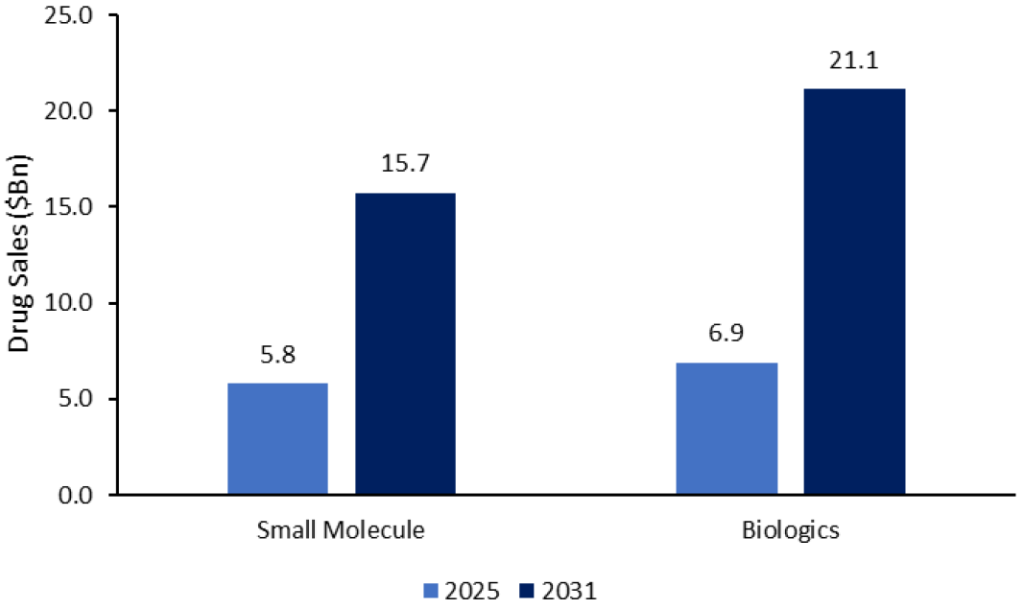
Figure 3: Total licensing agreement deal value involving South Korean innovator drug in-licensing to domestic versus international biopharmaceutical companies (2021-25 YTD)
(Image of Figure 3 would be inserted here)
GlobalData: South Korea Emerges as 2025 Licensing Hub with 113% Growth and Billion-Dollar Deals.
Figure 3 visually confirms the dramatic increase in international investment and partnerships, showcasing South Korea’s growing appeal as a hub for groundbreaking drug development.
Government support remains a key differentiator for South Korea. In 2025, the National Bio Committee was established with the ambitious goal of elevating South Korea into one of the world’s top five bio-industry leaders by 2035. This vision is backed by concrete plans for a ₩1 trillion fund, specifically designed to stimulate private investment in biopharmaceuticals and vaccines. This profound national commitment is further reinforced by multinational investment, with global companies continuing to expand their clinical research and manufacturing activities in South Korea as the country’s reputation for innovation solidifies globally.
Implications: How APAC’s Growth is Reshaping Global Clinical Research
The evidence unequivocally suggests an APAC landscape in dynamic evolution. With clinical trial activity rising two to three times faster than in Europe – a trend projected to accelerate significantly over the next decade – a vast array of new opportunities are emerging for sponsors worldwide. This rapid growth signifies a fundamental shift in the locus of pharmaceutical innovation, demanding a re-evaluation of global research strategies.
Challenges and Operational Pressures:
However, this increased trial activity also brings with it a number of operational pressures that require careful navigation. These include:
- Fragmented Regulatory Pathways: While significant reforms have occurred, regional variations and country-specific nuances still exist, complicating multi-country trials.
- Budgetary Changes: The increasing sophistication of trials, coupled with rising costs of advanced therapies, can strain budgets if not managed strategically.
- Delays to Start-up Times and Recruitment: Despite overall efficiency, specific highly specialized or rare disease trials can still face delays due to niche patient populations or complex logistical requirements.
- Talent Acquisition and Retention: The rapid expansion creates a high demand for skilled clinical research professionals, leading to competitive talent markets.
- Data Privacy and Harmonization: Ensuring compliance with diverse data privacy regulations across multiple APAC countries can be challenging.
- Intellectual Property Protection: While improving, concerns around IP protection and enforcement remain a consideration for some international sponsors.
Opportunities and Lessons for Other Regions:
Despite these challenges, the experiences of China, Japan, and South Korea demonstrate how sustained investment, supportive and modernised regulation, and long-term national commitment can cultivate internationally competitive clinical research ecosystems. As APAC assumes an increasingly larger and more central role in global drug development, sponsors are increasingly looking to the region not just for patient access, but for innovation, scientific expertise, and unique insights derived from diverse patient populations.
For other regions aiming to strengthen their own clinical research infrastructures, the APAC model offers several key lessons:
- Strategic Government Investment: Consistent, long-term funding for R&D infrastructure, biotech startups, and academic research is paramount.
- Proactive Regulatory Reform: Streamlining approval processes, accepting international data, and implementing fast-track designations can significantly accelerate drug development.
- Talent Development: Investing in education and training programs to build a skilled workforce in clinical research, data science, and advanced manufacturing is crucial.
- Ecosystem Building: Fostering collaboration between academia, industry, and government to create vibrant innovation clusters.
- Focus on Local Needs: Leveraging unique demographic and disease prevalence data to drive targeted research and innovation.
Navigating the APAC Landscape: The Role of Strategic Partnerships
For sponsors seeking to address the operational complexities and fully realise the immense opportunities within APAC, success largely depends on collaborating with experienced partners. These partners must possess a deep understanding of the intricate regulatory landscapes, operational nuances, and diverse cultural contexts inherent in conducting studies across this dynamic region.
ICON, with more than 30 years of experience in APAC and extensive operations spanning 13 countries, exemplifies such a partner. ICON helps sponsors unlock the region’s vast potential through comprehensive clinical development services. From strategic study design and navigation of complex regulatory pathways to efficient patient recruitment, meticulous clinical operations, robust data management, and innovative decentralised trial delivery, ICON combines unparalleled local expertise with global capabilities. This integrated approach empowers sponsors to accelerate development timelines, enhance study quality, and ultimately bring innovative therapies to patients faster.
Whether supporting early-phase research, managing large-scale multinational programmes, or facilitating the development of advanced therapies, ICON works hand-in-hand with sponsors to overcome regional complexities and ensure the successful execution of clinical trials across one of the world’s fastest-growing and most vital research environments. The rise of APAC is not merely a regional phenomenon; it is a global imperative that redefines the future of medicine, and strategic partnerships are key to harnessing its full potential.
To learn more about how ICON supports clinical development across APAC, download the free whitepaper below.
References
[References from original article, if any, would be listed here]
Additional market intelligence incorporated
[Additional market intelligence from original article would be listed here]

