
WASHINGTON D.C. — For decades, the process of "prior authorization"—the requirement that a healthcare provider obtain advance approval from an insurer before delivering a service—has functioned as a black box within the American healthcare system. While insurers defend the practice as a necessary gatekeeping mechanism to control costs and prevent "low-value" care, patients and doctors have long criticized it as a bureaucratic hurdle that delays life-saving treatment.
n
A landmark analysis by KFF (formerly the Kaiser Family Foundation) has now pulled back the curtain on this controversial practice. Following a 2024 federal mandate from the Centers for Medicare and Medicaid Services (CMS), the nation’s largest health insurers have been forced to release their internal prior authorization metrics for the first time. The results reveal a fragmented landscape where denial rates vary wildly by insurer and market segment, and where the vast majority of denials are overturned—if only the patient has the wherewithal to fight back.
n
Main Facts: The New Landscape of Transparency
n
The 2024 CMS regulation, often referred to as the "2024 Final Rule," was designed to address a growing crisis in patient access. According to KFF tracking polls, nearly 7 in 10 insured adults describe prior authorization as a significant burden. To combat this, CMS now requires Medicare Advantage (MA) organizations, Medicaid managed care plans, and Affordable Care Act (ACA) Marketplace insurers to publicly post their prior authorization metrics annually.
n
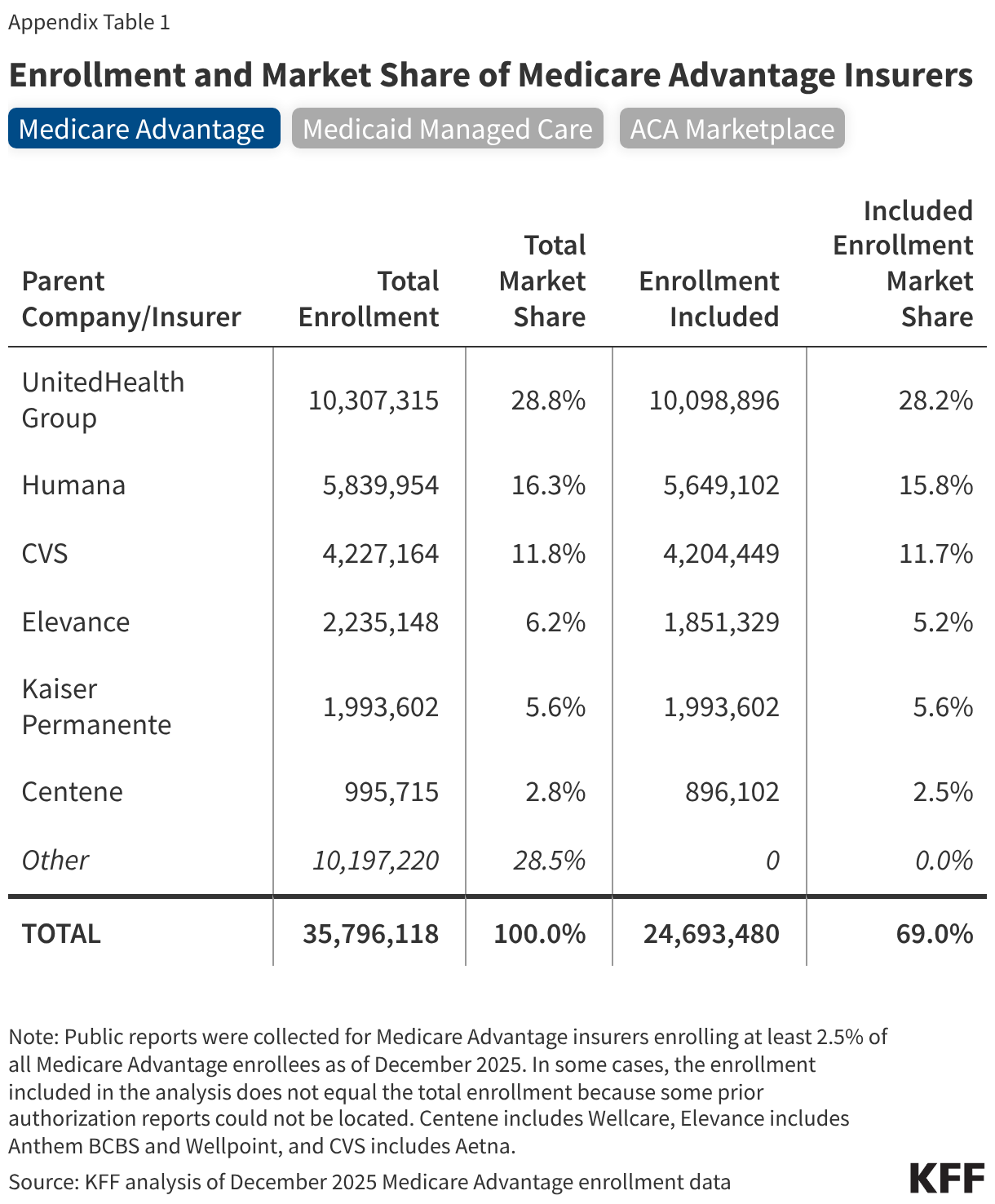
The KFF analysis, which examined data from 14 of the nation’s largest insurers representing over 71 million enrollees, highlights several critical findings:
n
- n
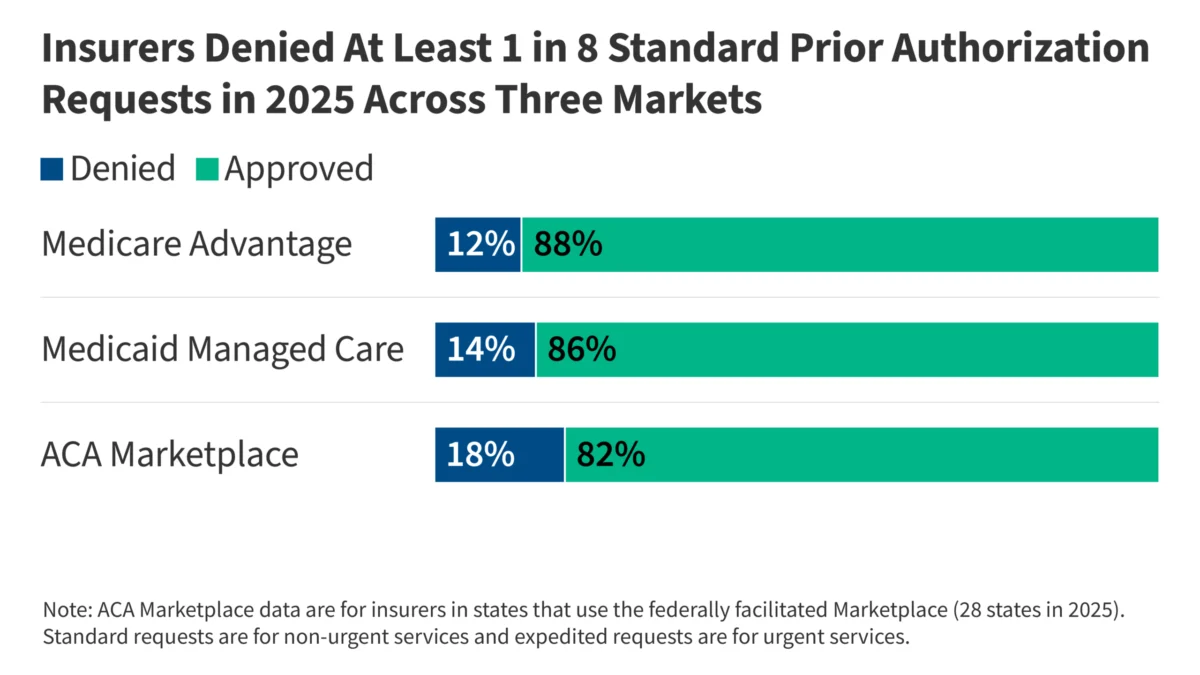
- Market Disparities: Denial rates for standard medical requests are highest in the ACA Marketplace (18%), followed by Medicaid managed care (14%), and Medicare Advantage (12%).
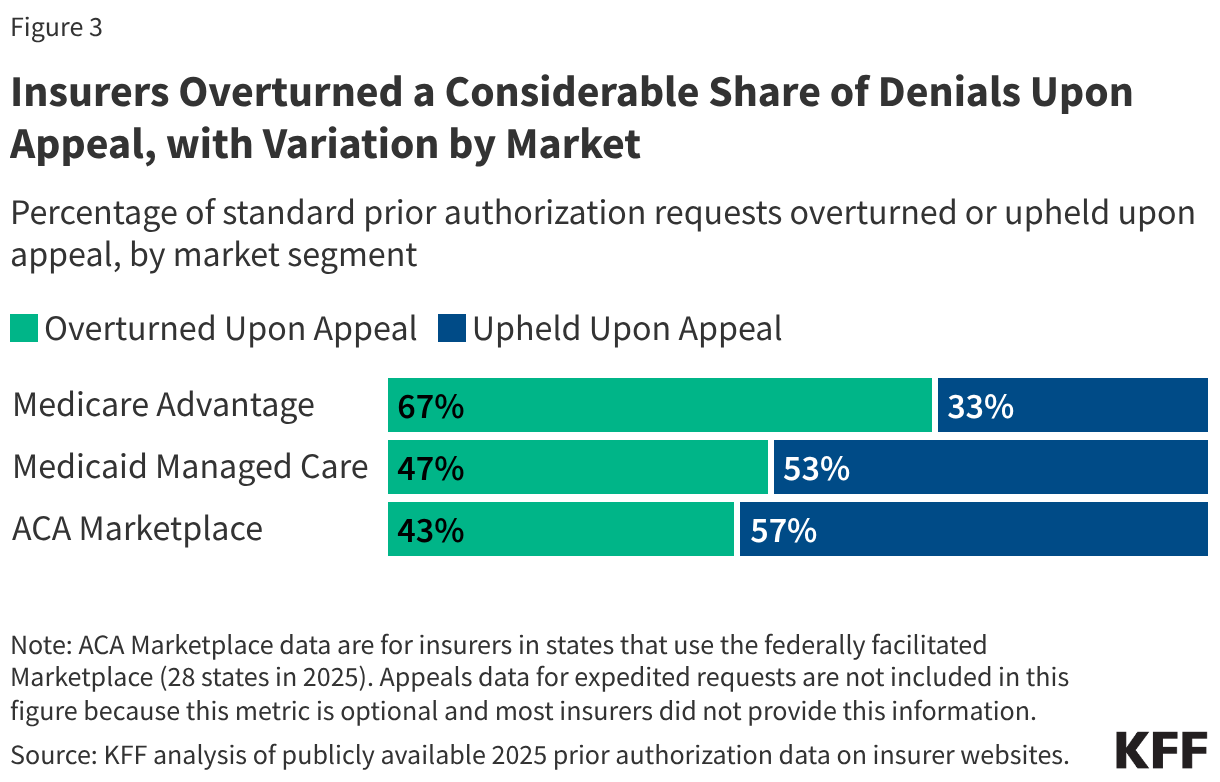
- The Appeals Success Rate: In Medicare Advantage, a staggering 67% of denied requests are overturned upon appeal. In Medicaid and the ACA Marketplaces, nearly half (47% and 43%, respectively) of denials are reversed.
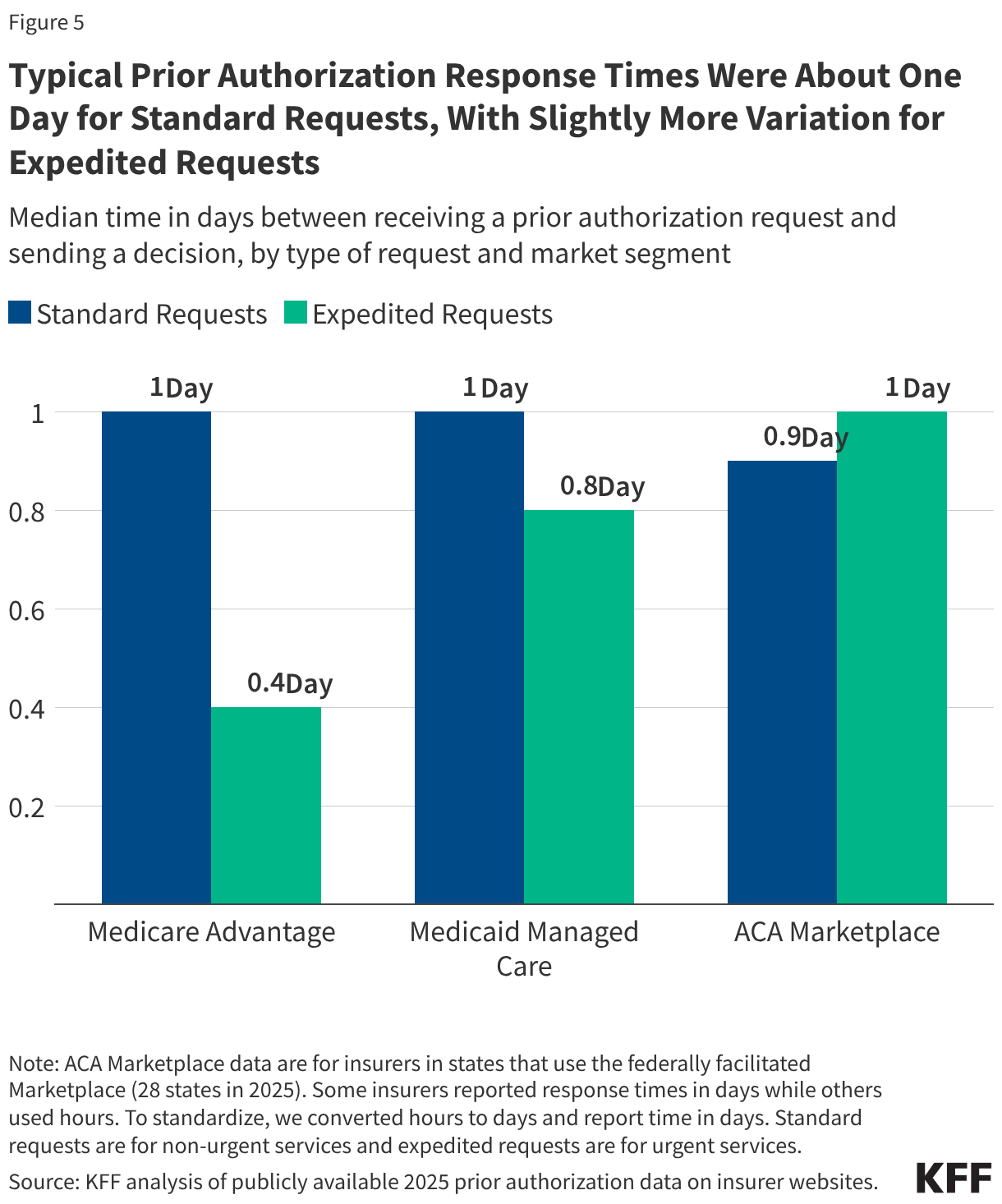
- Response Times: Despite the administrative friction, the median response time for most insurers is now roughly one day, likely due to the integration of AI and automated electronic systems.
- Insurer Variation: Within the same market, one insurer may deny 3% of requests while another denies 25%, suggesting that a patient’s access to care depends less on medical necessity and more on their choice of insurance carrier.
n
n
n
n
n
Chronology: From Bureaucratic Opacity to Public Accountability
n
The road to this data release has been years in the making, reflecting a shift in federal policy toward "transparency in coverage."
n
- n
- Pre-2024: Prior authorization was largely unregulated at the federal level regarding data disclosure. Patients had no way of knowing which insurers were most likely to deny their doctor’s recommendations before signing up for a plan.
- February 2024: CMS publishes the "2024 Regulation," a final rule aimed at streamlining and automating the prior authorization process. It mandates that insurers post metrics including approval/denial rates and response times.
- March 31, 2026: This marked the first major deadline for insurers to post their 2025 calendar year data.
- June 2025: Amidst rising pressure, a group of major health insurers voluntarily pledged to expand real-time approval responses by 2027.
- July 2026: CMS updates its reporting templates to close loopholes, such as insurers hiding data in hard-to-navigate corners of their websites.
- Looking Ahead (2026-2027): The "2026 Proposed Rule" seeks to expand these requirements further, potentially requiring insurers to include prescription drug data and raw numeric counts of denials, rather than just percentages.
n
n
n
n
n
n
n
Supporting Data: A Deep Dive into the Numbers
n
The KFF analysis provides a granular look at how the giants of the industry—UnitedHealth Group, Humana, CVS (Aetna), Centene, and Elevance—handle the requests that dictate their members’ health outcomes.
n
Denial Rates: A Tale of Three Markets
n
The study found that the ACA Marketplace is the most restrictive environment for patients. Centene, a dominant player in the ACA space, reported a 25% denial rate for standard requests. In contrast, GuideWell (Florida Blue) reported a denial rate of only 3%.
n
In the Medicare Advantage sector, which serves the nation’s seniors, the average denial rate was 12%. However, the disparity between companies was stark:
n
- n
- UnitedHealth Group: 17% denial rate.
- Elevance: 5% denial rate.
- Centene: 13% denial rate for expedited (urgent) requests.
n
n
The Appeals "Smoking Gun"
Perhaps the most damning data point for the insurance industry is the rate at which denials are overturned. If a denial is based on "medical necessity," it should, in theory, be difficult to reverse. Yet, the data shows that when patients or doctors appeal, the insurer often admits it was wrong.
In Medicare Advantage, Centene overturned more than 90% of its initial denials upon appeal. UnitedHealth Group overturned 81% of its denials in the Medicaid managed care space. This high "overturn rate" suggests one of two things: either the initial denials were issued by automated systems (AI) without sufficient human review, or the process is designed to be a "war of attrition," where the insurer only pays if the provider submits additional documentation and persists through multiple levels of bureaucracy.
Response Time Efficiency
A bright spot in the data is the speed of determination. The median response time for a standard request was 0.9 days across all markets. Expedited requests, which are meant for urgent, life-threatening situations, were handled in as little as 10 hours in Medicare Advantage. This suggests that the "automation" of the process is working, though critics argue that "fast denials" are no better for patients than "slow denials."
Official Responses and Industry Defense
The insurance industry, represented largely by AHIP (America’s Health Insurance Plans), maintains that prior authorization is a vital tool. In public statements and regulatory filings, insurers argue that the process protects patients from unnecessary surgeries, protects against fraud, and keeps premiums lower by ensuring that healthcare spending is evidence-based.
In June 2025, several leading insurers issued a voluntary pledge to simplify the process. "Health plans are taking action to ensure that prior authorization is a seamless, digital experience that doesn’t stand in the way of care," the pledge stated.
CMS, however, remains focused on the consumer’s right to know. In the 2024 regulation, the agency stated that the goal is to promote "accountability for payer prior authorization practices," envisioning a future where consumers use these denial rates to "shop" for insurance, much like they use Star Ratings for Medicare plans.
Implications: The Future of Patient Advocacy
Despite the breakthrough in transparency, the KFF report identifies significant gaps that remain.
The "Percentage Problem"
Currently, insurers are only required to report percentages, not raw numbers. This creates a "denominator problem." An insurer with a 5% denial rate might actually be denying more total claims than an insurer with a 15% rate if the first insurer requires prior authorization for every single service, while the second only requires it for high-cost surgeries. Without knowing the total volume of requests, the percentages can be misleading.
"Gold Carding" and Selective Reporting
Some insurers have begun "gold carding" programs, where providers with high approval rates are exempt from the process. While this reduces the burden on doctors, it also skews the data. If the "best" doctors are exempt, the insurer’s reported denial rate will only reflect their interactions with "lower-performing" doctors, potentially making the insurer look more restrictive than they actually are.
State-Level Revolution
While federal rules apply to CMS-regulated plans, the "self-funded" plans used by most large employers remain in the dark. To fill this gap, states like Massachusetts and Iowa have begun passing their own laws. Massachusetts recently prohibited prior authorization for a wide range of in-network services, including physical therapy and radiology for cancer patients, after a state analysis showed those services had near-100% approval rates anyway.
The AI Factor
As insurers move toward "real-time" approvals, the role of Artificial Intelligence is under increasing scrutiny. The "Improving Seniors’ Timely Access to Care Act," currently moving through Congress, would require Medicare Advantage plans to specifically report how many of their denials were generated by AI.
Conclusion
The release of the 2025 prior authorization metrics marks the end of an era of total insurer secrecy. However, for the average patient, the data remains difficult to find and even harder to interpret. The KFF analysis serves as a vital bridge, translating thousands of pages of spreadsheet data into a clear warning: where you buy your insurance may matter just as much as your doctor’s diagnosis.
As CMS moves toward the 2026 and 2027 reporting cycles, the pressure on insurers to justify their gatekeeping practices will only intensify. For now, the message to patients remains: if you receive a denial, the data shows that it is well worth the effort to fight back.

