
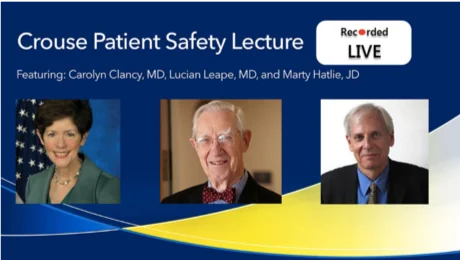
Syracuse, NY – October 2, 2019 – In a landmark gathering that underscored both the significant strides and persistent challenges in healthcare safety, a distinguished panel of patient safety pioneers convened at the MedStar Crouse Patient Safety Lecture. The event, held in Syracuse, New York, brought together the architects of the modern patient safety movement to reflect on a quarter-century of progress since Dr. Lucian Leape’s seminal work first cast a harsh light on the hidden epidemic of medical errors. The central theme resonated with urgency: "Giving patients more of a voice in healthcare is hugely important," a sentiment articulated by Marty Hatlie, a foundational figure in the field.
n
Historic Gathering at MedStar Crouse Lecture
n
The MedStar Crouse Patient Safety Lecture series is renowned for bringing leading voices to the forefront of critical discussions impacting healthcare quality and patient outcomes. The 2019 installment, however, held particular weight, marking the 25th anniversary of an article that irrevocably altered the landscape of medical practice and ignited a global movement. This occasion provided a unique platform for an intergenerational dialogue, allowing the pioneers to not only celebrate achievements but also to candidly assess the formidable work that still lies ahead. The synergy of their combined wisdom offered invaluable insights into the past, present, and future trajectory of patient safety.
n
The Esteemed Panel: Pioneers of Patient Safety
n
The panel itself was a veritable who’s who of patient safety, each member having played a pivotal role in shaping the discipline.
n
Marty Hatlie, founder and board member of the Consumers Advancing Patient Safety (CAPS), brought his extensive experience in patient advocacy and systems-level change. Hatlie’s career has been dedicated to empowering patients and fostering cultures of safety and transparency within healthcare organizations. His involvement in the formation of the National Patient Safety Foundation (NPSF) as its first executive director cemented his legacy as a critical force in establishing a national infrastructure for safety initiatives.
n
Sharing the stage were two titans often referred to as the "grandparents" of patient safety:
n
Dr. Lucian Leape, Professor Emeritus of the Harvard School of Public Health, is widely acknowledged as the "grandfather of patient safety." His groundbreaking 1994 article, "Error in Medicine," published in the Journal of the American Medical Association (JAMA), was the first to systematically quantify the alarming incidence of medical errors and, crucially, to propose systems theory as a viable solution, shifting the paradigm from individual blame to systemic analysis.
n
Dr. Carolyn Clancy, Deputy Undersecretary for Discovery, Education and Affiliate Networks in the Veterans Health Administration, brought a wealth of executive experience. Before her current role, Dr. Clancy served for ten years as the director of the Agency for Healthcare Research and Quality (AHRQ), a period during which the agency significantly advanced efforts to quantify medical errors and develop evidence-based solutions to mitigate them. Her leadership at AHRQ was instrumental in translating research into actionable strategies for safer care across the nation.
n
Together, these three luminaries engaged in a profound discussion, dissecting the journey of patient safety over the past 25 years and outlining the critical imperatives for the next generation of healthcare leaders and practitioners.
n
n
The Dawn of a Movement: A Chronological Look at Patient Safety
n
The modern patient safety movement did not emerge in a vacuum; it was born out of decades of largely unacknowledged harm and a prevailing culture that often suppressed discussions of medical error. The journey from silence to systemic improvement is a testament to the dedication of individuals like Leape, Hatlie, and Clancy.
n
Pre-1994: A Silent Crisis Unveiled
n
For much of medical history, errors were often viewed as inevitable human failings, isolated incidents attributable to individual incompetence or carelessness. The prevailing culture was one of shame and blame, where practitioners feared reprisal for admitting mistakes, leading to underreporting and a lost opportunity for learning. Data on medical errors was scarce, and public awareness was minimal. Hospitals and healthcare systems, while striving for quality, lacked a robust framework for identifying, analyzing, and preventing harm caused by systemic failures. This pre-1994 era can be characterized as a period of latent awareness, where the true scope of patient harm remained largely invisible, buried beneath a veneer of professional infallibility.
n
1994: Dr. Lucian Leape’s Landmark "Error in Medicine"
n
The publication of Dr. Lucian Leape’s "Error in Medicine" in JAMA on December 21, 1994, was a watershed moment. His article was not merely an academic exercise; it was a clarion call that shattered the silence surrounding medical errors. Leape meticulously synthesized existing research, revealing the startling reality that medical errors were a leading cause of death and injury, comparable to major public health crises.
n
Crucially, Leape’s article introduced and championed the application of systems theory to healthcare. Instead of focusing on "bad apples," he argued that most errors were the result of "bad systems" – flawed processes, poor communication, inadequate training, and suboptimal environmental factors. This paradigm shift was revolutionary. It moved the conversation from individual culpability to organizational responsibility, advocating for a proactive approach to identify and mitigate systemic vulnerabilities rather than simply punishing individuals after an error occurred. The article provided a conceptual framework that would underpin all subsequent patient safety initiatives, emphasizing learning from errors and designing safer systems.
n
The Emergence of National Initiatives: NPSF and AHRQ
n
Leape’s work catalyzed a surge of interest and action. Within a few years, national organizations began to form or reorient their missions to tackle patient safety head-on.
n
The National Patient Safety Foundation (NPSF) was formed in 1997, directly in response to the growing recognition of the scale of medical errors. Marty Hatlie was instrumental in its formation and served as its first executive director. NPSF quickly became a leading voice, advocating for patient safety research, education, and the implementation of best practices. It played a crucial role in bringing together diverse stakeholders – clinicians, administrators, patients, and policymakers – to collaborate on solutions. The foundation’s work helped to standardize definitions, develop reporting mechanisms, and promote a culture of safety across the healthcare continuum. (NPSF later merged with the Institute for Healthcare Improvement (IHI) in 2017, amplifying its impact).
n
Simultaneously, the Agency for Healthcare Research and Quality (AHRQ), a federal agency within the U.S. Department of Health and Human Services, intensified its focus on patient safety. Under Dr. Carolyn Clancy’s decade-long leadership, AHRQ became a powerhouse for quantifying the problem of medical error and developing evidence-based interventions. AHRQ funded extensive research, developed tools and resources for hospitals, and disseminated critical information on topics ranging from medication safety to healthcare-associated infections. Its efforts were pivotal in translating abstract concepts of safety into concrete, implementable strategies for healthcare providers nationwide. The agency’s commitment to data collection and analysis provided the empirical foundation necessary to drive continuous improvement.
n
Evolving Paradigms: Just Culture and CANDOR
n
As the patient safety movement matured, new concepts and frameworks emerged to address the complexities of human error and organizational response.
n
Just Culture is a foundational principle that seeks to balance accountability with the understanding of human fallibility. It recognizes that while individuals should be held accountable for reckless behavior, errors that arise from system design flaws or inadvertent human mistakes should be met with system-based solutions rather than punitive measures. In a Just Culture, errors are seen as opportunities for learning and improvement, fostering an environment where individuals feel safe to report incidents without fear of undue blame, thus enabling organizations to identify root causes and implement effective preventative strategies. This stands in stark contrast to the old "blame and shame" culture.
n
The CANDOR (Communication and Optimal Resolution) system represents another significant evolution. It is a comprehensive process designed to ensure that healthcare organizations respond to adverse events in a timely, transparent, and just manner. CANDOR emphasizes early communication with patients and families, offering support to both patients and healthcare providers ("second victims"), conducting thorough investigations, and, when appropriate, offering apologies and fair resolution. By promoting open dialogue and empathy, CANDOR aims to rebuild trust, facilitate learning, and reduce litigation, creating a more respectful and equitable response to harm.
n
n
Quantifying the Crisis and Celebrating Progress: Supporting Data and Insights
n
The journey of patient safety has been characterized by a continuous effort to quantify the problem, measure progress, and identify areas requiring further intervention. The data underscores both the persistent nature of medical error and the profound impact of concerted safety initiatives.
n
The Persistent Burden of Medical Error
Dr. Leape’s 1994 article, while groundbreaking, paved the way for even more comprehensive analyses. The seminal 1999 report by the Institute of Medicine (IOM), "To Err Is Human: Building a Safer Health System," famously estimated that between 44,000 and 98,000 Americans die each year due to preventable medical errors. This report ignited public outrage and legislative action, further solidifying patient safety as a national priority.
Subsequent research has continued to highlight the significant burden. A 2013 study published in the Journal of Patient Safety estimated the number of premature deaths associated with preventable harm in hospitals to be between 210,000 and 400,000 per year, positioning medical errors as potentially the third leading cause of death in the United States. While precise numbers remain challenging to ascertain due to reporting variations and methodological differences, the consensus is clear: medical error represents a significant public health crisis, impacting millions of lives and incurring billions in healthcare costs annually. These figures reinforce the urgency behind the ongoing discussions at forums like the MedStar Crouse Lecture.
Tangible Gains Through Systems Thinking
Despite the persistent challenges, the adoption of systems thinking has led to undeniable improvements in various domains of healthcare. The shift from individual blame to process improvement has yielded tangible results:
- Checklists: Inspired by aviation safety, surgical safety checklists (e.g., the WHO Surgical Safety Checklist) have been shown to significantly reduce complications and mortality rates by standardizing critical steps before, during, and after surgery.
- Electronic Health Records (EHRs) and CPOE: The widespread implementation of EHRs with computerized provider order entry (CPOE) has reduced medication errors by improving legibility, providing clinical decision support (e.g., drug-allergy alerts, dose checking), and streamlining medication reconciliation processes.
- Medication Safety Initiatives: Strategies like "tall man lettering" (e.g., DOPamine vs. DOBUTamine) to differentiate look-alike, sound-alike drugs, barcode medication administration, and pharmacy-driven protocols have dramatically decreased dispensing and administration errors.
- Infection Prevention: Aggressive hand hygiene campaigns, central line-associated bloodstream infection (CLABSI) bundles, and catheter-associated urinary tract infection (CAUTI) prevention protocols have led to substantial reductions in healthcare-associated infections, saving countless lives and reducing prolonged hospital stays.
- Communication Tools: Structured communication frameworks like SBAR (Situation, Background, Assessment, Recommendation) have improved handoffs and interprofessional communication, particularly in high-stakes environments.
These examples demonstrate that when healthcare professionals, armed with a systems perspective, actively design and implement safer processes, patient outcomes improve.
The Power of the Patient Voice: Data-Driven Impact
The call for greater patient involvement, championed by Marty Hatlie, is increasingly supported by evidence. Studies show that when patients and their families are actively engaged in their care, safety outcomes improve:
- Reduced Readmissions: Patients who are educated about their condition and discharge instructions, and actively participate in care planning, have lower rates of preventable readmissions.
- Early Error Detection: Engaged patients and families often serve as a crucial "last line of defense," identifying potential medication errors, missed care steps, or discrepancies in their treatment plans before harm occurs.
- Improved Adherence: When patients feel heard and are involved in decision-making, they are more likely to adhere to treatment plans, leading to better therapeutic outcomes.
- Enhanced Reporting: Empowering patients to speak up fosters a culture of transparency and encourages reporting of concerns or adverse events, providing valuable data for systemic improvement.
Organizations that actively solicit patient feedback, incorporate patient and family advisors onto committees, and design patient-centered care models consistently report higher patient satisfaction and improved safety metrics. The patient, once a passive recipient of care, is now recognized as an indispensable partner in the safety journey.
Expert Voices and Official Responses: Charting the Next Steps
The collective wisdom of the MedStar Crouse panel offered not just a retrospective glance but also a forward-looking blueprint for the next phase of patient safety. Their insights underscored the need for continued cultural transformation and strategic leadership.
Dr. Leape’s Enduring Legacy: Systems Over Scapegoats
Dr. Lucian Leape’s powerful assertion, "It’s not bad people, it’s bad systems," remains the cornerstone of modern patient safety. This philosophy advocates for a shift from a punitive approach, which historically blamed individual clinicians for errors, to a systemic analysis that seeks to understand why errors occur. By identifying the underlying vulnerabilities in processes, equipment, environment, and organizational culture, healthcare systems can implement robust preventative measures.
This perspective has been instrumental in fostering a culture of psychological safety, where reporting errors is encouraged rather than feared. When clinicians feel safe to report incidents, organizations gain invaluable data that can be used for learning and improvement. Leape’s legacy is a continuous call to move beyond surface-level fixes and delve into the complex interplay of factors that contribute to harm, thereby building inherently safer healthcare environments.
Marty Hatlie’s Vision: Empowering Patients and Boards
Marty Hatlie’s impassioned plea for greater patient voice in healthcare is a central tenet of the ongoing evolution of patient safety. "Giving patients more of a voice in healthcare is hugely important," he emphasized, recognizing that patients are not just passive recipients but active participants with unique insights into their own care journey. This involves fostering open communication, ensuring patients understand their treatment plans, and empowering them to ask questions and raise concerns without hesitation.
Hatlie also advocated for a fundamental shift in governance: "Let’s have our boards more reflect the consumers of care." This call for greater diversity and patient representation on hospital boards and leadership committees is critical. By including patient perspectives at the highest levels of decision-making, organizations can ensure that strategic priorities are truly aligned with patient needs and values, moving beyond purely financial or operational considerations. Patient board members can bring lived experiences that offer invaluable insights into service design, communication strategies, and overall patient experience, embedding patient safety into the organizational DNA from the top down.
Furthermore, Hatlie’s urging for more systems to adopt Just Culture and the CANDOR system highlights the need for compassionate and effective responses to adverse events. Just Culture promotes fairness and learning, distinguishing between human error, at-risk behavior, and reckless behavior. CANDOR ensures transparent communication with patients and families after an adverse event, providing support, apology, and resolution, while also supporting "second victims" (healthcare providers involved in the error). These frameworks are essential for building trust, fostering accountability, and transforming adverse events into profound learning opportunities.
Dr. Clancy’s Call to Action: Engaging Leadership and Fostering Teamwork
Dr. Carolyn Clancy’s insights focused on the critical role of leadership and the power of collaboration. Her suggestion to "get boards out of the board room and out on rounds" is a pragmatic yet profound call to action. Board members, often far removed from the daily realities of patient care, can gain invaluable perspective by directly observing frontline operations. This visibility can energize the board, connecting them directly to the impact of their decisions on patient safety and quality of care. Such engagement fosters a deeper understanding of operational challenges, empowers frontline staff, and demonstrates a tangible commitment to safety from the highest echelons of leadership.
Clancy powerfully articulated that "healthcare is a team sport." This analogy underscores the necessity of interdisciplinary collaboration, not just among different clinical specialties, but also extending to administrative staff, support services, and critically, the patients and their caregivers themselves. Effective teamwork, characterized by open communication, mutual respect, shared mental models, and clear roles and responsibilities, is a cornerstone of safe care. When all members of the healthcare team, including the patient, are empowered to speak up, contribute their expertise, and work cohesively, the likelihood of errors decreases significantly. This collaborative spirit transforms the patient from a passive recipient into an active, valued member of their own care team.
The Road Ahead: Implications for a Safer Healthcare Future
The MedStar Crouse Lecture served as a potent reminder that while monumental strides have been made in patient safety, the journey is far from over. The insights shared by Hatlie, Leape, and Clancy lay out clear implications for the future, emphasizing continuous vigilance, innovation, and a deeply ingrained culture of safety.
Beyond the Boardroom: Cultivating a Culture of Safety
The future of patient safety hinges on embedding a robust safety culture at every level of healthcare. This means moving beyond mere compliance with regulations to fostering an environment where safety is a core value, not just a priority. A strong safety culture is characterized by:
- Psychological Safety: Staff feel safe to report errors, near misses, and concerns without fear of punishment.
- Leadership Commitment: Leaders at all levels actively champion and model safe behaviors, allocating resources and holding themselves accountable for safety outcomes.
- Transparency: Open communication about errors, lessons learned, and safety performance with both staff and patients.
- Learning Orientation: A commitment to analyzing errors, identifying root causes, and implementing sustainable improvements.
- Teamwork and Collaboration: Effective interprofessional communication and cooperation.
Achieving this requires ongoing education, leadership development, and sustained organizational effort to dismantle traditional hierarchies and foster an environment where every voice contributes to safety.
Technological Frontiers and Ethical Considerations
Technology will continue to play a transformative role in patient safety, offering both immense opportunities and new challenges.
- Artificial Intelligence (AI) and Machine Learning (ML): These technologies hold the potential to revolutionize diagnostic accuracy, predict patient deterioration, identify medication interactions, and flag high-risk scenarios. AI-powered systems can analyze vast amounts of data to identify patterns that human clinicians might miss, leading to earlier interventions and more personalized care.
- Digital Health Tools: Telemedicine, remote monitoring, and patient-facing apps can enhance access to care, improve chronic disease management, and empower patients with real-time health data.
- Enhanced Interoperability: Seamless exchange of patient information across different healthcare settings and providers is crucial to prevent errors arising from incomplete or fragmented data.
However, the integration of these technologies also presents ethical considerations, including data privacy, algorithmic bias, the potential for new types of errors, and the impact on the human element of care. The development and deployment of these tools must be guided by patient safety principles and rigorous validation.
A Collaborative Imperative: Policy, Practice, and Patients
The future success of patient safety depends on a multi-faceted, collaborative approach involving policymakers, healthcare practitioners, and patients themselves.
- Policy and Regulation: Governments and regulatory bodies must continue to enact policies that support safety research, mandate transparent reporting, incentivize best practices, and hold organizations accountable for harm prevention. Funding for agencies like AHRQ remains critical for generating evidence and developing solutions.
- Clinical Practice: Healthcare professionals must continuously update their knowledge, embrace new technologies, practice effective teamwork, and champion patient engagement. The adoption of evidence-based practices and a commitment to continuous quality improvement are non-negotiable.
- Patient Empowerment: Patients and their families must be recognized as active partners in care. This involves providing them with accessible information, encouraging them to ask questions, and involving them in decision-making processes. Advocacy groups like CAPS will remain vital in championing the patient voice.
The Unfinished Agenda: Sustaining the Momentum
The quarter-century since "Error in Medicine" has been marked by significant progress, but as the panelists underscored, the agenda for patient safety remains unfinished. Diagnostic errors, alarm fatigue, clinician burnout, health disparities, and the integration of mental health with physical health continue to be complex challenges requiring innovative solutions.
Sustaining the momentum requires an unwavering commitment to the principles of transparency, learning, accountability, and patient partnership. It means continually challenging the status quo, embracing uncomfortable truths, and investing in the people and systems that deliver care. The ultimate vision is a healthcare system where harm is rare, preventable, and, when it does occur, is met with compassion, learning, and prompt resolution. The MedStar Crouse Lecture served as a powerful reminder that while the journey is long, the collective dedication of pioneers and practitioners alike continues to light the path toward a safer, more humane healthcare future.
To delve deeper into the insights shared by these patient safety legends, the full lecture is available for download at: http://bit.ly/2Oo6eL0.

