
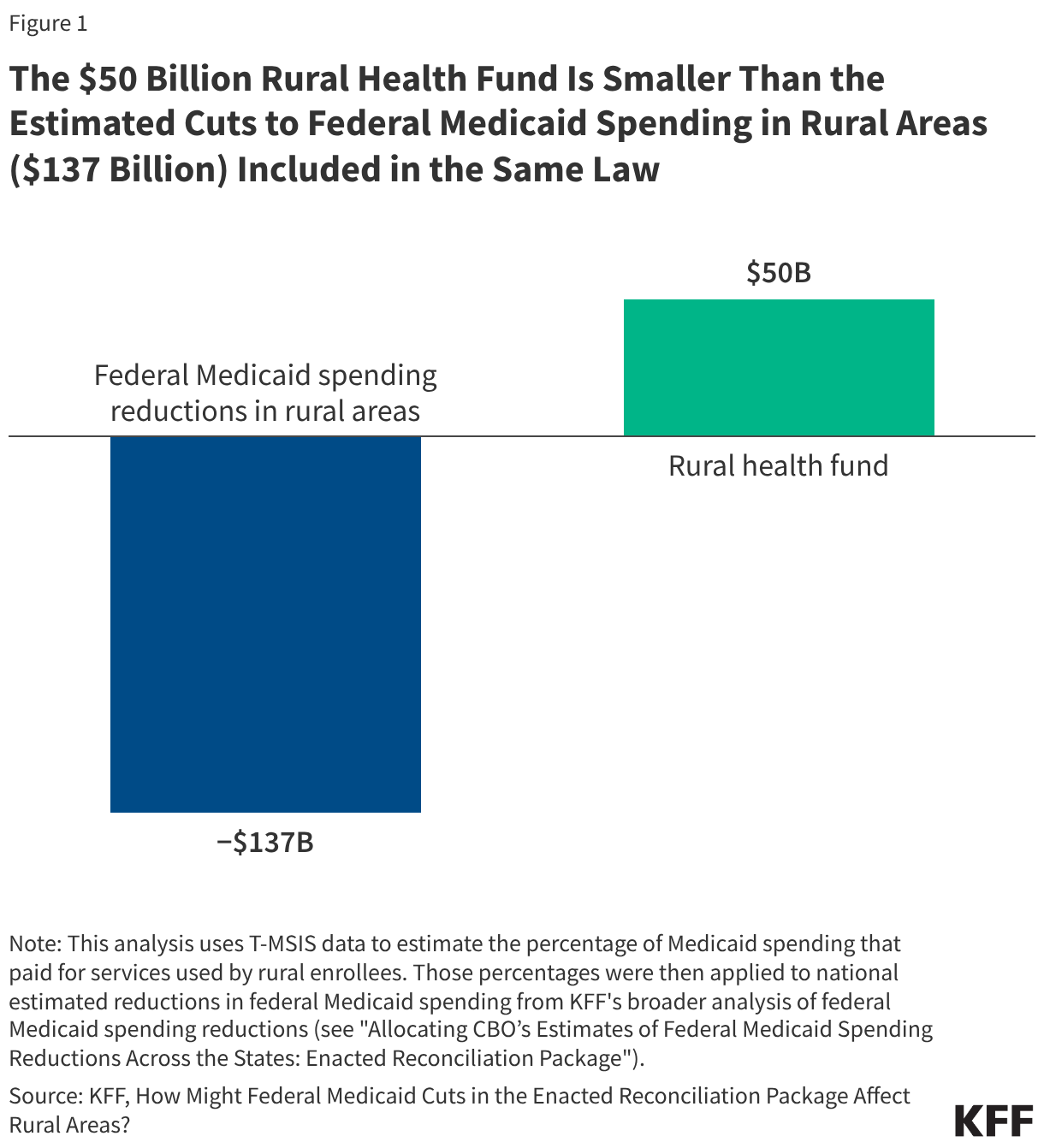
On July 4, 2025, a landmark budget reconciliation bill—frequently referred to by the administration as the “One Big Beautiful Bill”—was signed into law by President Trump. While the legislation introduced sweeping tax cuts and significant reductions in federal spending, its most profound impact was felt in the healthcare sector. Projections indicated a staggering $911 billion reduction in federal Medicaid spending over a decade. Of that, an estimated $137 billion in cuts were targeted specifically at rural areas, threatening the already fragile infrastructure of American rural medicine.
n
To mitigate these concerns and secure the necessary political support for the bill’s passage, lawmakers introduced a $50 billion "political compromise": the Rural Health Transformation Program (RHTP). This initiative, often called the “Rural Health Fund,” is designed to award grants to states over a five-year period to modernize and stabilize rural healthcare delivery. However, as the program enters its implementation phase, questions remain regarding whether this temporary infusion of cash can truly offset the permanent, structural reductions in federal healthcare support.
n
Main Facts: The Architecture of the Rural Health Fund
n
The Rural Health Transformation Program is a $50 billion federal grant initiative overseen by the Centers for Medicare & Medicaid Services (CMS). The program is administered through the newly established Office of Rural Health Transformation, led by Dr. Mehmet Oz.
n
Funding Mechanism and Distribution
n
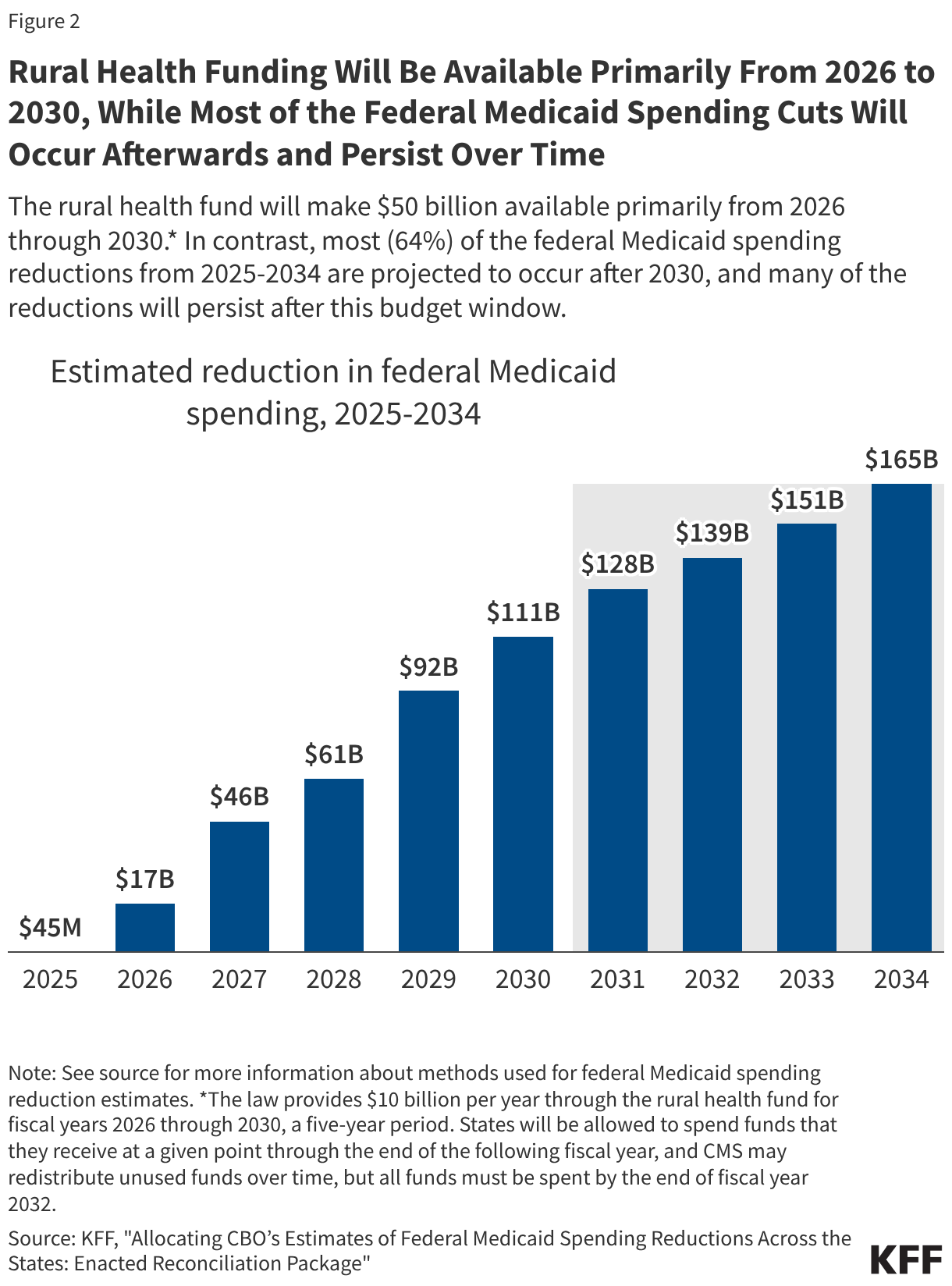
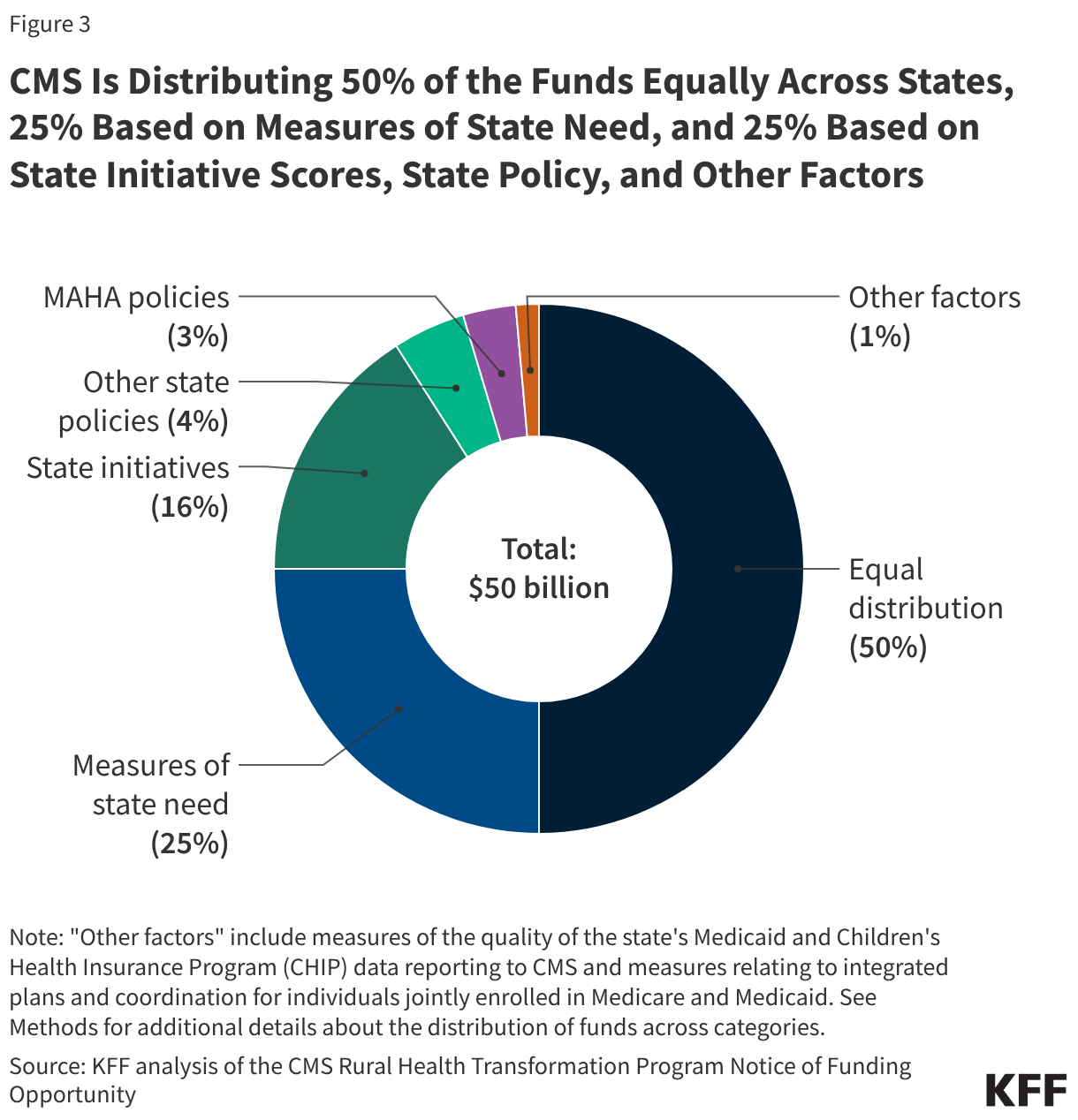
The fund is structured to distribute $10 billion annually from fiscal year 2026 through 2030. The distribution logic is split into two distinct categories:
n
- n
- Baseline Funding (50%): $25 billion is distributed equally among all 50 states, regardless of population size or specific need. Each state receives $100 million per year.
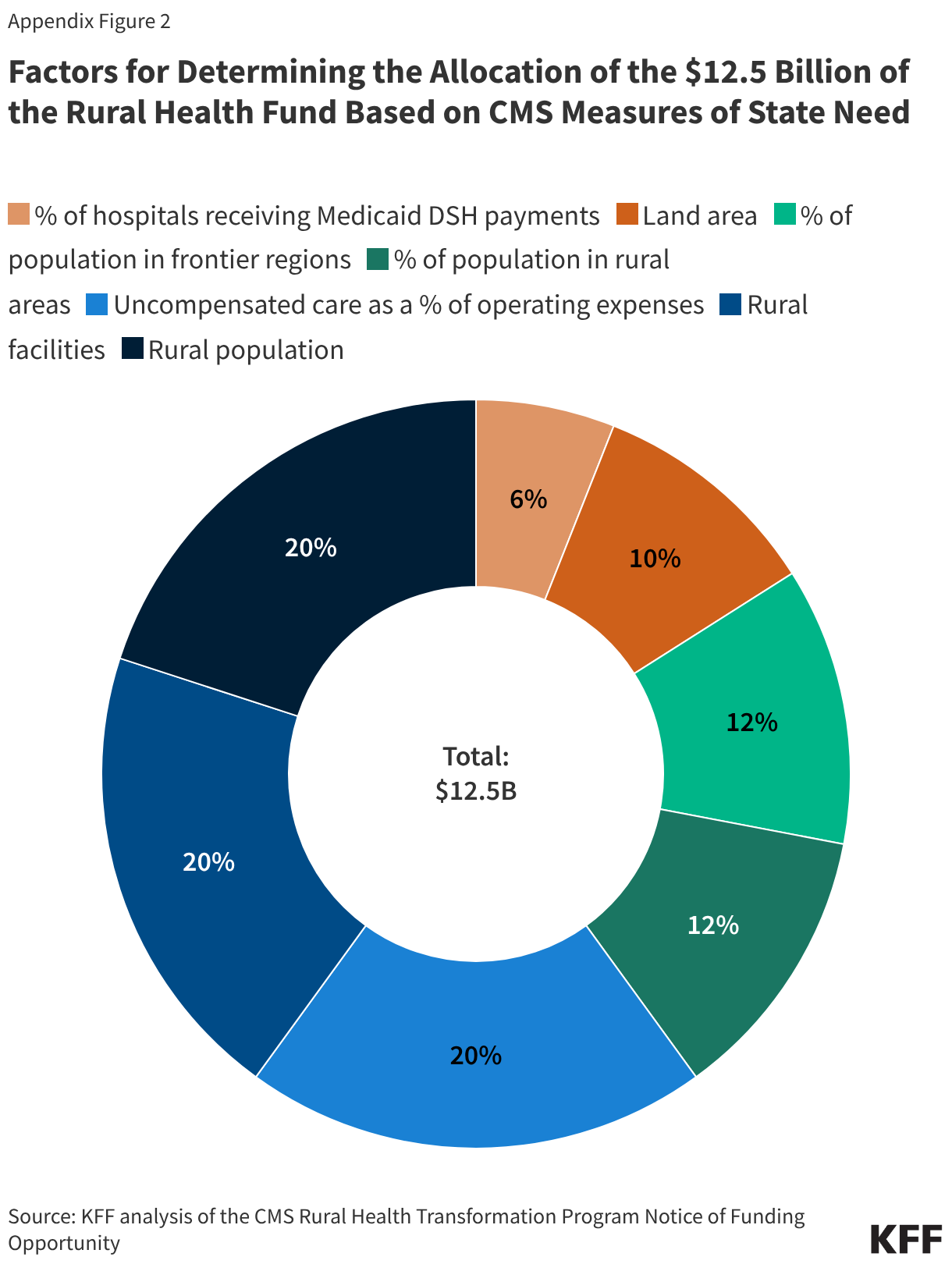
- Workload Funding (50%): The remaining $25 billion is allocated based on a complex formula involving 23 factors, including state need, rural population density, land area, and "initiative scores" based on state-proposed policy changes.
n
n
n
Permitted Uses and Strategic Goals
n
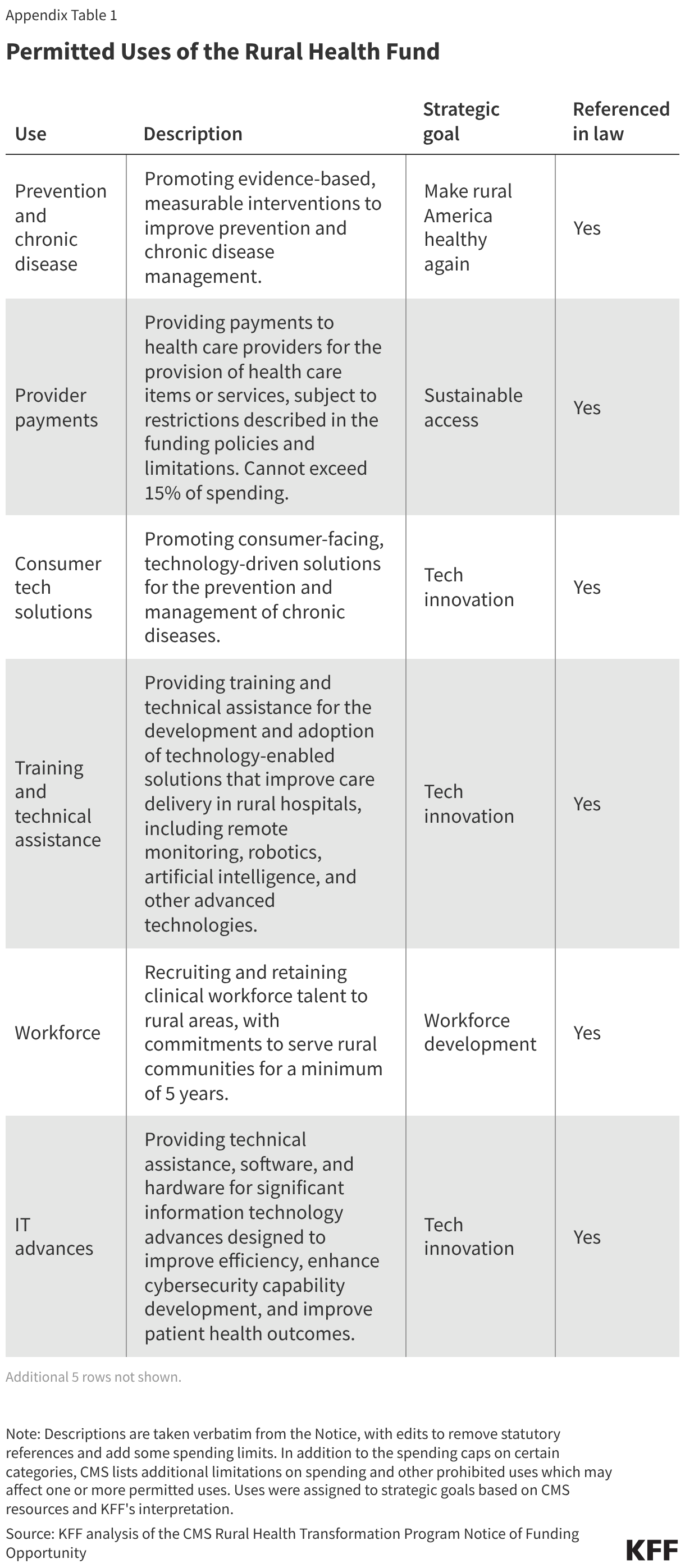
CMS has identified five strategic goals for the program: making rural America "healthy again," ensuring sustainable access, workforce development, innovative care models, and technological advancement. States are required to use the funds for at least three of eleven permitted activities, which include:
n
- n
- Expanding telehealth and AI diagnostic tools.
- Recruiting and retaining clinical workers in underserved areas.
- Promoting value-based care and alternative payment models.
- Investing in existing hospital infrastructure (within strict limits).
- Supporting chronic disease management and prevention.
n
n
n
n
n
n
Crucially, the law prohibits the use of these funds for direct provider payments or perpetual operating expenses. CMS has emphasized that the program is intended for "system transformation" rather than "temporary fixes."
n
Chronology: From Legislative Compromise to Implementation
n
The timeline of the RHTP has been remarkably accelerated, placing significant administrative pressure on state governments.
n
- n
- June 2025: During intense Senate negotiations, GOP lawmakers floated the idea of a dedicated rural fund to shield hospitals from the looming Medicaid cuts. The fund was increased from an initial $15 billion proposal to the final $50 billion.
- July 4, 2025: President Trump signs the reconciliation bill into law.
- September 2025: CMS issues the Notice of Funding Opportunity (NOFO), giving states less than two months to submit comprehensive applications and transformation plans.
- December 2025: CMS announces the first-year awards for all 50 states.
- Fiscal Year 2026: The first $10 billion tranche is made available. States begin setting up internal procurement processes to distribute funds to local entities.
- 2027–2030: Annual awards continue, contingent on states making "satisfactory progress" and submitting annual reports.
- 2032: All funds must be fully expended. The program officially winds down, leaving rural systems to rely on the transformed infrastructure or face the full brunt of the 2025 Medicaid reductions.
n
n
n
n
n
n
Supporting Data: The Funding Disparity and State Variations
While the $50 billion figure is substantial, data analysis suggests a significant gap between the program’s resources and the financial losses rural areas will face.
The Offset Gap
According to KFF analysis, the $50 billion fund offsets only about 37% of the $137 billion in estimated federal Medicaid cuts to rural areas over ten years. When considering the total $911 billion in Medicaid reductions nationwide, the RHTP accounts for only about 5% of the total spending cut. Furthermore, the fund is temporary (ending in 2032), while the Medicaid reductions are permanent.
State Award Disparities
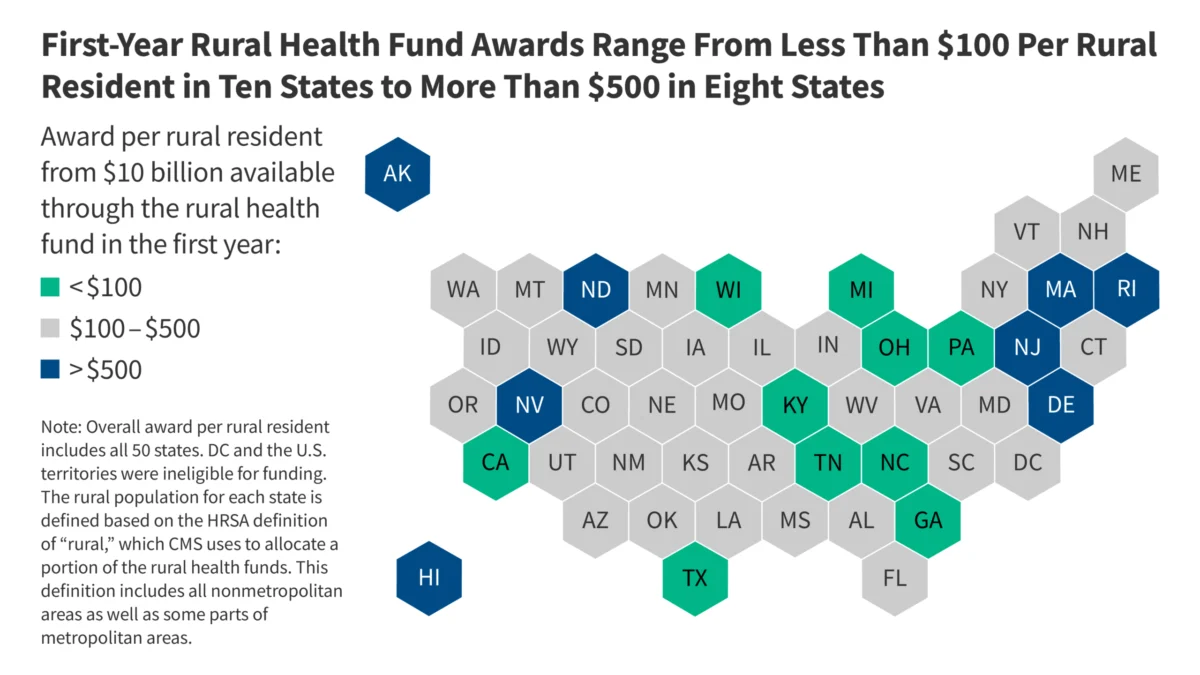
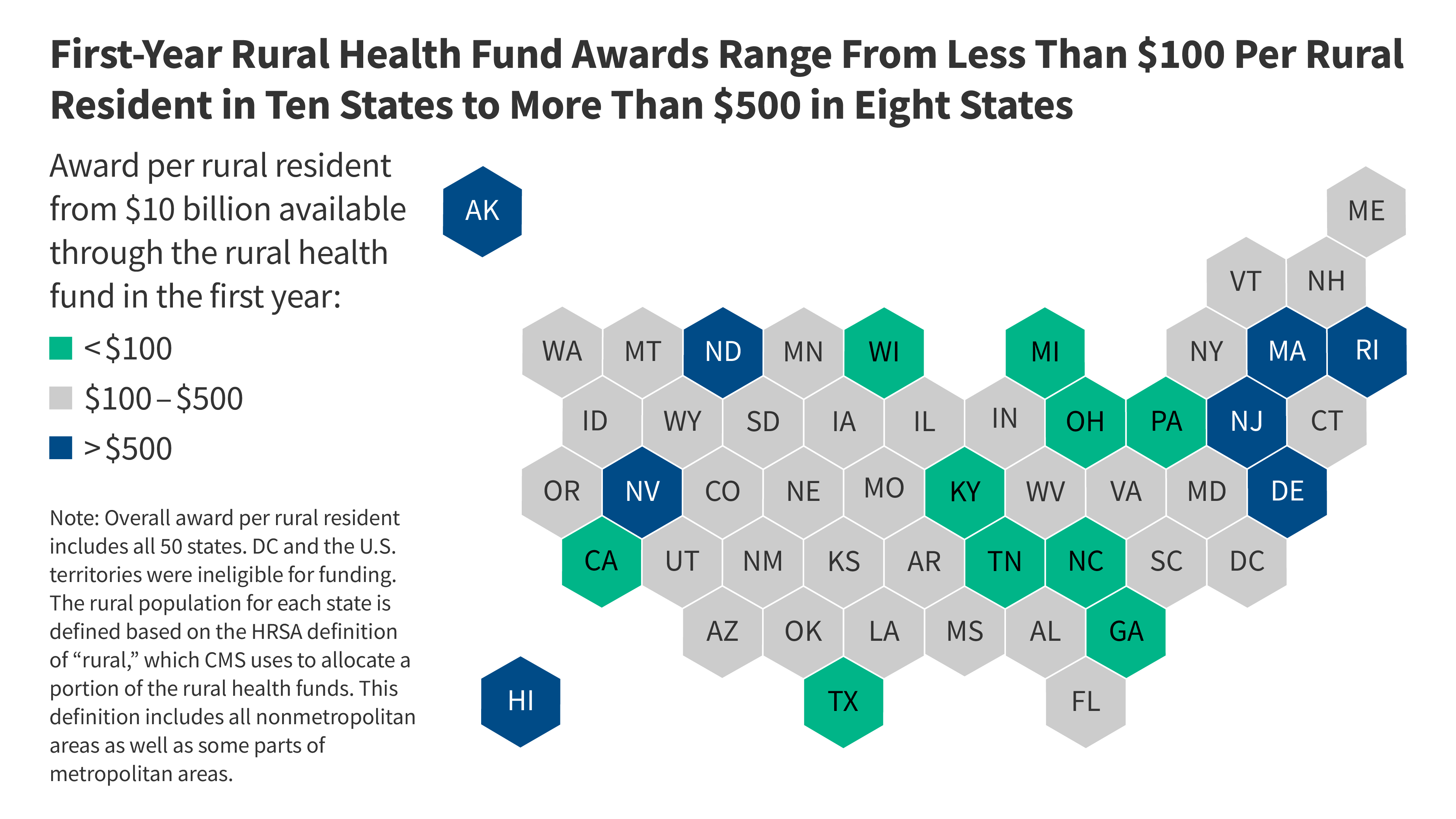
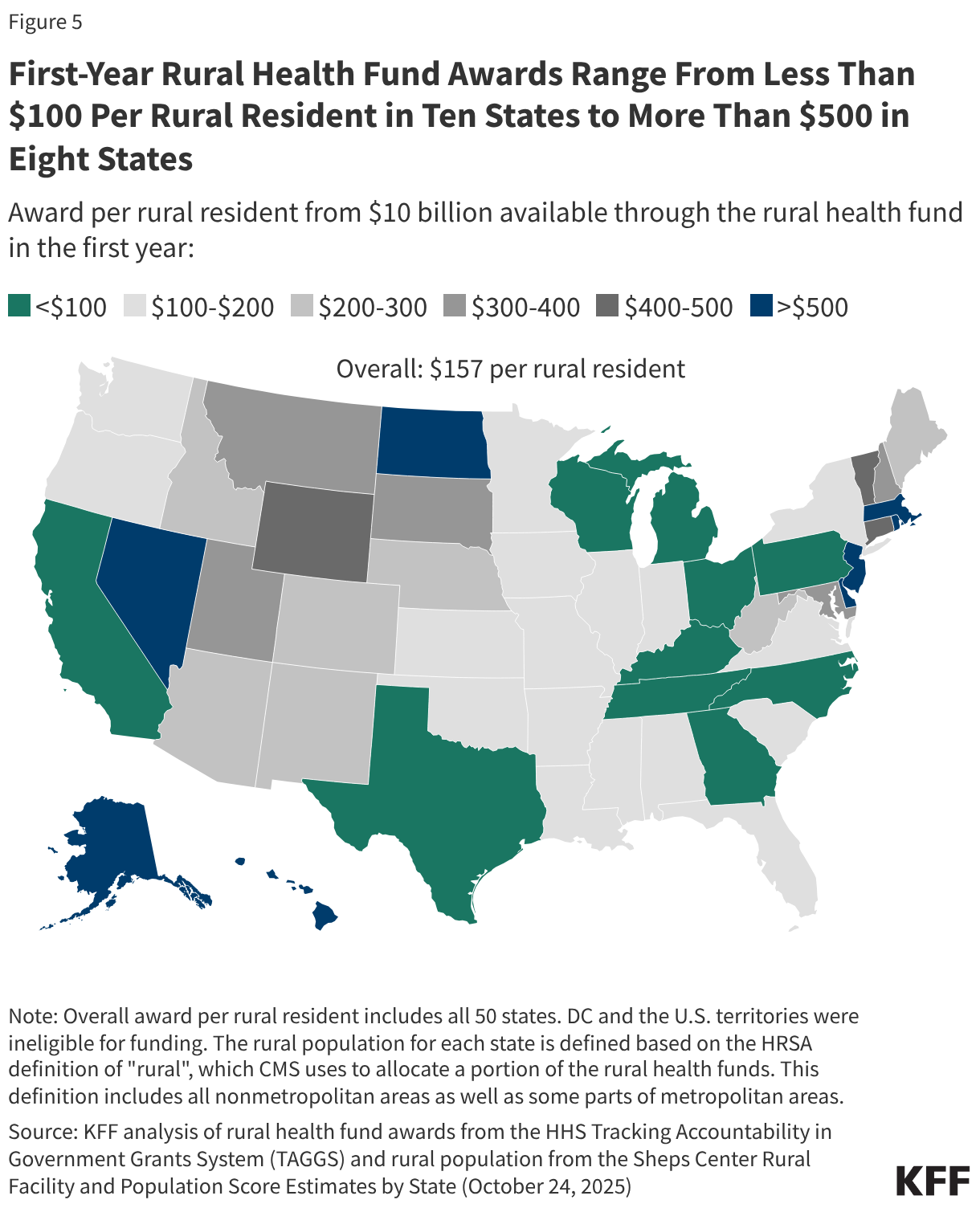
Because 50% of the fund is distributed equally, there are massive discrepancies in "funding per rural resident."
- Texas: Received the largest total first-year award at $281 million. However, with a rural population of 4.3 million, this equates to only $66 per rural resident.
- Rhode Island: A notable outlier, Rhode Island received approximately $6,305 per rural resident due to its small rural population and the guaranteed $100 million baseline.
- New Jersey: Received the smallest total award at $147 million, yet its per-resident funding ($1,069) remains significantly higher than that of more rural states like Texas.
The Land Area Factor
The formula heavily favors the five largest states by land area—Texas, California, New Mexico, Montana, and Alaska. These states received an estimated $88 million to $105 million in the first year from the "state need" pool alone, largely due to the geographic challenges of delivering healthcare across vast distances.
Official Responses: Praise, Caution, and Critique
The rollout of the RHTP has met with a mix of optimism from the administration and skepticism from industry stakeholders.
The Administration’s Perspective:
Dr. Mehmet Oz, head of CMS, has championed the program as a catalyst for innovation. He stated that states were given "room to be creative" and that the expectation is for states to learn from both "successes and failures" over the five-year period. The administration views the RHTP as a way to move rural healthcare away from a "dependence on federal subsidies" toward a more sustainable, tech-driven model.
The Hospital Industry:
The American Hospital Association (AHA) and the Federation of American Hospitals (FAH) have expressed significant concerns. They argue that the restrictions on using funds for "operating expenses" or "direct provider payments" limit the program’s ability to help hospitals struggling with immediate financial distress caused by the Medicaid cuts. The industry has called for greater flexibility, suggesting that without direct support, many rural facilities may close before the "transformation" can take hold.
Legislative Oversight:
A bipartisan group of Senators has pressed CMS for greater transparency. They expressed concern that small, independent rural providers may struggle to compete with large regional health systems for grant dollars. They have advocated for an online dashboard to track the flow of funds in real-time.
Policy Experts:
The Bipartisan Policy Center has highlighted the "transparency gap," noting that CMS does not plan to proactively release detailed progress reports to the public. Experts argue that without clear data on where the $50 billion is going, it will be impossible to measure the program’s effectiveness.
Implications: A High-Stakes Transformation
The Rural Health Transformation Program represents a high-stakes gamble on the future of rural American medicine.
1. The Looming "Funding Cliff"
Perhaps the most significant implication is the temporary nature of the fund. By 2032, the $50 billion will be gone, but the structural reductions in Medicaid and the expiration of ACA premium tax credits will continue to exert downward pressure on hospital revenues. If states do not successfully use these funds to create self-sustaining systems, rural healthcare could face a "funding cliff" in the next decade.
2. The Shift Toward Value-Based Care
The program is explicitly designed to push rural providers away from fee-for-service models and toward value-based care. While this could lead to better outcomes for chronic disease management, it requires a massive overhaul of administrative and billing systems—a task that may be too burdensome for small, understaffed rural clinics.
3. The Uninsured Rate
The 2025 reconciliation law is expected to lead to an unprecedented increase in the number of uninsured individuals as Medicaid eligibility tightens and ACA subsidies expire. This will inevitably lead to an increase in uncompensated care. The RHTP initiatives, such as health literacy and AI diagnostics, are intended to improve health, but they do not address the fundamental issue of patients’ ability to pay for services.
4. Technological Leapfrogging
If successful, the RHTP could allow rural areas to "leapfrog" urban centers in terms of tech adoption. By heavily subsidizing telehealth, AI-driven diagnostics, and shared administrative services, the program could make rural medicine more efficient. States like South Dakota and Louisiana are already using funds to build robust remote-care networks that could serve as national models.
In conclusion, the Rural Health Transformation Program is a ambitious attempt to modernize rural healthcare under the shadow of massive budget cuts. While it provides a much-needed $50 billion cushion, its success will depend on whether states can navigate a rigid federal timeline to build systems that can survive long after the "One Big Beautiful Bill’s" temporary funding expires.

