
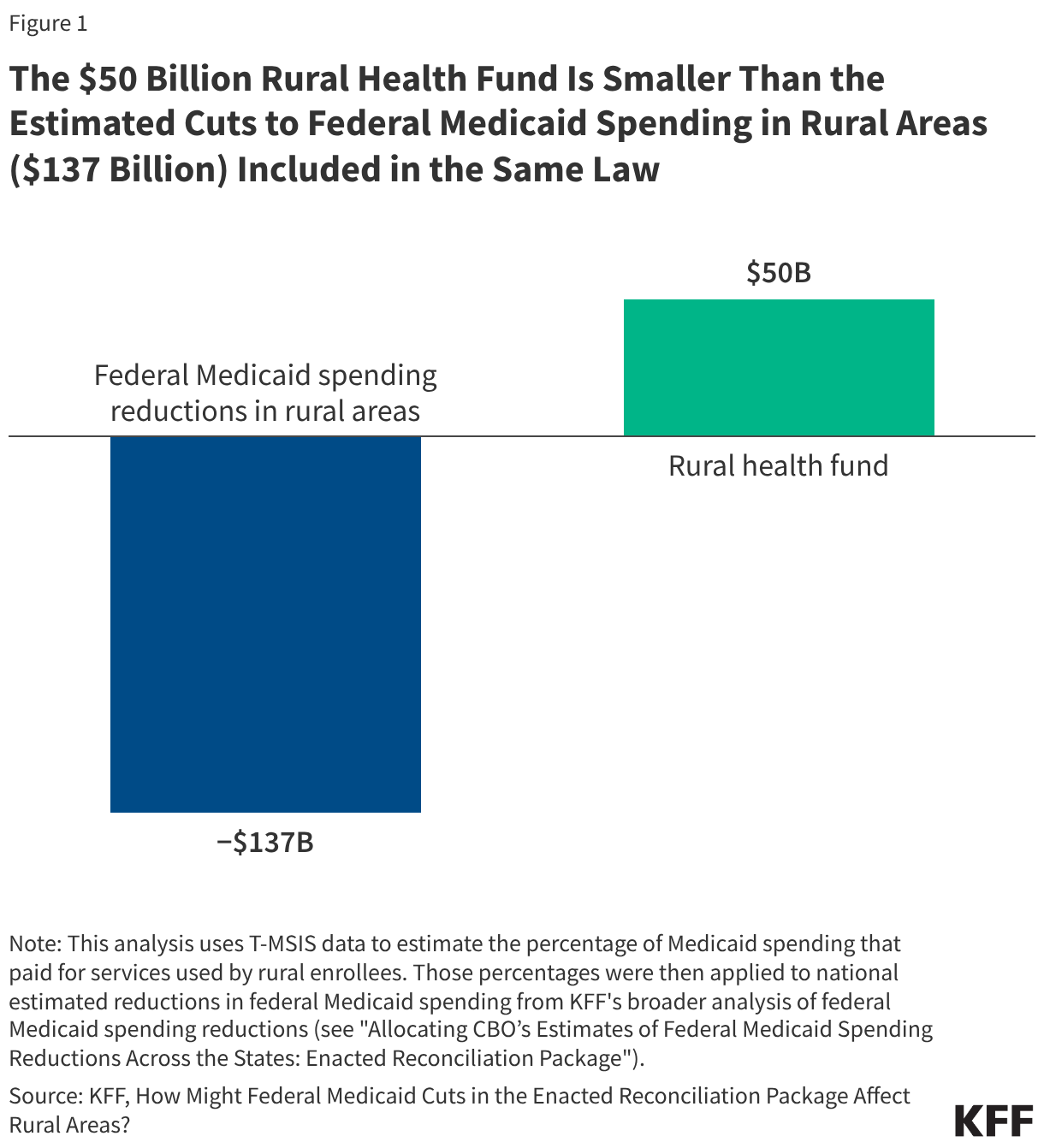
WASHINGTON D.C. — On July 4, 2025, President Trump signed into law a landmark budget reconciliation bill—popularly dubbed the “One Big Beautiful Bill”—that set in motion the most significant restructuring of federal health care spending in decades. While the legislation enacted sweeping tax cuts and broad fiscal reforms, it also projected a staggering $911 billion reduction in federal Medicaid spending over ten years. Of that total, an estimated $137 billion is expected to be carved directly from rural health care ecosystems.
n
To blunt the impact of these reductions and prevent a total collapse of rural medical infrastructure, the law established the Rural Health Transformation Program (RHTP). This $50 billion initiative, often referred to as the "rural health fund," represents a massive federal experiment in state-led health innovation. As the program enters its first operational phase, policy experts and healthcare providers are weighing whether this five-year, $50 billion infusion can truly transform a system facing a $137 billion deficit.
n
Main Facts: The $50 Billion Strategic Pivot
n
The Rural Health Transformation Program is not a traditional grant program; it is a "cooperative agreement" overseen by the newly established Office of Rural Health Transformation within the Centers for Medicare & Medicaid Services (CMS). Unlike block grants, these agreements require "substantial CMS project involvement," ensuring federal oversight of how states utilize the funds.
n
The Funding Split
n
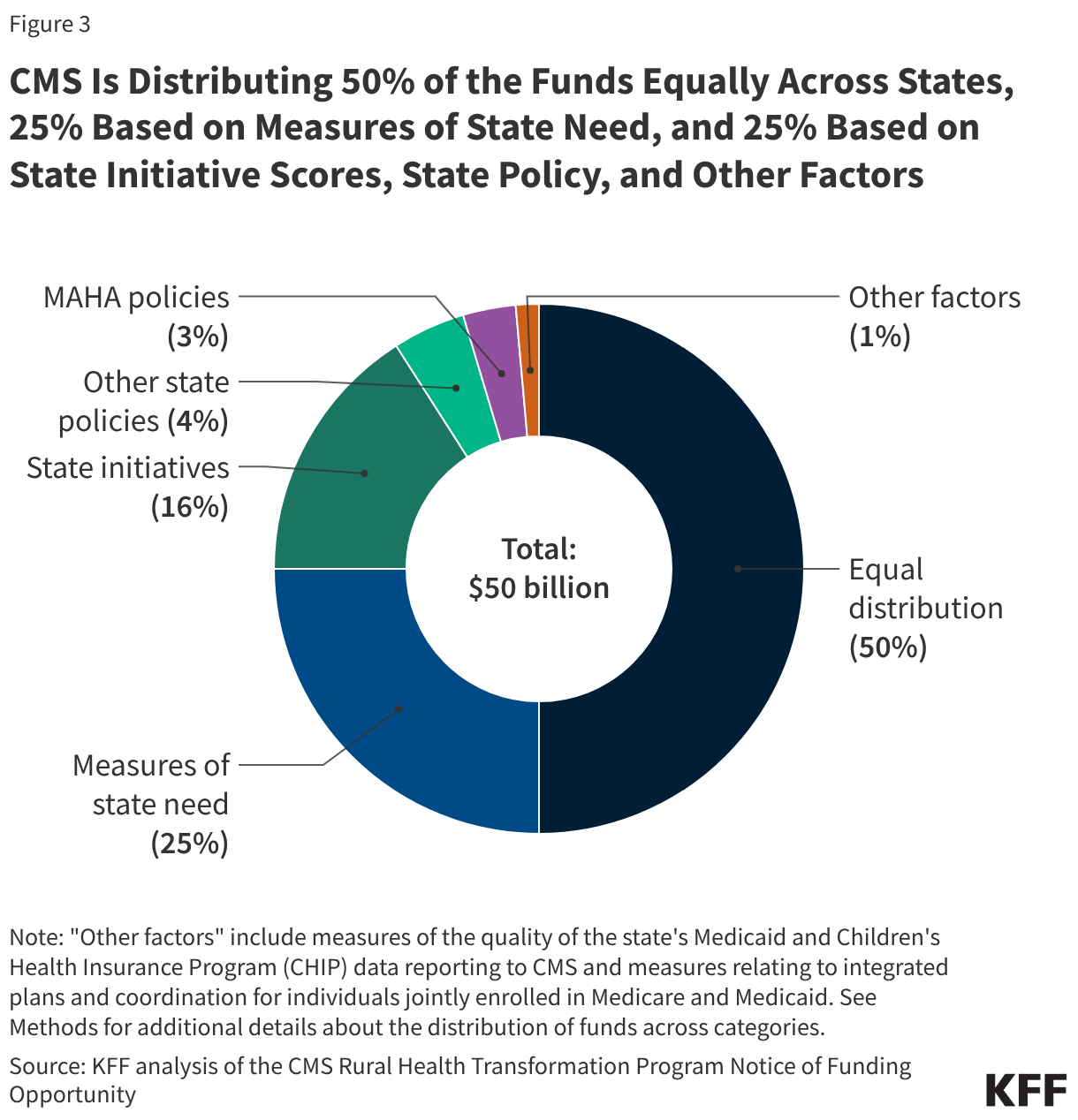
The $50 billion fund is divided into two distinct pools:
n
- n
- Baseline Funding ($25 Billion): Distributed equally among all 50 states ($100 million per state, per year) regardless of population or geographic size.
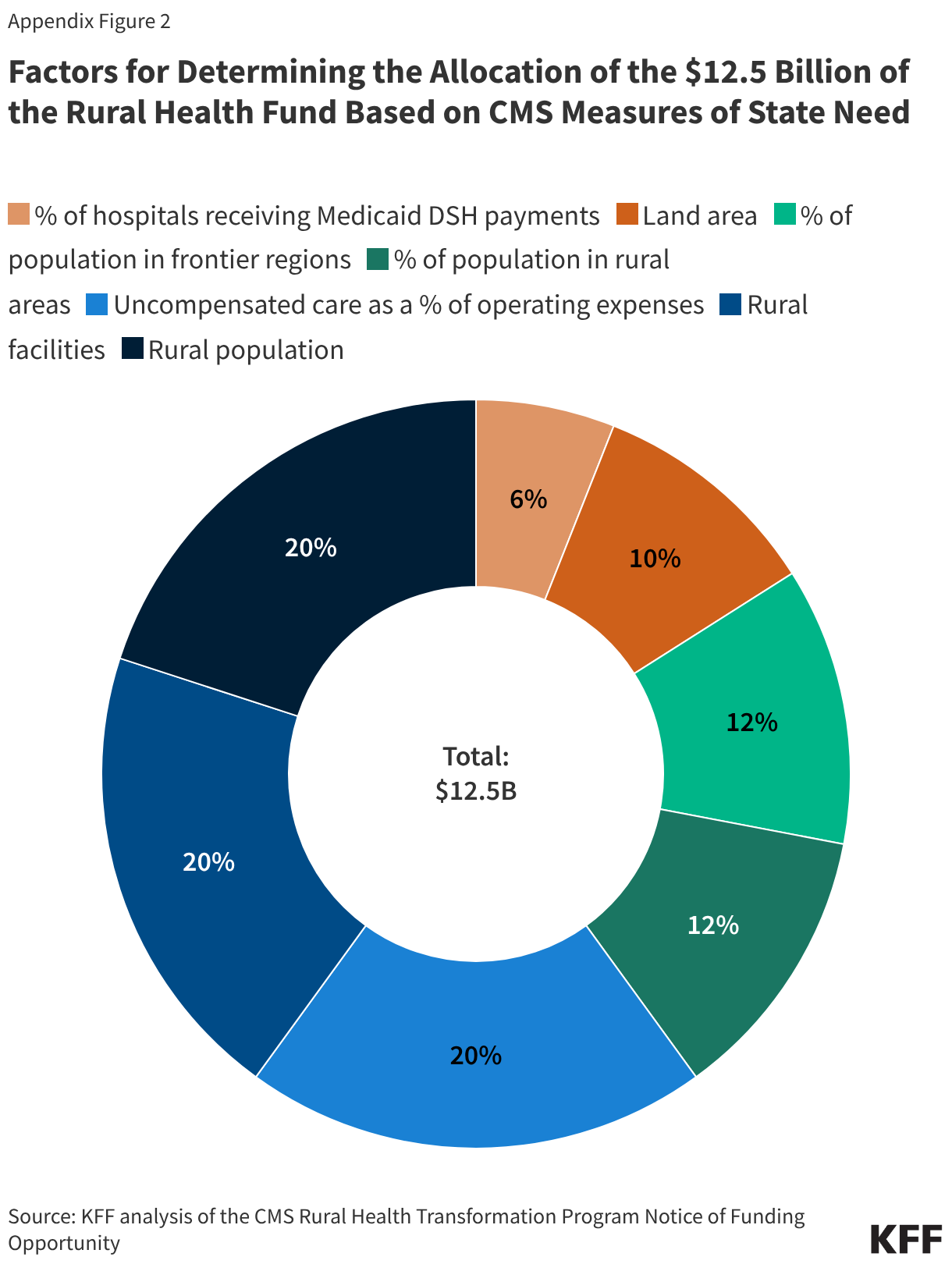
- Workload Funding ($25 Billion): Distributed based on a complex rubric of 23 factors, including state need, policy initiatives, and "innovation scores."
n
n
n
The Mandate for Transformation
n
CMS has been explicit that the RHTP is not a bailout for "perpetual operating expenses." Instead, states are required to use the funds for "system transformation." This includes eleven permitted uses ranging from chronic disease management and clinical workforce recruitment to the deployment of AI diagnostic tools and the expansion of telehealth infrastructure.
n
Crucially, the fund carries strict prohibitions. It cannot be used to pay for direct medical services traditionally covered by Medicaid, it cannot fund the construction of entirely new hospitals, and it cannot be used for political lobbying.
n
Chronology: From Legislative Compromise to Implementation
n
The RHTP was born not from a long-studied policy proposal, but as a last-minute political compromise in the Senate. As the 2025 reconciliation bill neared a vote, lawmakers from rural states expressed alarm over the projected impact of Medicaid cuts on local hospitals already teetering on the brink of insolvency.
n
- n
- June 2025: Senate negotiations yield a $50 billion fund to shield rural hospitals from the "One Big Beautiful Bill’s" broader fiscal tightening.
- July 4, 2025: The bill is signed into law.
- September 2025: CMS issues a "Notice of Funding Opportunity" (NOFO), giving states a high-pressure, two-month window to submit comprehensive transformation plans.
- December 2025: CMS announces the first-year awards for all 50 states, totaling $10 billion for Fiscal Year 2026.
- January 2026 – October 2026: States enter the "Finalization and Obligation" phase, where they must set up internal procurement processes and obligate their first-year funds to local entities.
- 2027 – 2030: Annual award cycles continue, with funding amounts potentially adjusted based on state performance and "satisfactory progress."
- 2032: The program’s hard sunset. All funds must be expended by the end of the fiscal year.
n
n
n
n
n
n
n
n
Supporting Data: The Disparity in Distribution
n
An analysis of the first-year awards reveals a complex landscape of winners and losers, driven by the program’s unique "equal baseline" structure.
n
State-by-State Breakdown
n
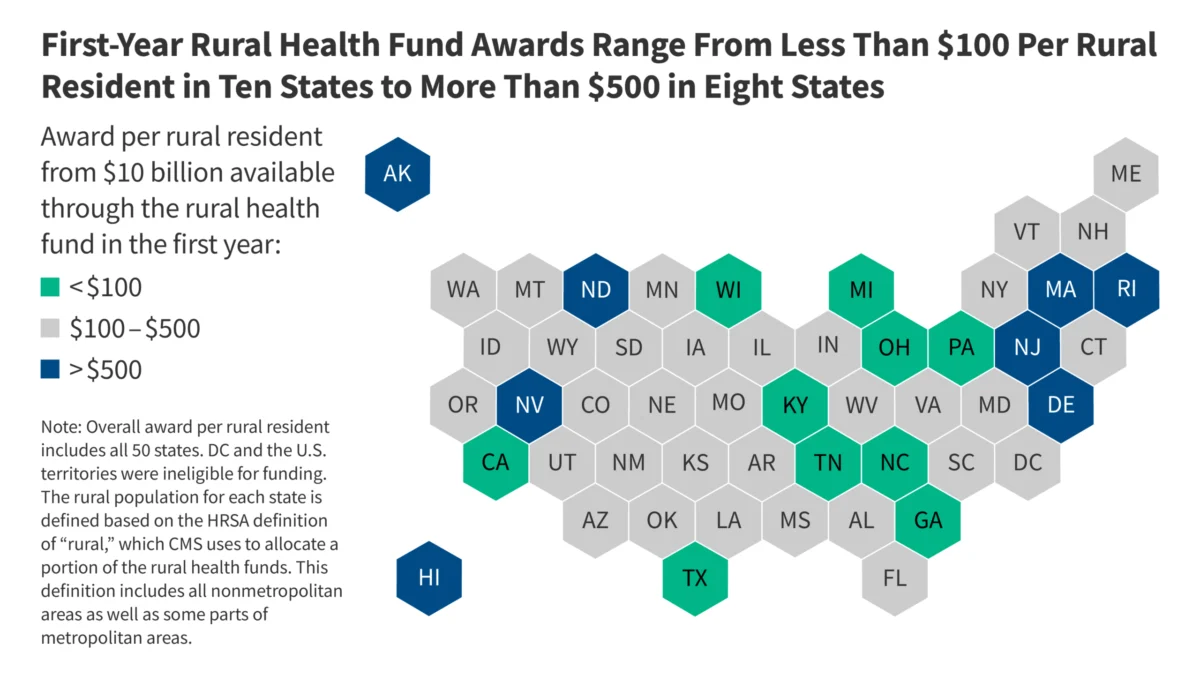
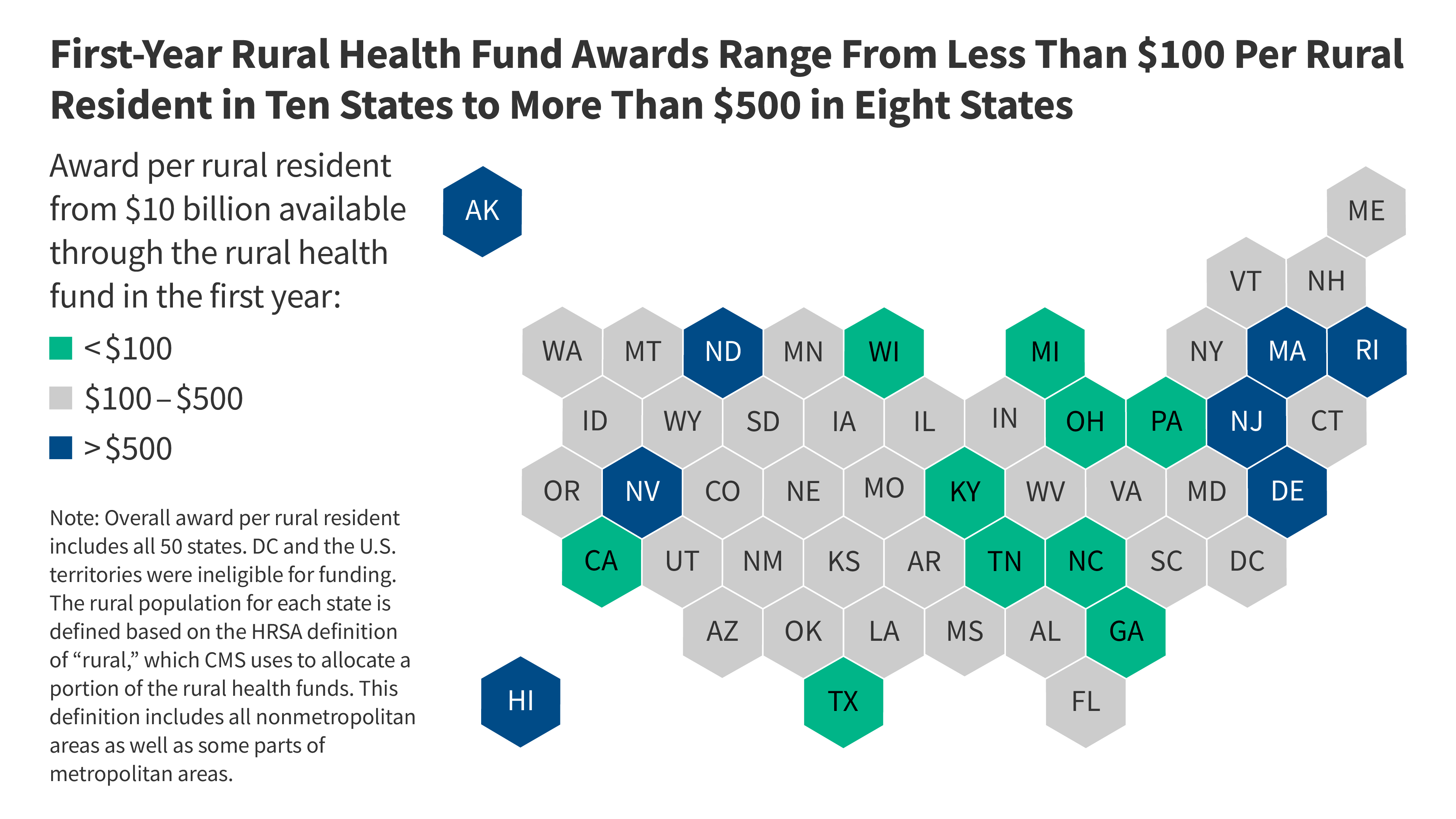
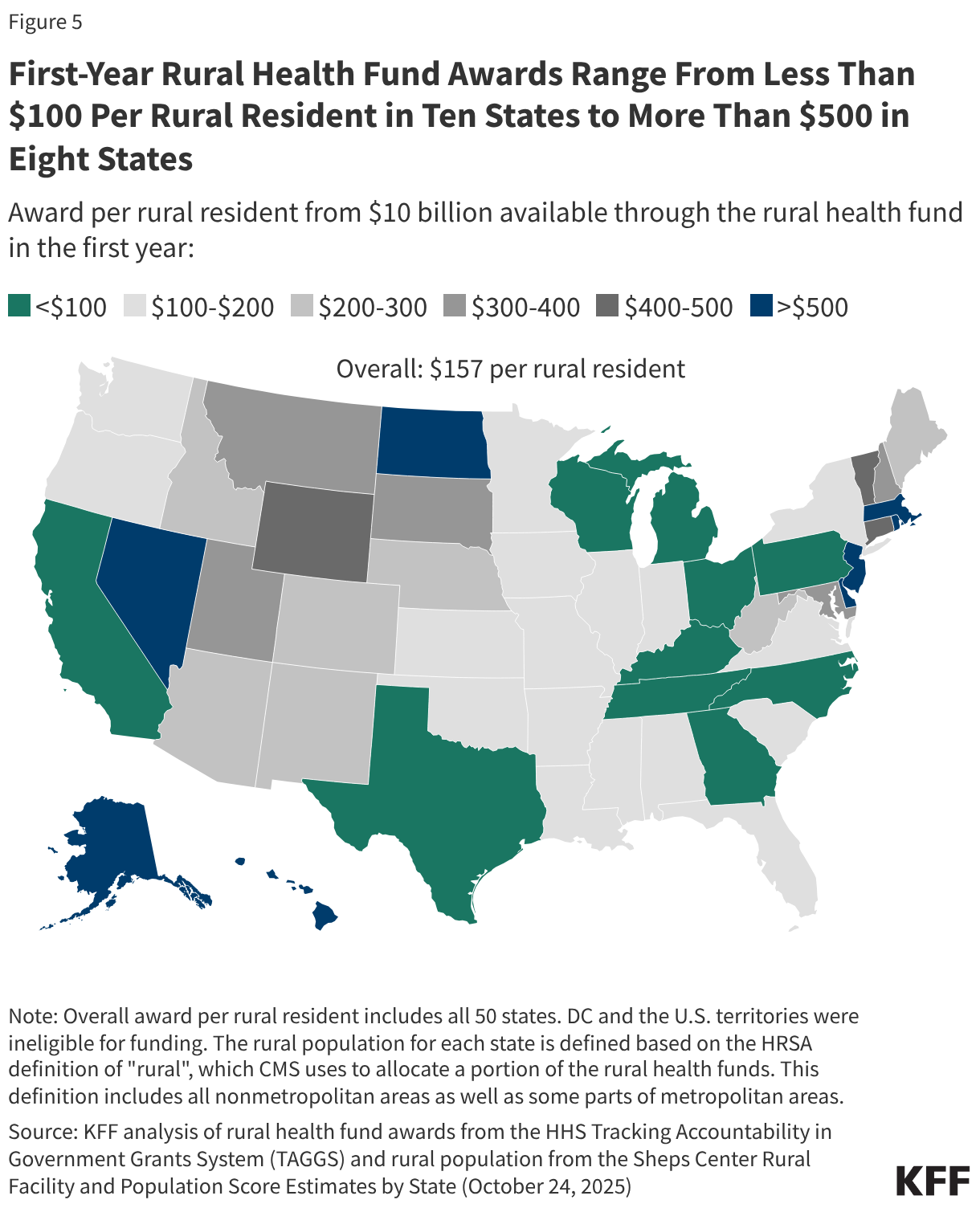
First-year awards for FY 2026 range from $147 million in New Jersey to $281 million in Texas. While Texas received the largest total award, the data looks very different when viewed through the lens of rural population density.
n
- n
- Texas: With 4.3 million rural residents, Texas’s award translates to a mere $66 per rural resident.
- Rhode Island: Due to its small rural population and the $100 million baseline guarantee, the state received an astonishing $6,305 per rural resident.
- Alaska: Benefited from its immense land area, receiving one of the highest awards ($990 per rural resident) as CMS allocated extra funds to the five largest states by geography.
The Fiscal Mismatch
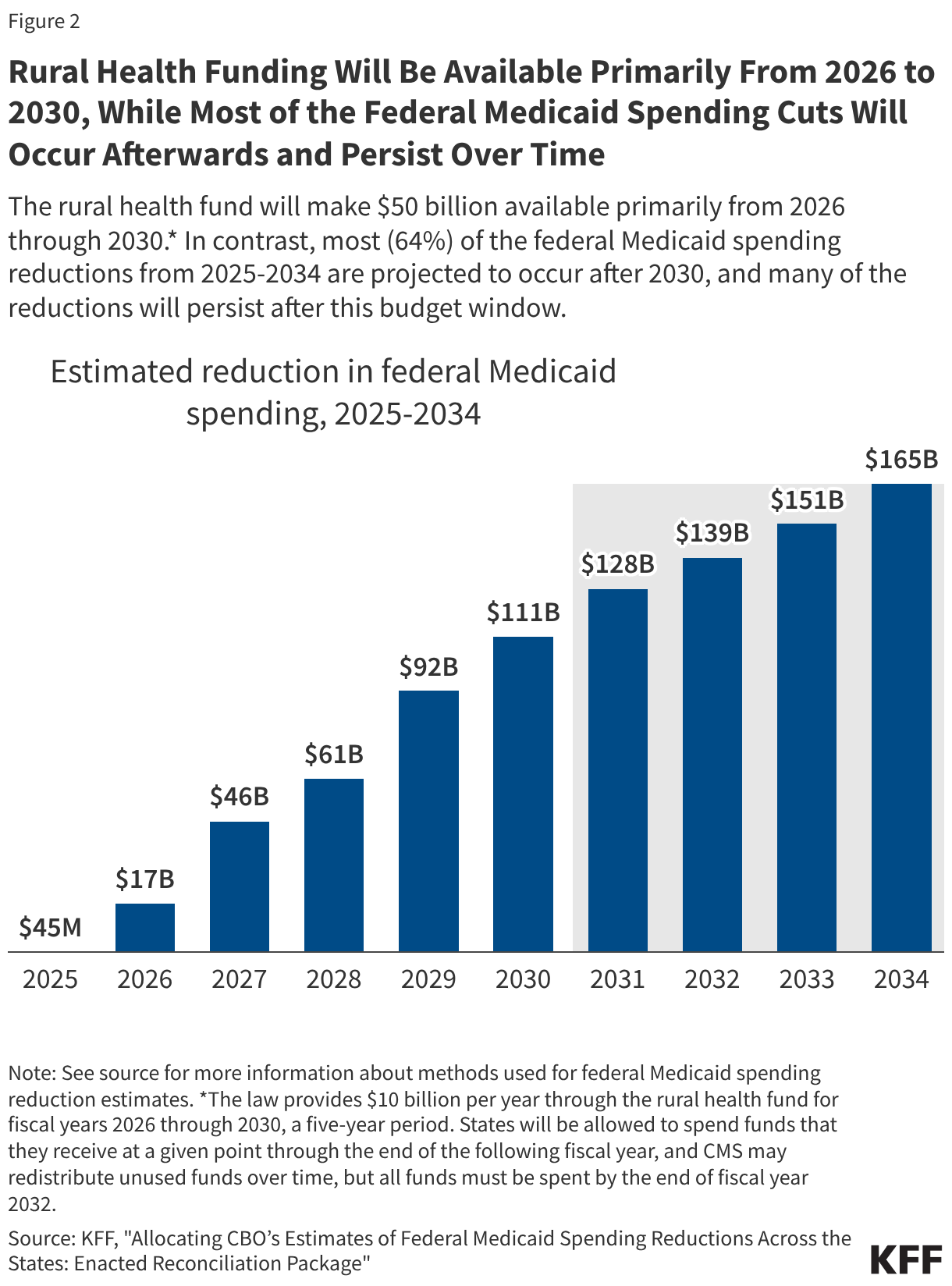
The most critical data point remains the comparison between RHTP funding and Medicaid reductions. According to analysis by KFF, the $50 billion fund covers only 37% of the estimated $137 billion in Medicaid cuts specifically targeting rural areas over the next decade. Furthermore, while the Medicaid cuts are permanent and backloaded (64% occurring after 2030), the RHTP funding is temporary and frontloaded, ending just as the deepest cuts begin to take effect.
Official Responses: Innovation vs. Survival
The implementation of the RHTP has sparked a debate between federal regulators and industry advocates over the program’s ultimate goal.
The Administration’s Vision
Dr. Mehmet Oz, head of CMS, has championed the program as a catalyst for a "new era of rural health." In recent statements, Oz emphasized that states are being given "room to be creative," with the expectation that they will "Make Rural America Healthy Again" through technological innovation rather than federal subsidies. "We expect states to invest in long-term, sustainable improvements," Oz stated, "not temporary fixes for outdated operating models."
The Hospital Industry’s Alarm
The American Hospital Association (AHA) and the Federation of American Hospitals (FAH) have expressed significant reservations. In a series of public comments, industry leaders argued that the program’s restrictions on capital investment and provider payments are counterproductive.
"While we appreciate the focus on innovation, you cannot innovate in a building that is crumbling or with a staff that hasn’t been paid," one industry representative noted. The AHA has called for CMS to lift restrictions on "direct provider support," arguing that without financial stability, "transformation" is impossible.
Congressional Oversight
A bipartisan group of Senators has also pressured CMS for greater flexibility. In a letter to the agency, lawmakers expressed concern that small, independent rural providers lack the administrative capacity to compete for these funds against large, urban-based regional health systems that may seek to "absorb" rural dollars under the guise of collaboration.
Implications: The 2030 Fiscal Cliff
As states begin to roll out their RHTP-funded initiatives, the long-term implications for the American rural landscape remain uncertain.
The Shift to Value-Based Care
By incentivizing "alternative payment models" and "system transformation," the RHTP is forcing rural providers to move away from fee-for-service models. States like Michigan and Georgia are already using their first-year awards to transition hospitals into "Rural Emergency Hospitals," a designation that allows facilities to ditch money-losing inpatient beds in favor of robust emergency and outpatient services.
The Transparency Gap
A growing concern among policy analysts is the lack of public transparency regarding where these billions are actually going. CMS has stated it will release state progress reports "upon request" via the Freedom of Information Act (FOIA), but it has no plans for a public-facing dashboard. The Bipartisan Policy Center has warned that without "real-time transparency," it will be impossible to track if the funds are reaching the "boots-on-the-ground" providers or being consumed by high-priced consultants and state bureaucracies.
The Coming "Cliff"
The most daunting implication is the program’s expiration date. By 2032, the $50 billion will be gone, but the Medicaid spending reductions enacted in 2025 will continue to grow. If the RHTP-funded innovations—such as AI diagnostics and administrative sharing—do not result in massive, self-sustaining cost savings, rural communities may find themselves in a more precarious position than before the program began.
The Rural Health Transformation Program represents a high-stakes gamble: that $50 billion in short-term innovation can offset $137 billion in long-term austerity. For the millions of Americans living in rural zip codes, the success of this program is not just a matter of policy—it is a matter of survival.

