
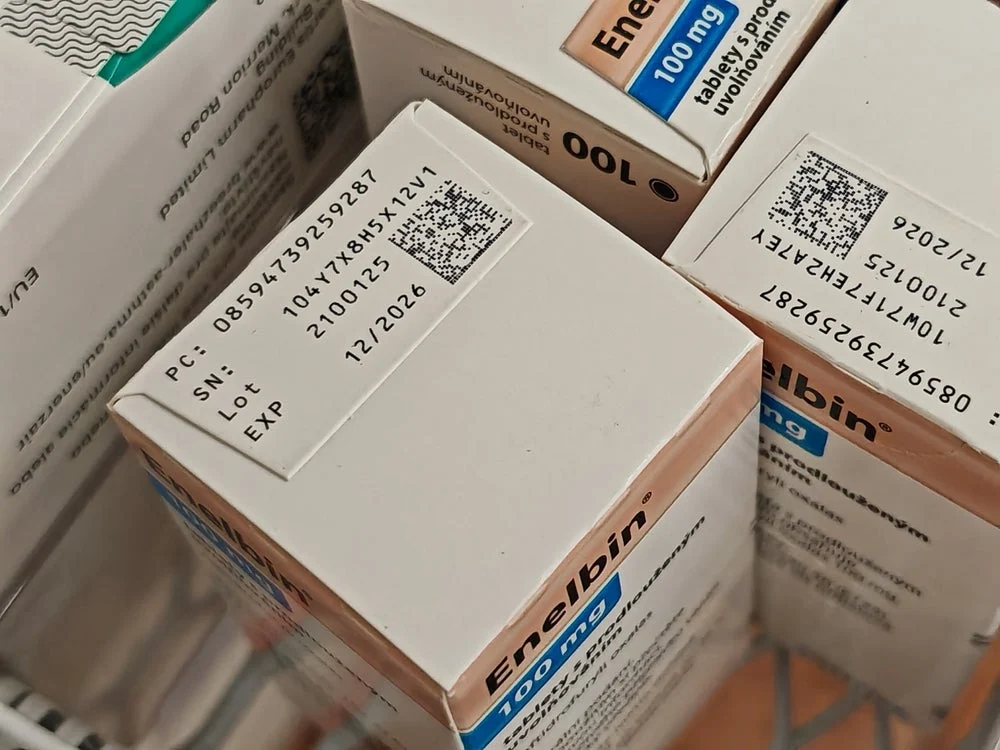
Brussels, Belgium – September 7, 2026 – In a landmark move poised to significantly enhance patient safety and streamline healthcare operations across Europe, two influential pharmaceutical organisations, the European Association of Hospital Pharmacists (EAHP) and the European Federation of Pharmaceutical Industries & Associations (EFPIA), have issued a unified call for the widespread adoption of barcodes on individual medication doses. This ambitious initiative aims to expand the current barcoding framework, which primarily applies to multi-packs, by mandating unique identifiers on every single unit of medication. The ultimate goal is to drastically reduce medication errors, a persistent and costly challenge within healthcare systems.
n
The new guidance, published today, outlines a clear roadmap for this transformative change. Starting in 2031, all newly introduced pharmaceutical products are expected to feature barcodes on each individual dose. Existing medicines will undergo a gradual retro-application process, ensuring a comprehensive transition over time. This proactive step marks a critical evolution in pharmaceutical traceability and patient care, building upon previous efforts to digitise medication management.
n
Main Facts: A New Era of Precision in Medication Administration
n
The joint proposal from the EAHP and EFPIA represents a pivotal moment in the ongoing quest for enhanced patient safety within European healthcare. At its core, the initiative seeks to extend the proven benefits of barcoding from multi-packs to individual doses, thereby creating an unparalleled level of precision in medication administration.
n
Currently, barcodes have been a mandatory feature on prescription and certain over-the-counter (OTC) medicines sold within the European Union since 2019. These unique identifiers, typically containing crucial information such as a product code, batch number, and expiry date, have played a vital role in combating falsified medicines and ensuring basic traceability. However, their application primarily to outer packaging or multi-unit packs has presented a gap in preventing errors at the point of care – specifically, when individual doses are separated from their original packaging for administration.
n
The new guidance explicitly addresses this critical gap. By requiring barcodes on single unit doses – encompassing a wide range of formats including vials, pre-filled syringes, and pens – the associations aim to enable comprehensive bedside scanning. This technological capability is envisioned as a powerful safeguard, allowing healthcare professionals to verify the "five rights" of medication administration (right patient, right drug, right dose, right route, right time) with unprecedented accuracy just before a medication is given.
n
Nathalie Moll, Director General of EFPIA, underscored the profound implications of this shift: “Over the next five years, all new medicines will include a barcode on every dose. This will support better use of healthcare resources, including healthcare professionals’ time, and will deliver real advances in patient care.” Her statement highlights not only the patient safety aspect but also the potential for significant improvements in operational efficiency within hospitals and other healthcare settings. The initiative is a testament to a shared commitment between pharmacists and the pharmaceutical industry to leverage technological advancements for the betterment of public health.
n
Chronology: From Multi-Pack Traceability to Individual Dose Precision
n
The journey towards individual dose barcoding is rooted in a decade-long evolution of pharmaceutical supply chain security and patient safety initiatives within the EU. Understanding this timeline provides crucial context for the significance of the EAHP and EFPIA’s latest proposal.
n
The 2019 Falsified Medicines Directive: A Foundational Step
n
The most significant precursor to the current initiative was the implementation of the EU Falsified Medicines Directive (FMD) in February 2019. This directive mandated the use of unique identifiers, or barcodes, on the packaging of virtually all prescription medicines and certain high-risk over-the-counter (OTC) drugs sold within the European Union. The primary objective of the FMD was to combat the growing threat of counterfeit medicines entering the legal supply chain, protecting patients from potentially ineffective or harmful products.
n
The unique identifier, a 2D data matrix barcode, encoded vital information: a product code, a unique serial number, the batch number, and the expiry date. This allowed for verification at various points in the supply chain, ultimately requiring pharmacies and hospitals to scan medicines before dispensing to ensure their authenticity. This move represented a monumental shift, introducing a new era of digital traceability for packaged medicines across the EU. While primarily focused on anti-counterfeiting, the FMD also inadvertently laid the groundwork for enhanced medication safety by familiarizing healthcare professionals with scanning technologies.
n
The Emergence of the Need for Individual Dose Barcoding
n
Despite the success of the FMD in securing the supply chain, a critical limitation remained: the barcodes were typically applied to the outermost packaging of a product, such as a carton containing multiple vials or tablets. Once these multi-packs were opened, and individual doses were separated for administration, the unique identifier was often lost. This created a ‘blind spot’ at the crucial point of care – the bedside – where the majority of medication errors occur.
n
Hospital pharmacists and patient safety advocates quickly recognized this gap. While the FMD prevented falsified medicines from reaching patients, it did little to prevent errors such as administering the wrong dose from a correctly verified batch, or giving a medication to the wrong patient. The existing system, while robust for supply chain integrity, lacked the granularity required for robust error prevention at the individual administration level.
n
The New Guidance: A Forward-Looking Timeline
n
The new guidance from EAHP and EFPIA directly addresses this challenge, proposing a structured timeline for implementation:
n
- n
- September 7, 2026: Publication of the joint guidance, signaling a clear intent and setting the stage for industry-wide adoption.
- By 2031: All newly introduced pharmaceutical products across Europe will be required to feature barcodes on each single unit dose of medication. This five-year lead time allows manufacturers sufficient opportunity for research, development, and adaptation of their packaging and production lines.
- Gradual Retro-application: Existing medicines currently on the market will be subject to a phased retro-application process. The specifics of this rollout (e.g., product categories, deadlines) will likely be determined through further consultation and regulatory frameworks, taking into account the complexity and volume of existing products.
n
n
n
n
This phased approach acknowledges the significant undertaking involved, balancing the urgent need for improved safety with the practicalities of manufacturing and supply chain transformation. The 2031 deadline for new products provides a clear target, while the gradual retro-application ensures a systematic and manageable transition for the vast array of existing medicines.
n
Supporting Data: The Alarming Reality of Medication Errors and the Promise of Barcoding
n
The impetus behind the EAHP and EFPIA’s ambitious proposal is firmly rooted in the stark reality of medication errors – a pervasive and often devastating issue within global healthcare systems. These errors represent a significant threat to patient safety, leading to preventable harm, prolonged hospital stays, and substantial economic burdens. The evidence overwhelmingly supports barcoding as a powerful antidote to this persistent problem.
n
The Pervasive Scope of Medication Errors
n
Medication errors are defined as any preventable event that may cause or lead to inappropriate medication use or patient harm while the medication is in the control of the healthcare professional, patient, or consumer. These errors can occur at any stage of the medication process: prescribing, transcribing, dispensing, or administration. The consequences range from minor adverse drug reactions to severe illness, permanent disability, and even death.
n
Globally, the World Health Organization (WHO) estimates that medication errors contribute to at least one death every day and injure approximately 1.3 million people annually in the United States alone. While precise pan-European figures are challenging to compile due to varying reporting mechanisms, national studies consistently paint a grim picture. For instance, data from various EU member states suggests that medication errors are among the most common types of adverse events in hospitals, affecting a significant percentage of inpatients. Common types of errors include:
n
- n
- Wrong medication: Administering a drug other than the one prescribed.
- Wrong dose: Giving too much or too little of the prescribed medication.
- Wrong patient: Administering medication to the incorrect individual.
- Wrong route: Giving medication via an unintended pathway (e.g., orally instead of intravenously).
- Wrong time: Administering medication outside the specified timeframe.
- Omission: Failing to administer a prescribed dose.
Beyond the immediate patient harm, medication errors impose immense financial strain on healthcare systems. They lead to longer hospital stays, requiring additional diagnostic tests, treatments, and nursing care. They can also result in avoidable readmissions, increased litigation costs, and a loss of public trust in healthcare providers. The cumulative cost of medication errors across Europe runs into billions of euros annually, representing a drain on already stretched healthcare budgets.
The Proven Efficacy of Barcode Medication Administration (BCMA)
The concept of using barcodes to enhance medication safety is not new. For years, healthcare institutions, particularly in North America, have implemented Barcode Medication Administration (BCMA) systems, which involve scanning both the patient’s wristband and the medication packaging before administration. The data collected by EAHP and EFPIA, drawing from pharmacists’ studies, strongly reiterates the efficacy of these systems.
These studies have consistently demonstrated that bedside scanning of barcodes can significantly reduce medication errors, with reported reductions ranging between 30% and 60%. This substantial decrease is attributed to the system’s ability to act as a final, automated check against the "five rights" of medication administration. When a nurse scans a patient’s wristband, the system pulls up their electronic medication record. When the medication barcode is scanned, the system verifies that it matches the prescribed drug, dose, and patient, flagging any discrepancies immediately.
The Enhanced Promise of Individual Dose Barcoding
While existing BCMA systems offer significant improvements, their effectiveness can be hampered when individual doses are removed from their original, barcoded multi-packs. This is particularly relevant in hospital settings where medications are often repackaged or separated into single doses for administration rounds. The new proposal for individual dose barcoding directly addresses this limitation, promising to extend the benefits of BCMA to the most granular level of medication management.
A pivotal piece of research supporting this expansion was published in the New England Journal of Medicine (NEJM). This study suggested that printing barcodes directly onto individual doses could slash medication error rates by an impressive 41%. This figure underscores the potential for a dramatic reduction in harm by ensuring that the critical verification data remains attached to the medication right up until the moment it enters the patient’s body.
The types of products that will fall within this new framework – vials, pre-filled syringes, and pens – are often high-risk medications, where dosing accuracy is paramount. For instance, a pre-filled syringe containing a potent anticoagulant or insulin requires absolute certainty of its contents and dose. Barcoding each of these units provides an unprecedented layer of security.
In essence, the supporting data paints a compelling picture: medication errors are a severe and costly problem, and barcoding has proven to be one of the most effective technological interventions. By moving to individual dose barcoding, Europe’s pharmaceutical leaders are aiming to maximize this potential, driving down error rates to new lows and fostering an environment of unparalleled patient safety.
Official Responses: Uniting Industry and Pharmacy for Patient Welfare
The joint guidance issued by the European Association of Hospital Pharmacists (EAHP) and the European Federation of Pharmaceutical Industries & Associations (EFPIA) represents a powerful alignment of interests between two key stakeholders in the healthcare ecosystem. Their unified voice underscores a shared commitment to patient safety and a proactive approach to leveraging technology for public health.
The Hospital Pharmacist’s Perspective: A Direct Impact on Frontline Care
For hospital pharmacists, the proposal for individual dose barcoding is a direct response to daily challenges faced on the front lines of patient care. The EAHP, representing over 22,000 hospital pharmacists across 36 European countries, has long advocated for measures that enhance medication safety and efficiency within hospital settings. Their endorsement of this initiative stems from a deep understanding of the complexities and risks inherent in hospital medication management.
Hospital pharmacists are acutely aware of the "last mile" problem in medication administration. While they meticulously ensure the correct medication leaves the pharmacy, errors can still occur during the final stages of dispensing and administration on wards. Manual checks, while essential, are prone to human error, especially in busy, high-pressure environments. The ability to conduct bedside scanning of every single dose, regardless of its original packaging, offers an invaluable safety net.
EAHP spokespersons, echoing the sentiment of their membership, would likely highlight several key benefits:
- Enhanced Patient Safety: This is the paramount concern. Individual dose barcoding provides an additional layer of verification, significantly reducing the risk of administering the wrong drug, dose, or to the wrong patient. It acts as a digital safety guardian, confirming the integrity of the medication right at the point of administration.
- Improved Workflow and Efficiency: While initially requiring investment, the long-term benefits include reduced time spent investigating and correcting errors, fewer adverse events requiring additional care, and more streamlined medication rounds. Pharmacists could also leverage this data for more accurate inventory management and expiry date tracking.
- Data-Driven Insights: The detailed data generated by scanning individual doses could offer invaluable insights into medication usage patterns, potential error hotspots, and opportunities for process improvement within hospitals.
- Reduced Stress for Healthcare Professionals: Knowing that an automated system is providing a final check can alleviate some of the immense pressure on nurses and doctors, allowing them to focus more on direct patient interaction and complex clinical judgments.
The EAHP’s involvement signifies that this is not just an industry-driven initiative but one deeply supported by those who manage and dispense medications daily, witnessing firsthand the consequences of errors.
The Pharmaceutical Industry’s Commitment: Investment in Innovation and Trust
EFPIA, representing the research-based pharmaceutical industry operating in Europe, brings the perspective of manufacturers who will bear the primary responsibility for implementing this change. Nathalie Moll’s statement, "Over the next five years, all new medicines will include a barcode on every dose. This will support better use of healthcare resources, including healthcare professionals’ time, and will deliver real advances in patient care," succinctly captures the industry’s commitment.
For EFPIA and its member companies, this initiative is a strategic investment in patient trust and the future of pharmaceutical care. While the undertaking will be substantial, the long-term benefits are clear:
- Strengthened Brand Reputation: Companies that proactively adopt these safety measures enhance their reputation as responsible and patient-centric innovators.
- Market Leadership: Being at the forefront of such a significant safety enhancement can solidify a company’s position as a leader in quality and reliability.
- Future-Proofing: As healthcare systems increasingly digitise, integrating individual dose barcoding aligns with the broader trend towards smart hospitals and interconnected health records.
- Operational Benefits: Beyond patient safety, enhanced traceability at the individual dose level can improve internal inventory management, recall efficiency, and supply chain integrity.
While the financial and logistical challenges of redesigning packaging, adapting manufacturing lines, and investing in new technologies are considerable, the industry appears to view these as necessary investments for a safer, more efficient healthcare future. This collective commitment from manufacturers demonstrates a recognition that preventing errors is not only a moral imperative but also a strategic business imperative that fosters long-term relationships with healthcare providers and patients.
The unified front presented by the EAHP and EFPIA sends a powerful message: patient safety is a shared responsibility, and technological innovation, even if challenging to implement, is the key to unlocking a new era of precision and reliability in medication administration.
Implications: A Transformative Shift for Healthcare, Industry, and Patients
The EAHP and EFPIA’s proposal for individual dose barcoding carries far-reaching implications that will resonate across the entire healthcare ecosystem, fundamentally transforming how medicines are manufactured, distributed, and administered. This initiative is not merely an incremental improvement but a foundational shift towards a more secure, efficient, and patient-centric pharmaceutical landscape.
For Healthcare Systems: Enhanced Safety, Efficiency, and Data
The most immediate and profound implication for healthcare systems, particularly hospitals, is the potential for an unprecedented boost in patient safety. The ability to scan every individual dose at the patient’s bedside provides a robust, automated safety check that virtually eliminates many common medication errors. This translates directly into:
- Reduced Adverse Events: Fewer instances of patients receiving the wrong medication, dose, or route, leading to better patient outcomes and reduced morbidity and mortality.
- Shorter Hospital Stays: Fewer complications arising from errors mean quicker recovery times and reduced need for extended care.
- Decreased Readmissions: Patients discharged with correct medication regimens are less likely to suffer complications requiring re-hospitalization.
- Lower Costs: The financial burden associated with treating medication errors – including additional diagnostic tests, treatments, legal costs, and extended care – will significantly diminish. This frees up valuable resources that can be reallocated to other critical areas of patient care.
Beyond safety, the initiative promises significant improvements in operational efficiency.
- Streamlined Medication Rounds: Nurses can spend less time on manual verification and more time on direct patient care.
- Accurate Inventory Management: Barcoding individual doses allows for precise tracking of medication usage, reducing waste, preventing stockouts, and streamlining ordering processes.
- Improved Audit Trails: Every scan creates a digital record, offering unparalleled traceability for investigations, quality control, and regulatory compliance.
- Integration with Electronic Patient Records (EPRs): The proposed use cases include seamless entry of medication into EPRs, creating a comprehensive and error-resistant digital patient history. This integration is crucial for building "smart hospitals" where data flows freely and intelligently to support clinical decisions.
For the Pharmaceutical Industry: Innovation, Investment, and Adaptation
The pharmaceutical industry faces the most significant practical challenge in implementing this vision. The implications are vast and will require substantial investment and innovation:
- Manufacturing Line Re-tooling: Existing production lines, designed for multi-pack barcoding, will need significant upgrades or complete overhauls to apply barcodes to individual units, often in microscopic sizes. This includes new printing technologies, vision systems for quality control, and robotics for handling smaller, individually barcoded items.
- Packaging Redesign: Many medications come in packaging that is not conducive to individual dose barcoding. New packaging solutions will need to be developed that protect the medication while allowing for barcode application and scanning. Challenges surrounding pack dimensions and material compatibility will need to be overcome.
- Supply Chain Adjustments: The entire supply chain will need to adapt to handling individually barcoded units, from distribution centers to wholesalers and pharmacies. This includes updating IT systems for tracking and inventory.
- Increased Costs: The initial investment in R&D, new machinery, and process changes will be considerable. While the long-term benefits in terms of patient safety and efficiency are clear, managing these upfront costs and potential impacts on drug pricing will be a critical factor.
- Standardization and Collaboration: Manufacturers will need to collaborate closely with EAHP, EFPIA, and regulatory bodies to ensure common standards for barcode types, data content, and scanning protocols across Europe. This is essential for interoperability and seamless integration.
- Competitive Advantage: Companies that embrace this change early and effectively could gain a significant competitive edge, demonstrating leadership in patient safety and technological adoption.
For Patients: Enhanced Trust and Peace of Mind
Ultimately, the most important beneficiaries of this initiative are patients. The implications for them are deeply personal:
- Increased Peace of Mind: Patients and their families can have greater confidence that they are receiving the correct medication and dose, reducing anxiety associated with hospital stays and treatment.
- Better Health Outcomes: Fewer medication errors directly translate to more effective treatments, faster recoveries, and a reduced risk of preventable harm.
- Greater Transparency: While not directly visible to patients, the underlying system provides a higher degree of transparency and accountability in medication administration.
- Empowerment: As patients become more engaged in their own care, the knowledge that such robust safety measures are in place can be empowering.
Overcoming Challenges and Looking to the Future
While the vision is compelling, successfully navigating the implementation challenges will be crucial. These include:
- Technical Feasibility: Ensuring consistent, readable barcode application on diverse product forms and materials.
- Economic Viability: Balancing the investment costs for manufacturers with the long-term savings for healthcare systems.
- Regulatory Harmonization: Ensuring that national regulations across EU member states are aligned with the new guidance.
- Healthcare Professional Training: Providing adequate training to nurses, doctors, and pharmacists on new scanning protocols and system integration.
Looking ahead, the widespread adoption of individual dose barcoding could pave the way for even more advanced applications. This could include real-time data analytics for population health, enhanced pharmacovigilance (monitoring drug safety), and even personalized medicine, where individual doses could be linked to specific patient characteristics or genetic profiles.
In conclusion, the EAHP and EFPIA’s proposal for barcoding on every individual dose of medication marks a profound and necessary step forward for European healthcare. It represents a bold commitment to eradicating preventable harm, fostering greater efficiency, and building a future where patient safety is not just an aspiration, but an ingrained reality at every point of care. The journey will be complex, but the destination – a safer, more reliable healthcare system – is unequivocally worth the effort.

