With the midterm elections approaching, health care costs have emerged as the primary economic anxiety for the American public, overshadowing other household expenses despite fluctuating inflation in other sectors. According to recent polling data, approximately six in ten adults report being "very" (27%) or "somewhat worried" (35%) about their ability to afford health care for themselves and their families. This anxiety encompasses the rising price of health insurance premiums as well as out-of-pocket expenses for doctor visits and prescription medications.
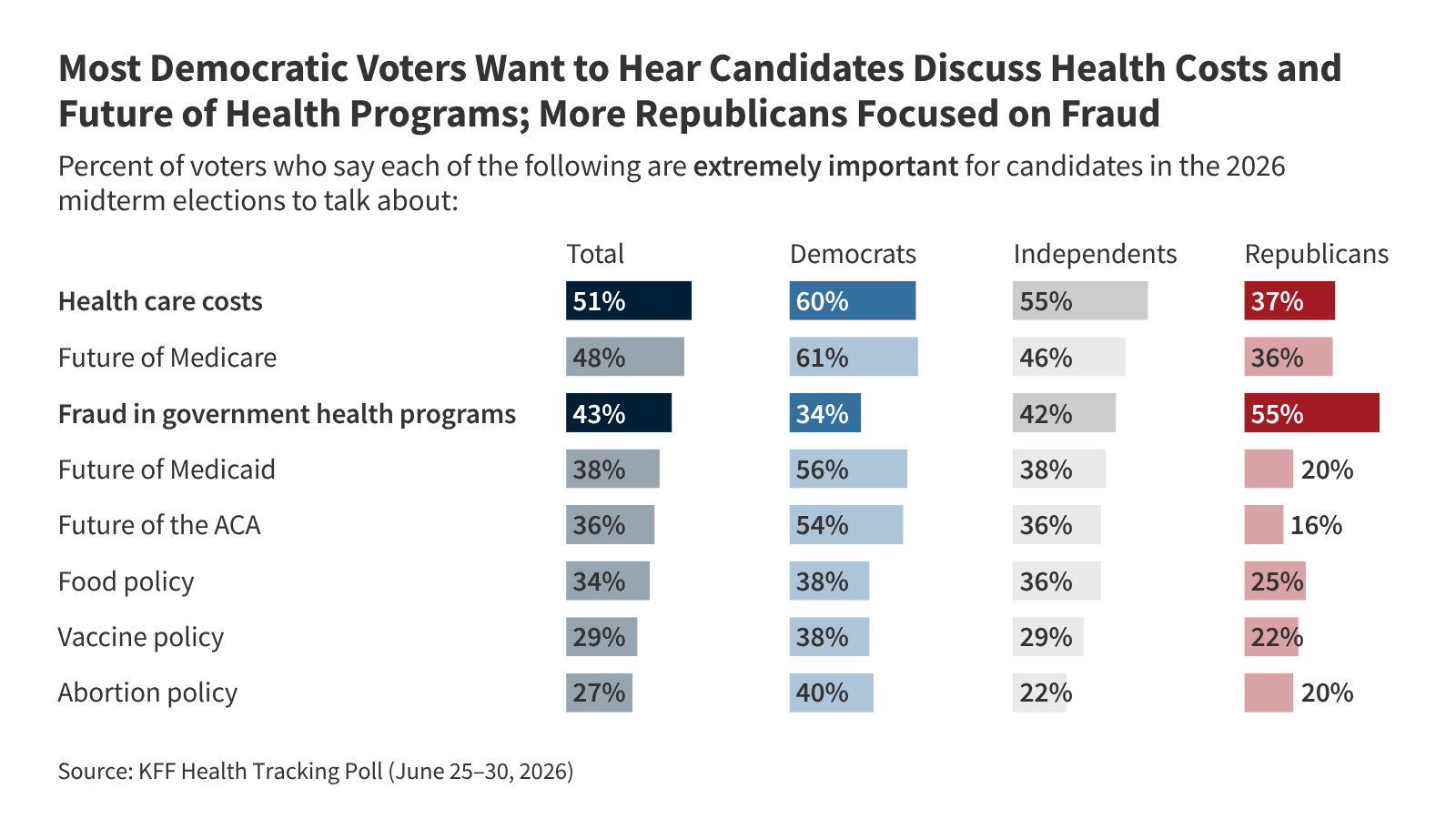
This level of concern significantly outpaces other major financial pressures. Approximately one in five adults report being "very worried" about affording gasoline and transportation (22%), rent or mortgage payments (21%), groceries (20%), or monthly utility bills (19%). While concerns regarding fuel costs spiked earlier in the year—reaching a near-parity with health care anxieties in April due to geopolitical tensions affecting global oil markets—the recent stabilization of gas prices has allowed health care to regain its position as the preeminent financial concern for the electorate.
The Health Care Policy Agenda for the Midterms
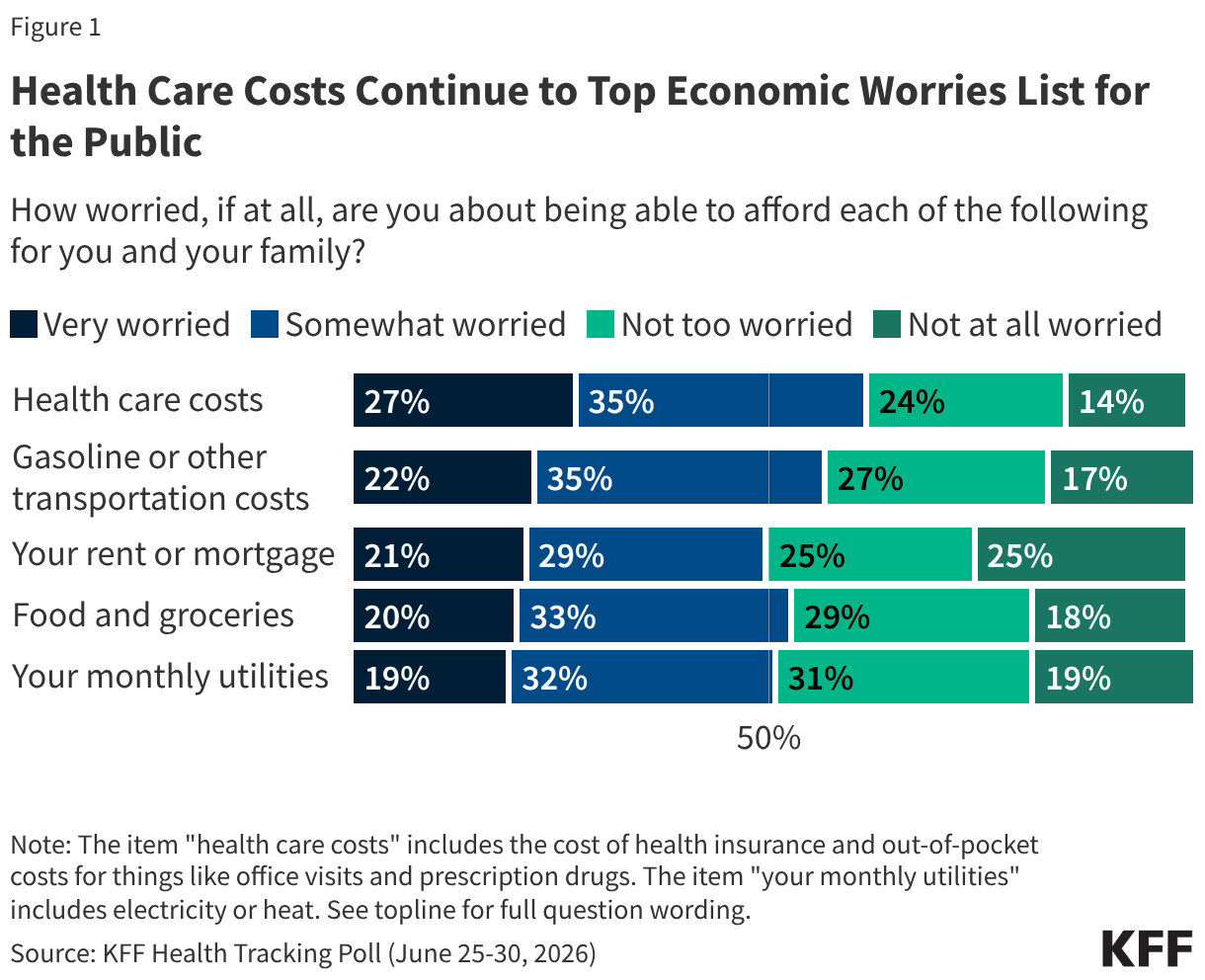
Beyond general economic worry, voters have identified specific health care issues they expect candidates to address on the campaign trail. Health care costs lead this list, with 51% of voters labeling it an "extremely important" topic for discussion. This is closely followed by the future of Medicare (48%) and the integrity of government health programs.
Other significant areas of interest include:
- Fraud in Government Programs: 43% of voters view this as an extremely important issue.
- The Future of Medicaid: 38% of voters want to hear candidates’ plans for the safety-net program.
- The Affordable Care Act (ACA): 36% remain focused on the stability of the insurance marketplaces.
- Food Policy and Regulation: 34% are concerned with chemical additives and pesticides.
- Vaccine and Abortion Policy: 29% and 27% respectively view these as extremely important campaign topics.
The salience of these issues is underscored by the fact that a majority of voters across the spectrum view almost all of these topics as at least "very important," with fewer than 15% dismissing any of them as "not important."
A Deepening Partisan Divide on Priorities
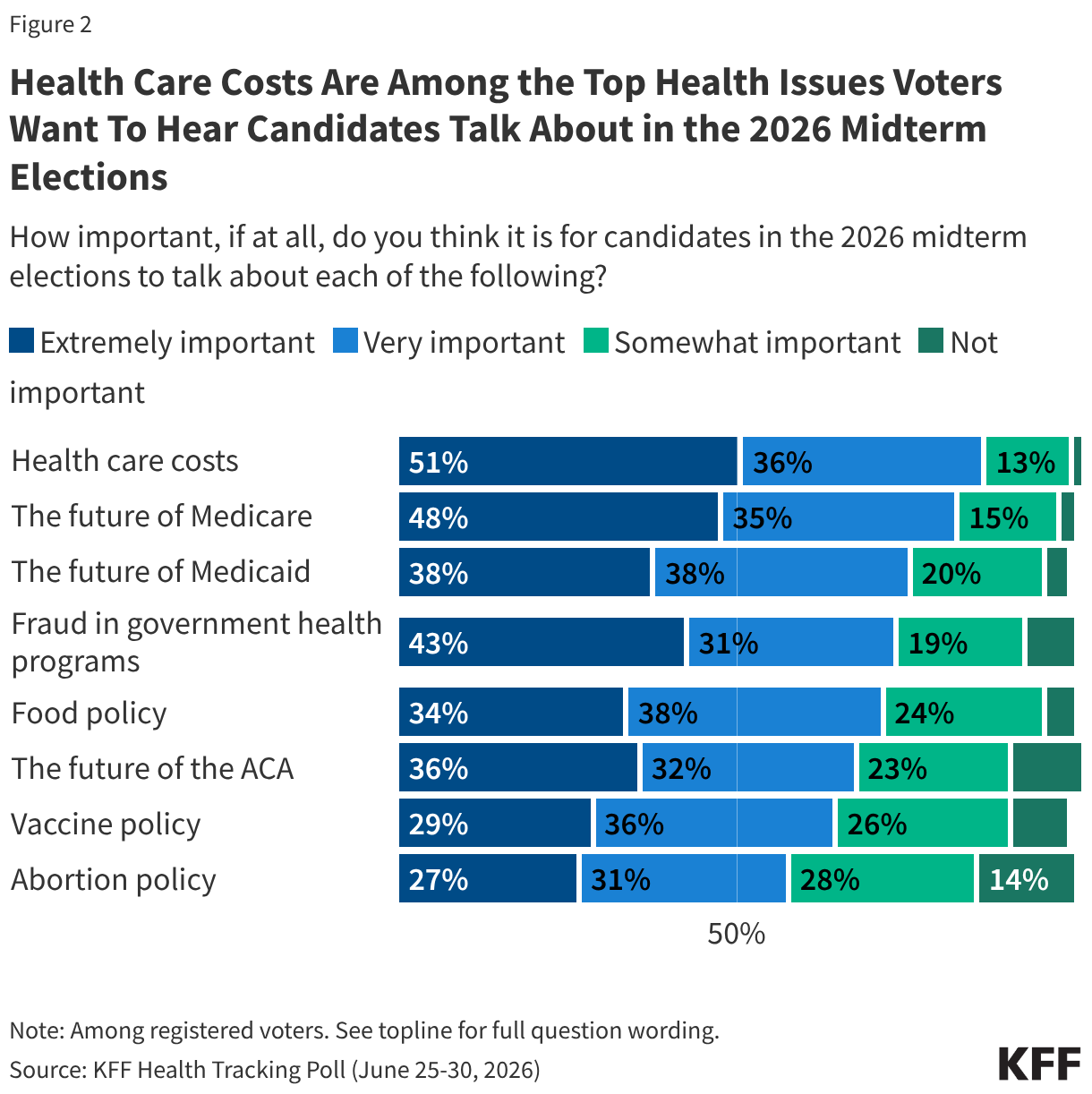
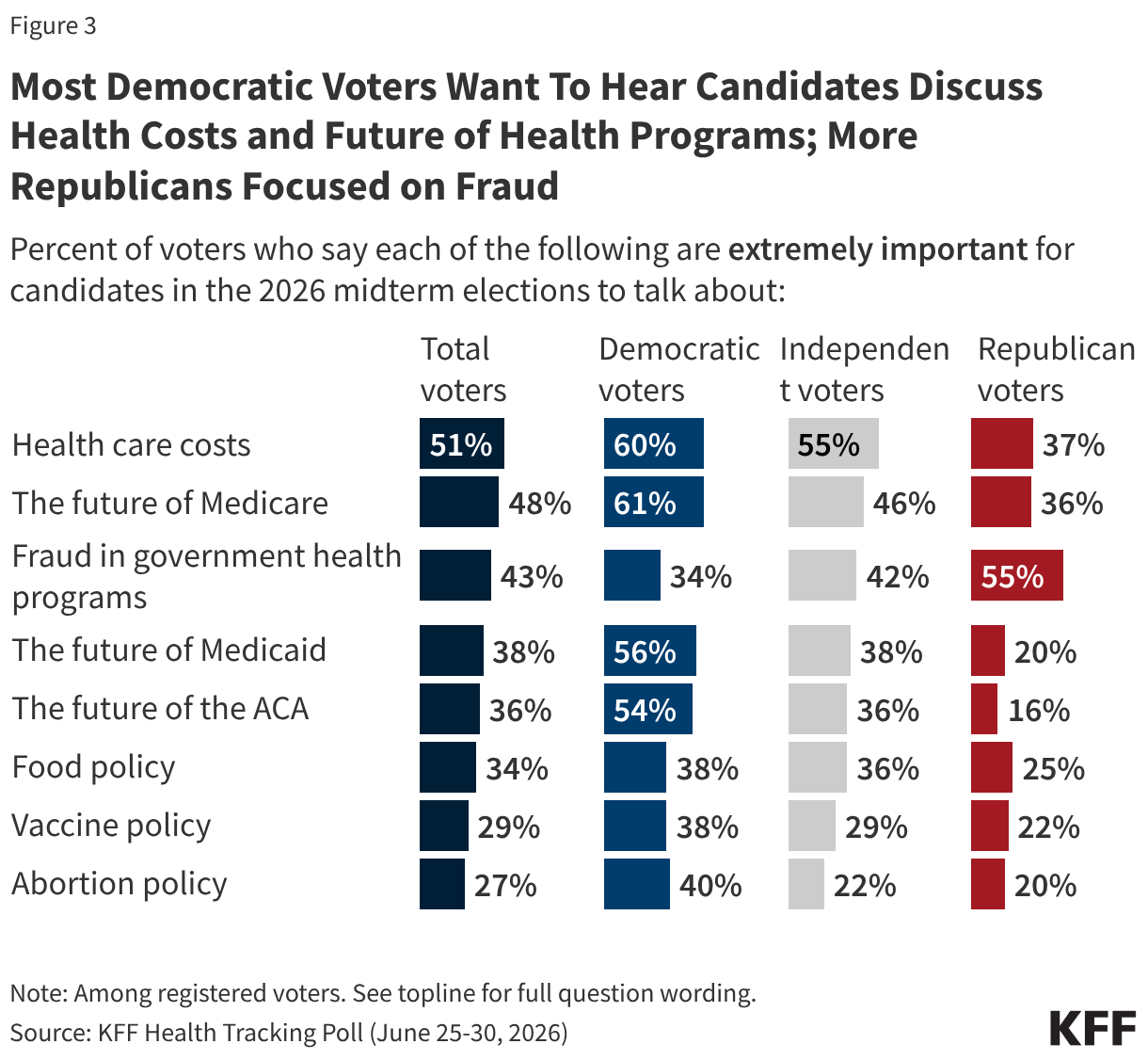
While health care is a universal concern, the lens through which different partisans view the problem varies significantly. For Democratic voters, the priority lies in the preservation and expansion of existing programs. Majorities of Democrats want to hear about the future of Medicare (61%), health care costs (60%), the future of Medicaid (56%), and the future of the ACA (54%).
In contrast, Republican voters are increasingly focused on the integrity of these programs. Fraud in government health programs has become the top health care issue for Republicans, with 55% citing it as extremely important. This represents an 18-percentage-point lead over health care costs (37%), their second-ranked issue. Independent voters align more closely with Democrats on the primary issue, with 55% prioritizing health care costs, followed by the future of Medicare (46%) and fraud prevention (42%).
Chronology of Federal Anti-Fraud Initiatives
The focus on fraud among Republican voters coincides with an aggressive series of actions taken by the Trump administration throughout 2026. The administration has framed the elimination of fraud, waste, and abuse as a primary mechanism for reducing overall health care spending.
Key milestones in this anti-fraud campaign include:
- March 2026: President Trump issues an Executive Order establishing the Task Force to Eliminate Fraud, chaired by Vice President J.D. Vance.
- Spring 2026: The Department of Justice (DOJ) conducts a National Health Care Fraud Takedown, resulting in charges against over 450 defendants across 45 states.
- June 2026: The administration requests that all states revalidate "high-risk" Medicaid providers, leading to potential service disruptions in several jurisdictions.
- Late 2026: The federal government freezes funding for New York’s Medicaid Fraud Control Unit (MFCU) and defers payments to Minnesota and California, citing mismanagement.
These actions have sparked a national debate over whether the administration is prioritizing fiscal integrity or using federal oversight as a tool to pressure Democratic-led states.
Public Perception of Fraud vs. Reality
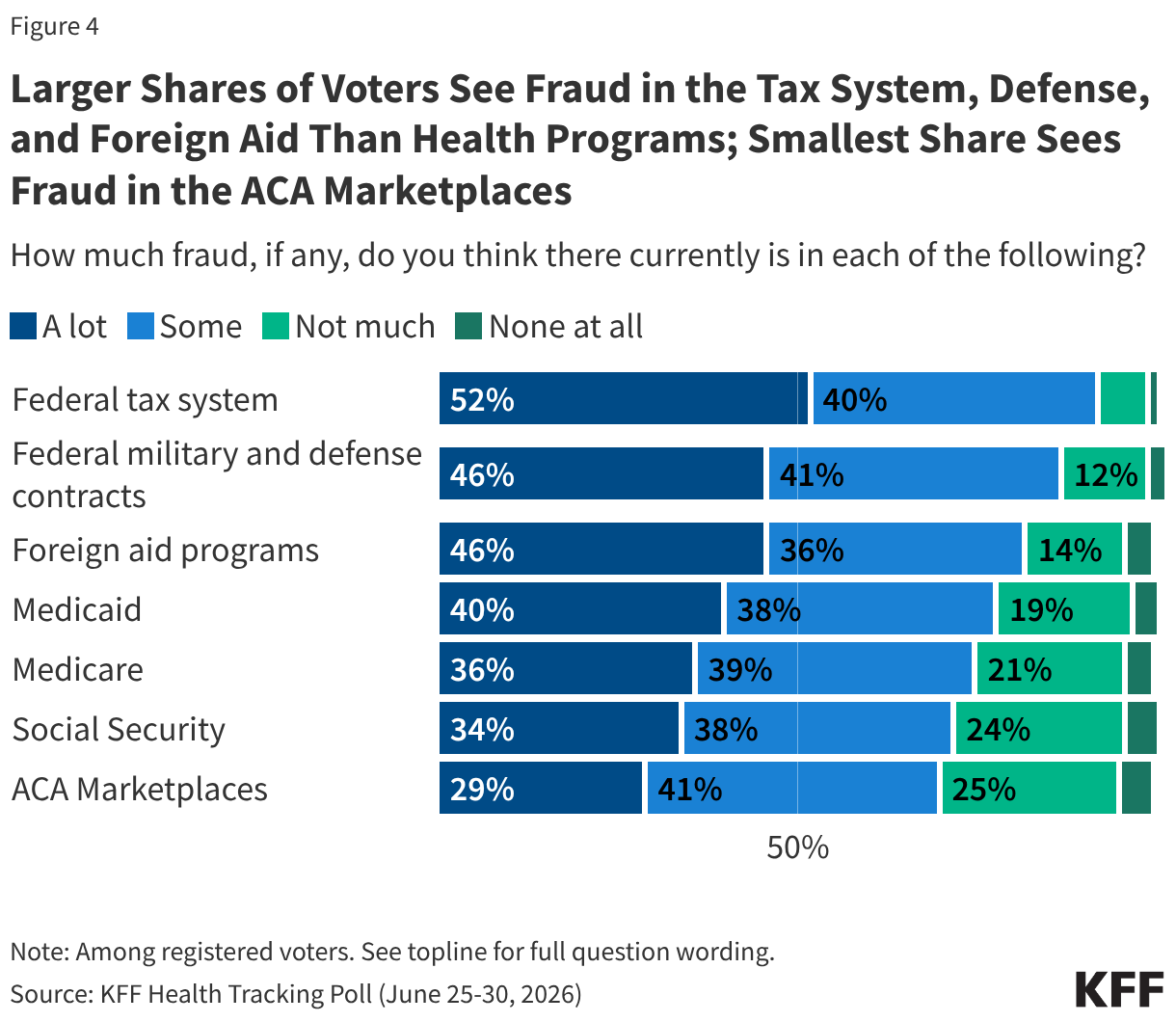
Voter perceptions of where fraud occurs often differ from the areas where it is most prevalent. While health care fraud is a major talking point, voters actually perceive higher levels of fraud in other government sectors. Approximately 52% of voters believe there is "a lot" of fraud in the federal tax system, followed by foreign aid (46%) and military contracts (46%).
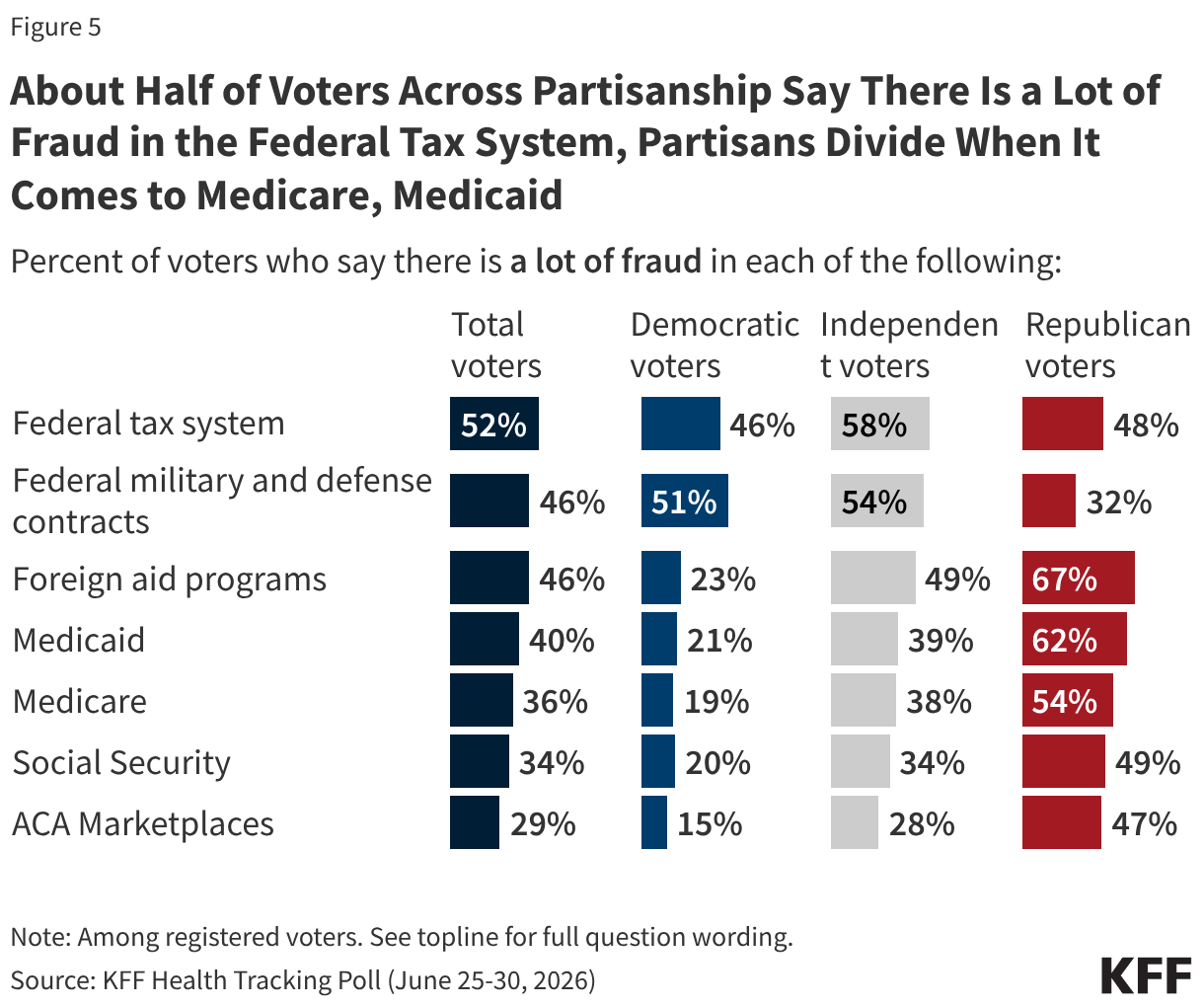
Regarding health care specifically, 40% of voters see widespread fraud in Medicaid, 36% in Medicare, and 29% in the ACA marketplaces. Partisanship heavily influences these views; Republicans are more than twice as likely as Democrats to claim there is "a lot" of fraud in Medicaid (62% vs. 21%) and Medicare (54% vs. 19%). Conversely, Democrats and Independents are more likely to see fraud in military and defense spending.
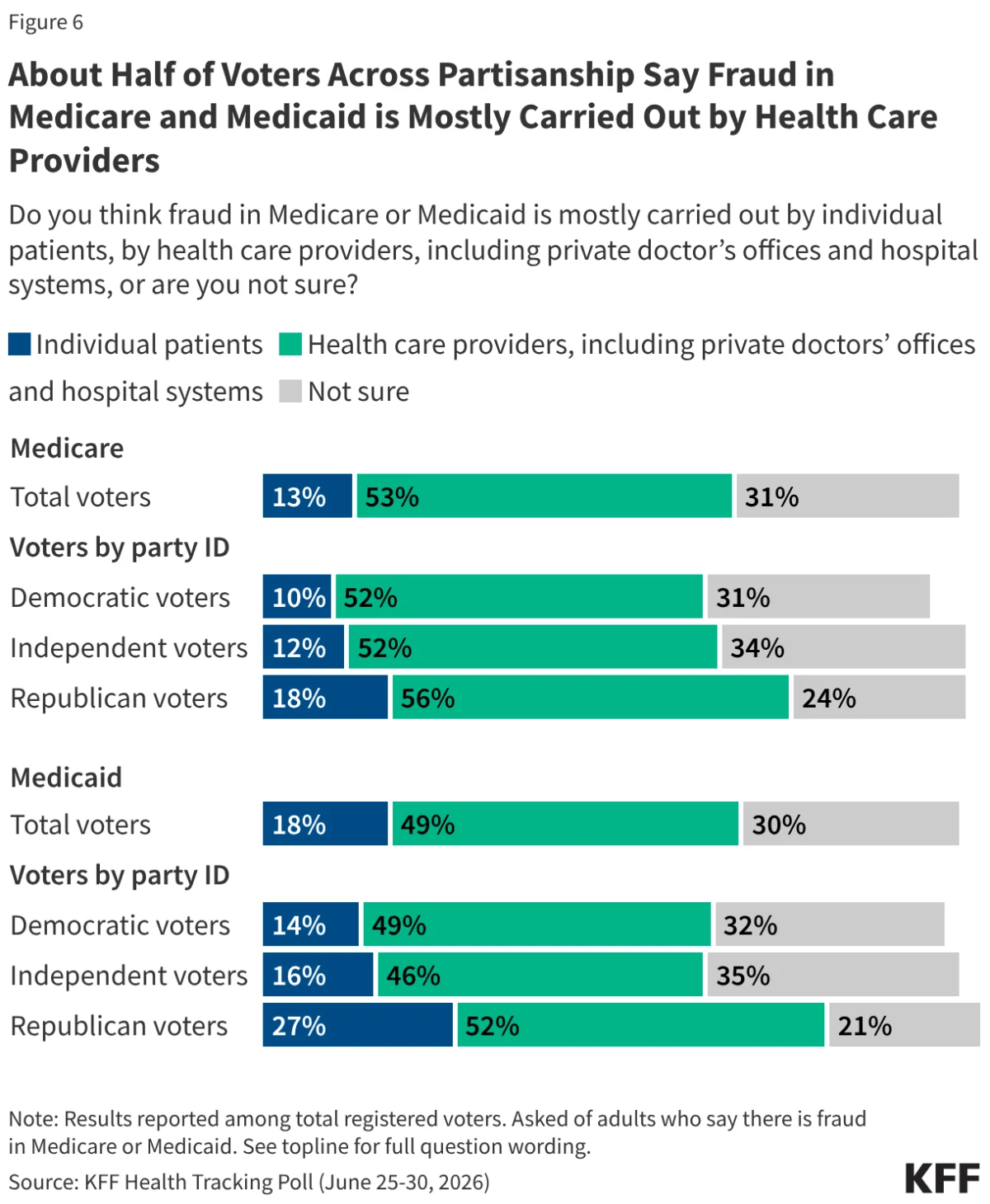
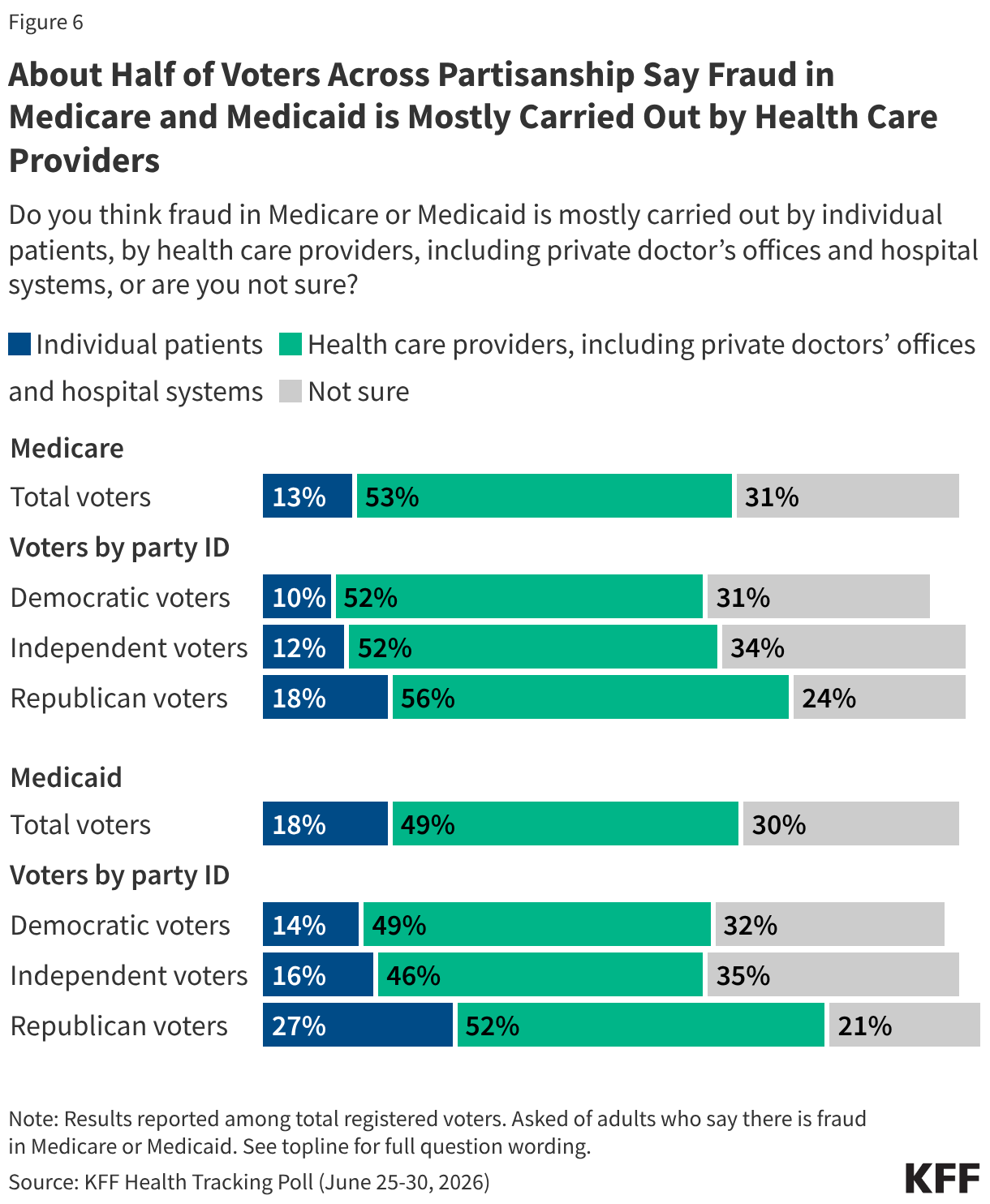
A notable point of agreement exists regarding the perpetrators of fraud. Roughly half of all voters (53%) believe that health care providers—including private doctors’ offices and hospital systems—are the primary actors behind Medicare and Medicaid fraud. Only 13% to 18% of voters attribute the bulk of fraud to individual patients. However, Republican voters are more likely than their counterparts to suggest that individual patients play a significant role in Medicaid fraud.
The Trade-off: Access vs. Fiscal Integrity
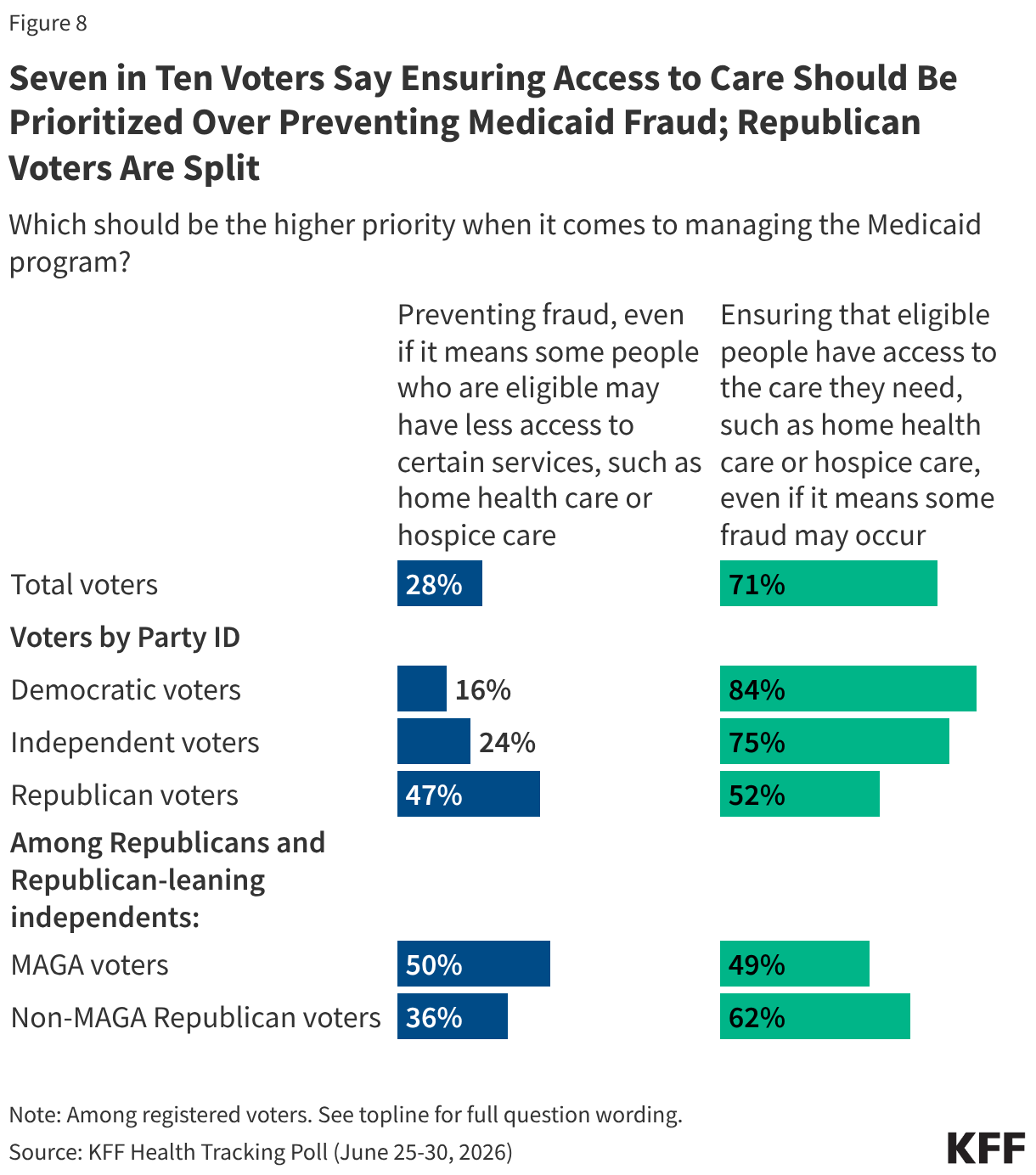
The central tension in the current health care debate is the balance between preventing fraud and ensuring access to care. When forced to choose, the American electorate leans heavily toward access. Seventy-one percent of voters say the priority for managing Medicaid should be ensuring eligible people receive care, even if it means some fraud may occur. Only 28% believe preventing fraud should be the priority if it results in eligible individuals losing access to services.
This issue reveals a split within the Republican party. While 84% of Democrats and 75% of Independents prioritize access, Republican voters are split 52% for access and 47% for fraud prevention. Within the GOP, "Make America Great Again" (MAGA) supporters are evenly divided (50% to 49%), while non-MAGA Republicans lean more toward prioritizing access (62%).
Implications of Federal Funding Deferrals
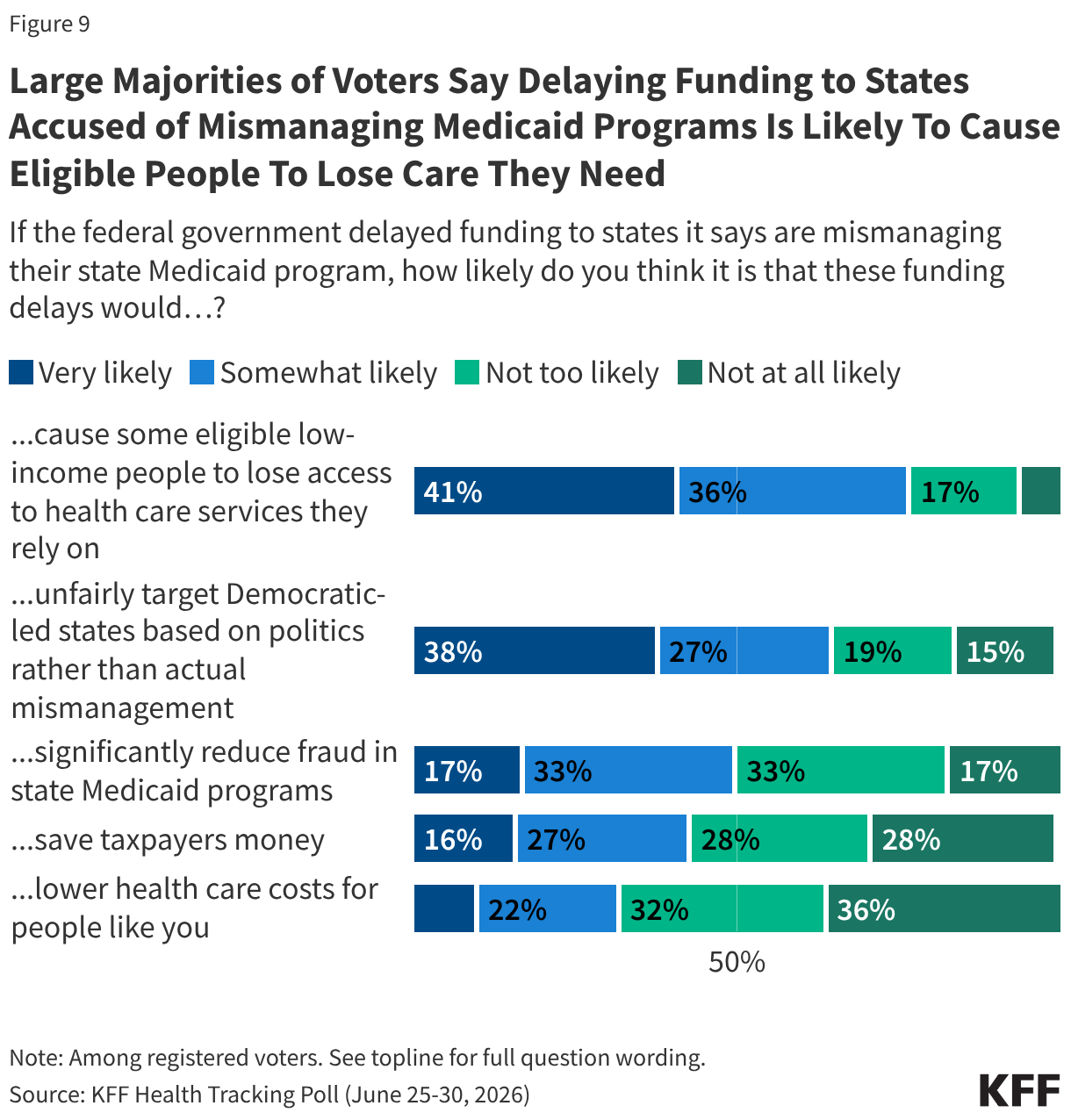
The administration’s decision to delay or withhold Medicaid funding from specific states has drawn sharp criticism and skepticism from the public. Approximately 77% of voters believe that delaying federal funds to states accused of mismanagement will likely cause low-income individuals to lose access to essential health care.
Furthermore, the public is skeptical of the administration’s stated goals:
- Political Motivation: 65% of voters believe these funding deferrals are motivated by politics rather than a genuine desire to reduce mismanagement.
- Targeting of Democratic States: 65% say the actions unfairly target states with Democratic governors.
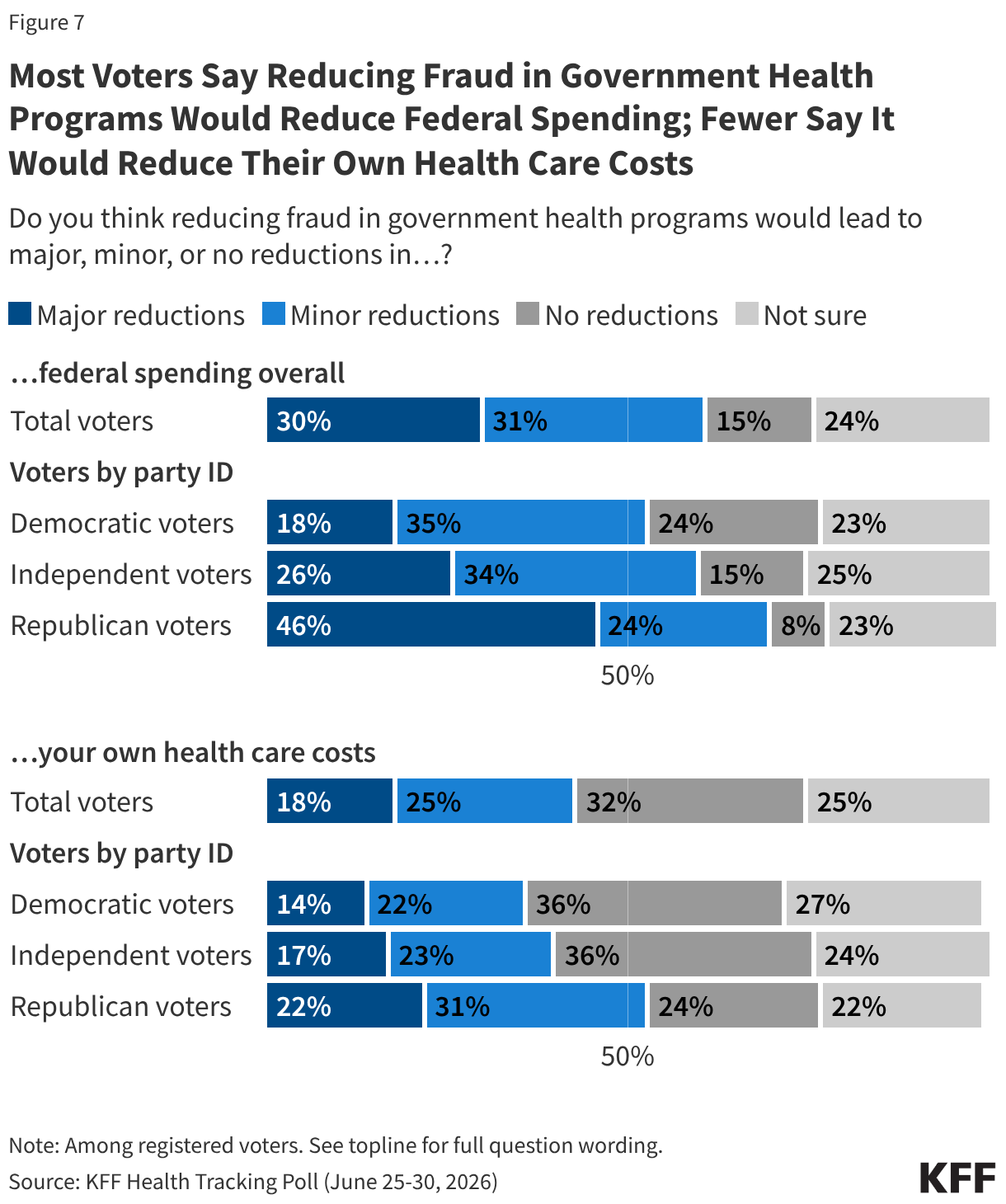
- Economic Impact: Only 31% of voters believe that cracking down on fraud will actually lower their personal health care costs.
Analysis from organizations such as KFF suggests that while anti-fraud measures can recover billions of dollars, these amounts represent a small fraction of total health care spending. Consequently, such measures are unlikely to result in significant out-of-pocket savings for the average consumer, despite the administration’s rhetoric.
Broader Impact and Future Outlook
As the midterm elections approach, the divide between voter concerns and administrative action remains stark. While the administration focuses on "program integrity" and fraud as a means of cost control, the majority of the electorate remains focused on the high prices of insurance and medical services.
The potential for "collateral damage"—where eligible beneficiaries lose coverage due to aggressive provider revalidation or state-level funding freezes—could become a major campaign liability for candidates who prioritize fraud prevention over access. If state-federal tensions continue to escalate, the stability of the Medicaid program, which serves millions of the nation’s most vulnerable citizens, may become the defining issue of the election cycle.
For candidates, the challenge will be to address the very real anxiety surrounding health care costs without appearing to undermine the programs that voters rely on for their physical and financial well-being. As the data suggests, while Americans want an efficient government, they are unwilling to sacrifice the health care safety net in the pursuit of rooting out fraud.