
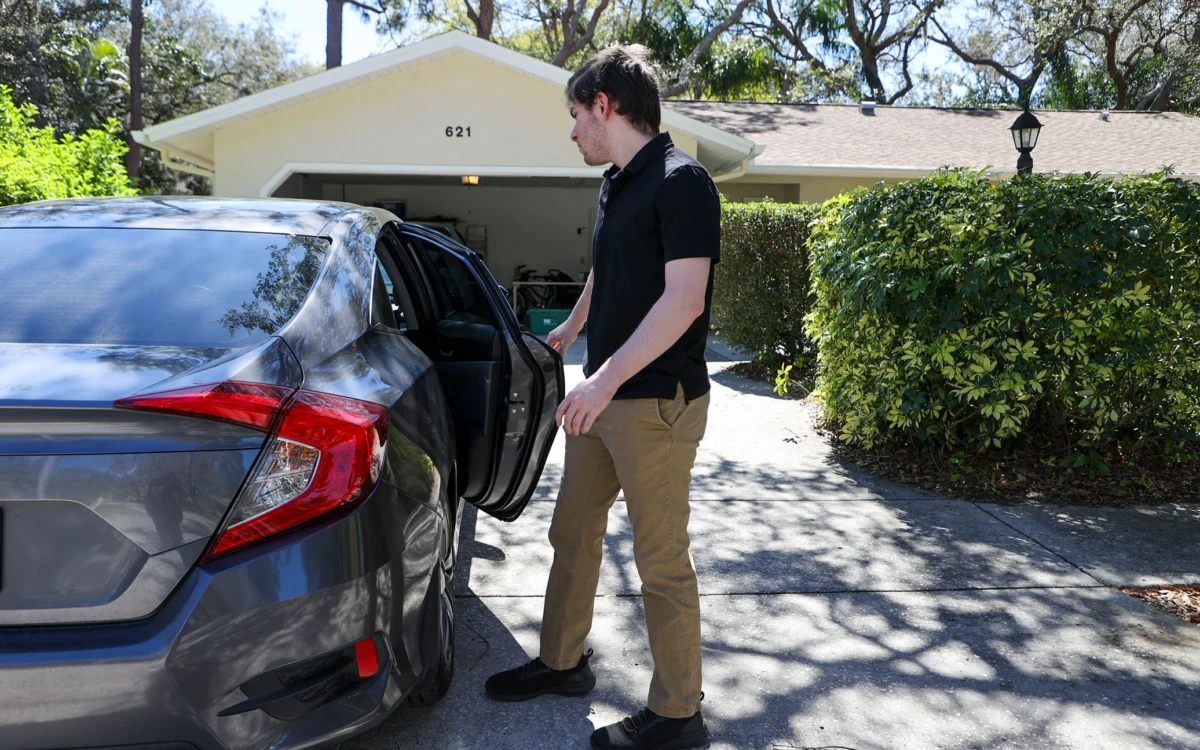
SAN FRANCISCO, CA – In a significant move that underscores the persistent challenges faced by individuals with disabilities in accessing essential services, federal officials have initiated legal action against ride-sharing giant Lyft. The U.S. Department of Justice (DOJ) has filed a lawsuit accusing Lyft and its extensive network of drivers of routinely denying rides to passengers with disabilities, including those accompanied by service animals or using stowable wheelchairs. The lawsuit, lodged in the U.S. District Court for the Northern District of California, seeks millions of dollars in damages and comprehensive systemic changes to the company’s operations.
n
The core of the federal complaint revolves around alleged violations of the Americans with Disabilities Act (ADA), a landmark civil rights law enacted in 1990 that prohibits discrimination against individuals with disabilities in all areas of public life, including private transportation services. The DOJ contends that Lyft’s practices and the conduct of its drivers have created a discriminatory environment, effectively excluding a vulnerable segment of the population from a vital modern convenience.
n
Among the serious allegations are claims that Lyft drivers frequently refuse service to passengers based on their disability, often citing service animals or the presence of mobility devices as reasons. Compounding these denials, the lawsuit states that Lyft imposes unjust cancellation fees and other surcharges on passengers who have been illegally denied rides, turning discrimination into an additional financial burden. Beyond the denial of service, the DOJ further alleges that Lyft drivers "insult and demean people with disabilities," while the company’s customer service representatives engage in "disrespectful questions," signaling a broader culture of insensitivity and lack of understanding within the organization.
n
Moreover, the federal complaint asserts that Lyft has demonstrated an unwillingness to modify its policies, practices, and procedures to prevent discrimination. Federal officials cite instances where drivers denied "reasonable requests," such as allowing a person with mobility challenges to occupy the front seat of a vehicle – a seemingly minor accommodation that can be crucial for comfort, safety, and ease of access for many individuals.
n
Jesus A. Osete, acting assistant attorney general in the Justice Department’s Civil Rights Division, emphasized the profound importance of this legal action. "Individuals with disabilities should be able to rely on ride-share services free of discrimination," Osete stated. "We intend to uphold the ADA’s promise that people with disabilities are entitled to equal access in every part of public life, including essential transportation services." The lawsuit seeks not only substantial monetary compensation – $53 million for individuals who have filed complaints with Lyft or the Justice Department – but also a significant civil penalty and a court order compelling Lyft to cease its discriminatory actions, implement sweeping policy changes, and provide mandatory ADA training for all staff and drivers.
n
Chronology of Allegations and Legal History
n
The recent lawsuit against Lyft is not an isolated incident but rather emerges from a pattern of concerns and previous legal skirmishes involving ride-sharing companies and disability rights. The Justice Department’s action reflects an ongoing commitment to enforce the ADA in the rapidly evolving landscape of on-demand transportation.
n
Initial Complaints and DOJ Investigation
n
The current legal offensive stems from numerous complaints lodged by individuals with disabilities, detailing their experiences of discrimination while attempting to use Lyft’s services. These complaints prompted the Justice Department to launch a comprehensive investigation into Lyft’s practices. During the course of this federal review, the DOJ informed Lyft of its investigation and the concerns raised. In response, Lyft reportedly introduced a voluntary in-app feature designed to allow riders to notify drivers in advance if they would be accompanied by a service animal. While seemingly a step towards accessibility, the lawsuit explicitly states that despite this feature, "discrimination against those with service animals continued," indicating that the measure was either insufficient, poorly enforced, or simply ignored by a significant number of drivers. This suggests a deeper systemic issue that a mere notification feature could not resolve.
n
A Precedent: The 2020 Settlement with Lyft
n
Crucially, this is not the first time Lyft has found itself in legal crosshairs with the Justice Department over disability discrimination. In 2020, Lyft reached a settlement with the DOJ concerning similar claims. At that time, the company formally agreed to update its policies to explicitly ensure that individuals using foldable wheelchairs and walkers were granted equal access to rides. This prior agreement serves as a significant backdrop to the current lawsuit. It raises critical questions about the effectiveness of Lyft’s previous commitments and its ability to implement and enforce these policies across its vast and decentralized network of independent contractor drivers. The recurrence of these issues suggests that the 2020 settlement may have addressed symptoms rather than the root causes of discrimination, or that compliance mechanisms proved inadequate. For disability advocates, the repeated legal action underscores a troubling pattern that demands more rigorous oversight and accountability.
n
The Broader Context: The Uber Lawsuit
n
The legal landscape further reveals that the challenges faced by individuals with disabilities in the ride-sharing sector are not unique to Lyft. Just last year, the Justice Department filed a lawsuit with strikingly similar allegations against Lyft’s primary competitor, Uber. That lawsuit also cited widespread denial of service to passengers with disabilities, including those with service animals and mobility devices, and the imposition of unfair cancellation fees. The parallel nature of these two high-profile lawsuits against the industry’s titans points to a potentially systemic issue within the gig economy’s transportation model itself. It suggests that the challenges of ensuring ADA compliance are deeply embedded in the operational structures, driver training, and accountability frameworks of these platforms. The repeated federal intervention signals a clear message to the ride-sharing industry: accessibility is not an optional add-on but a fundamental legal requirement that must be rigorously upheld.
n
Supporting Data and Allegations in Detail
n
The Justice Department’s lawsuit meticulously details a series of alleged discriminatory practices, painting a stark picture of the obstacles and indignities faced by passengers with disabilities attempting to use Lyft’s services. These aren’t merely legal technicalities; they represent significant barriers to independence and participation in society.
n
The Human Impact of Discrimination
n
Beyond the legal terminology, the allegations translate into real-world consequences for individuals. When a ride is denied, it can mean missing a crucial medical appointment, being late for work, being stranded in an unsafe location, or being unable to participate in social activities. For many, ride-sharing services are not a luxury but an essential component of their daily lives, offering a degree of independence that traditional public transportation may not always provide. The emotional toll of repeated denials, coupled with disrespectful interactions, can be profound, leading to frustration, humiliation, and a diminished sense of self-worth.
n
Service Animals: More Than Just Pets
n
One of the most frequent and egregious allegations involves the denial of service to individuals traveling with service animals. Service animals, typically dogs, are not pets; they are highly trained working animals that perform specific tasks to assist individuals with disabilities. These tasks can range from guiding people who are blind, alerting individuals with seizures, retrieving items for those with mobility impairments, or providing psychiatric support. Under the ADA, service animals are generally permitted in all public accommodations, including private transportation services like Lyft. Drivers who deny service to a passenger with a legitimate service animal are not merely being inconvenient; they are directly impeding a person’s ability to navigate the world safely and independently. The lawsuit highlights instances where drivers either outright refused to transport a service animal, questioned the animal’s legitimacy disrespectfully, or drove away upon seeing one, despite Lyft’s stated policies and even its in-app notification feature.
n
Mobility Devices: The Struggle for Basic Access
n
Another critical area of concern is the refusal of service to passengers using mobility devices, particularly stowable wheelchairs. While the ADA mandates that private transportation companies must accommodate such devices, the DOJ alleges that Lyft drivers frequently fail to do so. This can manifest in various ways: drivers claiming their vehicle lacks space when it does, refusing to assist with loading the device, or simply canceling the ride without explanation upon seeing the wheelchair. For individuals reliant on these devices, a denied ride can mean being physically stranded. It strips away their autonomy and reinforces the societal barriers that still exist. The previous 2020 settlement specifically addressed foldable wheelchairs and walkers, making the continued allegations even more troubling as it suggests a failure to fully embed and enforce these accommodations.
n
Unjust Cancellation Fees: Adding Insult to Injury
n
The imposition of cancellation fees on passengers who have been illegally denied service is a particularly insidious form of discrimination. Imagine a scenario where a driver pulls up, sees a service animal or a wheelchair, and immediately cancels the ride or drives away. The passenger, already facing the stress and inconvenience of a denied ride, is then charged a cancellation fee by Lyft. This effectively penalizes the victim for the discriminatory actions of the driver, transforming a civil rights violation into a financial burden. The lawsuit portrays this practice as a clear indication of a system that not only permits discrimination but also profits from its aftermath.
n
Disrespectful Interactions: A Culture of Insensitivity
n
The lawsuit goes beyond mere denial of service to address the quality of interactions between Lyft personnel and passengers with disabilities. The DOJ alleges that drivers "insult and demean people with disabilities." This could involve making derogatory comments, openly questioning the legitimacy of a disability or service animal, or displaying overt annoyance. Such interactions contribute to an environment where individuals with disabilities feel unwelcome and disrespected. Similarly, allegations that Lyft’s customer service representatives ask "disrespectful questions" suggest a lack of adequate training and understanding of ADA requirements and disability etiquette. Instead of resolving issues, customer service interactions may exacerbate the passenger’s frustration and feelings of marginalization.
n
Refusal of Reasonable Accommodations
n
The ADA requires reasonable modifications to policies, practices, and procedures to avoid discrimination. The lawsuit highlights the denial of seemingly simple yet crucial accommodations, such as allowing a person with mobility challenges to sit in the front seat. For individuals with certain physical limitations, balance issues, or even those needing extra space for a service animal, sitting in the front seat can be a matter of comfort, safety, or necessity. The refusal of such a reasonable and often easily implementable request underscores a broader alleged unwillingness by Lyft and its drivers to accommodate the diverse needs of its passenger base.
n
The Gig Economy Challenge: Enforcement and Accountability
n
A significant underlying factor in these recurring issues is the operational model of the gig economy. Lyft drivers are classified as independent contractors, not employees. This distinction often complicates enforcement of company policies and civil rights laws. While Lyft can issue guidelines and deactivation threats, monitoring and ensuring consistent compliance across millions of independent contractors presents a unique challenge. The lawsuit implicitly questions whether Lyft’s existing "long-standing policies" and "in-app tools" are genuinely effective in a decentralized system where individual drivers may prioritize personal convenience over legal obligations and company directives. The core tension lies in who bears ultimate responsibility for ADA compliance – the platform that connects riders and drivers, or the individual drivers themselves? The DOJ’s stance is clear: the platform is accountable.
n
Official Responses and Industry Context
The legal battle between the Justice Department and Lyft highlights a critical divergence between federal enforcement priorities and a major corporation’s stated commitments. Both sides have articulated their positions, offering insights into the contentious nature of the lawsuit.
Justice Department’s Unwavering Stance
The Justice Department’s position, articulated by Jesus A. Osete, is unambiguous: "We intend to uphold the ADA’s promise that people with disabilities are entitled to equal access in every part of public life, including essential transportation services." This statement frames the lawsuit not merely as a punitive measure against a single company, but as a broader commitment by the federal government to ensure civil rights are upheld in the modern era. The DOJ sees ride-sharing services as an integral part of public life, and therefore, subject to the full force of the ADA. This lawsuit is a clear signal that the federal government will actively pursue companies that fail to provide accessible services, reinforcing the idea that digital platforms and innovative business models do not exempt entities from fundamental civil rights obligations. The emphasis on "equal access in every part of public life" underscores the DOJ’s belief that transportation is a foundational element for individuals with disabilities to participate fully in society, from employment to healthcare to social engagement.
Lyft’s Official Rebuttal
In response to the federal lawsuit, Lyft issued a strong rebuttal, expressing disagreement with the Justice Department’s allegations. "We disagree with the Department of Justice’s allegations. Discrimination has no place in the Lyft community," the company stated. Lyft’s statement outlines several points of defense:
- Zero Tolerance for Discrimination: The company asserts that discrimination is antithetical to its community values.
- Long-Standing Policies: Lyft claims to have established policies that explicitly require drivers to accommodate riders traveling with service animals or using foldable mobility devices.
- Serious Consequences: The company states that drivers who violate these policies face "serious consequences, including permanent deactivation."
- In-App Tools: Lyft points to its technological solutions, such as allowing riders to notify drivers in advance about service animals and reminding drivers of their legal obligations.
- Cooperation with DOJ: The company affirms its cooperation throughout the DOJ’s review process.
- Commitment to All Riders: Lyft reiterates its commitment to serving every rider, including those with disabilities.
However, the DOJ’s lawsuit directly challenges the effectiveness and enforcement of these very policies and tools. If policies are "long-standing" and consequences "serious," the federal complaint implicitly asks why widespread and continued discrimination is still allegedly occurring. This disconnect suggests either that the policies are insufficient, their enforcement is lax, or the in-app tools are not robust enough to overcome persistent discriminatory behavior by individual drivers within the gig economy model. The lawsuit essentially argues that Lyft’s stated commitment and internal mechanisms have failed to prevent systemic violations of federal law.
Industry-Wide Scrutiny
The lawsuits against both Lyft and Uber illuminate a broader pattern of scrutiny facing the entire ride-sharing industry concerning accessibility. While these companies have revolutionized urban transportation, their rapid growth has outpaced, or at least challenged, their ability to fully integrate accessibility standards. The independent contractor model, while offering flexibility, also complicates the consistent application of training and accountability for civil rights compliance. Regulators and disability advocates are increasingly calling for more robust mechanisms to ensure that these essential services are truly accessible to everyone, not just those without visible disabilities or mobility challenges. The question extends beyond Lyft and Uber to other on-demand services that rely on similar operational models.
Implications and The Path Forward
The Justice Department’s lawsuit against Lyft carries far-reaching implications, not just for the ride-sharing giant but for the broader gig economy, disability rights advocacy, and the future of accessible transportation. The outcome of this legal battle could reshape how on-demand services operate and how civil rights are enforced in the digital age.
Potential Outcomes of the Lawsuit
The DOJ is seeking substantial remedies that go beyond mere financial penalties.
- Financial Penalties: The demand for $53 million in damages for individuals who have filed complaints, coupled with a civil penalty, aims to compensate those directly harmed and to deter future violations. This financial burden could be significant for Lyft, impacting its profitability and investor confidence.
- Injunctive Relief: Perhaps more impactful than the monetary damages is the request for a court order compelling Lyft to cease its discriminatory actions. This would likely mandate comprehensive changes to Lyft’s policies, procedures, and potentially its operational model. Crucially, the demand for mandatory ADA training for all staff and drivers highlights the DOJ’s belief that a lack of awareness and proper education is a significant contributing factor to the discrimination. Implementing such widespread training across a dynamic and often transient driver base would be a massive logistical undertaking and a considerable expense for Lyft.
- Precedent Setting: A successful prosecution or a settlement favoring the DOJ would set a powerful precedent for other technology companies and gig economy platforms. It would reinforce the principle that innovation does not grant immunity from civil rights laws and that companies are responsible for the actions of their independent contractors when those actions occur within the scope of providing the company’s service.
- Settlement vs. Trial: While the DOJ has filed a lawsuit, many such cases ultimately conclude with a settlement. A settlement might involve Lyft agreeing to implement specific policy changes, training programs, and a structured compensation fund for affected individuals, potentially avoiding a protracted and costly trial, but still yielding significant changes.
Impact on the Disability Community
For individuals with disabilities, this lawsuit represents a crucial fight for basic human rights and dignity.
- Renewed Hope and Validation: The federal government’s intervention can offer a sense of validation for those who have experienced discrimination, reaffirming that their experiences are legitimate and that their rights are worth fighting for. It provides hope that systemic change is possible.
- Increased Awareness and Empowerment: The high-profile nature of the lawsuit brings national attention to the persistent issues of accessibility in modern transportation. This increased awareness can empower more individuals to report instances of discrimination and encourage advocacy groups to intensify their efforts.
- Enhanced Independence: If successful, the lawsuit could lead to tangible improvements in service accessibility, fostering greater independence and equal participation in society for millions of Americans with disabilities.
Impact on Lyft’s Operations and Reputation
The lawsuit carries significant repercussions for Lyft as a company.
- Reputational Damage: Being sued by the U.S. Department of Justice for civil rights violations is a severe blow to a company’s public image. Coming after a previous settlement and alongside a similar lawsuit against its main competitor, it suggests a recurring problem that undermines public trust and goodwill.
- Operational Overhaul: Implementing court-ordered changes, especially mandatory ADA training for all drivers and staff, would require a substantial investment of time, resources, and managerial effort. It could necessitate a re-evaluation of how Lyft onboards, monitors, and holds its independent contractors accountable.
- Business Model Adjustments: The lawsuit might force Lyft, and potentially the broader gig economy, to re-examine the implications of its independent contractor model regarding civil rights enforcement. It could lead to stricter vetting, more continuous training, and more robust mechanisms for reporting and resolving discrimination claims, potentially altering the flexibility that defines the gig economy.
The Future of Accessible Transportation
This lawsuit serves as a critical juncture for the future of accessible transportation.
- Beyond Ride-Sharing: The lessons learned from this case will undoubtedly extend beyond Lyft and Uber to other on-demand services, including food delivery, package delivery, and other emerging platforms that rely on independent contractors. Companies in these sectors will likely face increased scrutiny regarding their own ADA compliance.
- Innovation in Accessibility: The legal pressure could spur greater innovation in integrating accessibility features from the outset of product design, rather than as an afterthought. This could include better in-app communication tools, clearer guidelines for drivers, and more effective mechanisms for reporting and addressing discrimination.
- A Call to Action: Ultimately, the lawsuit is a powerful call to action for companies, regulators, and the public to collaborate in ensuring genuine inclusion. It underscores that while technology can offer unprecedented convenience, it must also be leveraged to uphold fundamental human rights and ensure that progress benefits everyone, regardless of their abilities. The pursuit of justice for individuals with disabilities in the ride-sharing economy is a testament to the ongoing struggle for true equality and access in all facets of modern life.

