
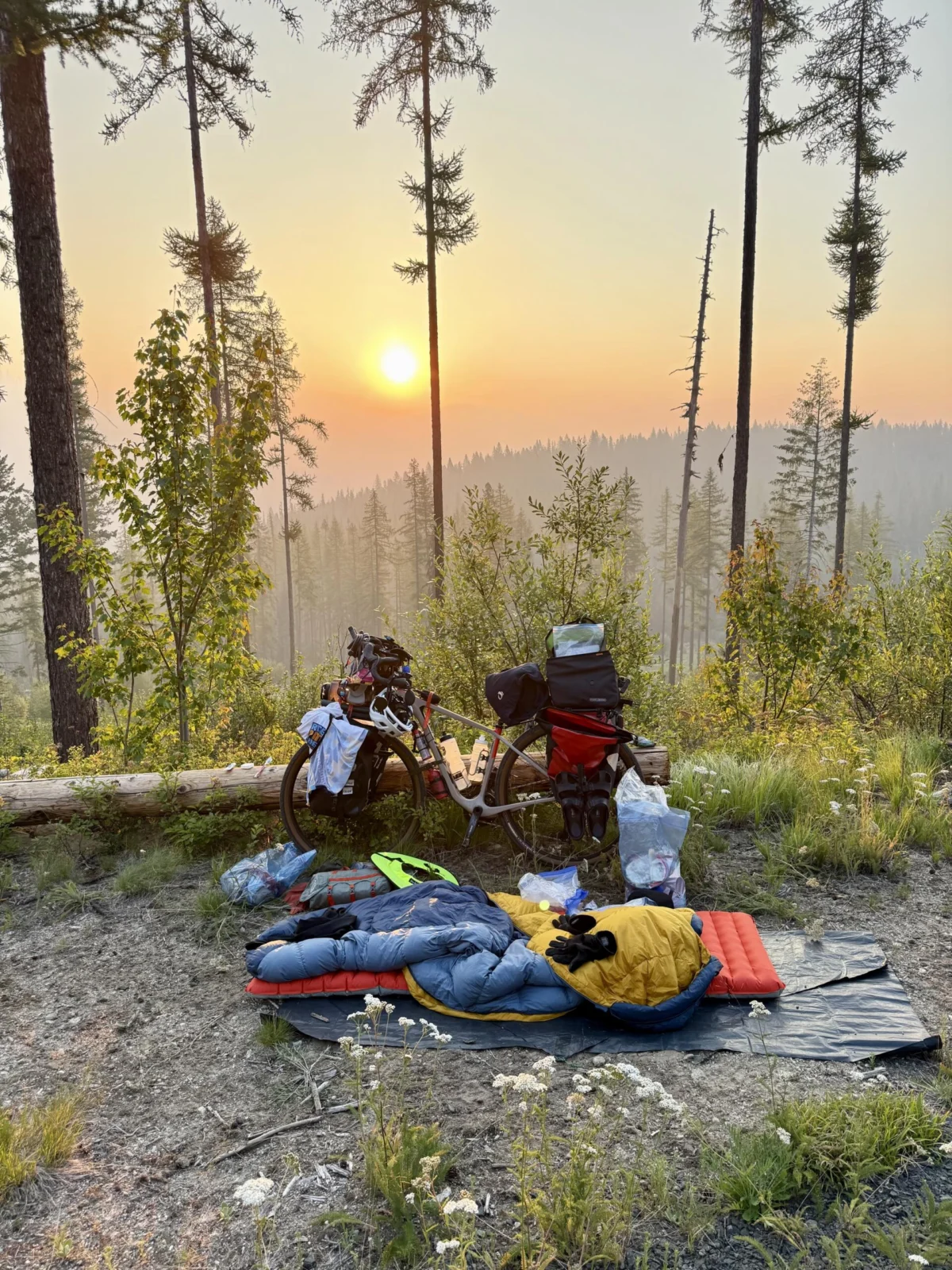
LEONARD, ND – In the quiet, expansive stretches of the American Midwest, where the horizon seems to retreat further with every revolution of a bicycle pedal, Pat McAleer is engaged in a grueling test of human endurance. What began on July 15 as a ceremonial dip of a bicycle wheel into the Pacific Ocean at La Push, Washington, has evolved into a 5,000-mile cross-country mission known as "Ride Pat Ride."
n
McAleer, a resident of Richmond, Virginia, is currently three months into a solo, self-supported journey across the United States. His destination is the Atlantic shoreline of Virginia Beach, but his ultimate goal lies in the laboratories of medical researchers: finding a cure for Type 1 Diabetes (T1D). As he traverses the "Northern Tier" route, McAleer is not just battling the elements; he is leveraging his journey to raise significant funds and awareness for Breakthrough T1D (formerly JDRF), the leading global organization funding T1D research.
n
Main Facts: The Scope of the Mission
n
The "Ride Pat Ride" campaign represents one of the most ambitious individual DIY fundraising efforts in recent years for Breakthrough T1D. The journey is defined by several staggering metrics:
n
- n
- Total Distance: Over 5,000 miles, significantly longer than a direct cross-country route due to the specific trails and safety-focused detours.
- Duration: A scheduled three-month odyssey.
- Self-Supported Status: Unlike many charity rides that feature support vehicles and pre-arranged lodging, McAleer is "fully loaded," carrying his own shelter, cooking supplies, and water.
- The Route: Primarily following the Adventure Cycling Association’s Northern Tier Route, which takes cyclists through the northernmost states of the U.S.
n
n
n
n
n
McAleer’s journey is currently in its middle act. After conquering the formidable Rocky Mountains, he has transitioned into the High Plains of North Dakota and the lake country of Minnesota. As of late August, he had surpassed the 1,850-mile mark, a milestone that signaled both the halfway point of his journey and a shift in the psychological and physical challenges of the ride.
n
Chronology of a Continental Crossing
n
The Departure and the Rockies (July 15 – Early August)
n
The journey commenced with a flight from Richmond to Seattle, followed by a transit to the rugged coast of La Push. On July 15, McAleer dipped his tires in the Pacific, symbolizing the start of his eastward trek. The initial weeks were defined by verticality. Climbing through the Cascades and the Rocky Mountains in Montana, McAleer faced the double challenge of high altitude and heavy gear.
n
"You go from this forest mountain thing, where you can see a bit into the distance, and then you get these big mountaintop views," McAleer recalled during a recent stop. The descent from the Rockies marked a transition from "big sky country" to the rolling prairies, a shift that offered visual relief but introduced a new atmospheric adversary.
n
The Plains and the Battle of Headwinds (Mid-August)
n
By the time McAleer reached Leonard, North Dakota—a small community about three hours west of Fargo—the topography had flattened, but the difficulty had not diminished. In the plains, the absence of mountain passes is compensated for by relentless headwinds.
n
"It’s deceiving because in the morning, you look at your route, you look at the topography, and you’re like, ‘Oh, this will be great.’ Not so quick—check the wind!" McAleer noted. He described the experience of pedaling against a 20-mph headwind on flat ground as feeling identical to climbing a steep mountain pass, requiring the same caloric output for a fraction of the speed.
n
The Midwest Transition (Late August – Present)
n
Currently, McAleer is making his way through Wisconsin. This phase of the journey involves navigating a patchwork of two-lane highways and occasional stretches of the Interstate. In North Dakota, the lack of secondary roads forced him onto I-94. While daunting for most cyclists, McAleer found the experience surprisingly safe, noting that commercial truck drivers and motorists gave him wide berths, often moving entirely into the left lane to accommodate his passage.

n
Supporting Data: Logistics and the "Fully Loaded" Philosophy
n
One of the most compelling aspects of McAleer’s journey is his commitment to being self-supported. In the world of long-distance cycling, there are two primary schools of thought: "Bikepacking light," which relies on hotels and restaurants, and "Traditional Touring," which involves carrying a mobile home on two wheels. McAleer chose the latter.
n
The Weight of Independence
n
McAleer’s bicycle is outfitted with several heavy-duty panniers (saddlebags) containing:
n
- n
- A tent, sleeping bag, and mattress pad.
- A portable cook stove and several days’ worth of dehydrated rations.
- A high-capacity water filtration system and several gallons of backup water.
- Essential electronics, including a phone, GPS, and solar chargers.
n
n
n
n
While this setup adds significant weight, McAleer argues it provides "incredible flexibility." If he reaches a point of exhaustion in a remote area, he does not need to push another 20 miles to the nearest motel; he can simply find a safe spot and set up camp.
Adaptations and Error Correction
The journey has been a masterclass in adaptation. McAleer admitted to overpacking initially, having to ship a "one-way suitcase" of unnecessary clothing and gear back to Virginia just days into the ride. He also swapped out a hydration backpack—which he found uncomfortable for 8-hour riding days—for a simple water jug system.
Environmental factors have also forced gear changes. To combat the intense sun of the plains, he added a wide-brimmed hat that fits over his helmet. More critically, as wildfires in the West sent plumes of smoke across the Northern Tier, McAleer had to purchase a respirator mask to protect his lungs while maintaining the high respiratory rate required for cycling.
Official Responses and Community Impact
The response to McAleer’s ride has been a mixture of corporate support from Breakthrough T1D and grassroots "trail magic" from the American public.
The Breakthrough T1D Framework
Breakthrough T1D has highlighted McAleer as a premier example of their "Your Way" fundraising program. This platform allows individuals to create custom challenges—ranging from bake sales to transcontinental bike rides—to fund research into T1D, an autoimmune disease where the pancreas produces little to no insulin. Unlike Type 2 diabetes, T1D is not related to diet or lifestyle and currently has no cure.
A spokesperson for the organization noted that DIY fundraisers like McAleer are vital because they provide "organic outreach," bringing the message of T1D awareness to small towns and communities that traditional national advertising might never reach.
The "Darnell" Factor: Small-Town Americana
The human element of the story is perhaps best encapsulated by McAleer’s experience in Moffit, North Dakota. Arriving late on a Sunday, he found only a post office and a bar. After seeking permission from the bartender—a man named Darnell—to camp behind the post office, McAleer was told, "If anyone asks you anything, you just tell them Darnell said it’s okay."

The following morning, a local resident who had seen his tent brought him a hot cup of coffee. Such interactions have been a staple of the trip. At a convenience store, after McAleer accidentally fell asleep at a table while studying his maps, the staff—intrigued by his "Breakthrough T1D" jersey—looked up his mission online. By the time he woke up, the two employees had pooled their money to donate $140 to his cause.
"They were hosting me in their store… just taking care of me," McAleer said. "It just brought out the goodness of people."
Implications: Why the "Ride Pat Ride" Matters
As McAleer enters the final third of his journey, the implications of his ride extend beyond the immediate dollars raised.
1. Advancing T1D Research
The funds raised through Ride Pat Ride are funneled directly into clinical trials for disease-modifying therapies and the development of "artificial pancreas" technology. For the millions living with T1D, these advancements represent the difference between a life of constant finger-pricks and insulin injections and a life of relative normalcy.
2. The Power of Solo Advocacy
In an era of digital-first activism, McAleer’s physical presence in the rural U.S. serves as a powerful reminder of the efficacy of "boots-on-the-ground" (or tires-on-the-pavement) advocacy. Every time a driver sees his jersey or a local asks about his gear, a conversation about T1D begins.
3. Inspiring the Next Generation of "DIY" Philanthropists
McAleer is demonstrating that you don’t need a corporate sponsorship or a professional cycling background to effect change. His journey is a blueprint for how personal passion can be harnessed for global impact. Breakthrough T1D continues to encourage others to follow his lead, whether through the "Ride" program—which features organized destination rides in 2026—or through their own unique "My Ride" challenges.
As Pat McAleer pedals toward the Atlantic, the headwinds may remain, and the road may remain long, but the support of a nation and the hope of a T1D community are pushing him forward. His journey is a testament to the idea that while a cure for diabetes may still be miles away, every revolution of the wheel brings it just a little bit closer.
Supporters can follow Pat’s progress and contribute to the mission via the official Ride Pat Ride website or through Breakthrough T1D’s social media channels.

