
Introduction: A Movement Beyond Miles
n
In an era where public health initiatives often struggle to break through the noise of digital distractions, the Obesity Action Coalition (OAC) has successfully captured the public’s imagination with its latest endeavor. The 2026 OAC Step Challenge, a month-long initiative held every October, has recently been thrust into the media spotlight, signaling a significant shift in how society approaches physical activity, inclusivity, and health advocacy.
n
The campaign received a major boost this week when it was featured on WFLA’s Bloom Tampa Bay. In a segment titled “Take a Step and Make an Impact!”, the program highlighted the OAC’s unique approach to wellness—one that moves away from the high-pressure environment of traditional fitness challenges and toward a more inclusive, community-driven model. As the challenge continues through the end of October, it serves as a powerful reminder that every movement, regardless of intensity or form, contributes to a larger mission of education, advocacy, and support for those affected by the chronic disease of obesity.
n
n
Main Facts: Redefining the "Step" in Step Challenge
n
The 2026 OAC Step Challenge is not a standard marathon or a high-intensity interval training program. Instead, it is designed as a "movement-agnostic" platform. At its core, the challenge is built on the philosophy that intentional movement is a human right and a personal journey, rather than a competitive metric.
n
Inclusivity at the Forefront
n
The OAC has intentionally broadened the definition of a "step." Recognizing that individuals have varying levels of mobility and different physical needs, the challenge encourages activities such as:
n
- n
- Gardening and Yard Work: Recognizing the functional fitness involved in outdoor maintenance.
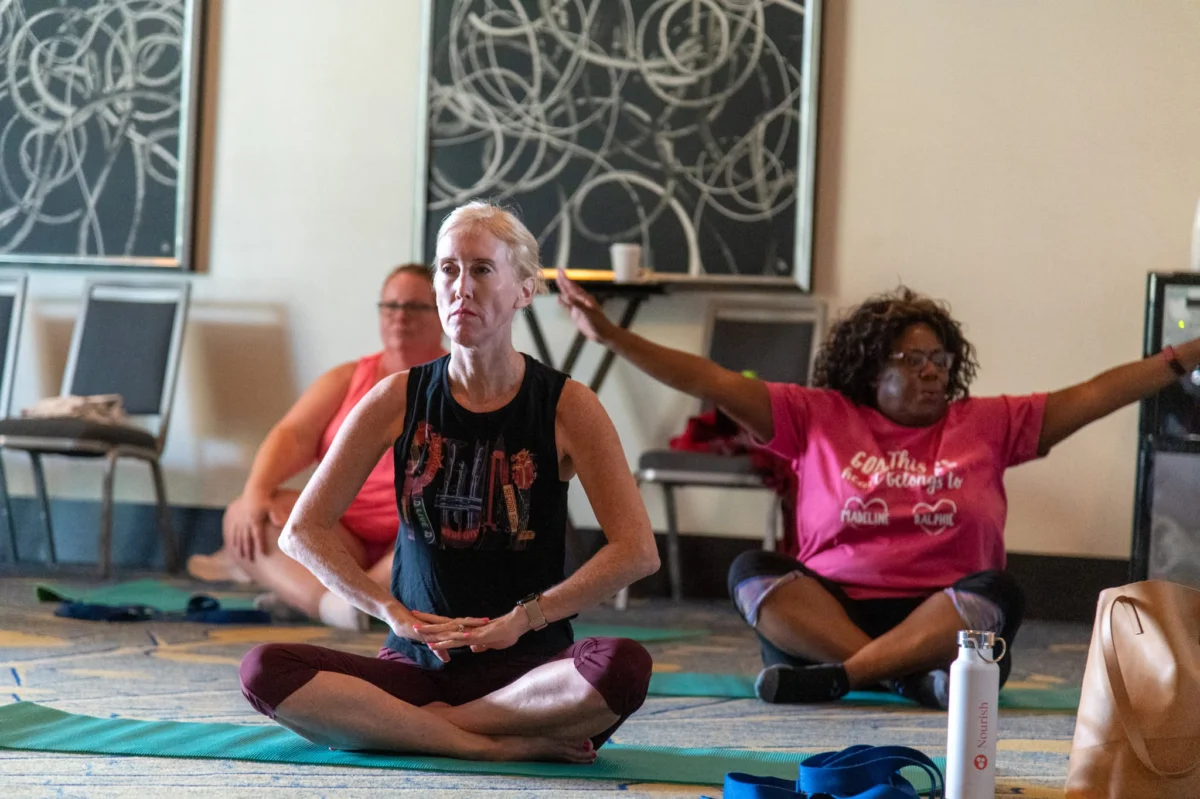
- Stretching and Yoga: Highlighting the importance of flexibility and mental-physical connection.
- Swimming and Water Aerobics: Providing low-impact options for those with joint concerns.
- Wheelchair Movement: Ensuring that those with mobility impairments are fully integrated into the community goal.
n
n
n
n
n
The Dual Mission
n
While physical health is a primary driver, the 2026 Step Challenge serves a secondary, equally vital purpose: fundraising. The proceeds generated through registrations and team sponsorships are funneled directly into the OAC’s core pillars:
n
- n
- Education: Providing evidence-based resources to help individuals navigate their health journeys.
- Advocacy: Fighting for legislative changes, such as the Treat and Reduce Obesity Act (TROA), to ensure better access to care.
- Awareness: Challenging the pervasive weight bias and stigma that often prevent individuals from seeking medical help.
- Support: Building a community where individuals feel seen, heard, and empowered.
n
n
n
n
n
n
Chronology: From Concept to National Coverage
n
The journey of the 2026 Step Challenge began long before the first of October. To understand the current momentum, one must look at the timeline of its development and the strategic rollout that led to its feature on Bloom Tampa Bay.
n
Phase I: The Planning and Recruitment (January – August 2026)
n
Early in the year, the OAC leadership identified a need for a flagship event that could bridge the gap between their advocacy work and the daily lives of their members. The "Step Challenge" concept was refined to ensure it did not alienate the very people the OAC serves. Unlike traditional fitness trackers that focus solely on distance, the OAC developed a conversion system where various activities could be translated into "step equivalents," ensuring a level playing field for all participants.
n
Phase II: The Launch and Early Momentum (September 2026)
n
The registration portal opened in late August, with a massive push across social media platforms. By the time October 1st arrived, thousands of individuals and hundreds of corporate teams had signed up. The OAC utilized "early bird" incentives and team-building kits to encourage workplaces to participate as a form of corporate social responsibility.
n
Phase III: The Media Pivot (October 2026)
Midway through the month, the campaign reached a critical mass. The feature on WFLA’s Bloom Tampa Bay served as a turning point. By appearing on a platform dedicated to health and lifestyle, the OAC was able to reach a broader demographic beyond its existing membership. The segment emphasized that "it is never too late to start," sparking a surge in mid-month registrations.
Supporting Data: The Statistics of Physical Activity and Obesity
The necessity of the OAC Step Challenge is underscored by startling statistics regarding public health in the United States. According to the Centers for Disease Control and Prevention (CDC), adult obesity rates in the U.S. have remained at historic highs, with over 40% of the population classified as having obesity.
The Impact of "Non-Exercise" Movement
Research suggests that Non-Exercise Activity Thermogenesis (NEAT)—the energy expended for everything we do that is not sleeping, eating, or sports-like exercise—plays a crucial role in metabolic health. The OAC Step Challenge leverages this data by validating activities like gardening and stretching.
- Metabolic Benefits: Even 15 minutes of intentional movement can improve insulin sensitivity and cardiovascular health.
- Mental Health: Studies from the American Psychological Association show that regular, low-intensity movement significantly reduces symptoms of anxiety and depression, which are often co-morbidities of obesity.
The Financial Burden of Stigma
A 2023 study published in the journal Obesity found that weight stigma in the workplace and healthcare settings leads to billions of dollars in lost productivity and increased healthcare costs. By fundraising through a positive, movement-based challenge, the OAC addresses the financial gap in advocacy needed to combat this stigma at a legislative level.
Official Responses: Voices from the Frontlines
The OAC’s leadership and partners have been vocal about the significance of the 2026 challenge. During the Bloom Tampa Bay segment, representatives emphasized that the challenge is a "microcosm of the OAC mission."
Statement from OAC Leadership
"The Step Challenge is about more than just a number on a pedometer," stated an OAC spokesperson during the WFLA interview. "It’s about the person who hasn’t felt comfortable in a gym setting finally finding a community where their movement is celebrated. It’s about the advocate who walks to raise money for a bill that will change lives. We are taking steps toward a world where obesity is treated with the same respect and medical urgency as any other chronic disease."
Expert Insights on "Intentional Movement"
Health experts appearing on Bloom noted that the OAC’s approach aligns with modern clinical recommendations. Dr. Gayle Guyardo, host of Bloom, highlighted that the "intentionality" of the movement is what matters most. By focusing on what the body can do rather than what it cannot, the challenge fosters a psychological environment of success, which is a key predictor of long-term health maintenance.
Implications: A Catalyst for Systemic Change
The success of the 2026 OAC Step Challenge has implications that extend far beyond the final day of October. It represents a shifting paradigm in public health communications and advocacy.
Shifting the Narrative on Obesity
For decades, the narrative surrounding obesity has been one of "personal failure" and "lack of willpower." The Step Challenge flips this script. By focusing on community support and inclusive movement, it reframes obesity as a complex, chronic condition that requires a supportive environment rather than judgment. This shift is essential for encouraging more individuals to seek medical intervention and support groups.
Legislative and Policy Influence
The funds raised during this challenge are not merely symbolic. They provide the "war chest" needed for the OAC to lobby on Capitol Hill. The momentum from the 2026 challenge is expected to bolster the push for the Treat and Reduce Obesity Act (TROA), which aims to expand Medicare coverage to include intensive behavioral therapy and FDA-approved medications for chronic weight management. When thousands of people "step" for a cause, they create a visual and data-driven mandate for policymakers.
Future of Community-Based Health
The OAC’s model provides a blueprint for other health organizations. By integrating media partnerships (like WFLA), inclusive activity definitions, and clear advocacy goals, they have created a sustainable model for engagement. As the month of October draws to a close, the OAC is already looking toward 2027, with plans to expand the challenge into a year-round "Movement Portal" that continues to bridge the gap between physical activity and social justice.
Conclusion: The Final Stretch
As the final weeks of October 2026 approach, the message from the Obesity Action Coalition is clear: there is still time to make an impact. The "Take a Step and Make an Impact!" segment on Bloom Tampa Bay has ignited a final wave of enthusiasm, proving that the public is hungry for health initiatives that are compassionate, inclusive, and purpose-driven.
Whether it is a single individual walking through their neighborhood, a team of coworkers gardening in a community plot, or a donor supporting a participant from afar, every action contributes to the OAC’s vision. In the fight against obesity and weight-based discrimination, every step—no matter how small—is a step toward a healthier, more equitable future.
How to Get Involved:
For those looking to join the movement before the October deadline, the OAC continues to accept registrations and donations at obesityaction.org/stepchallenge. Participants are encouraged to share their progress on social media using the hashtag #OACStepChallenge to continue the cycle of awareness and inspiration.

