
As the Medicare open enrollment period for 2027 commences, beneficiaries across the United States are facing a transformed landscape for prescription drug coverage. New data indicates a period of significant volatility, characterized by a sharp rise in premiums for stand-alone plans, the disappearance of once-common "zero-premium" options, and a structural shift in how seniors pay for their medications.
n
According to a comprehensive analysis of Centers for Medicare & Medicaid Services (CMS) data, the average beneficiary now navigates a marketplace featuring approximately 28 Medicare Advantage prescription drug plans (MA-PDs) and 9 stand-alone prescription drug plans (PDPs). While the sheer number of options remains high, the financial burden of these choices is shifting, particularly for those who rely on traditional Medicare supplemented by stand-alone drug coverage.
n
Main Facts: The 2027 Part D Reality
n
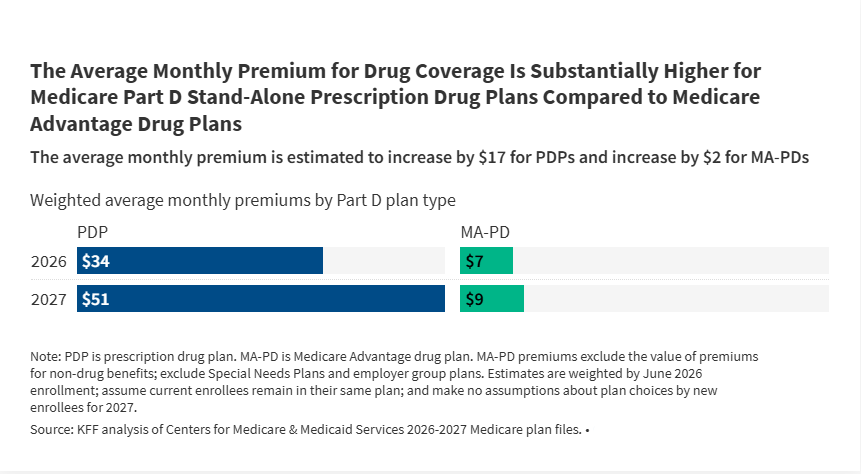
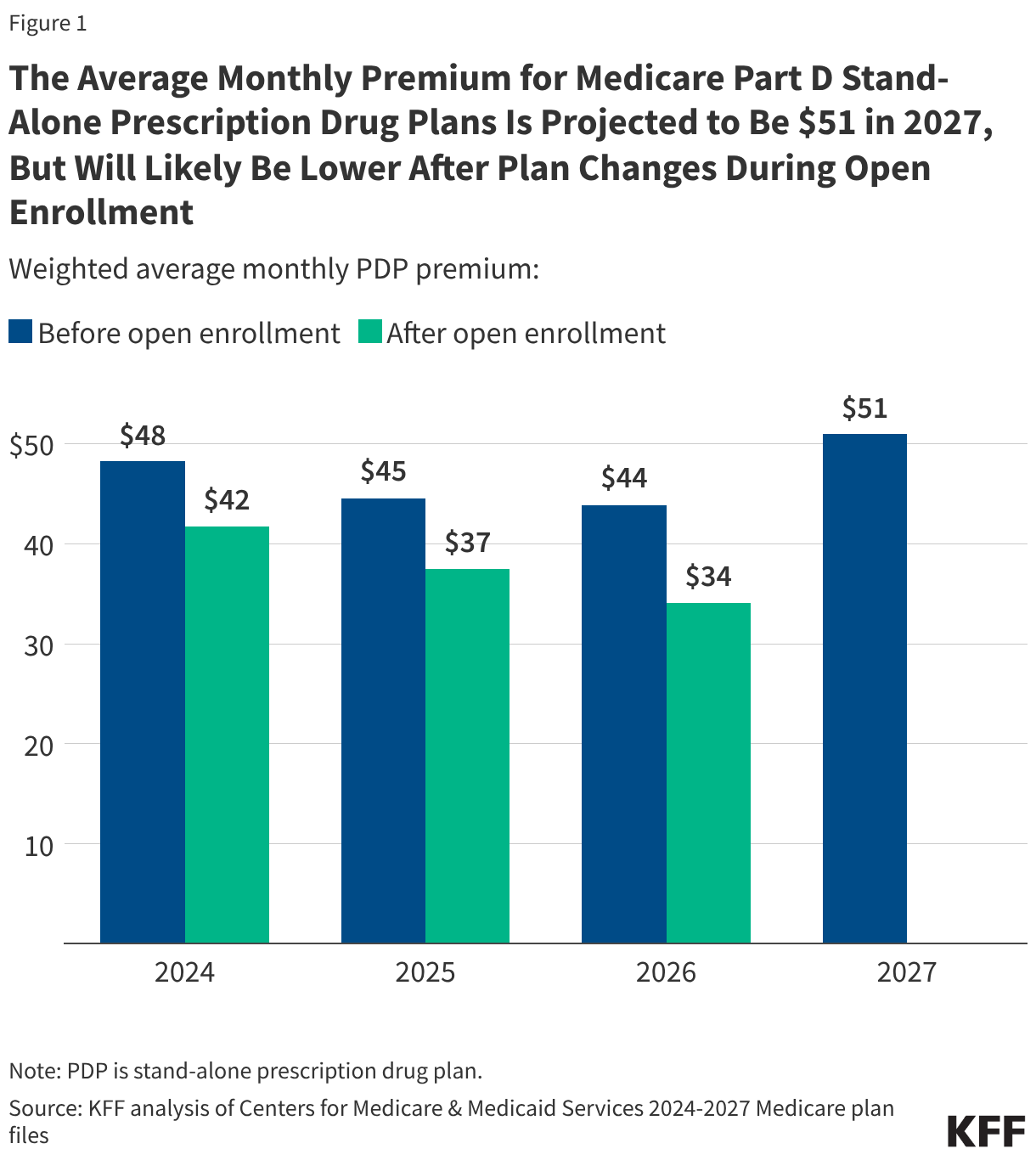
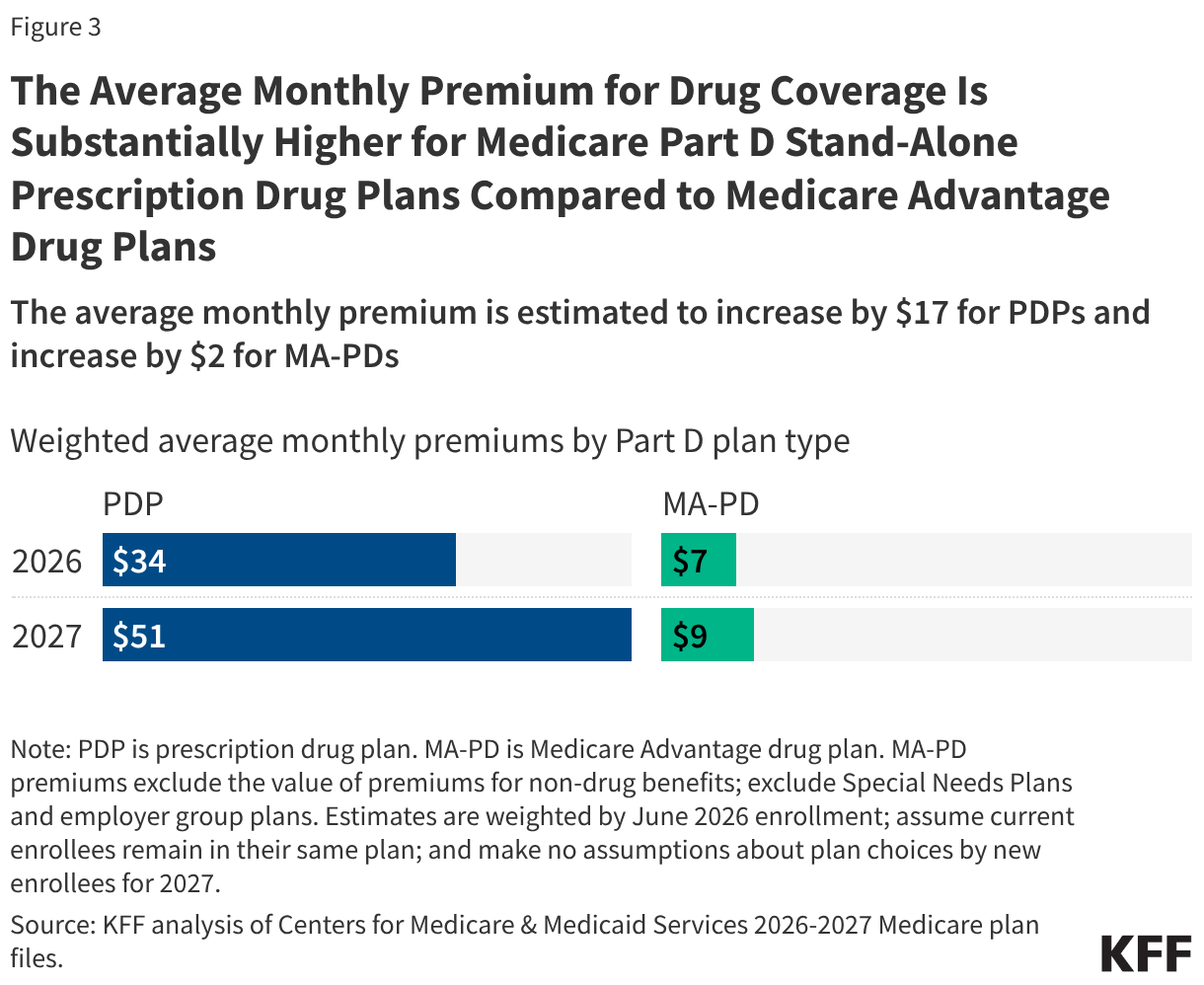
The headline finding for the 2027 plan year is a projected 50% increase in the average monthly premium for stand-alone PDPs. For enrollees who remain in their current plans without switching, the average premium is expected to climb from $34 in 2026 to $51 in 2027.
n
The Death of the Zero-Premium Stand-Alone Plan
n
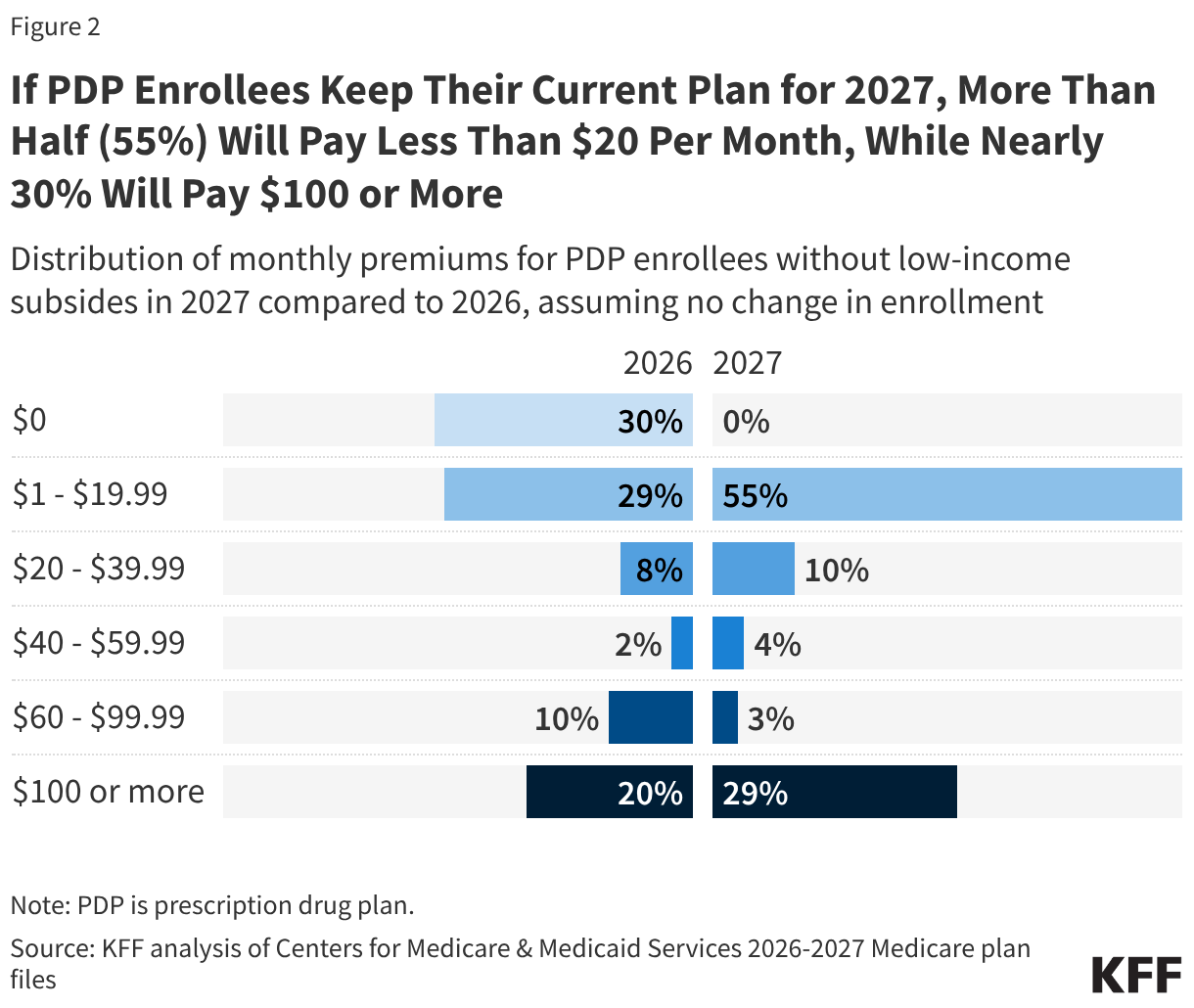
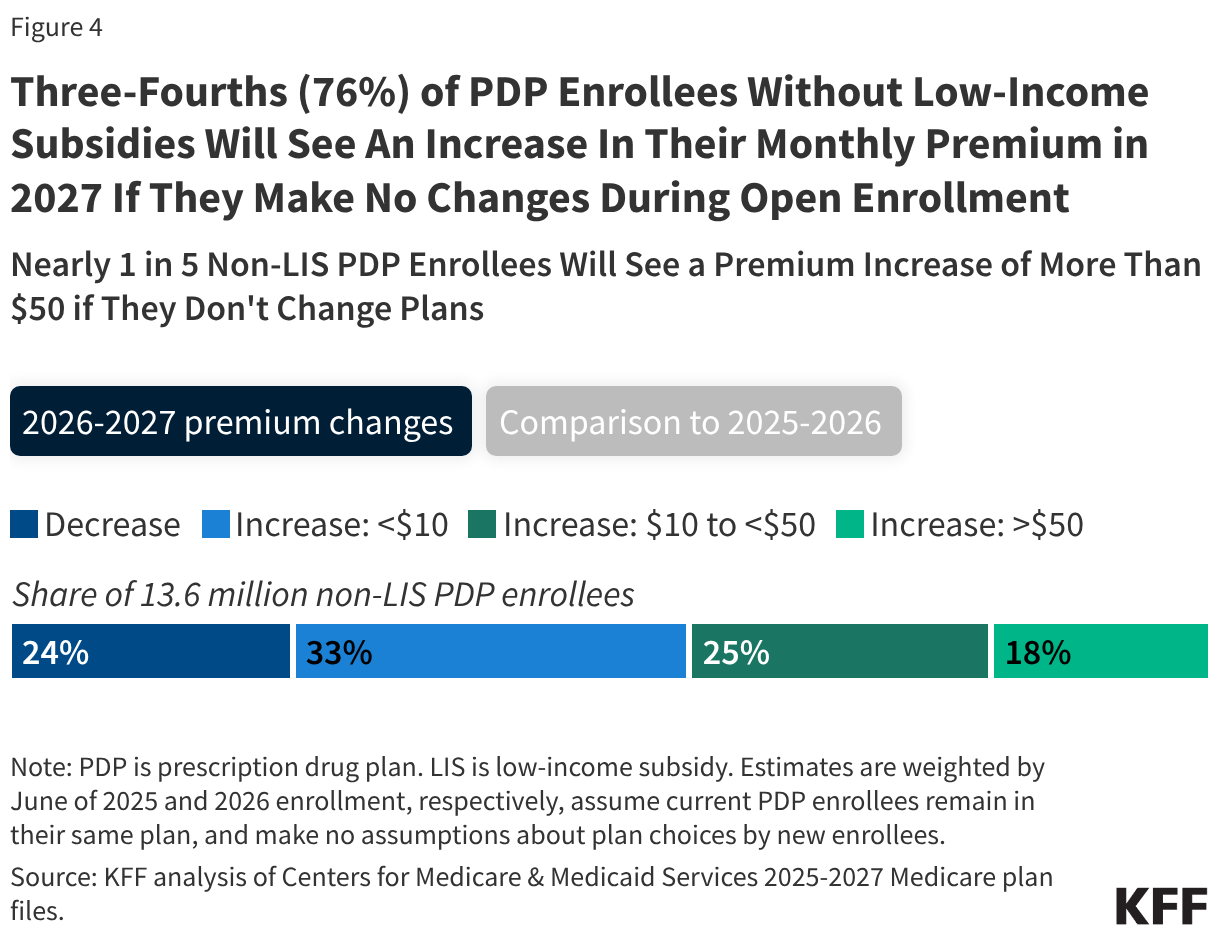
In a landmark shift for the program, the 2027 market will feature zero stand-alone PDPs with a $0 monthly premium. This marks a stark contrast to 2026, where 30% of non-Low-Income Subsidy (LIS) enrollees enjoyed coverage with no monthly fee. For the 4.1 million enrollees currently in these plans, a premium hike is now an absolute certainty.
n
The Widening Gap Between PDP and MA-PD
n
The divide between stand-alone plans and Medicare Advantage-integrated plans has reached a historic chasm. While PDP enrollees face an average $51 premium, MA-PD enrollees will pay an average of just $9 for their drug coverage. This nearly six-fold difference is largely driven by the "rebate" system available to Medicare Advantage sponsors, which allows them to use government payments to subsidize or eliminate drug premiums—a mechanism not available to stand-alone PDPs.
n
Rising Deductibles and Unpredictable Cost-Sharing
n
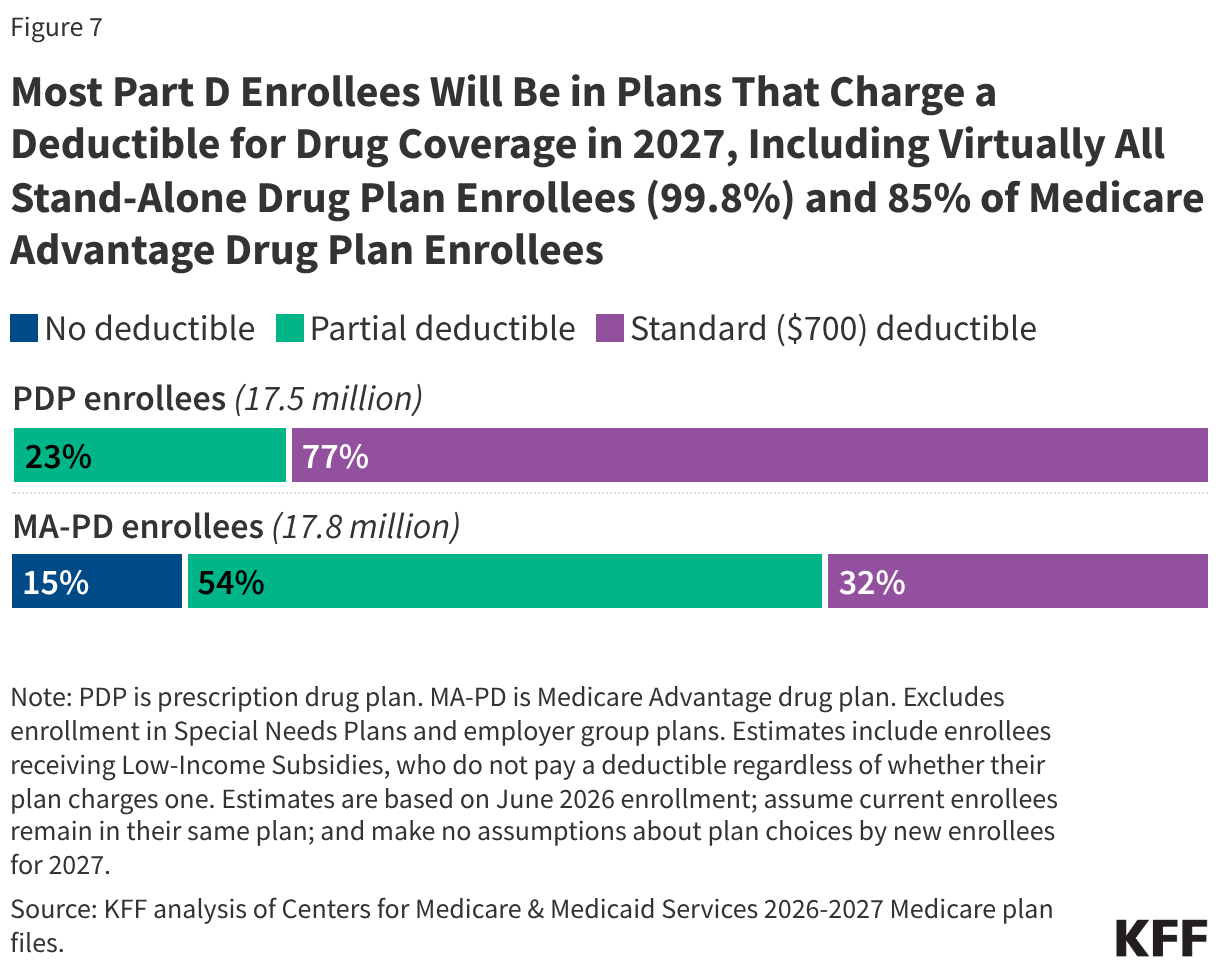
Financial exposure is also increasing at the point of sale. Nearly all PDP enrollees (99.8%) and the vast majority of MA-PD enrollees (85%) will face a drug deductible in 2027. Furthermore, the market is moving away from predictable "copayments" (flat fees) in favor of "coinsurance" (a percentage of the drug’s cost), which can lead to significant out-of-pocket fluctuations for seniors on fixed incomes.
n
Chronology: The Road to the 2027 Premium Spike
n
To understand the 2027 price surge, one must look at the policy shifts of the preceding three years.
n
2025-2026: The Stabilization EranFollowing the passage of the Inflation Reduction Act (IRA), which introduced major reforms to Medicare Part D (including a $2,000 out-of-pocket cap), there was significant concern regarding premium stability. In response, the Trump administration implemented the Part D Premium Stabilization Demonstration. This program provided additional subsidies to PDP sponsors and, crucially, capped the maximum allowable monthly premium increase at $50 for participating plans in 2026.
n
October 2025: The First Warning SignsnDuring the 2025 open enrollment, initial projections suggested premiums would jump from $37 to $44. However, because seniors are "price sensitive," many switched to lower-cost plans, eventually bringing the actual weighted average premium for 2026 down to $34.
n
2027: The "Cliff" EffectnThe discontinuation of the Premium Stabilization Demonstration after 2026 has created a "cliff" effect. Without the $50 cap on increases and the extra federal subsidies, insurers have adjusted their 2027 bids to reflect the full cost of the IRA’s expanded benefits. This has resulted in 2.4 million PDP enrollees facing premium increases of more than $50 per month if they stay in their current plans—a scenario that was virtually non-existent under the stabilization program.
n
Supporting Data: Regional and Plan-Specific Volatility
n
The $51 average premium masks extreme variations depending on the provider and the geographic region.
n
National Plan Variations
n
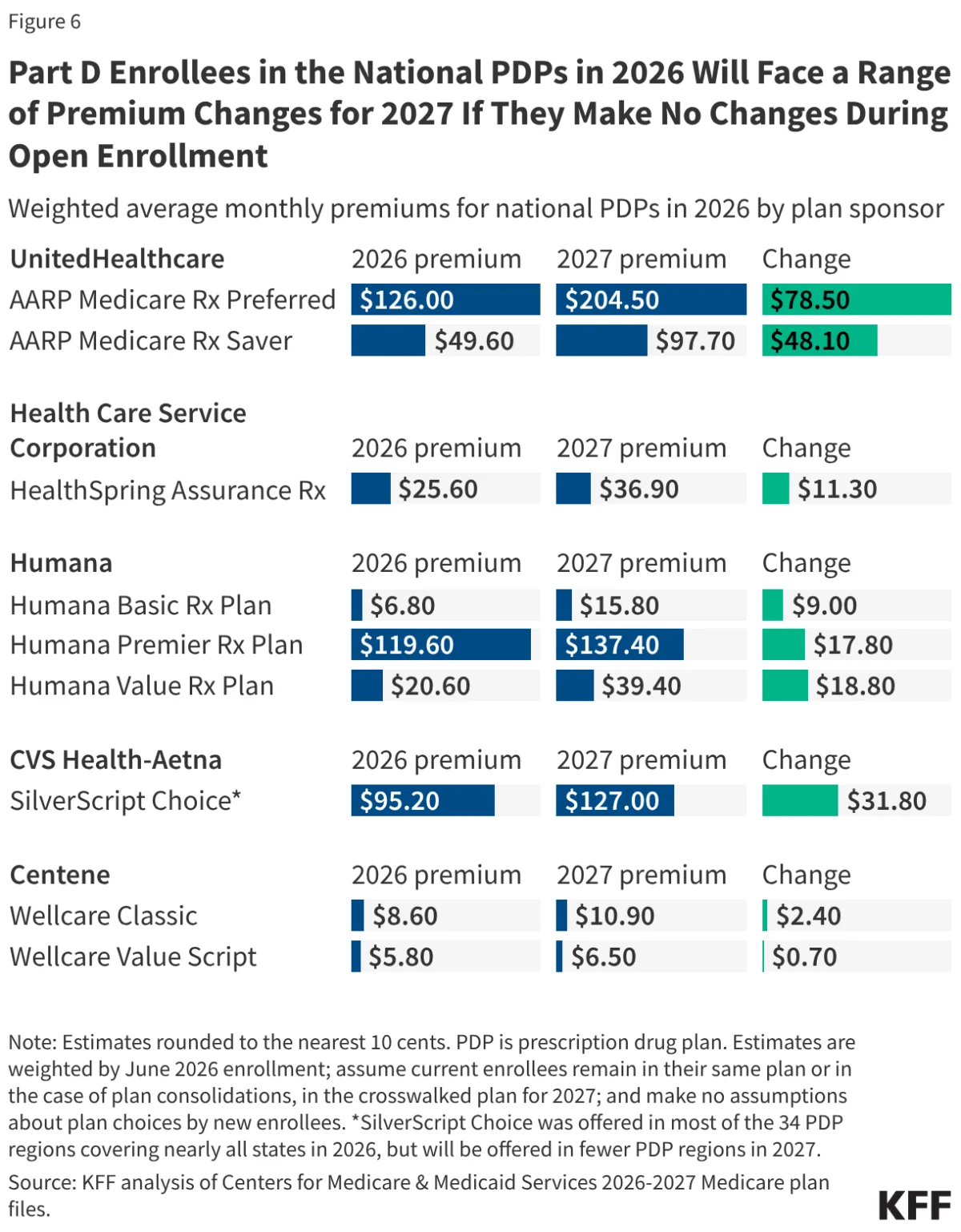
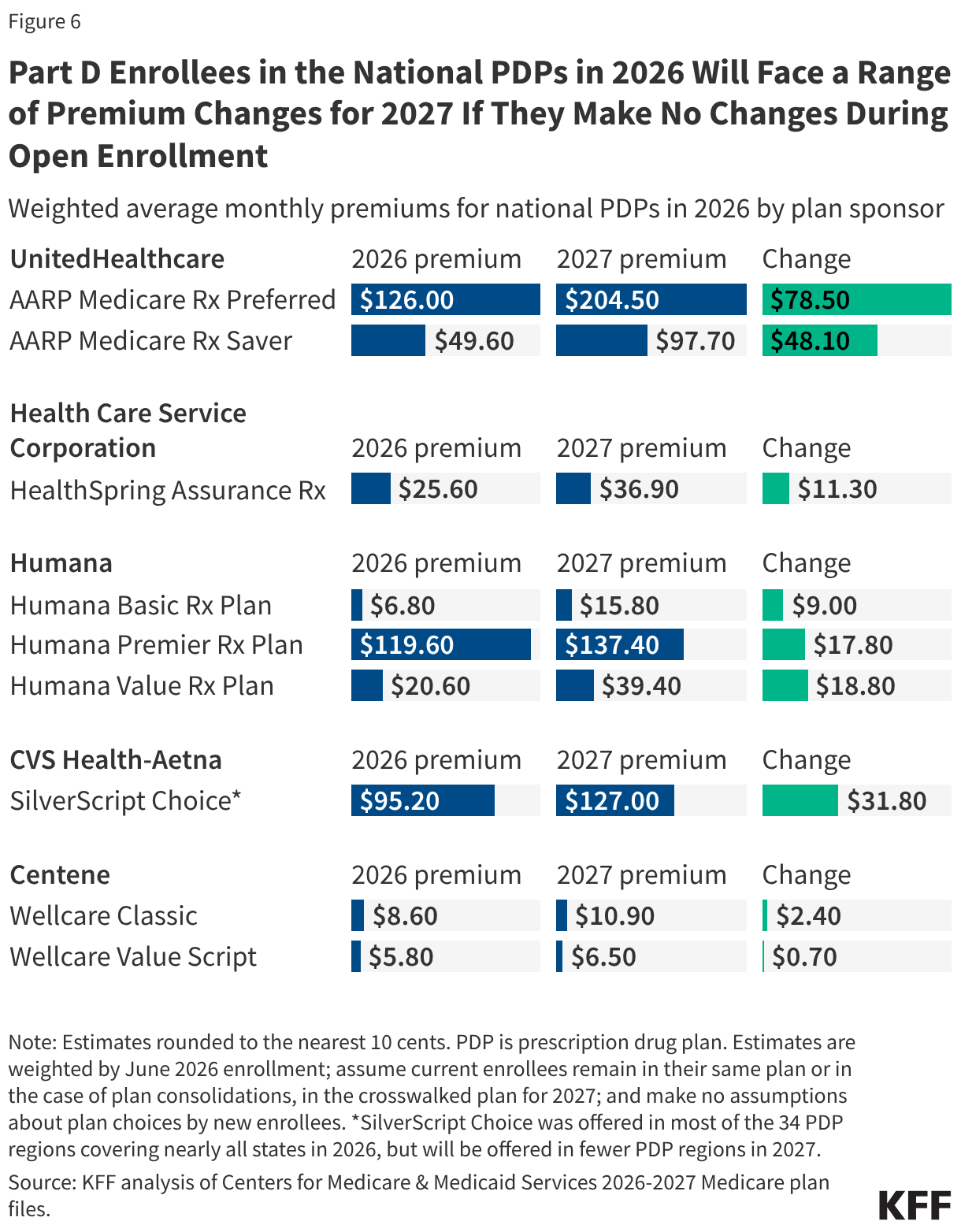
Among the eight national PDPs available in all 34 Medicare regions, the price spectrum is vast:
n
- n
- The Low End: Centene’s Wellcare Value Script remains the most affordable national option, with an average premium of $6.50.
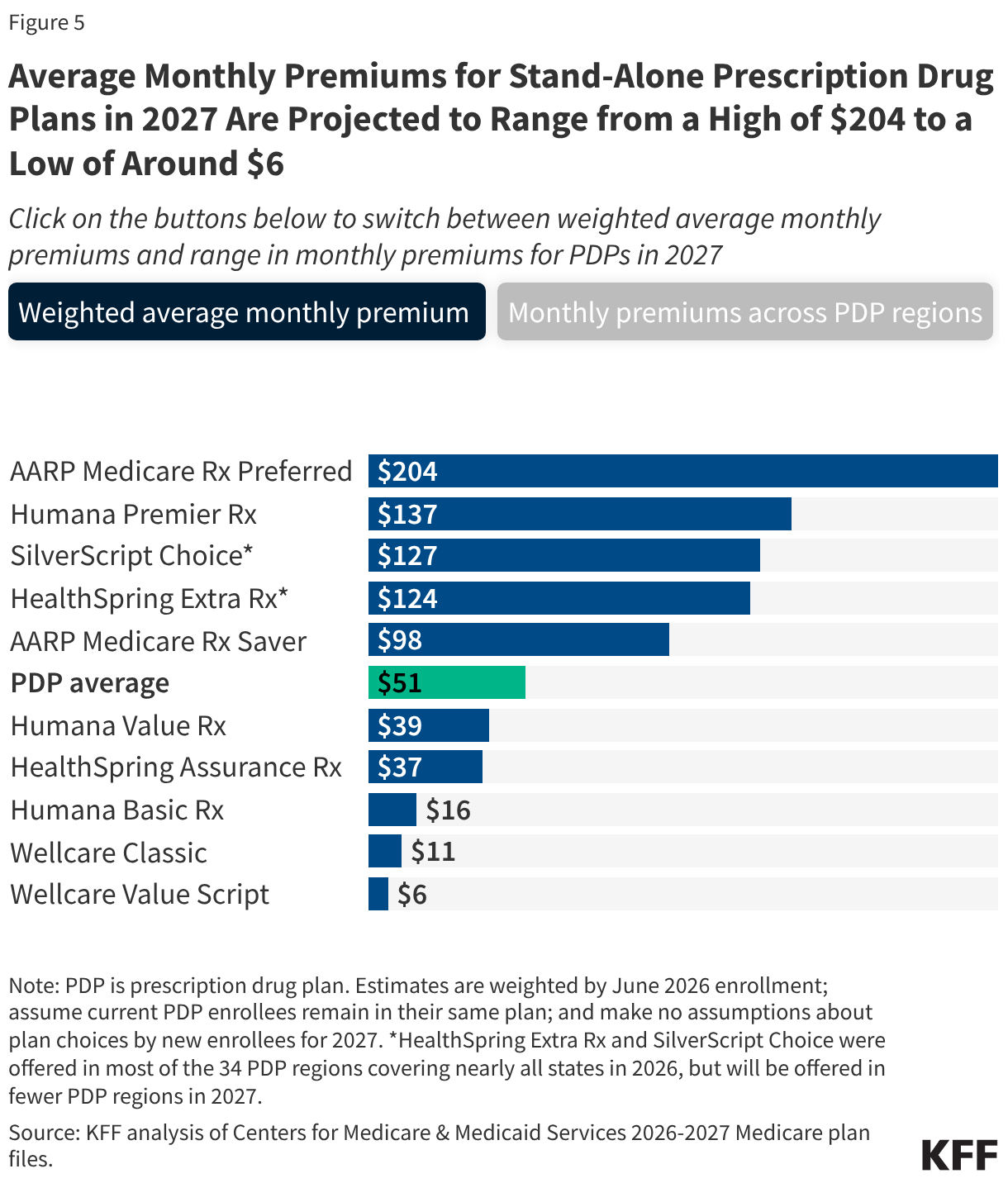
- The High End: UnitedHealthcare’s AARP Medicare Rx Preferred has reached an average of $204.50 per month, a 62% increase from the previous year.
- Humana: The Humana Premier Rx Plan follows closely at $137.40.
n
n
n
n
Geographic Disparities
n
A senior’s zip code significantly impacts their monthly costs. For example, the AARP Medicare Rx Saver plan averages $98 nationally, but its premiums range from as low as $10.30 in some regions to a staggering $235.30 in others. Similarly, Humana Basic Rx ranges from $6.30 to $169.60 depending on the region.
n
The Deductible Burden
The standard Part D deductible is mandated to increase from $615 in 2026 to $700 in 2027. Data shows that plans are tracking closely to this maximum:
- PDP Average Deductible: $643 (a 19% increase from 2026).
- MA-PD Average Deductible: $489 (a 36% increase from 2026).
While MA-PD deductibles are lower, the rate of increase for those plans is actually outpacing stand-alone plans, suggesting that the "zero-deductible" era of Medicare Advantage drug coverage is also fading.
Official Responses and Methodology
The Centers for Medicare & Medicaid Services (CMS) has provided a more optimistic outlook than the KFF analysis, though the two differ in methodology.
The CMS Projection:
CMS recently projected a modest $1 increase in the national average premium (from $35 to $36). However, analysts note that CMS did not fully disclose its calculation method. It is widely believed that the CMS estimate assumes a high degree of "consumer switching"—meaning it assumes seniors will leave high-cost plans for lower-cost ones.
The KFF/Industry Perspective:
The KFF estimate of $51 is an "enrollment-weighted" average based on where seniors are currently enrolled. It highlights the "sticker shock" seniors will face when they receive their Annual Notice of Change (ANOC) letters. Industry experts point out that while switching will likely drive the final average down, the initial 76% of enrollees facing price hikes represents a significant administrative and financial hurdle for the elderly population.
MedPAC’s Findings:
The Medicare Payment Advisory Commission (MedPAC) has highlighted the role of Medicare Advantage rebates in this pricing disparity. Monthly rebates per MA enrollee have more than doubled since 2018, rising from $95 to $199. In 2026 alone, $51 of that rebate was used specifically to buy down Part D premiums, effectively masking the true cost of drug coverage for MA-PD enrollees—a luxury stand-alone PDPs do not have.
Implications: A Crossroads for Medicare Beneficiaries
The 2027 data suggests several long-term implications for the American healthcare system and its aging population.
1. The "Incentivized" Migration to Medicare Advantage
The stark $42 monthly difference between PDP and MA-PD premiums ($51 vs. $9) acts as a powerful financial incentive for seniors to move away from Original Medicare and into Medicare Advantage. Critics argue this creates a two-tiered system where those who prefer the flexibility of traditional Medicare are penalized with significantly higher drug costs.
2. Reduced Predictability for Seniors
The shift toward coinsurance for "Preferred Brand" drugs—rising from 54% to 83% of MA-PD enrollees—means that seniors will no longer pay a flat $35 or $47 fee. Instead, they will pay a percentage of the drug’s negotiated price. As drug prices fluctuate, so will the senior’s monthly out-of-pocket costs, making budgeting more difficult for those on Social Security.
3. The Necessity of Active Enrollment
The 2027 plan year marks the end of "passive enrollment" as a safe strategy. With 76% of PDP enrollees facing increases and nearly 20% facing hikes of more than $600 per year ($50/month), the cost of inaction has never been higher.
4. Financial Strain on the Non-Subsidized
While LIS enrollees are protected from these shifts, the 13.6 million "non-LIS" PDP enrollees—often middle-class retirees—are bearing the brunt of the market’s volatility. For this group, the 2027 open enrollment period is not merely a routine check-up but a vital financial intervention.
As the open enrollment window progresses, the data serves as a stark reminder: the "Standard" Medicare Part D experience is becoming more expensive and less predictable, requiring a more sophisticated and active consumer approach than at any time in the program’s 20-year history.

