
The landscape of American healthcare financing is facing a seismic shift as the 2025 federal reconciliation law begins to take hold. Aimed at curbing federal expenditures, the law is projected to reduce federal Medicaid spending by an estimated $911 billion over the next decade (2025–2034). A central pillar of this fiscal contraction involves new, stringent restrictions on Medicaid State Directed Payments (SDPs)—a mechanism that has historically allowed states to bolster payments to hospitals and other providers.
n
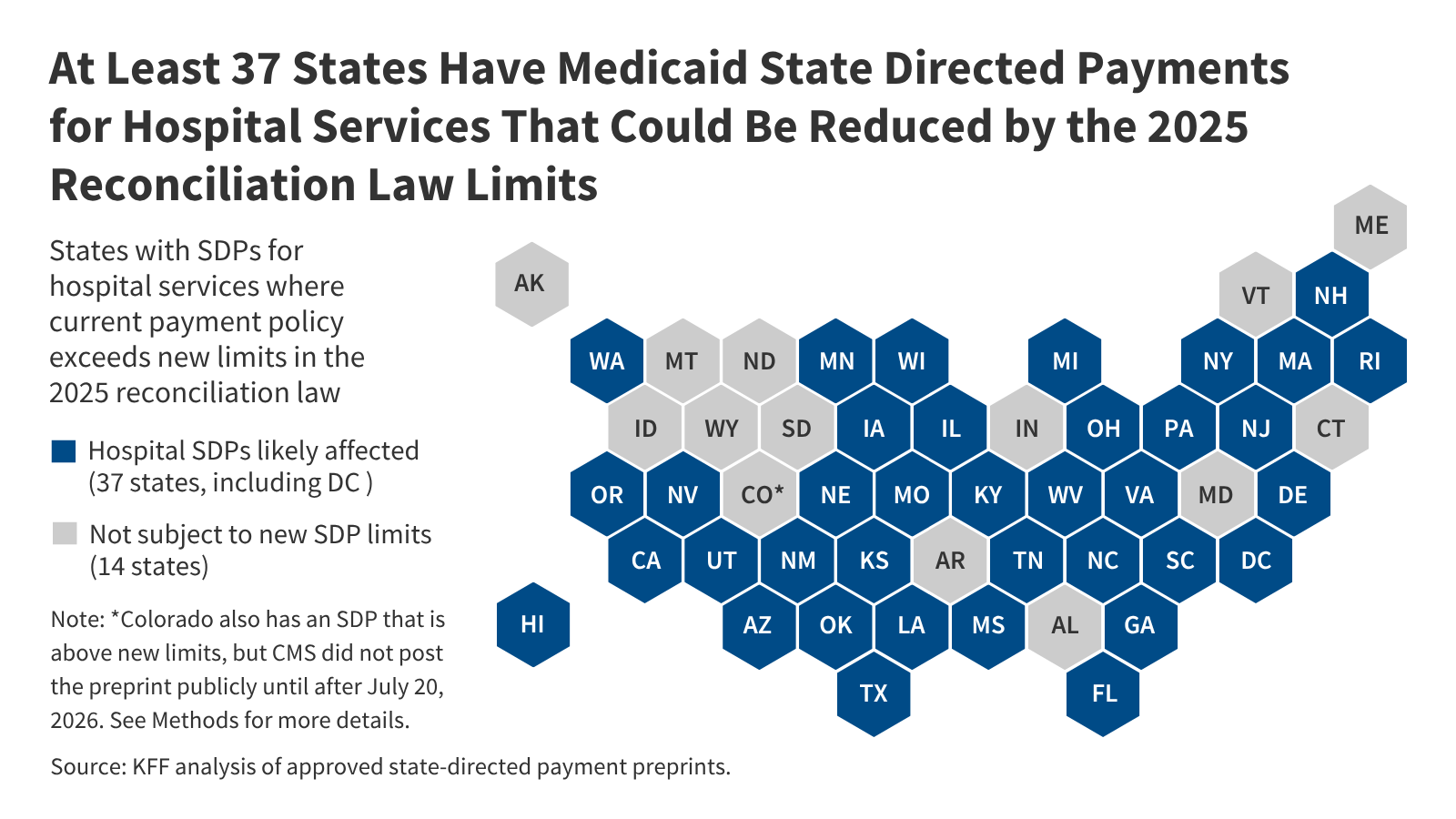
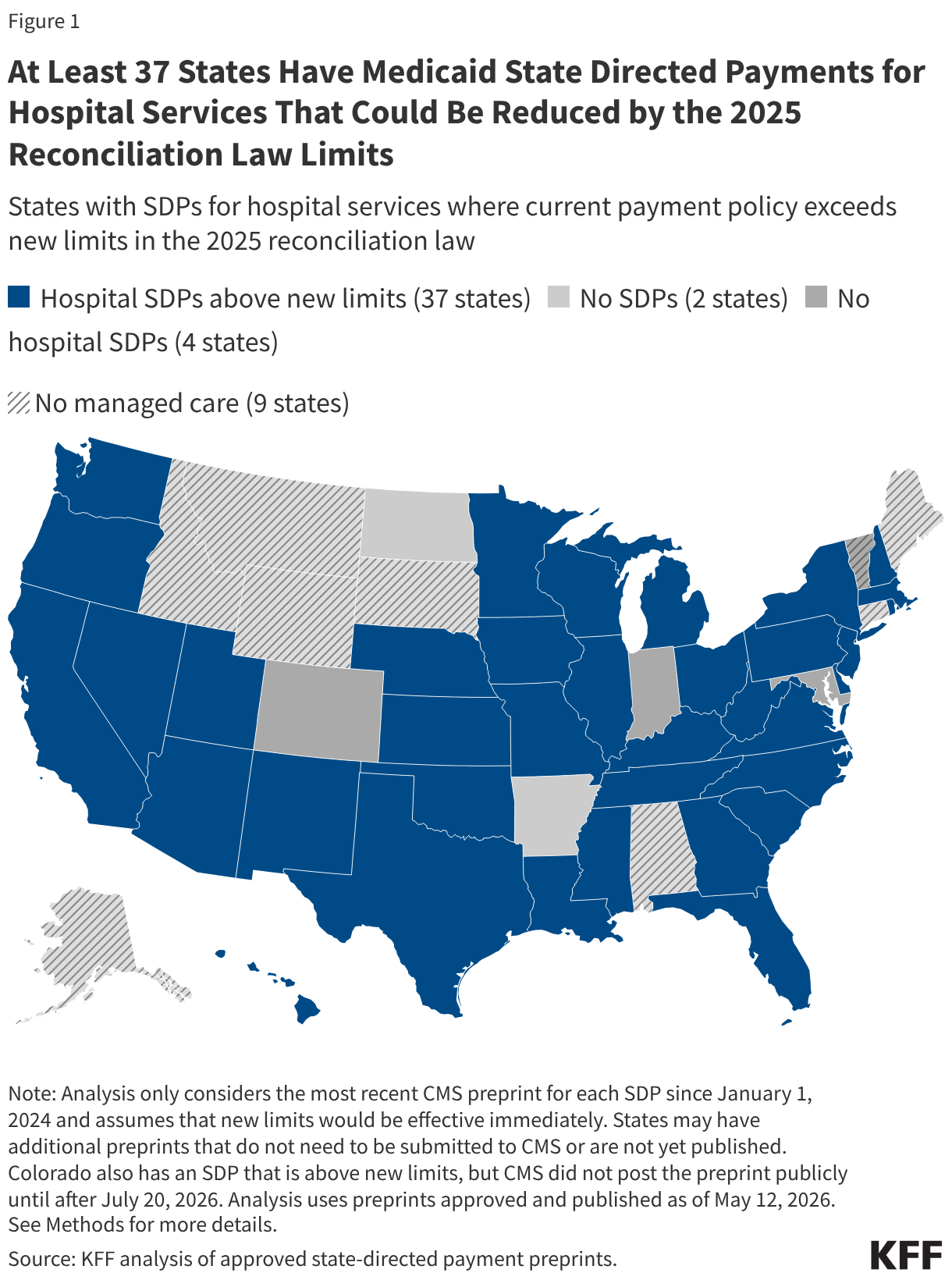
According to a comprehensive analysis by KFF, at least 37 states are poised to see significant reductions in federal funding for hospital services. As the federal government transitions from a "commercial rate" benchmark to a "Medicare-based" cap, approximately $60 billion in current federal spending is identified as exceeding the new limits. This transformation represents not just a technical change in accounting, but a fundamental realignment of how the safety net is funded.
n
Main Facts: The End of the "Average Commercial Rate" Era
n
To understand the impact of the 2025 reconciliation law, one must first understand the mechanism of State Directed Payments (SDPs). While states are generally prohibited from interfering in how Managed Care Organizations (MCOs) negotiate rates with providers, SDPs provide a legal "workaround." They allow states to require MCOs to increase rates or set minimum payment floors for specific services.
n
For years, the Centers for Medicare and Medicaid Services (CMS) allowed these payments to be benchmarked against Average Commercial Rates (ACR)—the prices private insurers pay. Because private insurers typically pay nearly double what Medicare pays, states used SDPs to funnel billions of additional dollars into their hospital systems, often to compensate for low base Medicaid rates.
n
The 2025 reconciliation law effectively ends this practice. The key facts of this shift include:
n
- n
- New Payment Ceilings: SDP payment rates are now capped at 100% of the Medicare rate for states that have adopted the Affordable Care Act (ACA) Medicaid expansion, and 110% for non-expansion states.
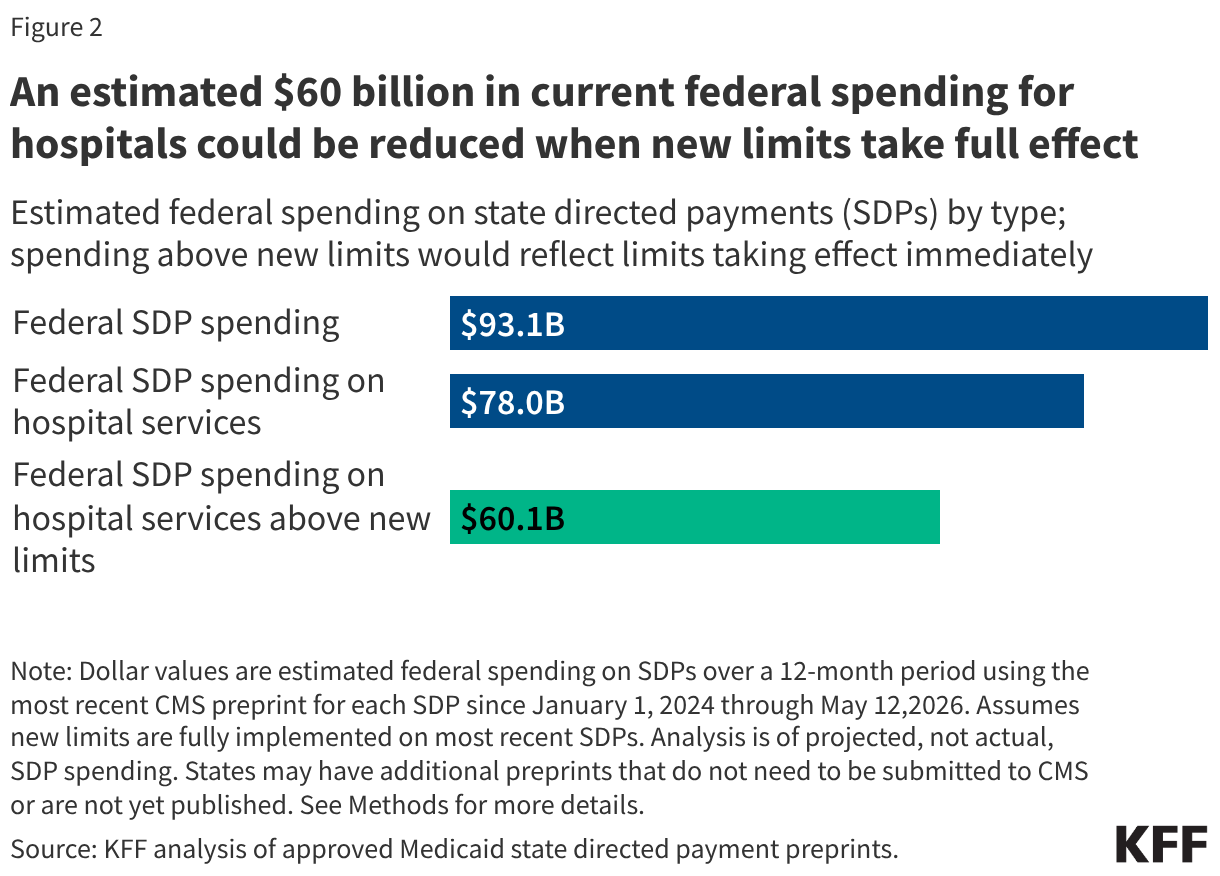
- Widespread Impact: KFF estimates that 84% of all SDP spending is currently directed toward hospital services, making the sector the primary target of these reductions.
- The $60 Billion Gap: Of the federal spending currently flowing to hospitals via SDPs, roughly 77% ($60 billion) exceeds the new Medicare-linked limits.
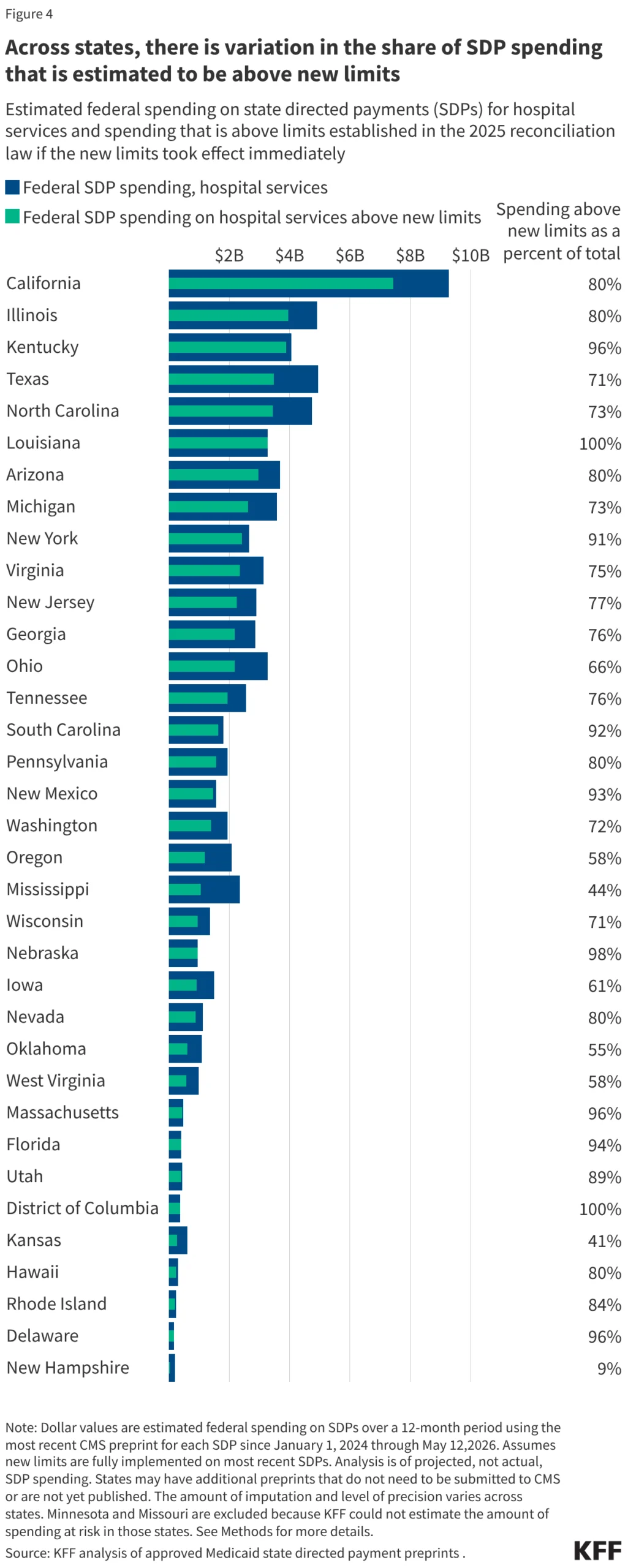
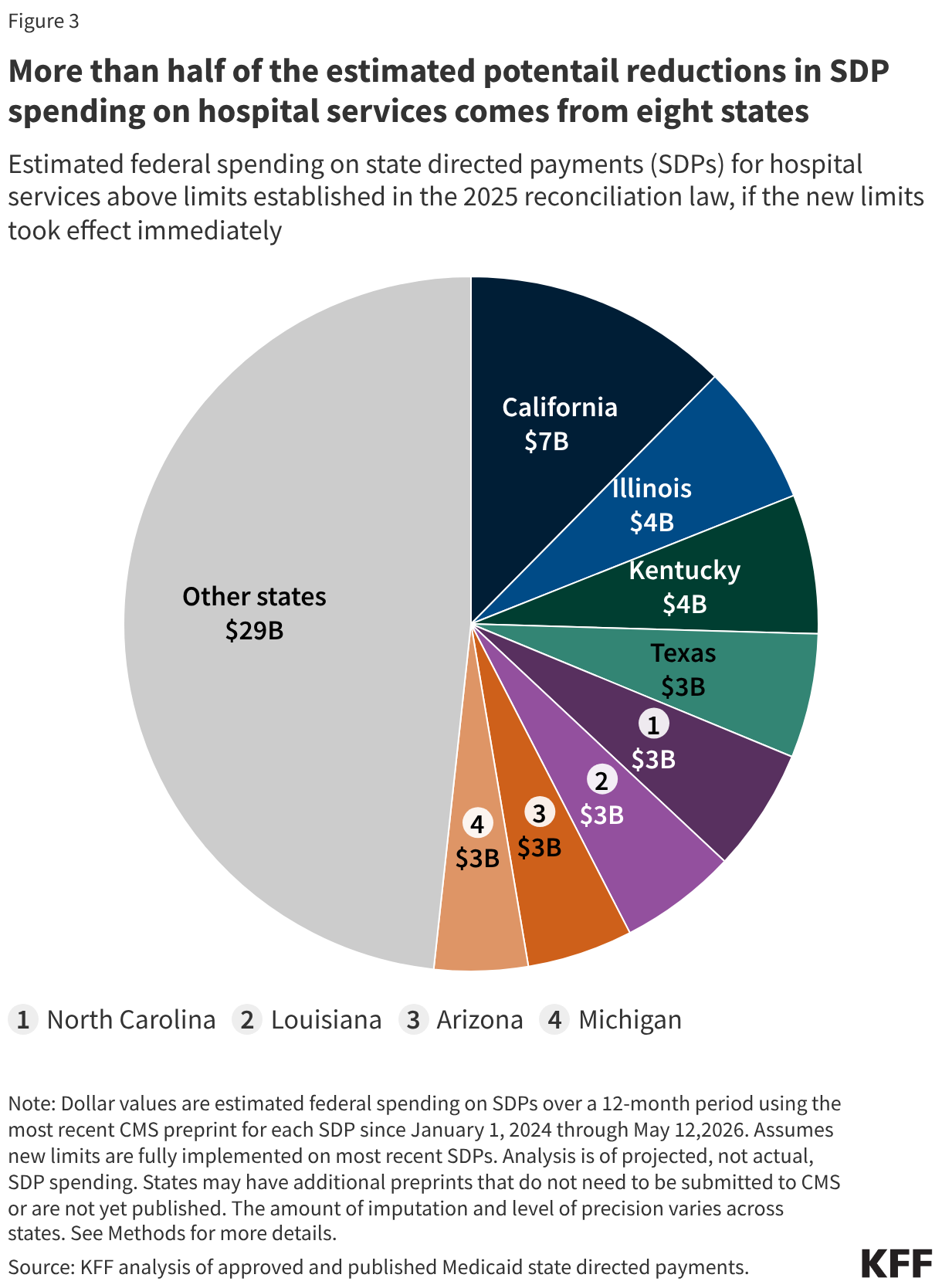
- State Concentration: Over half of the "at-risk" federal spending is concentrated in just eight states: California, Illinois, Kentucky, Texas, North Carolina, Louisiana, Arizona, and Michigan.
n
n
n
n
n
Chronology: From Regulatory Expansion to Fiscal Contraction
n
The road to the current crisis is marked by a rapid expansion of SDPs followed by an abrupt legislative correction.
n
2021–2023: The Surge of SDPs
n
Following the COVID-19 pandemic, states increasingly utilized SDPs to stabilize their healthcare infrastructures. CMS encouraged this trend to improve provider participation and patient access. By allowing states to bridge the gap between Medicaid rates and commercial rates, SDPs became a vital lifeline for safety-net hospitals.
n
May 2024: The Managed Care Rule
n
CMS issued a landmark rule codifying the requirements for SDPs. This rule was intended to provide transparency and a formal structure for how states directed managed care payments. However, the rule also inadvertently fueled a surge in federal spending, as more states realized they could leverage federal matching funds by setting SDPs at the high "Average Commercial Rate" threshold.
n
2025: The Legislative Pivot
n
In response to ballooning federal deficits and concerns that private insurance benchmarks were artificially inflating Medicaid costs, Congress passed the 2025 reconciliation law. This legislation targeted the $911 billion in projected Medicaid growth, specifically identifying SDPs as a primary area for cost-containment.
n
June 2025 – August 2026: Implementation and Uncertainty
n
In June 2025, CMS released a proposed rule to implement the reconciliation law’s changes. Throughout late 2025 and 2026, states continued to submit "preprints"—the application forms for SDPs—even as the regulatory environment shifted. For example, Colorado submitted a proposal in June 2025 seeking to pay hospitals at commercial rates, representing $378 million in reimbursements, only to face a backlog of approval as CMS grappled with the new legal limits.
n
January 2028: The Phase-In Begins
n
The new limits will not take effect overnight. The law mandates a gradual phase-in for existing SDPs starting in January 2028, with full implementation varying by state. This "glide path" is intended to give hospitals time to adjust their budgets, though many industry experts warn it may not be enough.
n
Supporting Data: Mapping the Financial Fallout
n
The KFF analysis relies on "preprints," which are the only national data source available for tracking SDPs. While these documents offer a window into state intentions, they also reveal a complex and often opaque financial system.
n
The Scale of Reductions
n
The KFF study examined 131 preprints across 35 states. The findings illustrate a stark reality:
n
- n
- Total Federal Hospital SDP Spending: Approximately $78 billion.
- Amount Above New Limits: $60 billion.
- Percentage of Federal Hospital SDP Spending At Risk: 77%.
State-Specific Vulnerabilities
The impact is not distributed evenly across the country. Eight states account for the lion’s share of the federal funding that exceeds the new caps:
- California: $7.4 billion
- Illinois: $4.0 billion
- Kentucky: $3.9 billion
- Texas: $3.5 billion
- North Carolina: $3.4 billion
- Louisiana: $3.3 billion
- Arizona: $3.0 billion
- Michigan: $2.6 billion
In some jurisdictions, the reliance on high-rate SDPs is absolute. In Louisiana and the District of Columbia, KFF estimates that 100% of current hospital SDP spending is above the new reconciliation law limits. Conversely, states like New Hampshire, where only 9% of SDP spending exceeds the limit, are much better positioned to weather the transition.
The "Benchmark" Problem
The shift from Average Commercial Rates (ACR) to Medicare rates is the primary driver of these reductions. KFF notes that ACRs typically average about double what Medicare pays. By capping payments at 100% or 110% of Medicare, the federal government is effectively halving the maximum allowable supplemental payment in many states.
Official Responses and Regulatory Context
The reaction to the 2025 reconciliation law has been divided along fiscal and clinical lines.
The Centers for Medicare and Medicaid Services (CMS):
CMS has moved into a period of intensive regulatory drafting. In their June 2025 proposed rule, the agency emphasized the need for "standardized rates" to measure MCO payments against benchmarks like Medicare FFS. However, CMS officials have also acknowledged the data gaps. Preprints often include "projected" rather than "actual" spending, and many states omit details about how spending is allocated across different services. KFF researchers had to impute data for nearly $39.6 billion in hospital spending because state-submitted preprints were incomplete or lacked machine-readable formats.
State Healthcare Agencies:
State officials have expressed concern that the new limits ignore the unique costs of treating Medicaid populations. Many states finance their portion of SDPs through "provider taxes" or "intergovernmental transfers" (IGTs). If federal matching funds decrease because of the new caps, states may find it impossible to maintain current payment levels, leading to a net loss in revenue for providers.
Hospital Associations:
The American Hospital Association and various state-level groups have warned that the $60 billion reduction could be catastrophic. They argue that the "commercial rate" was a fair benchmark because it reflected the actual cost of care in the private market, whereas Medicare rates are often criticized for failing to cover the full cost of hospital overhead.
Implications: A Potential Crisis for Access and Equity
The long-term consequences of the 2025 reconciliation law extend far beyond balance sheets. The reduction in SDP spending threatens the very stability of the healthcare safety net.
Impact on Hospital Operations
The ability of a hospital to absorb these losses depends heavily on its "operating margin."
- For-Profit and Large Systems: Hospitals with a high volume of commercially insured patients and healthy margins may be able to withstand the reduction in Medicaid SDPs.
- Safety-Net and Rural Hospitals: Facilities that serve a high percentage of Medicaid and uninsured patients are at extreme risk. For these hospitals, SDPs often make the difference between a surplus and a deficit. KFF warns that these institutions may be forced to cut service lines—such as obstetrics or mental health—or close entirely.
Access to Care
If hospitals cannot sustain the financial hit, Medicaid enrollees will be the first to suffer. Lower payment rates often lead to fewer providers participating in the Medicaid program, resulting in longer wait times and increased travel distances for specialized care. This creates a "two-tiered" healthcare system where Medicaid patients have insurance but lack meaningful access to providers.
The Behavioral Response
States and hospitals are unlikely to remain passive. Experts predict a surge in "behavioral responses," including:
- Redesigning Provider Taxes: States may attempt to restructure how they tax hospitals to maximize federal match under the new, lower caps.
- Shifting to Base Rates: States might try to increase "base" Medicaid rates to compensate for the loss of SDPs, though this requires state general fund involvement, which is often politically difficult.
- Consolidation: The financial pressure may accelerate the trend of independent hospitals merging with larger systems to find economies of scale, further reducing competition in local markets.
Conclusion
The 2025 reconciliation law represents a historic retrenchment of federal Medicaid support. By targeting State Directed Payments and tethering them to Medicare rates, the federal government is seeking to reclaim $911 billion in spending. However, the KFF analysis suggests that the cost of this "fiscal responsibility" may be measured in the closure of rural hospitals and the erosion of healthcare access for the nation’s most vulnerable populations. As the 2028 phase-in approaches, the healthcare industry must prepare for a future where the generous "commercial rate" benchmarks of the past are a distant memory.

