
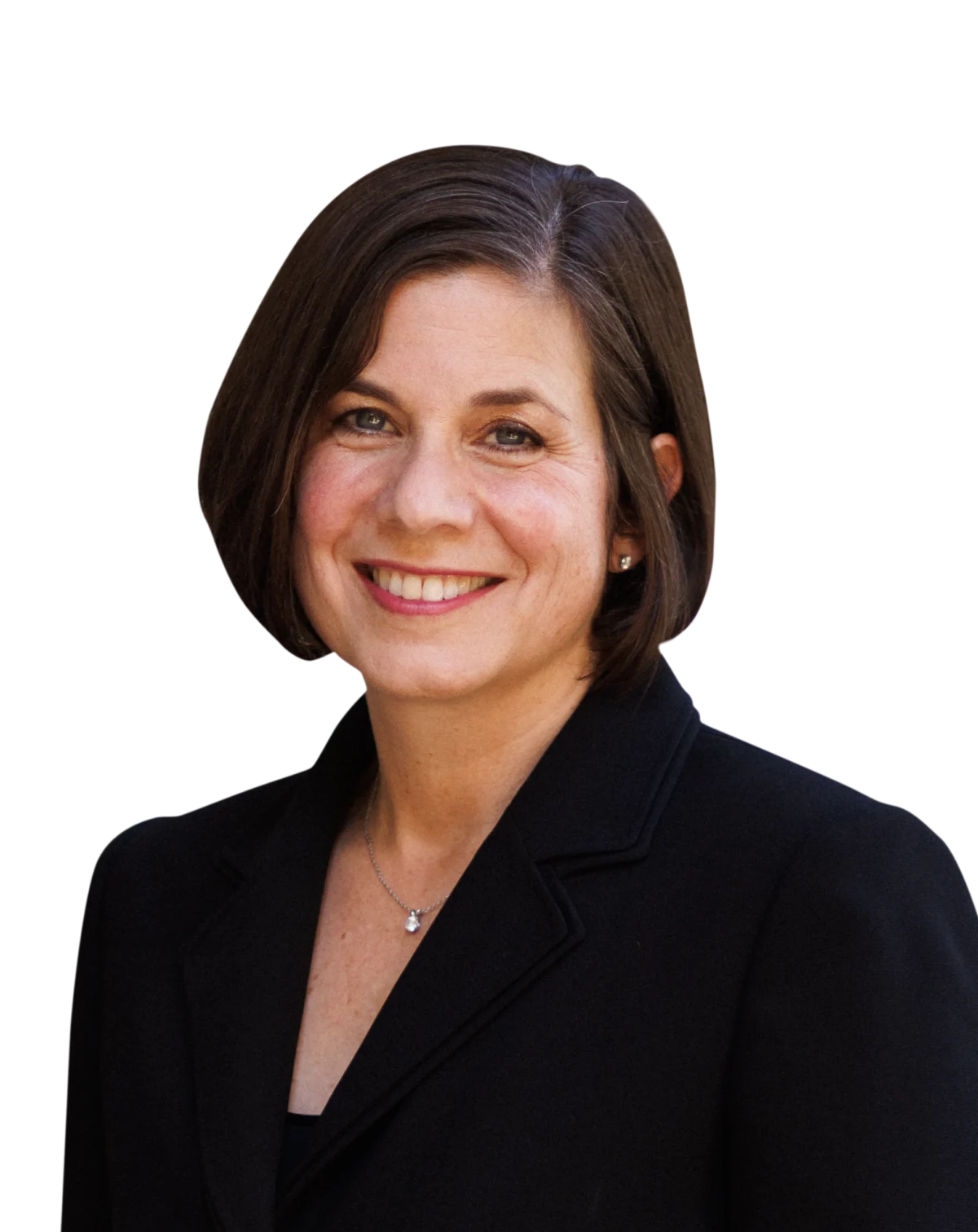
PALO ALTO, CA — As artificial intelligence transitions from a futuristic promise to an everyday clinical reality, the healthcare industry finds itself at a critical crossroads. The rapid deployment of algorithmic tools in diagnostics, triage, and patient management has outpaced the development of a cohesive regulatory framework. This tension took center stage in the latest installment of The Business of Health with Chip Kahn, where Dr. Michelle Mello, a preeminent authority on health law and ethics from Stanford University, joined host Chip Kahn to dissect the "rules of the road" for medical AI.
n
The episode, titled "AI Series: Episode 13," arrives at a pivotal moment. By mid-2026, AI is no longer a peripheral experiment; it is embedded in the infrastructure of American hospitals. However, as Dr. Mello highlights, the questions of who ensures accuracy and who bears liability when technology fails remain dangerously unresolved.
n
Main Facts: The Intersection of Innovation and Oversight
n
The core of the discussion centers on the "accountability gap" in healthcare technology. While the Food and Drug Administration (FDA) has cleared hundreds of AI-enabled medical devices, the day-to-day governance of these tools often falls to individual hospital systems.
n
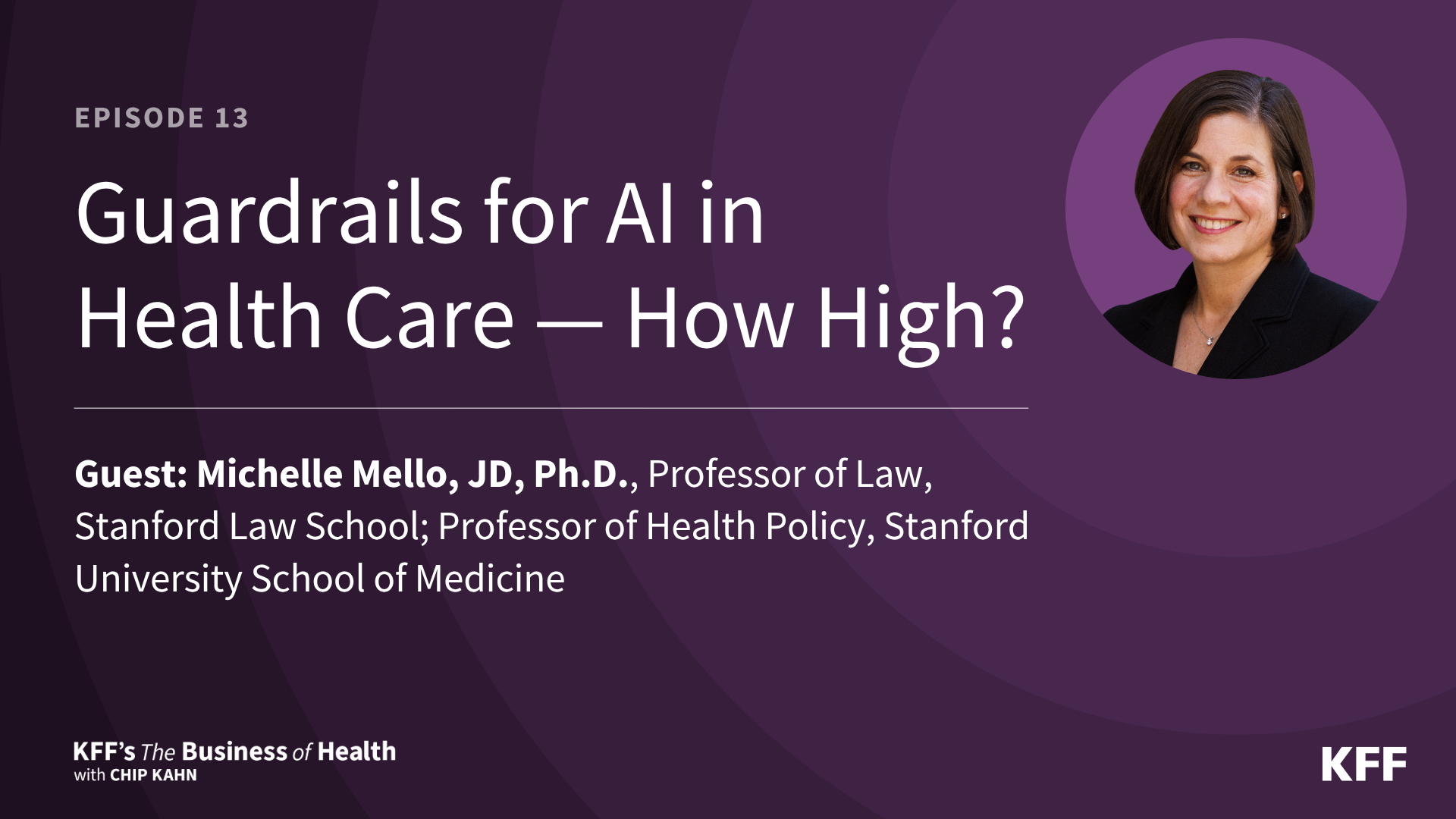
Dr. Michelle Mello, holding both a JD and a Ph.D., serves as a Professor of Law at Stanford Law School and a Professor of Health Policy at the Stanford School of Medicine. Her dual role positions her at the epicenter of this debate. As the co-leader of Stanford’s Healthcare Ethical Assessment Lab for AI (HEAL-AI), Mello is tasked with a daunting objective: creating a rigorous vetting process for AI tools before they ever touch a patient record.
n
The primary facts established in the dialogue include:
n
- n
- Institutional Responsibility: In the absence of comprehensive federal mandates, leading academic medical centers like Stanford are being forced to create their own "internal FDA" processes to evaluate the safety and ethics of AI.
- The Liability Quagmire: Current medical malpractice laws are ill-equipped to handle "black box" algorithms. If a physician follows an AI’s recommendation and the patient is harmed, the legal system struggles to distribute blame between the doctor, the hospital, and the software developer.
- The Ethics of Deployment: Beyond technical accuracy, AI tools often inherit the biases of their training data. Dr. Mello argues that "getting it right" involves not just clinical precision, but social equity.
n
n
n
n
Chronology: From Algorithmic Hype to Clinical Reality (2023–2026)
n
To understand the urgency of the current moment, one must look at the compressed timeline of AI integration in healthcare over the last three years.
n
- n
- 2023–2024: The Generative Explosion. Following the public release of Large Language Models (LLMs), healthcare providers began experimenting with AI for administrative tasks—scribing notes, summarizing charts, and handling insurance queries. The focus was on efficiency and reducing physician burnout.
- Late 2024: The Diagnostic Pivot. AI began moving into "high-stakes" territory. Algorithms for detecting sepsis, analyzing radiological scans for early-stage oncology, and predicting patient deterioration became standard offerings from major health-tech vendors.
- 2025: The Regulatory Lag. While the FDA updated its "Action Plan" for AI/ML-based software, critics argued the agency remained focused on pre-market approval rather than post-market monitoring. This left a vacuum in how AI performs "in the wild" across diverse patient populations.
- 2026: The Era of Accountability. As featured in Kahn’s podcast, the industry has reached a point of reckoning. High-profile instances of algorithmic bias and "hallucinations" in clinical settings have shifted the conversation from how fast we can implement AI to how safely we can govern it.
n
n
n
n
n
Supporting Data: The High Stakes of Algorithmic Medicine
n
The scale of AI’s footprint in 2026 is supported by staggering industry data. According to recent market analysis, the global AI in healthcare market has surpassed $100 billion, with a compound annual growth rate (CAGR) exceeding 35%.
n
However, the data regarding safety is more sobering. A 2025 meta-analysis of clinical AI tools found that nearly 20% of diagnostic algorithms showed significant "performance drift"—a phenomenon where the tool’s accuracy degrades over time as patient demographics or clinical practices change.
n
Furthermore, research published by HEAL-AI indicates that without active intervention, algorithms trained on historical data can exacerbate racial and socioeconomic disparities. For instance, triage algorithms that use "cost of care" as a proxy for "severity of illness" have been shown to systematically deprioritize Black patients, who historically have less access to expensive healthcare resources.
n
"Data is not neutral," Dr. Mello noted during the episode. "It is a mirror of our past clinical practices, including our failures and our biases. If we don’t curate that data with an ethical lens, we are simply automating inequity."
n
Official Responses and Expert Insights
n
Chip Kahn, a veteran of health policy and a senior visiting fellow at KFF, pushed the conversation toward the practicalities of hospital management. Kahn’s perspective reflects the broader industry concern: hospitals want the benefits of AI—better outcomes and lower costs—but are wary of the litigation and reputational risks.
n
The Stanford Model: HEAL-AInDr. Mello’s work at HEAL-AI represents one of the most sophisticated "official" responses to these challenges. The lab performs what Mello calls "ethical red-teaming." Before a tool is deployed at Stanford Health Care, it undergoes a multi-layered assessment:
n
- n
- Transparency Check: Can the AI explain its reasoning, or is it a "black box"?
- Bias Auditing: How does the tool perform across different zip codes, ethnicities, and age groups?
- Clinical Utility: Does the tool actually improve outcomes, or does it merely add "alarm fatigue" for nurses and doctors?
The Legal Perspective
Mello highlighted a glaring hole in the legal system: "Learned Intermediary" doctrine. Historically, if a medical device failed, the manufacturer was liable. However, if a doctor used the device improperly, the doctor was liable. With AI, the line blurs. If an AI suggests a treatment and the doctor agrees, the doctor is legally the "learned intermediary." But if the AI’s reasoning is hidden, can the doctor truly be held responsible for "over-relying" on a tool they don’t fully understand?
"We are seeing a shift where the ‘Standard of Care’ is being redefined," Mello explained. "Soon, it may be considered malpractice not to use AI for certain tasks, yet we haven’t decided who pays the price when the AI is the source of the error."
Implications: The Future of the Patient-Provider Relationship
The implications of the Mello-Kahn dialogue extend far beyond the courtroom or the boardroom. They touch the very heart of the patient-doctor relationship.
1. The Erosion of Trust
If patients perceive that their care is being dictated by an unaccountable algorithm, the foundational trust in the medical profession could erode. Dr. Mello emphasizes the need for "informed consent" regarding AI use, suggesting that patients have a right to know when an algorithm is influencing their diagnosis.
2. The "De-Skilling" of Clinicians
There is a growing concern that over-reliance on AI could lead to a "de-skilling" of the medical workforce. If younger physicians rely on AI to interpret EKGs or skin lesions, will they maintain the clinical intuition necessary to intervene when the technology goes offline or errors occur?
3. The Rise of "Algorithm Vigilance"
The future of healthcare administration will likely require a new class of professionals: "Algorithm Vigilance Officers." These individuals will be tasked with the continuous monitoring of AI performance, ensuring that tools remain accurate, unbiased, and compliant with evolving state and federal laws.
4. Federal vs. State Regulation
While the podcast focused on institutional ethics, the broader implication is a looming battle over regulation. With the federal government slow to act, states like California and Massachusetts are beginning to draft their own AI safety standards. This creates a patchwork of regulations that could complicate the business of health for multi-state hospital systems.
Conclusion: Writing the Rules in Real-Time
As Chip Kahn concluded the episode, the takeaway was clear: the "Business of Health" is now inextricably linked to the "Ethics of AI." The technology is moving at the speed of light, while the law moves at the speed of a gavel.
Dr. Michelle Mello’s work at Stanford provides a blueprint for how the industry might bridge this gap. By treating AI not just as a software purchase, but as a clinical team member that requires credentialing, oversight, and ethical vetting, healthcare systems can begin to write the rules of the road.
"We cannot wait for a ‘Titanic moment’ in medical AI to start building lifeboats," Mello warned. The challenge for the next decade will be ensuring that as medicine becomes more artificial, it does not become less human.

