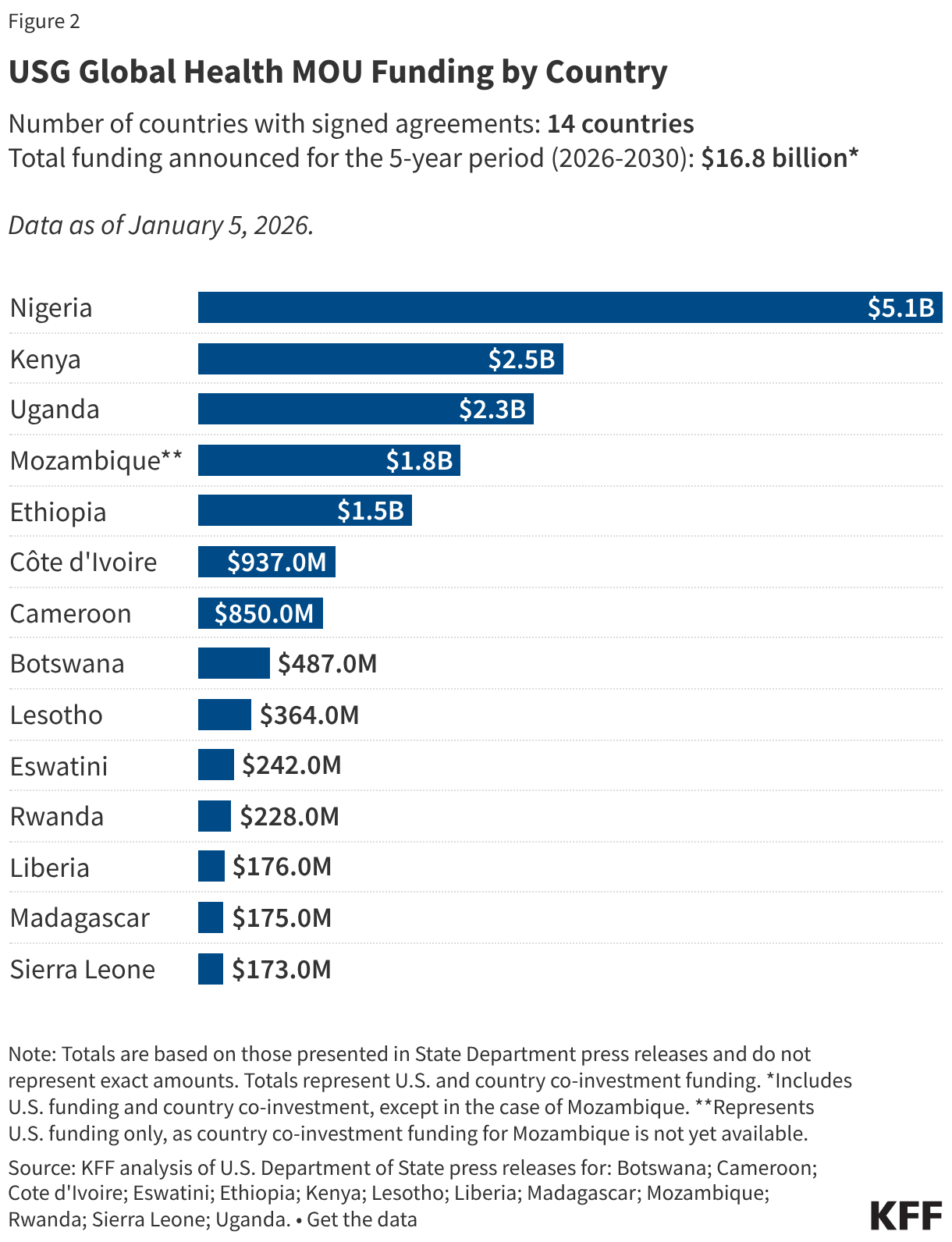
The United States government has officially initiated a fundamental shift in its approach to international development and public health assistance through the implementation of the America First Global Health Strategy. Launched on September 18, 2025, this policy marks a departure from traditional donor-recipient dynamics, moving instead toward a model of bilateral partnership defined by mutual accountability, domestic resource mobilization, and a phased transition to full country ownership. Central to this strategy is the establishment of five-year Memorandums of Understanding (MOUs) with partner nations, spanning the period from 2026 to 2030. These agreements serve as binding frameworks that outline a gradual reduction in U.S. financial assistance in exchange for a documented commitment from partner governments to increase their own domestic health expenditures.
This strategic pivot is designed to move beyond the cycle of indefinite aid dependency, aiming instead to foster "resilient and durable health systems" capable of self-sustenance. As of mid-2026, the U.S. Department of State and the U.S. Agency for International Development (USAID) have begun the complex process of signing and implementing these agreements across several continents. The strategy reflects a broader geopolitical trend of prioritizing sustainable, localized governance and ensuring that U.S. foreign assistance yields measurable, long-term stability in global health security.
A Chronology of the Strategy’s Evolution
The path toward the America First Global Health Strategy began in late 2024, as policymakers sought a more efficient framework for the billions of dollars allocated annually to global health programs such as the President’s Emergency Plan for AIDS Relief (PEPFAR) and the President’s Malaria Initiative (PMI). On September 18, 2025, the formal report was released, detailing the "America First" vision for global health engagement. This document laid the groundwork for the 2026–2030 implementation cycle.
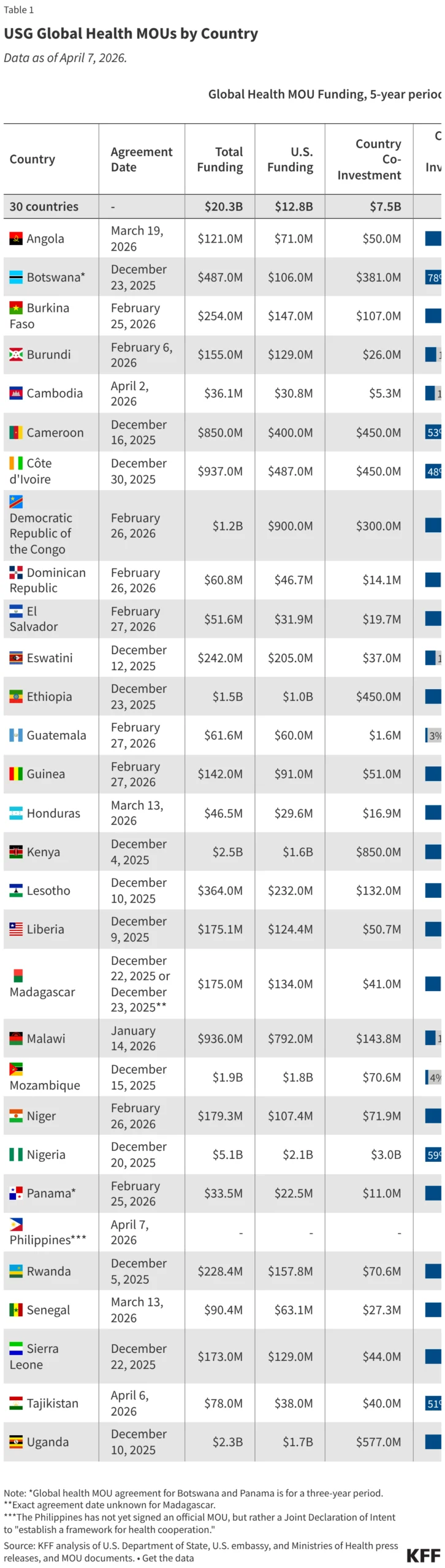
Following the announcement, the U.S. government entered an intensive period of diplomatic negotiation. In the final months of 2025, the first wave of bilateral agreements was signed with key partner nations in Sub-Saharan Africa and Southeast Asia. On January 13, 2026, the first comprehensive tracking resources were made available to the public to monitor the progress of these signings. By April 13, 2026, the strategy reached a critical milestone as more countries joined the framework, and the State Department began releasing specific funding tranches tied to the new MOU requirements. The full implementation of these programs is scheduled to take effect in late 2026, marking the beginning of the five-year "glide path" toward decreased U.S. involvement.
The Mechanics of Bilateral Memorandums of Understanding
The MOUs are not merely symbolic gestures; they are detailed operational plans that dictate the trajectory of health funding for half a decade. Each agreement is tailored to the specific epidemiological and economic profile of the partner country, but all share a core set of objectives:
- System Resilience: Investing in local infrastructure, laboratories, and health workforces to ensure countries can manage health crises without external intervention.
- Domestic Co-Investment: A mandatory "co-financing" share that requires partner countries to increase their health budgets annually.
- Transition Milestones: Clear benchmarks that, if met, trigger the gradual hand-over of program management from U.S.-based NGOs and contractors to local Ministries of Health.
- Sustainability Targets: Ensuring that essential services—such as antiretroviral therapy (ART) for HIV or immunization programs—remain funded through domestic revenue as U.S. grants scale back.
The State Department utilizes a variety of data sources to monitor these MOUs, including press releases from U.S. embassies and partner country Ministries of Health. While some MOU texts are publicly available in their entirety, others remain summarized in diplomatic statements, creating a varying level of transparency across different regions.
The Co-Financing Mandate: A New Fiscal Reality
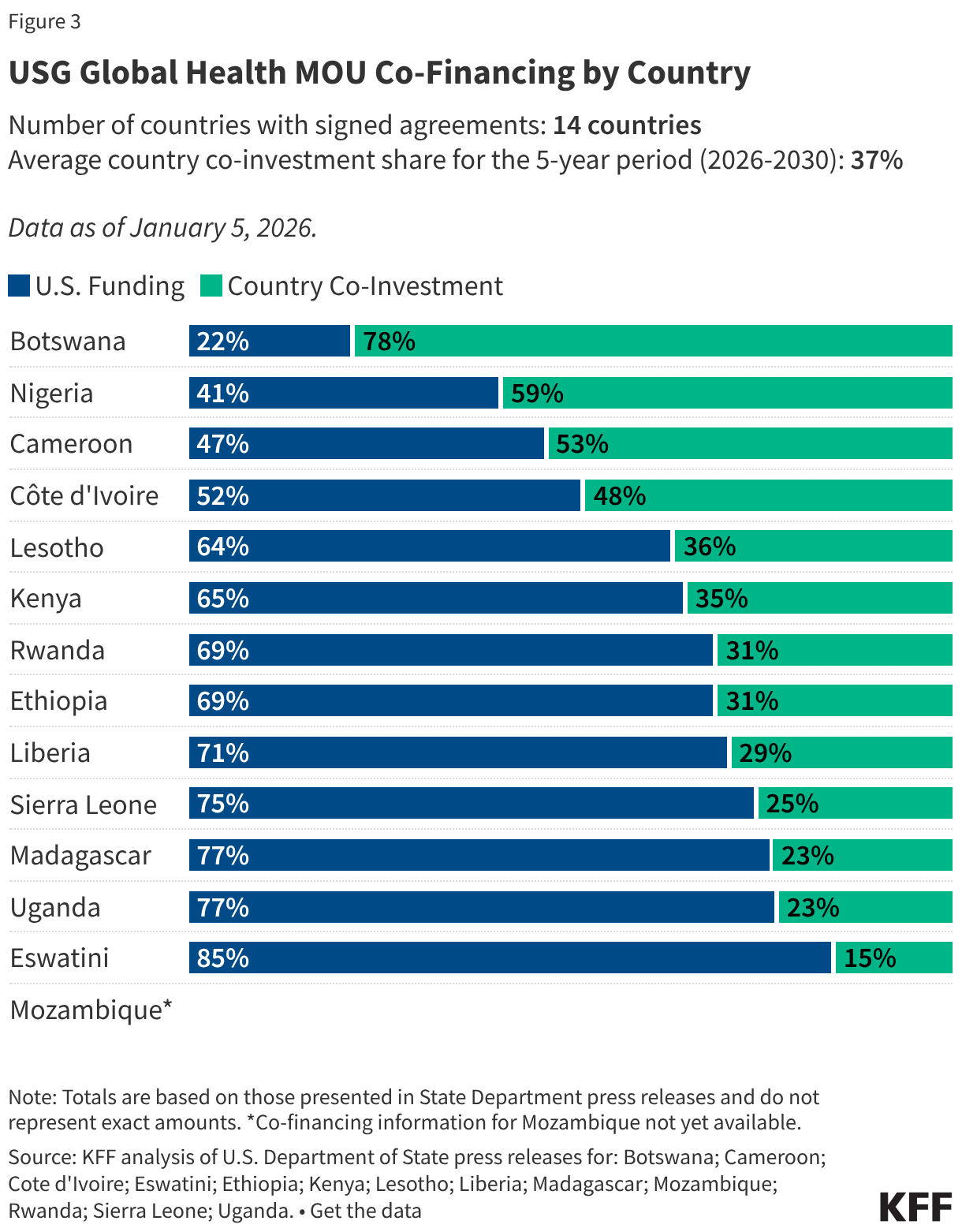
The most significant—and controversial—aspect of the 2026–2030 strategy is the co-investment requirement. Under the America First Global Health Strategy, the U.S. government has pledged to decrease its health assistance in a predictable, tiered fashion. In response, partner countries must demonstrate a proportional increase in domestic health spending.

This "stacked bar" approach to financing is designed to ensure that the total pool of health funding in a country does not drop, even as the source of that funding shifts from the U.S. taxpayer to the local government. For many developing nations, this requires significant fiscal reform, including improved tax collection and the prioritization of health over other sectors like defense or infrastructure.
Data from the early signed MOUs indicate that the U.S. is targeting a "sustainability threshold" by 2030, where the majority of routine health operations are funded domestically. This shift is intended to protect health gains from the fluctuations of U.S. political cycles and to ensure that local health systems are accountable primarily to their own citizens rather than foreign donors.
Programmatic Focus: Global Health Security and Beyond
While the strategy emphasizes a broad transition of ownership, it also narrows its focus on specific "high-impact" program areas. These include:
- Global Health Security (GHS): A primary pillar of the strategy involves outbreak preparedness and response. Agreements categorized under GHS focus on strengthening surveillance systems, laboratory capacity, and the ability to contain health threats at their source before they become global pandemics.
- HIV/AIDS, Malaria, and Tuberculosis: The U.S. continues to support these areas through the transition, but with an emphasis on integrating these vertical programs into the broader national health system.
- Maternal and Child Health: Funding in this sector is increasingly tied to the development of primary healthcare networks that can provide services across a person’s lifespan.
The tracking of these program areas is conducted through keyword searches of MOU documents and press releases. For Global Health Security specifically, the U.S. government looks for mentions of "outbreak preparedness" and "health threat containment" as indicators that a country is aligning with U.S. national security interests.

Official Perspectives and Global Reactions
The rollout of the America First Global Health Strategy has elicited a wide range of responses from the international community and domestic stakeholders.
U.S. officials have defended the policy as a necessary evolution of foreign aid. A spokesperson for the State Department recently noted, "The goal of the America First Global Health Strategy is not to abandon our partners, but to empower them. By creating a clear, five-year roadmap for transition, we are ensuring that these countries are no longer dependent on the generosity of others for the basic survival of their people. This is about dignity, sovereignty, and fiscal responsibility."
In contrast, some health ministers in partner countries have expressed cautious optimism tempered by concerns over the speed of the transition. In a joint statement, several African health ministers acknowledged the importance of ownership but warned that "the aggressive timeline for domestic co-investment must account for global economic headwinds and the unique fiscal constraints of developing economies."
Public health advocacy groups have also raised concerns that a "one-size-fits-all" approach to decreasing aid could lead to funding gaps if local governments fail to meet their co-investment pledges. These groups argue that the "America First" branding should not come at the expense of the humanitarian successes achieved over the last two decades.
Analysis of Implications and Potential Risks
The transition to country ownership represents a high-stakes gamble for global public health. If successful, it will create a network of self-reliant nations capable of managing their own health needs and contributing to global security. If the transition is poorly managed, however, it could lead to the resurgence of preventable diseases and the collapse of fragile health infrastructures.
1. The Risk of "Fiscal Shock":
Many of the countries receiving U.S. aid are also grappling with high levels of sovereign debt. Requiring these nations to increase domestic health spending while U.S. aid decreases could lead to a fiscal shock, potentially forcing cuts in other essential social services.
2. Accountability and Governance:
The strategy assumes that partner governments have the institutional capacity to manage large-scale health programs. In countries where corruption or administrative inefficiency is prevalent, the transition from U.S.-managed programs to domestic management poses significant risks to the continuity of care.
3. Geopolitical Shifts:
As the U.S. reduces its direct financial footprint, other global powers, such as China or the European Union, may seek to fill the void. The "America First" strategy must therefore balance fiscal reduction with the need to maintain diplomatic influence and partnerships in strategically important regions.
4. Data Transparency:
As noted in the methods of the MOU tracker, the availability of detailed information varies. For the strategy to be effective, there must be a high level of transparency and rigorous monitoring to ensure that both the U.S. and partner countries are meeting their financial and programmatic obligations.
Conclusion: The Path Forward to 2030
The America First Global Health Strategy is a landmark policy that redefines the United States’ role in the world. By moving from a donor to a partner, the U.S. is signaling a new era of international development—one characterized by the expectation that aid should be a temporary bridge to self-sufficiency rather than a permanent entitlement.
As the implementation phase begins in late 2026, the global health community will be watching closely. The success of the 2026–2030 MOUs will be measured not just by the amount of money saved by the U.S. government, but by the ability of partner nations to maintain and improve the health of their populations. The tracker will continue to be a vital tool for journalists, policymakers, and health advocates as they monitor this ambitious transition toward a more resilient and durable global health landscape.
The ultimate test of the "America First" approach will be whether it results in a world that is not only more fiscally responsible but also safer and healthier for all. The next five years will determine if this model of sustainable country ownership becomes the new gold standard for international cooperation or a cautionary tale of the risks of rapid disengagement.