
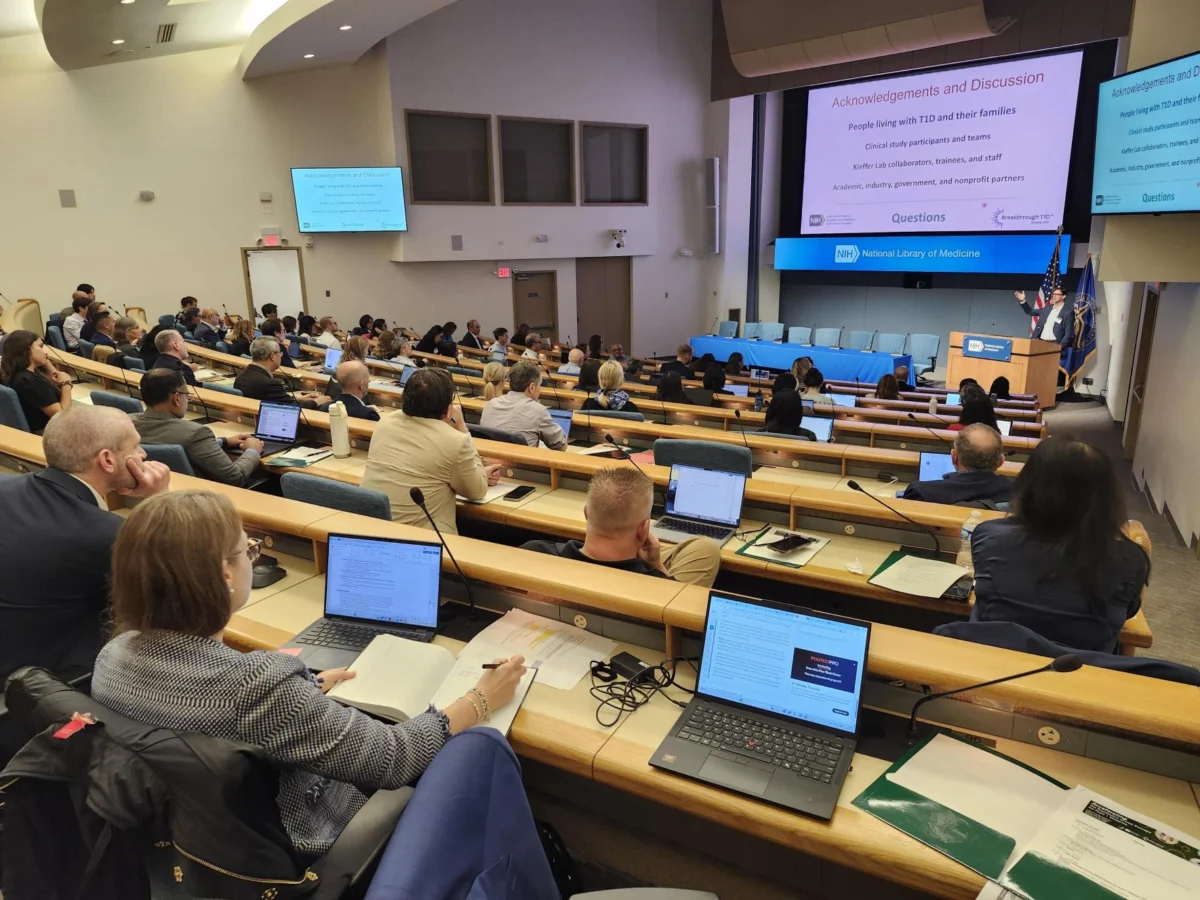
The landscape of Type 1 Diabetes (T1D) treatment is undergoing its most significant transformation since the discovery of insulin over a century ago. For decades, the management of T1D has been a relentless cycle of monitoring, calculation, and injection. However, a recent high-level workshop co-hosted by Breakthrough T1D (formerly JDRF) and the National Institute of Diabetes and Digestive and Kidney Diseases (NIDDK) has signaled that the medical community is on the precipice of a "functional cure" through next-generation islet cell therapies.
n
Titled “Accelerating the Translation of Cell Therapy for Type 1 Diabetes,” the public workshop convened an unprecedented assembly of researchers, clinicians, industry titans, and regulators from the U.S. Food and Drug Administration (FDA). Their collective mission: to bridge the gap between successful lab experiments and a scalable, universal cure that frees patients from the burden of external insulin.
n
n
Main Facts: A Paradigm Shift in T1D Management
n
Type 1 Diabetes is an autoimmune condition where the body’s immune system mistakenly destroys insulin-producing islet cells in the pancreas. Without these cells, the body cannot regulate blood glucose, leading to life-threatening complications.
n
Islet cell therapy involves replacing these destroyed cells with healthy, functioning ones. Currently, the field is transitioning between two distinct eras:
n
- n
- First-Generation Therapies: These rely primarily on cadaveric islet cells (harvested from deceased donors). While effective, they are severely limited by a shortage of donors and are currently reserved for patients with "hypoglycemia unawareness"—a life-threatening inability to feel when blood sugar drops too low.
- Next-Generation Therapies: These utilize manufactured islet cells derived from stem cells. Because these can be grown in laboratories at a massive scale, they offer the potential to treat the millions of people living with T1D worldwide, regardless of the severity of their complications.
n
n
n
The workshop highlighted that we are no longer asking if these therapies work—clinical trials have already shown patients achieving insulin independence and healthy blood sugar levels—but rather how we can make them safe, scalable, and accessible to everyone.
n
n
Chronology: The Road to the "Functional Cure"
n
The journey toward cell therapy has been a multi-decade marathon. Understanding the chronology of this progress is essential to appreciating the urgency of the current workshop.
n
- n
- The Early 2000s (The Edmonton Protocol): Researchers in Alberta, Canada, demonstrated that transplanting islet cells from donor pancreases could lead to insulin independence. However, the need for lifelong, heavy immunosuppression and the lack of donor organs limited its reach.
- The 2010s (The Stem Cell Breakthrough): Scientists successfully figured out the "recipe" to turn pluripotent stem cells into functional, insulin-producing beta cells. This solved the supply problem, moving the field from "organ donation" to "manufacturing."
- 2020–Present (The Clinical Explosion): Companies like Vertex Pharmaceuticals and others began human trials of stem-cell-derived islets. Early results have been nothing short of miraculous, with some participants remaining insulin-free for years.
- The 2024 Workshop: As these therapies move toward late-stage trials, the NIDDK and Breakthrough T1D recognized a bottleneck. The transition from "boutique" clinical trials to "mass-market" medicine requires a new roadmap for manufacturing, regulation, and patient safety.
n
n
n
n
n
n
Supporting Data: Overcoming the Three Pillars of Translation
n
The workshop focused on four critical areas of development that will determine the success of next-generation therapies: Nonclinical Studies, Large-Scale Manufacturing, Clinical Trial Design, and the integration of Artificial Intelligence.
n
1. Nonclinical Foundations and Immune Protection
n
Before a therapy reaches a human, it must be proven safe in the lab. Presenters shared data on "immune protection"—perhaps the biggest hurdle in T1D research. Even if you transplant new islets, the body’s autoimmune response will try to kill them again.
n
Current data suggests two paths:
n
- n
- Encapsulation: Putting cells in a physical "pouch" that lets insulin out but keeps immune cells out.
- Gene Editing: Using CRISPR to "cloak" the cells, making them invisible to the immune system.
n
n
The workshop emphasized that identifying the right T1D models in the lab is essential for generating reproducible data that the FDA can trust.
2. The Manufacturing Challenge
Scaling up is a daunting task. Moving from a laboratory petri dish to a bioreactor capable of producing billions of cells requires meeting stringent FDA requirements.
- Consistency: Every batch of manufactured islets must be identical in potency and purity.
- Cost-Effectiveness: For these therapies to be accessible, the cost of manufacturing must be reduced through automation.
- Academic vs. Industry: The workshop highlighted how academic centers are excellent for "first-in-human" proof of concept, while industry partnerships are necessary to build the infrastructure for global distribution.
3. The Integration of Artificial Intelligence (AI)
In a forward-looking session, researchers discussed how AI is being applied to optimize the entire islet workflow.
- Predictive Modeling: AI algorithms are now being used to forecast a patient’s blood sugar response up to a year after a transplant.
- Manufacturing Optimization: AI monitors cell growth in real-time, modifying conditions (like temperature or nutrient flow) to ensure the highest quality of "smart" islets.
- Biological Design: AI is helping design "smart cells" that can sense an impending immune attack and automatically deploy localized immune-protective measures.
Official Responses: Aligning Regulators and Researchers
A standout feature of the workshop was the active participation of the FDA. In the past, regulatory hurdles were often seen as a barrier; today, there is a collaborative effort to define the "rules of the road" early.
The FDA’s Perspective: Representatives emphasized the need for "meaningful endpoints" in clinical trials. While "insulin independence" is the gold standard, the FDA is also looking at "Time in Range" (TIR) and the reduction of severe hypoglycemic events as valid markers of success. They expressed a commitment to the "Patient-Focused Drug Development" (PFDD) initiative, ensuring that what patients value is reflected in the approval process.
Breakthrough T1D’s Stance: The organization reiterated its role as a "convener." By bringing together the NIDDK and the FDA, Breakthrough T1D ensures that the scientific community isn’t working in a vacuum. Their leadership stressed that "the momentum is real," but it requires a "doubling down" on funding and collaborative research to overcome the final hurdles of scalability.
NIDDK’s Role: As a branch of the NIH, the NIDDK’s involvement signals that islet cell therapy is a top federal priority. Their focus remains on the long-term safety and the fundamental biological understanding of how these cells integrate into the human body.
The Human Element: Risk, Reward, and Lived Experience
Perhaps the most poignant part of the workshop was the inclusion of the T1D community. Several individuals who have lived with the disease for decades shared their perspectives on the "benefit vs. risk" calculation.
For many, the prospect of taking immunosuppressant drugs—which come with their own side effects—is a price they are willing to pay to escape the constant threat of hypoglycemia. One panelist noted that even a "partial" success—where they still required one injection a day but no longer feared "crashing" overnight—was a life-changing outcome.
The Participant Advisory Council (PAC) at Breakthrough T1D played a vital role in these discussions, reminding researchers that "person-centered design" is not just a buzzword. It means creating therapies that fit into a person’s life, rather than forcing the person to revolve their life around the therapy.
Implications: A Future Beyond the Pump
The implications of this workshop are profound. We are moving away from a world of managing symptoms and toward a world of restoring function.
For Patients
The success of next-generation islet therapies would mean an end to finger sticks, carb counting, and the "24/7" mental load of T1D. While first-gen therapies are for the few, next-gen therapies are being designed for the many.
For the Healthcare System
While the upfront cost of cell therapy will be high, the long-term savings are astronomical. By preventing the complications of T1D—such as kidney failure, blindness, and cardiovascular disease—cell therapies could save the healthcare system billions of dollars over the lifetime of a single patient.
For Global Science
The techniques being perfected for islet cells—stem cell differentiation, immune cloaking, and AI-driven manufacturing—will provide a blueprint for treating other diseases. If we can replace the insulin-producing cells of the pancreas, we can eventually look toward replacing cells in the heart, the liver, or the brain.
Conclusion: The Path Forward
The "Accelerating the Translation of Cell Therapy for Type 1 Diabetes" workshop was more than just a meeting of minds; it was a call to action. The science has proven that islet cell therapy works. The challenge now lies in the "translation"—the difficult, expensive, and technical work of turning a laboratory miracle into a standard medical procedure.
As Breakthrough T1D and the NIDDK continue their partnership, the message to the T1D community is clear: The goal is no longer just better insulin or better pumps. The goal is a world where T1D is a manageable footnote in a person’s medical history, rather than a defining daily struggle. Through the marriage of biology, manufacturing, and artificial intelligence, the "functional cure" is moving out of the realm of science fiction and into the clinic.

