
The landscape of obesity treatment is undergoing a radical transformation. As pharmaceutical breakthroughs in GLP-1 receptor agonists and other weight-management medications redefine clinical outcomes, a new frontier is emerging: the digital companion. These software applications, designed to accompany prescription treatments, promise to bridge the gap between the doctor’s office and the patient’s daily life. However, as the integration of technology and pharmacology accelerates, critical questions regarding patient needs, data privacy, and regulatory oversight have come to the forefront.
n
New research released by the Obesity Action Coalition (OAC), coupled with landmark guidance from the U.S. Food and Drug Administration (FDA), has placed these "prescription companion apps" under a national spotlight. This dual development signals a shift toward a more regulated, patient-centric digital health ecosystem, ensuring that technology serves the individual rather than complicating their journey toward health.
n
Main Facts: The Convergence of Tech and Therapeutics
n
The core of the current discussion revolves around the "Prescription Companion App" (PCA). Unlike general wellness apps found on the App Store—which might track steps or offer generic diet advice—PCAs are specialized tools designed to function in tandem with a specific prescription medication. Their functions are multifaceted, ranging from dosage reminders and side-effect tracking to providing direct communication channels with healthcare providers.
n
The Obesity Action Coalition (OAC), a leading non-profit organization dedicated to giving a voice to individuals affected by obesity, recently conducted a comprehensive survey of 133 adults to gauge patient sentiment toward these tools. Their findings reveal a sophisticated consumer base that is eager for digital assistance but wary of "tech-creep" and privacy violations.
n
Simultaneously, the FDA has stepped in to provide a regulatory framework. On October 20, 2026, the agency issued final guidance regarding software used with prescription drugs. This guidance clarifies how the FDA views the relationship between a drug’s "labeling" and the digital content provided by an app. It establishes a clear line: when an app provides information essential to the safe and effective use of a drug, it falls under the purview of federal oversight.
n
Together, the OAC’s research and the FDA’s guidance emphasize that the future of obesity care is not just about the molecules in the medication, but the digital environment surrounding the patient.
n
Chronology: The Evolution of Digital Health in Obesity Care
n
The journey to our current digital-pharmacological hybrid model has been several decades in the making:
n
- n
- The Early 2000s: The Era of Self-Monitoring. Early digital health tools were largely "electronic diaries." Patients would manually log calories or exercise on desktop software. These were isolated tools with no connection to medical treatment plans.
- 2010–2018: The Rise of the Smartphone and Wearables. The explosion of the App Store and the introduction of the Apple Watch moved health tracking to the wrist. However, these remained "wellness" tools rather than "medical" tools. The obesity epidemic continued to grow, largely addressed through lifestyle modification apps that often lacked clinical validation.
- 2019–2023: The Pharmacological Revolution. The introduction of highly effective obesity medications (such as semaglutide and tirzepatide) changed the conversation. These medications require precise dosing schedules and involve side effects that need careful management. Pharmaceutical companies began developing proprietary apps to support patients taking these specific drugs.
- 2024–2025: The Rise of "Digital Therapeutics." The concept of an app as a "companion" became mainstream. Companies realized that better adherence—driven by app reminders—led to better clinical outcomes. However, this period was also marked by "app fatigue" and growing concerns over how "Big Pharma" was using patient data.
- October 2026: The Regulatory Turning Point. Recognizing the "Wild West" nature of prescription software, the FDA issued its final guidance. This move was prompted by the realization that an app’s interface is, in many ways, an extension of the drug’s physical packaging and instructions.
n
n
n
n
n
n
Supporting Data: What Patients Actually Want
n
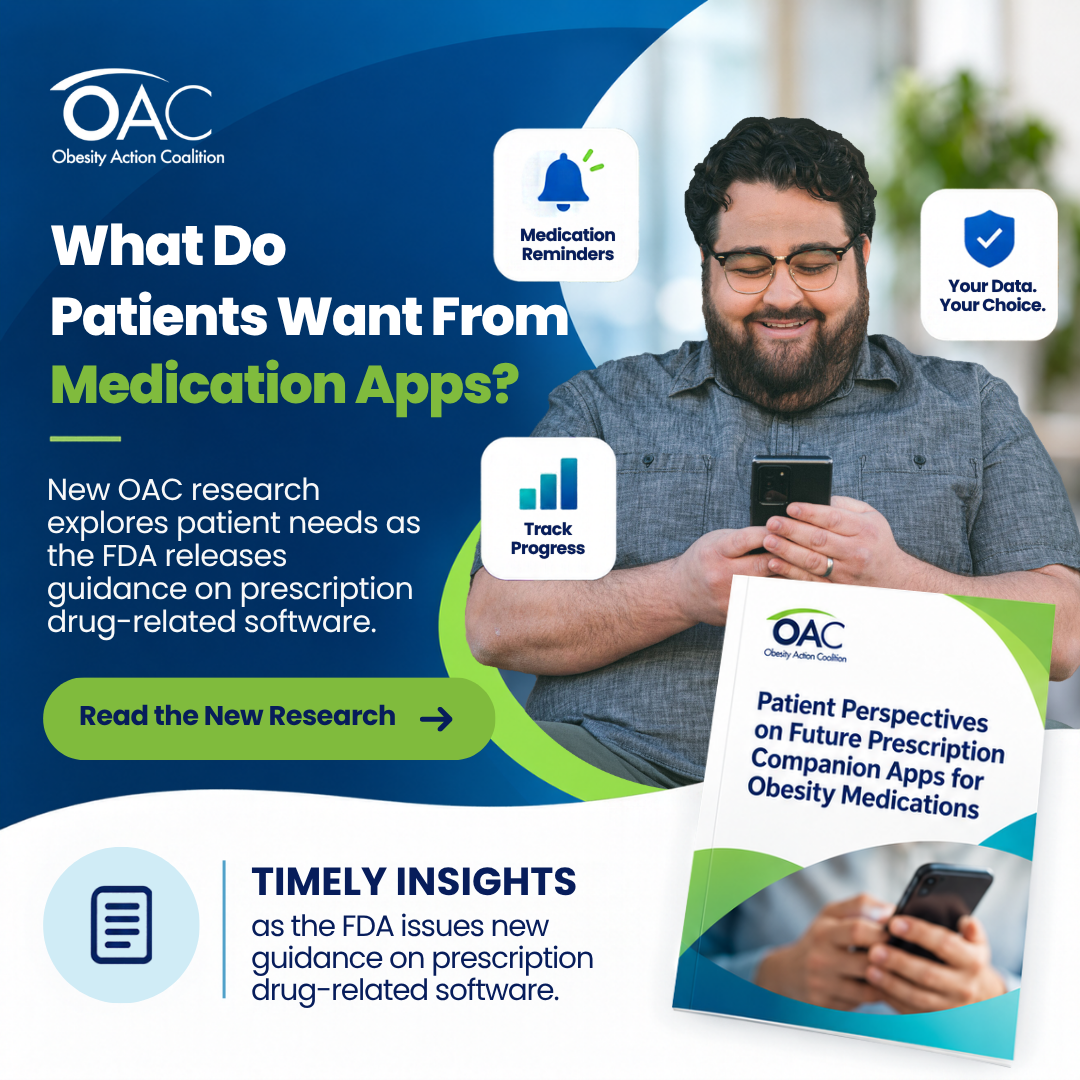
The OAC’s survey of 133 adults provides a data-driven look at the "patient voice." While the sample size is targeted, the consensus in the responses is overwhelming, highlighting four pillars of patient concern:
n
1. Clarity Over Complexity
n
90% of respondents prioritized clear medication instructions. In the context of obesity treatment—where patients may be self-administering injections—the margin for error is slim. Patients are not looking for "gamified" experiences or social media integration; they want a digital version of a clear, concise instruction manual that helps them use their medication correctly.
n
2. The Privacy Mandate
n
Data privacy is no longer a niche concern. 89% of participants demanded a clear explanation of how their data is used. In obesity care, data is particularly sensitive, often including weight, body image reflections, and metabolic health markers. Patients expressed a "trust-but-verify" attitude, wanting to know exactly who has access to their health journey.
n
3. Autonomy and Control
n
Closely tied to privacy is the concept of data sovereignty. 89% of respondents stated they want control over what information is shared with their healthcare team. This suggests a desire for a "curated" relationship with providers, where patients can choose to highlight specific trends rather than being under constant, unmonitored surveillance.
n
4. The "FDA Seal of Approval"
n
Perhaps the most telling statistic is that 86% of patients said FDA review would directly influence their decision to use an app. This underscores a significant trust in federal institutions over corporate self-regulation. For patients, an FDA review serves as a proxy for safety, efficacy, and reliability.
n
However, the data also revealed a significant hurdle: Alert Fatigue. A subset of respondents expressed apprehension about "too many notifications." This "digital noise" can lead to patients muting or deleting apps, rendered the tools useless. The takeaway for developers is clear: an app must be a tool, not a chore.
n
Official Responses: The FDA’s Regulatory Framework
n
The FDA’s guidance, titled "Prescription Drug Use-Related Software," represents a sophisticated understanding of modern medicine. In their official communication, the agency clarified that software disseminated by a drug manufacturer for use with one or more of its prescription drugs will be handled under specific labeling rules.
n
Key components of the FDA guidance include:
- Labeling Integration: If an app is essential to the "intended use" of the drug, the app’s content may be considered part of the drug’s labeling. This means the information provided must be truthful, non-misleading, and balanced.
- Submission Requirements: Drug companies are now required to provide the FDA with certain app content and updates. This ensures that a company cannot change the "instructions for use" via a software update without regulatory oversight.
- Post-Market Monitoring: The FDA will monitor how these apps perform in the real world, looking for "glitches" or "bugs" that could lead to medication errors.
By establishing these rules, the FDA is effectively treating the app as a "Drug-Led Combination Product." This ensures that the digital interface meets the same rigorous standards as the physical medication.
Implications: The Future of Digital Obesity Care
The convergence of the OAC’s research and the FDA’s guidance has profound implications for the future of the healthcare industry.
For Pharmaceutical Companies: The days of "value-added" apps that serve as mere marketing tools are over. Pharma companies must now invest in high-level UX/UI design that prioritizes medical clarity and data security. They must also prepare for a more rigorous submission process, treating their software developers as an integral part of their clinical and regulatory teams.
For Healthcare Providers: PCAs offer a "window" into the patient’s life between appointments. If these apps are designed correctly, doctors will receive cleaner, more actionable data. However, providers must also be mindful of the "digital divide." If treatment success becomes heavily reliant on using a high-end smartphone app, patients with lower digital literacy or limited access to technology may be left behind.
For the Patient: The primary implication is empowerment. When patients have a tool that is FDA-vetted and designed with their specific needs in mind, they become active participants in their treatment. The OAC’s research serves as a reminder that the patient is the "end-user" of both the drug and the app. For digital obesity care to be successful, it must move away from a "top-down" approach and toward a collaborative model.
Conclusion: Putting the Human Before the Hardware
As we look toward 2027 and beyond, the integration of digital tools in obesity care is inevitable. The medications are too complex, and the stakes are too high for patients to be left to manage their treatments with paper logs and memory alone.
However, as the Obesity Action Coalition has demonstrated, the success of these tools depends on their humanity. A successful prescription companion app is one that respects the patient’s privacy, simplifies their life, and carries the weight of clinical authority. By listening to patient voices and adhering to the FDA’s new regulatory guardrails, the medical community can ensure that the digital revolution in obesity care is not just technologically advanced, but fundamentally compassionate.
The future of obesity care is here—it is digital, it is regulated, and, most importantly, it must be patient-first.

