
WASHINGTON, D.C. — In the spring of 2026, the landscape of global health is witnessing a profound transformation. For over two decades, the President’s Emergency Plan for AIDS Relief (PEPFAR) stood as the gold standard of American soft power, credited with saving more than 26 million lives and preventing millions of HIV infections. However, new data released by the State Department on April 17, 2026, reveals a program in the throes of a radical and controversial pivot.
n
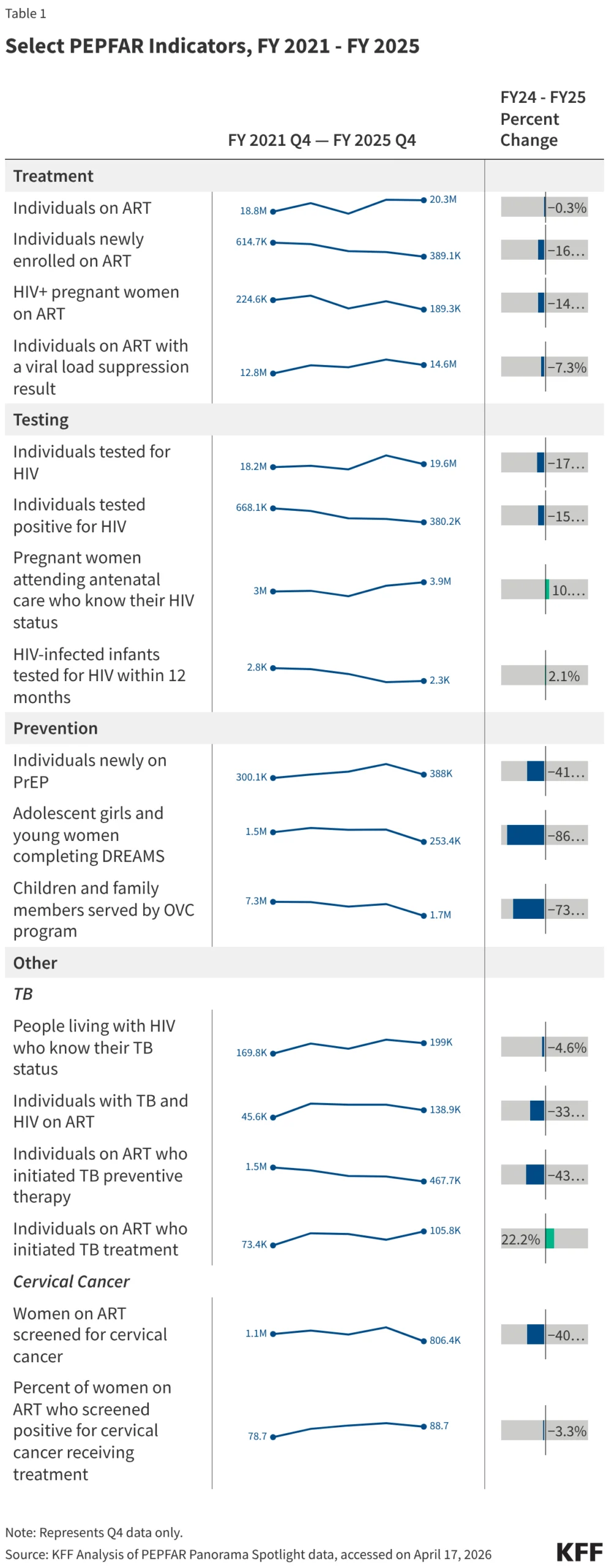
Following a year of data blackouts and administrative restructuring under the second Trump administration, the newly released Fiscal Year (FY) 2025 Fourth Quarter (Q4) results provide the first empirical glimpse into how the "America First Global Health Strategy" is affecting the ground-level fight against HIV/AIDS. The findings present a complex, often troubling picture: while total treatment numbers remain stable, critical prevention services and new enrollments have plummeted, raising fears of a future resurgence in infections.
n
Main Facts: A Program in Transition
n
The analysis of the FY 2025 Q4 data, which covers the period from July 1 to September 30, 2025, highlights several critical shifts in the U.S. global HIV response:
n
- n
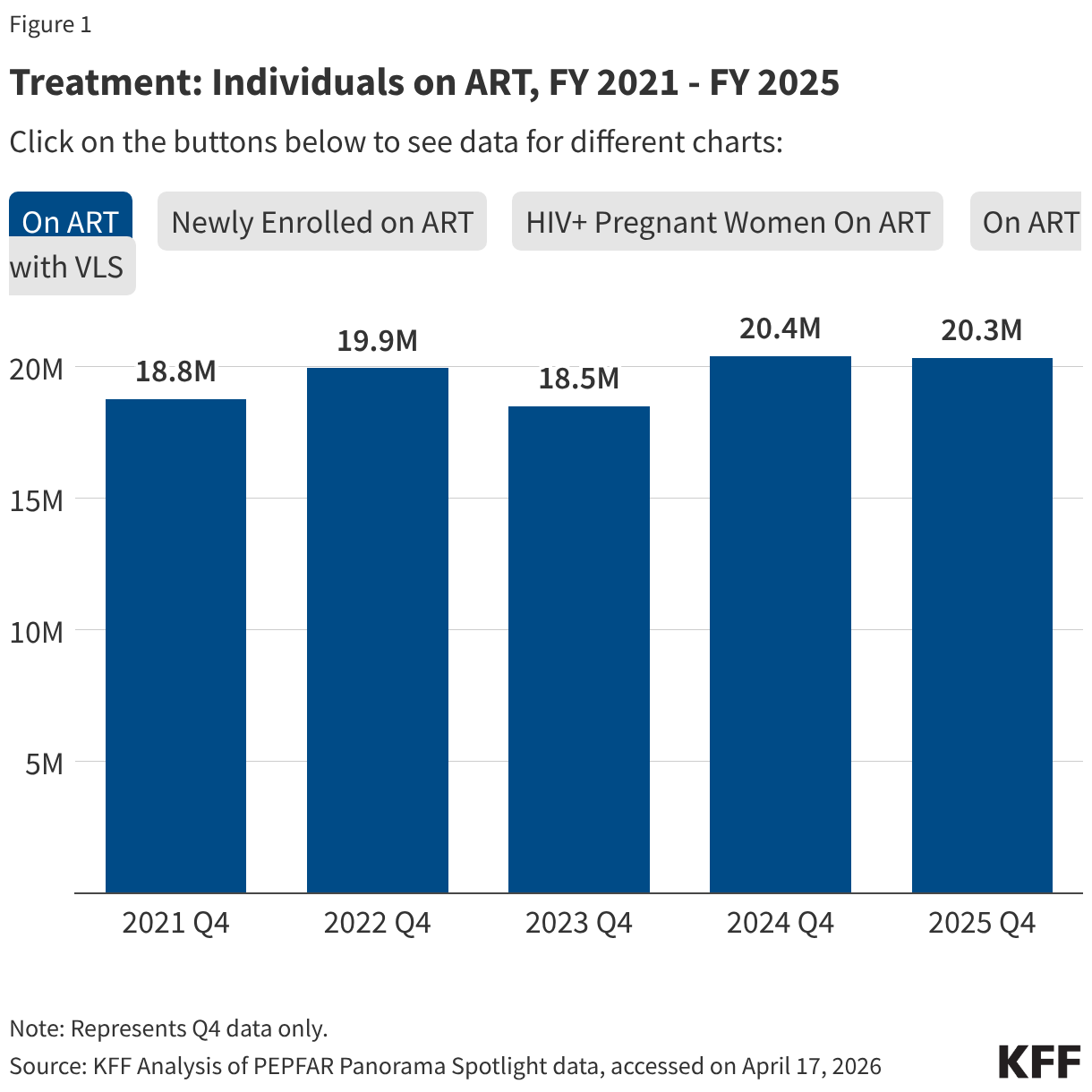
- Treatment Stability vs. Enrollment Decline: While the total number of people living with HIV (PLHIV) receiving antiretroviral therapy (ART) has held steady at approximately 20 million, the number of newly enrolled patients on treatment has seen a significant drop.
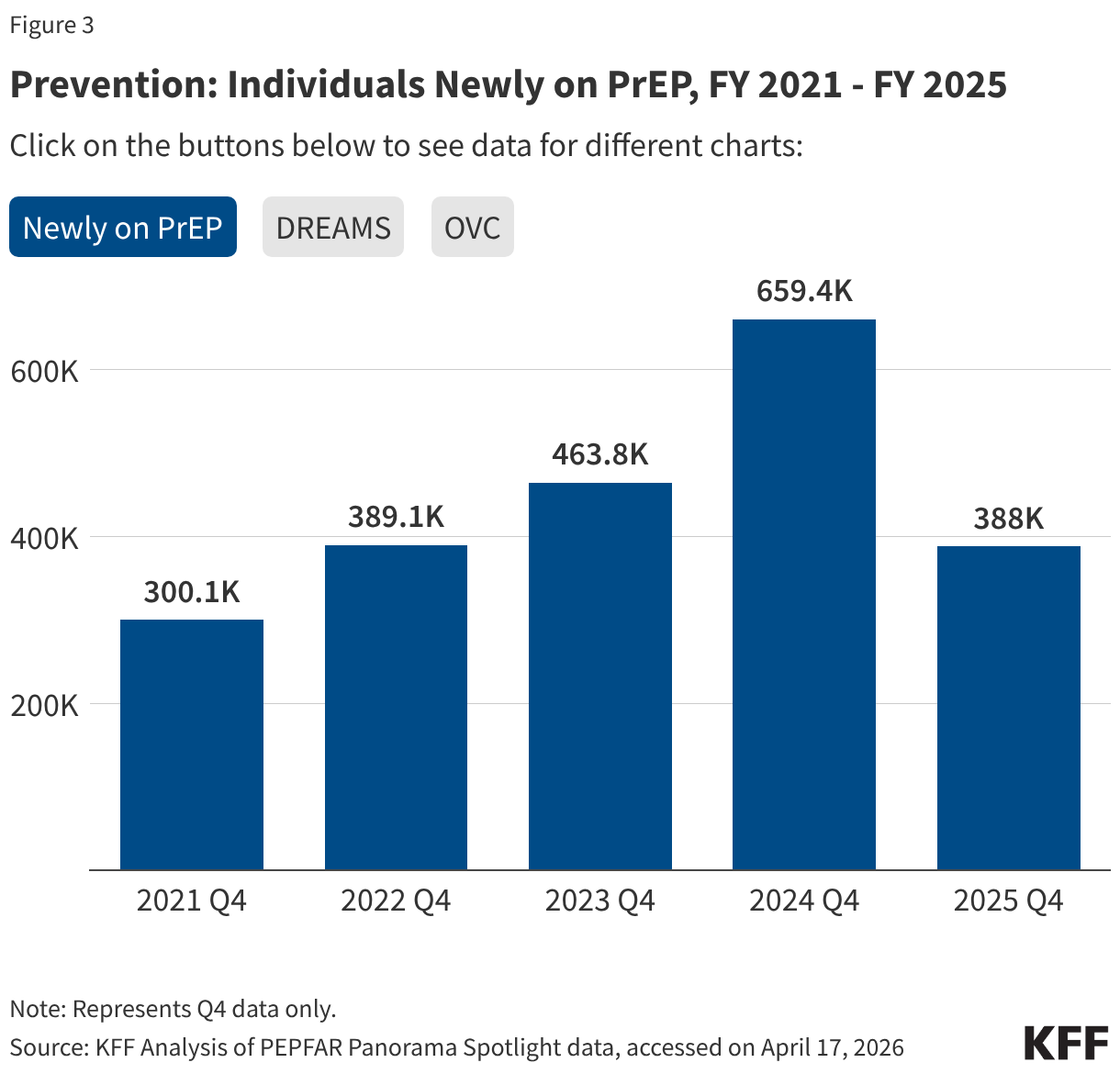
- Prevention Crisis: Services for HIV prevention, specifically Pre-Exposure Prophylaxis (PrEP) and the DREAMS program for adolescent girls and young women, have been sharply scaled back. This aligns with the administration’s policy shift away from specific social-behavioral interventions.
- Data Transparency Gaps: For the first time in over a decade, a full three quarters of data (Q1-Q3 of FY 2025) were not released to the public. The State Department cited "reporting and implementation challenges" following the administration’s foreign aid review.
- Reporting Requirements: Several key indicators, including DREAMS completion and cervical cancer screening, were transitioned from "required" to "optional" reporting, making it difficult to distinguish between a decline in actual services and a decline in data collection.
- Integrated Health Shift: The administration has begun moving away from "vertical" (disease-specific) programming toward an integrated approach anchored in bilateral agreements with host country governments.
n
n
n
n
n
n
Chronology: The Road to the 2026 Data Release
n
To understand the current state of PEPFAR, one must trace the administrative upheavals that began in early 2025.
n
January – March 2025: The Stop Work OrdernShortly after the inauguration, the administration issued a temporary "stop work order" for various global health implementers. This was followed by a comprehensive foreign aid review that sought to align all international assistance with the "America First" doctrine. During this period, the PEPFAR Panorama Spotlight—the program’s flagship public data platform—was taken offline, creating a "data blackout" that lasted several months.
n
May 2025: The Launch of "America First Global Health"nThe State Department officially unveiled the "America First Global Health Strategy." This new framework emphasized bilateral agreements over multilateral partnerships (like the Global Fund) and prioritized "frontline commodities" (drugs and diagnostics) over "supportive services" (counseling, community outreach, and gender-based programs).
n
June – December 2025: Reorganization and CancellationsnThroughout the middle of the year, numerous PEPFAR awards were cancelled or allowed to expire. Funding was redirected toward a more integrated health approach, where HIV services were folded into broader primary healthcare initiatives managed directly by host governments.
n
April 17, 2026: The Q4 Data RevealnAfter over a year of speculation from public health experts and advocacy groups, the State Department released the Q4 results for FY 2025. Notably, data for the first three quarters of the year remained missing, leaving a significant gap in the historical record of the pandemic response.
n
Supporting Data: Analyzing the Mixed Results
n
A deep dive into the MER (Monitoring, Evaluation, and Reporting) indicators reveals the specific areas where the program is maintaining its momentum and where it is faltering.
n
1. HIV Treatment and Viral Suppression
n
The most resilient aspect of the PEPFAR portfolio appears to be the maintenance of existing patients. The total number of individuals on ART remained stable compared to FY 2024. Furthermore, the number of patients achieving viral load suppression (VLS)—meaning the virus is undetectable and untransmittable—remained high.
n
However, the "new enrollment" metric tells a different story. The decline in new patients starting ART suggests that the "reach" of the program is shrinking. If fewer people are being diagnosed and started on treatment, the long-term goal of ending the epidemic by 2030 becomes increasingly unreachable.
n
2. The Prevention Slump
n
The most alarming data points reside in the prevention sector.
n
- n
- PrEP: New PrEP enrollments saw a steep decline. PrEP is a cornerstone of modern HIV prevention, particularly for high-risk populations.
- DREAMS: The DREAMS program, designed to empower adolescent girls and young women (the demographic with the highest infection rates in sub-Saharan Africa), saw a significant reduction in reported completions.
- OVC Programs: Support for Orphans and Vulnerable Children (OVC) also saw a downward trend, reflecting the administration’s move away from social support services.
3. Testing and Diagnostics
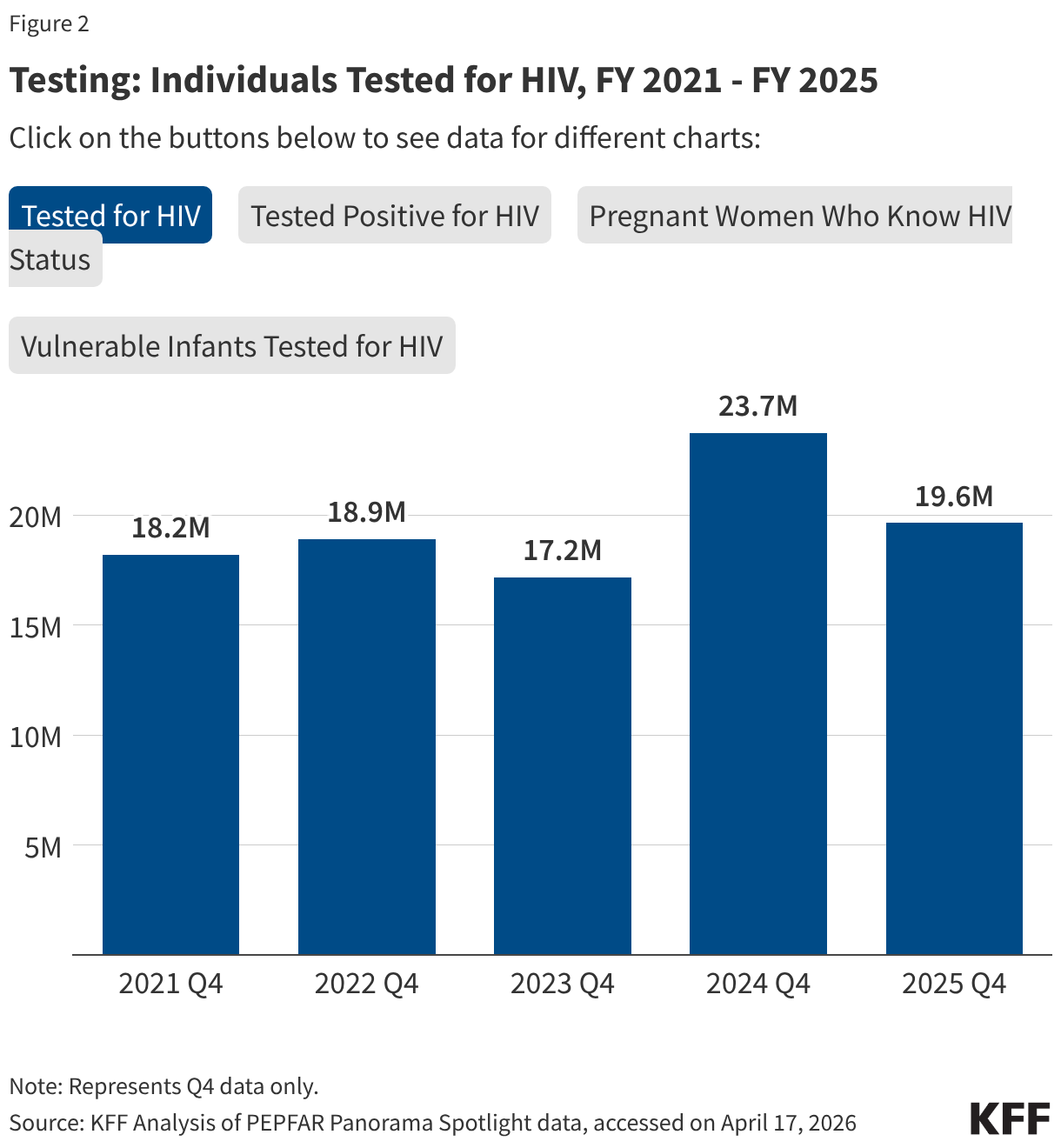
HIV testing volume decreased in Q4 of FY 2025 compared to the previous year. While some might argue this reflects a lower prevalence of the disease, experts worry it is a symptom of reduced access. If testing is not prioritized, "silent" transmissions may increase, only becoming apparent years later when patients present with advanced AIDS.
4. TB and Cervical Cancer
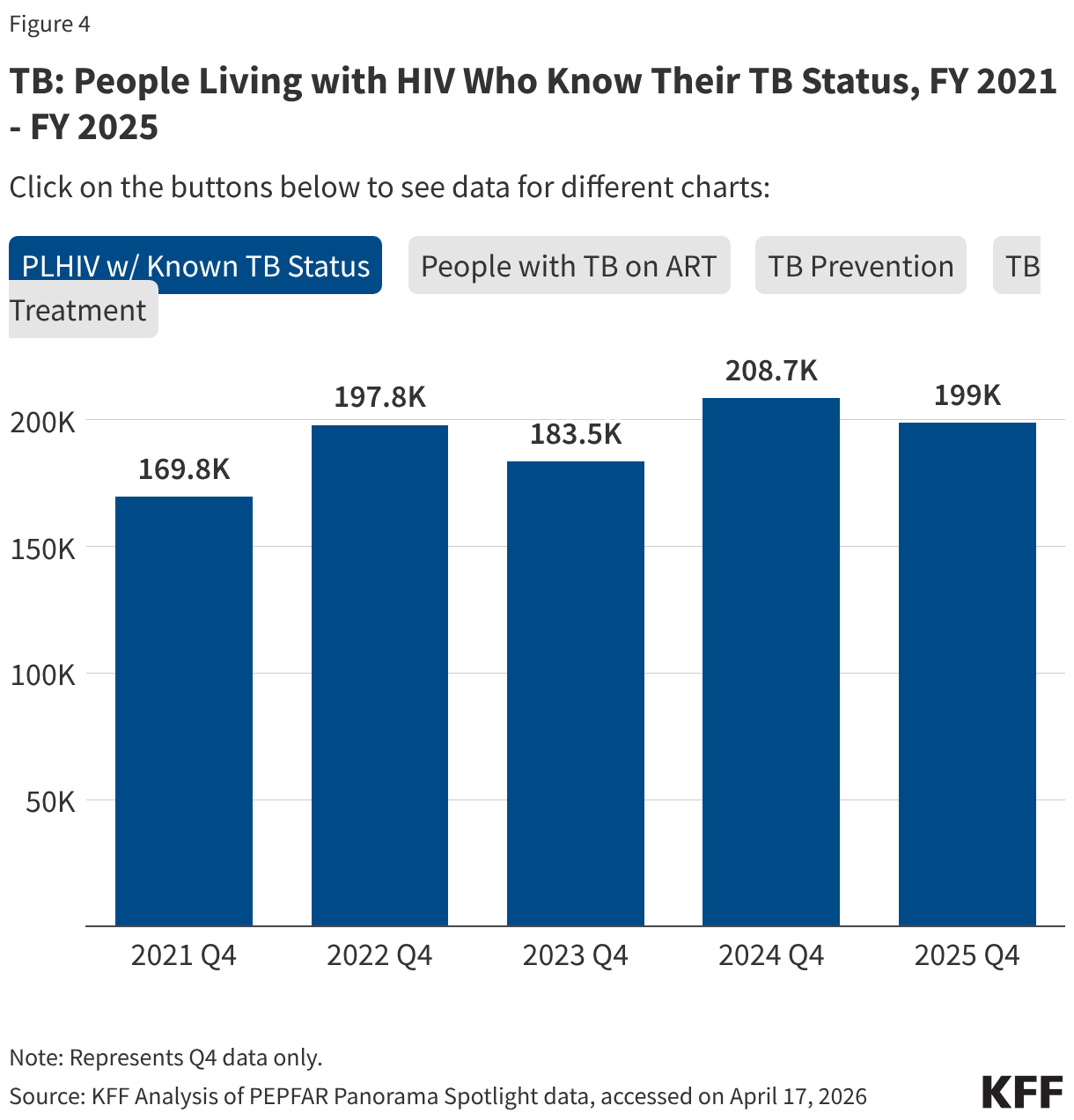
One of the few bright spots in the report was the treatment of TB/HIV co-infections. The number of people living with HIV and TB who are receiving ART increased, suggesting that clinical integration for these two deadly diseases remains a priority. Conversely, cervical cancer screening for women on ART declined, likely due to the change in reporting requirements from "required" to "optional."
Official Responses and Policy Context
The State Department has defended the shifts, characterizing them as a necessary evolution toward "sustainability" and "country ownership."
In a statement accompanying the data release, officials noted that PEPFAR "continues to support over 20 million people living with HIV" and emphasized that the shift to bilateral agreements would ensure that U.S. taxpayer dollars are used more efficiently by bypassing large international NGOs and working directly with sovereign states.
The administration’s "America First" strategy posits that disease-specific programs like PEPFAR are a relic of a "siloed" past. By integrating HIV care into general health systems, the administration argues it is building more resilient health infrastructures in partner nations.
However, critics and public health analysts express skepticism. "The stability in total treatment numbers is a testament to the infrastructure built over twenty years, but you cannot maintain an epidemic response by only looking backward," said one global health analyst from KFF. "The decline in new enrollments and prevention services suggests we are losing the front line of the fight."
Implications: A Future of Uncertainty
The findings from the FY 2025 Q4 data release have several long-term implications for the global community:
1. The Risk of a Resurgent Epidemic
The scale-back of PrEP and DREAMS, combined with lower testing rates, creates a "blind spot" in the global response. Without aggressive prevention and case-finding, new infection rates could quietly climb, undoing decades of progress.
2. The Erosion of Data-Driven Policy
PEPFAR was historically lauded for its "data-driven" approach. The decision to make several reporting indicators optional and the failure to release three quarters of data suggest a move away from transparency. Without consistent data, it becomes impossible for the international community to hold the U.S. or host governments accountable for outcomes.
3. The Sustainability Paradox
While "country ownership" is a long-term goal of global health, many experts argue that the transition is happening too abruptly. If host governments are not yet ready to absorb the financial and logistical burden of these programs, the quality of care may suffer.
4. The Future of U.S. Leadership
As the U.S. shifts toward bilateralism and reduces its focus on social-behavioral HIV programming, other global actors—including China and the European Union—may seek to fill the vacuum in global health leadership.
The April 2026 data release serves as a snapshot of a program at a crossroads. While the "America First" strategy has not yet led to a total collapse of the treatment pipeline, the cracks in the foundation—specifically in prevention and data transparency—suggest that the coming years will be a period of significant risk for the global HIV/AIDS response. As the administration continues to reorganize U.S. foreign aid, the world watches to see if this new integrated approach can truly sustain the progress of the last two decades or if the "end of AIDS" will remain an elusive dream.

