
As America navigates an era of increasingly liberalized drug laws and a surge in the availability of high-potency cannabis, a crucial question resurfaces: does frequent marijuana use blunt ambition and diminish drive? While the science remains a complex tapestry of conflicting findings and ongoing research, emerging evidence suggests a nuanced relationship, particularly when high potency, frequent consumption, and adolescent or young adult use converge. This article delves into the evolving understanding of cannabis’s impact on motivation, examining historical perspectives, contemporary research, and the potential societal implications of a nation grappling with its evolving relationship with marijuana.
n
The Echoes of "Amotivational Syndrome": A Historical Perspective
n
The notion that cannabis use could erode an individual’s drive is not new. Decades ago, as early research into marijuana began to emerge, the concept of "amotivational syndrome" took root. First described in the late 1960s by independent research groups, this syndrome was characterized by a cluster of behaviors purportedly linked to regular marijuana use. While not a formal diagnosis in the Diagnostic and Statistical Manual of Mental Disorders (DSM), the concept has been acknowledged in discussions surrounding the functional consequences of Cannabis Use Disorder.
n
Anecdotal observations, like those of a former psych tech who witnessed friends lose interest in competitive activities after consuming cannabis, paint an early picture of this perceived effect. The personal narrative, while not scientific proof, highlights a tangible, albeit small-scale, manifestation of the question that now looms larger: what happens to drive when cannabis is not only more potent but also more consistently integrated into the lives of millions? The early descriptions of amotivational syndrome pointed to a decline in ambition, a reduced capacity for goal-directed behavior, and a general apathy towards formerly engaging activities.
n
The Shifting Landscape: Potency and Prevalence
n
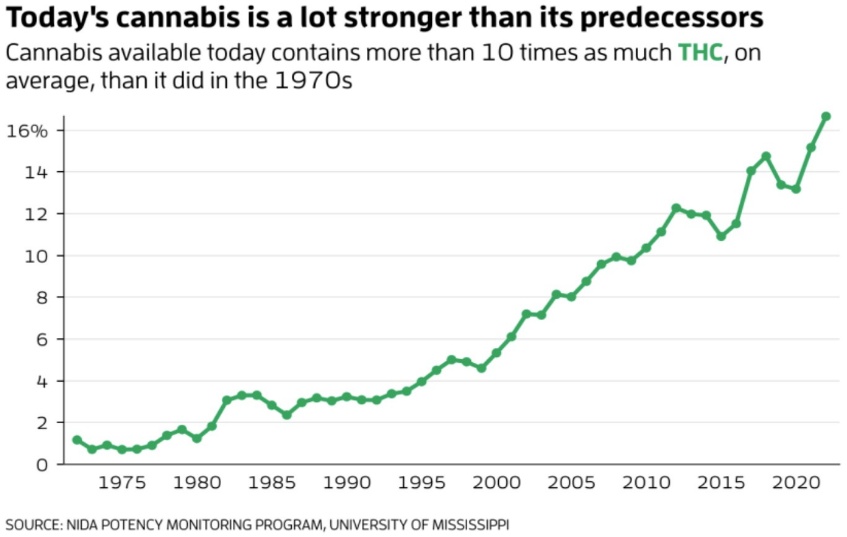
The cannabis landscape of today is starkly different from that of the 1960s. Universal agreement exists on one critical factor: the dramatic increase in potency. The average tetrahydrocannabinol (THC) content, the primary psychoactive component of marijuana, has surged over the past five decades. This escalation is attributed to advancements in selective breeding and a shift in cultivation practices, favoring sinsemilla – the resin-rich buds of unpollinated female plants – over less potent mixtures of leaves and stems. This increased THC concentration means that modern cannabis products deliver a significantly more potent psychoactive experience.
n
Concurrently, marijuana use has become increasingly widespread. As of August 2026, a significant number of U.S. states and the District of Columbia have legalized recreational adult-use cannabis. Data from the Substance Abuse and Mental Health Services Administration (SAMHSA) indicates a consistent rise in usage. In 2024, an estimated 64.2 million individuals reported using marijuana at least once in the preceding year, with a notable increase in prevalence observed between 2021 and 2024. What’s particularly striking is the demographic shift in usage patterns. While daily or near-daily alcohol consumption still outpaces similar cannabis use among older adults, the inverse is true for young adults, suggesting a generational divergence in substance use habits.
n
The University of Michigan’s Monitoring the Future study, a longitudinal research project tracking trends in substance use among young adults, provides further insight. In 2023, among individuals aged 19-30, a significant portion reported recent marijuana use. This demographic, encompassing much of Generation Z and younger Millennials, represents a key cohort whose long-term developmental trajectories are intertwined with their substance use patterns. Public opinion also reflects this evolving landscape, with a substantial majority of Americans now supporting the legalization of marijuana for medical or recreational purposes, a stark contrast to the historical stance of prohibition.
n
The Scientific Scrutiny: What the Evidence Shows
n
While the term "amotivational syndrome" may have fallen out of favor in formal diagnostic criteria, the scientific inquiry into cannabis and motivation has continued, yielding more nuanced findings. A comprehensive 2024 review of research on cannabis and motivation concluded that recent studies, excluding those focused on acute intoxication, do not support the existence of a generalized amotivational syndrome. However, this same review did identify a critical caveat: weekly cannabis users exhibit a reduced willingness to expend effort for rewards when intoxicated. This finding raises a significant possibility that frequent cannabis use could contribute to a persistent state of diminished motivation.
n
Furthermore, the review highlighted evidence from both acute and non-acute cannabis use studies suggesting that marijuana exposure is associated with blunted reward anticipation responses in the ventral striatum, a key brain region involved in reward processing and motivation. This neurobiological observation provides a potential mechanism for how cannabis might impact drive, even in the absence of a universally recognized "syndrome."

n
Adolescent and Young Adult Use: A Critical Intersection
n
The confluence of high potency, frequent use, and the developmental stage of adolescence and young adulthood appears to be a particularly sensitive area of concern. A significant 2024 meta-analysis, scrutinizing 63 studies encompassing over 438,000 individuals, examined the relationship between marijuana use during these formative years and subsequent educational and employment outcomes. The findings were consistent and concerning, revealing moderate-certainty associations with:
n
- n
- Lower academic achievement: Students who used marijuana during adolescence and young adulthood tended to perform less well academically.
- Increased school absenteeism: Higher rates of missed school days were observed among young cannabis users.
- Elevated dropout rates: The likelihood of discontinuing formal education prematurely was greater.
- Reduced likelihood of high school completion: The probability of obtaining a high school diploma was diminished.
- Lower probability of obtaining a postsecondary degree: The pursuit and attainment of higher education were negatively impacted.
n
n
n
n
n
n
While the data on unemployment associations were of lower certainty, the authors acknowledged a potential increase in unemployment that could be linked to these educational disparities. It is crucial to underscore that associational studies, by their nature, demonstrate correlation rather than direct causation. However, the consistent patterns observed across numerous studies, particularly those focusing on vulnerable developmental periods, cannot be dismissed. The ethical limitations of randomized controlled trials – where researchers would deliberately administer potentially harmful substances – mean that direct causal proof of harm in this context is unattainable. This leaves researchers and policymakers to interpret the weight of correlational evidence and its potential implications.
n
The Unseen Costs: Are We Underestimating the Erosion of Drive?
n
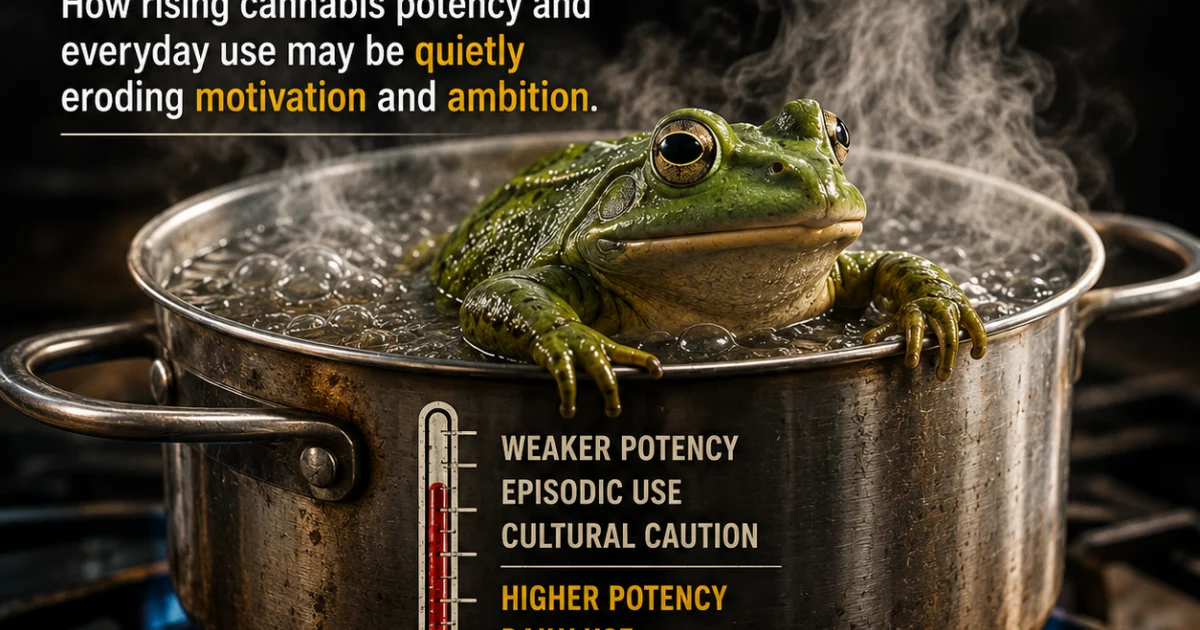
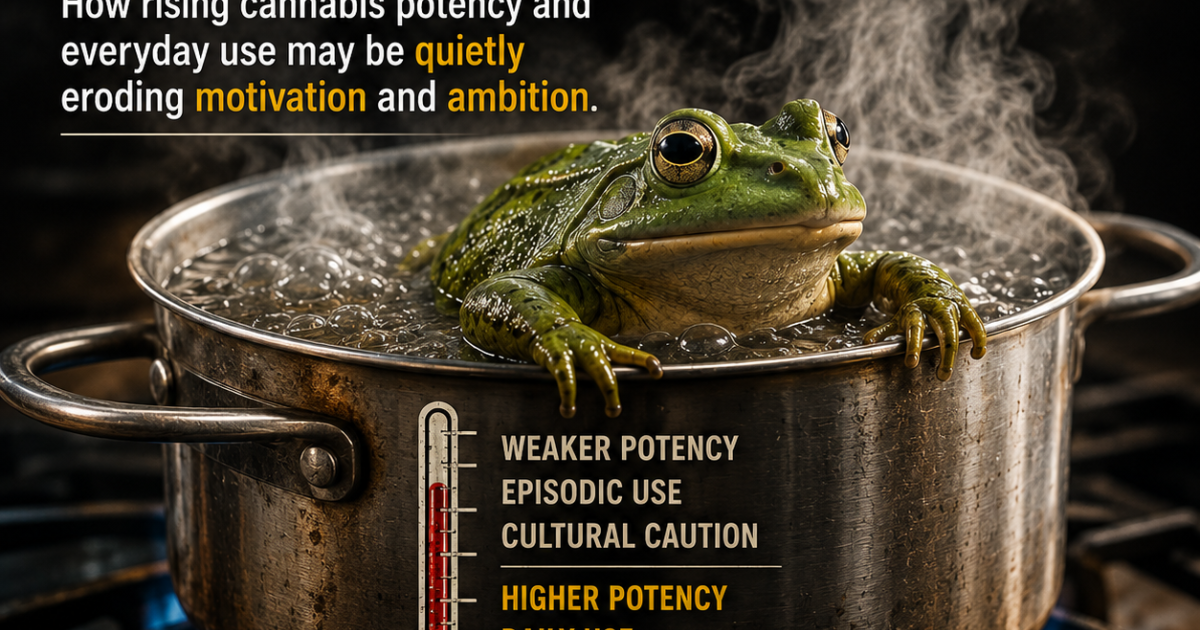
The transition from a society where marijuana was less potent and its use more episodic to one characterized by high-potency products and widespread, often daily, consumption marks a profound societal shift. The analogy of the "frog in slowly simmering water" aptly captures the potential danger. When cannabis was weaker and use less normalized, the trade-off between intoxication and drive was more readily apparent and culturally understood. Today, the narrative has largely shifted towards viewing cannabis as benign recreational fare, potentially obscuring the subtle but significant consequences of its widespread and potent use.
n
"Amotivational syndrome," or more broadly, a decline in drive and ambition, does not typically manifest as an acute crisis. Instead, its impact is often insidious and cumulative. It is the high school diploma that was never earned, the career advancement that was never pursued, the graduate program to which one never applied, and the quiet, collective dimming of aspiration across a population. As legal prohibitions are dismantled, there is a risk of overlooking the biological and psychological realities of the present. Drive, focus, and the intrinsic willingness to strive are not immutable forces; they are fragile cultural assets that can be eroded.
n
If societal harm is narrowly defined by overt metrics such as fatal overdoses or emergency room visits, cannabis may appear benign. However, if harm is measured by the slow, often imperceptible, erosion of human potential – the missed opportunities, the unfulfilled aspirations, the diminished capacity for innovation and sustained effort – then the heat from the simmering water of cannabis’s pervasive influence may already be acutely felt. The question of whether frequent, high-potency cannabis use dulls drive is not merely an academic debate; it is a critical inquiry with profound implications for individual well-being and the collective future of a nation. The ongoing research and evolving societal landscape demand continued vigilance and a comprehensive understanding of this complex relationship.
nnnnn

