
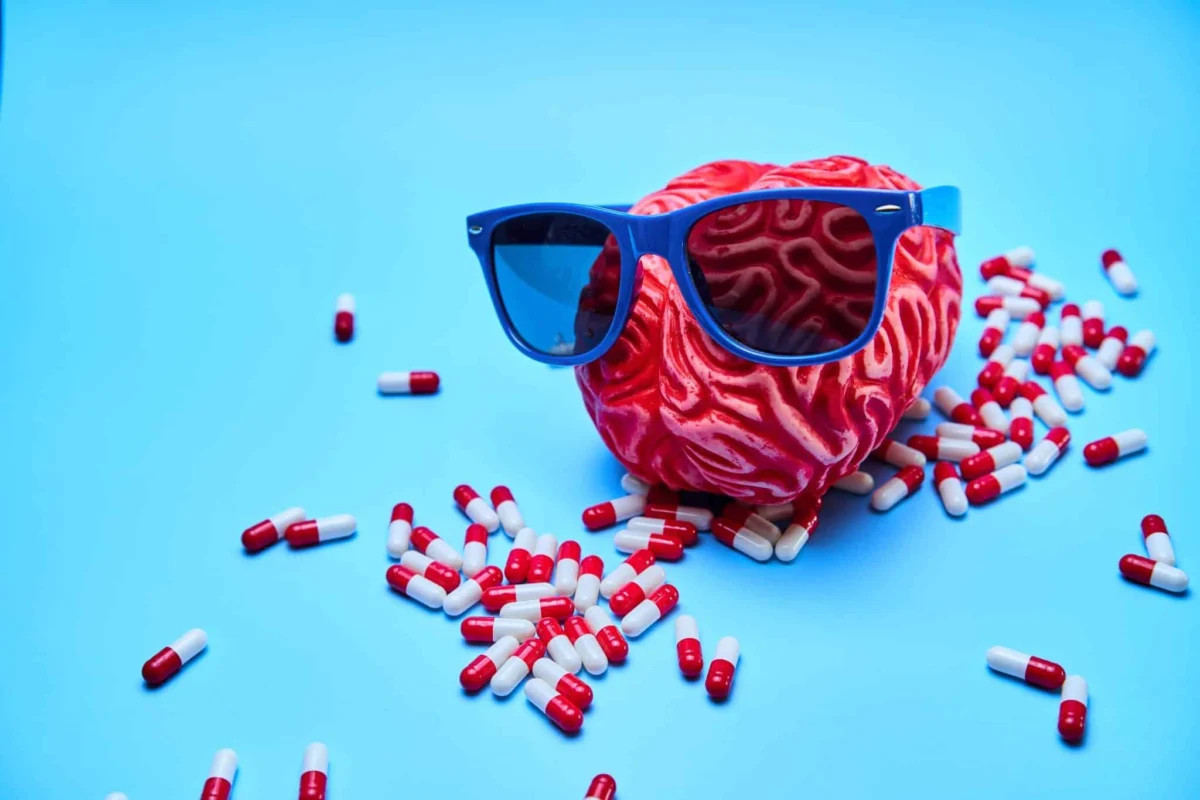
The human brain is a marvel of evolutionary engineering—a "squishy" three-pound organ capable of composing symphonies, calculating the trajectory of stars, and forming complex social bonds. Yet, for all its sophistication, the brain possesses a profound vulnerability: its capacity to learn too well. In the field of addiction science, a provocative theory is gaining traction, suggesting that what we call "addiction" may not be a disease in the traditional sense, but rather a form of "pathological overlearning"—a feedback loop where the brain’s natural adaptive mechanisms become trapped in a self-destructive cycle.
n
As society grapples with an escalating overdose crisis and a burgeoning era of behavioral addictions, the parallels between human neurological loops and the "model collapse" seen in Artificial Intelligence (AI) are becoming increasingly impossible to ignore. By examining the intersection of neuroscience, psychology, and digital evolution, we begin to see a clearer picture of why the brain gets stuck—and how it might be freed.
n
Main Facts: The Intersection of Biology and Behavior
n
At the heart of the current debate are two competing, yet potentially complementary, frameworks: the Overlearning Theory and the Displacement Theory.
n
Pathological Overlearning
n
The concept of addiction as overlearning was popularized by Marc Lewis, PhD, a neuroscientist and professor of developmental psychology. In his seminal work, The Biology of Desire: Why Addiction Is Not a Disease, Lewis argues that addiction is the result of the brain reacting to a motivating experience exactly the way it was designed to. Through repeated exposure to a reward—whether a substance or a behavior—the brain’s neuroplasticity carves deep grooves, prioritizing that reward above all other survival needs. Unlike a disease that attacks an organ from the outside, Lewis posits that addiction is the brain learning and adapting to a specific, repeated stimulus until that stimulus becomes the "new normal."
n
Stress Displacement
n
The Unified Theory of Addiction offers a different entry point. It suggests that all addictions, regardless of the substance or behavior involved, stem from a fundamental response to emotional distress. This is known as "displacement." When an individual faces social isolation, trauma, or chronic stress, the brain seeks an outlet to discharge that tension. If a substance or behavior successfully provides that relief, it is adopted as a coping mechanism.
n
The AI Connection
n
A striking parallel to this neurological feedback loop has recently emerged in the field of computer science: AI "model collapse." This phenomenon occurs when generative AI models are trained on data produced by other AI models rather than human-generated content. As the "slop" (low-quality, synthetic material) increases, the AI loses its nuance, forgets "edge cases," and eventually produces nonsensical or degraded output. Researchers are now investigating whether the human brain, when caught in the "slop" of addictive cycles or manipulated by synthetic digital environments, undergoes a similar collapse of cognitive diversity.
n
Chronology: The Evolution of Addiction Theories
n
To understand where we are, we must look at how our understanding of the addicted brain has shifted over the last century.
n
- n
- The Moral Model (Early 20th Century): Addiction was viewed primarily as a failure of character or a lack of willpower. Recovery was seen as a matter of moral fortitude.
- The Disease Model (Mid-20th Century): With the rise of organizations like Alcoholics Anonymous and later scientific research, addiction began to be classified as a chronic, relapsing brain disease. This helped reduce stigma but, according to critics like Marc Lewis, ignored the brain’s inherent plasticity and ability to "unlearn."
- The Neuroplasticity Revolution (Late 20th to Early 21st Century): Advances in neuroimaging allowed scientists to see the brain changing in real-time. This birthed the idea that the brain is not "broken" but has been "rewired" through experience.
- The Digital Integration (2020s–Present): The rise of AI and social media algorithms has introduced a new variable. We are no longer just looking at how brains react to chemicals, but how they react to synthetic stimuli designed by machines to maximize engagement. The 2024 discovery of "AI model collapse" and studies on "synthetic memories" have added a terrifying new layer to the study of pathological learning.
n
n
n
n
n
Supporting Data: Feedback Loops and "AI Slop"
n
The data supporting these theories is both neurological and technological.
n
The Brain’s Recovery
n
One of the strongest arguments against the permanent disease model is the brain’s ability to revert. As Marc Lewis notes, "The measurable brain changes that characterize addiction usually disappear when people stop using." This suggests that the "damage" is actually a state of adaptation. If the brain were truly diseased in the way a liver or heart is, the cessation of the behavior would not necessarily result in the immediate reversal of the structural changes.
n
The Prevalence of Synthetic Content
n
A 2025 report by Futurism and other data analysts estimated that over 50% of online content is now artificially generated. This "AI slop" creates a digital echo chamber. For a human brain, particularly one already struggling with displacement or addiction, this environment provides a perfect breeding ground for pathological overlearning. If the stimuli the brain receives are repetitive, low-quality, and designed to trigger reward centers (like "likes" or "infinite scrolls"), the brain’s learning mechanisms become hijacked by a loop of synthetic rewards.
n
False Memory Implantation
n
A 2024 study published in Arxiv titled "Synthetic Human Memories" demonstrated that AI-generated images and videos can successfully implant false memories in human subjects. The study found that AI-edited visuals significantly increased false recollections. This suggests that our brains are highly susceptible to "garbage in, garbage out" dynamics. For an individual in the throes of addiction, whose brain is already hyper-focused on a single source of relief, the introduction of synthetic, manipulative digital content could further distort their perception of reality and their memory of the consequences of their addiction.
n
Official Responses and Expert Perspectives
n
The debate over these theories remains heated among clinicians and researchers.
n
The Pro-Disease Perspective: Many medical professionals argue that the "disease" label is essential for securing insurance coverage for treatment and for removing the "moral" stigma that prevents people from seeking help. They argue that even if the brain can recover, the vulnerability to relapse remains a lifelong physiological reality.
n
The Neuroplasticity Perspective (Marc Lewis): Lewis argues that labeling addiction as a disease is actually disempowering. If the brain learned the addiction, it can learn to move past it. He suggests that addiction is a "developmental" stage rather than a permanent pathology. By understanding that the brain is doing what it was built to do—pursue a perceived good—individuals can find more agency in their recovery.
The Social/Environmental Perspective: Advocates of the Displacement Theory, such as those referenced in Holly Whitaker’s Quit Like a Woman, argue that we focus too much on the substance and not enough on the "emotional suffering" and "social isolation" that drive the need for relief. They suggest that the "cure" for addiction isn’t just neurological but social: fixing the environments that make people want to escape in the first place.
The Technological Perspective: AI researchers warning about "model collapse" are increasingly collaborating with psychologists. They warn that just as an AI loses its "intelligence" when it stops consuming diverse, human-led data, the human mind loses its "cognitive flexibility" when it is trapped in the narrow feedback loop of an addiction or a digital echo chamber.
Implications: Breaking the Cycle
The realization that addiction may be a form of pathological overlearning driven by a need for displacement has profound implications for the future of treatment and society.
1. Moving Beyond the "Broken Brain"
If addiction is overlearning, then treatment should focus on "intensive relearning." This goes beyond traditional talk therapy; it involves creating new, high-reward, healthy feedback loops that can compete with the addictive one. It requires a focus on "neuro-growth" rather than just "abstinence."
2. Addressing the "Source" of Displacement
We must recognize that the brain doesn’t overlearn in a vacuum. If the underlying cause of addiction is emotional suffering or social isolation, no amount of neurological "unlearning" will work if the individual is returned to the same stressful environment. Recovery must include the rebuilding of social fabric and the reduction of chronic life stress.
3. Guarding Against Digital Feedback Loops
As AI continues to saturate our environment, we must be vigilant about the "slop" we consume. If synthetic media can implant false memories and algorithms can drive pathological overlearning, then "digital hygiene" becomes a matter of mental health. For those in recovery, the danger of AI-driven "psychosis" or "temptation" is a new frontier that clinicians must address.
4. The Ouroboros Risk
The metaphor of the Ouroboros—the snake eating its own tail—is the perfect symbol for both addiction and AI model collapse. When a system (be it a brain or a software model) begins to feed only on itself or on its own degraded outputs, it eventually consumes itself. To prevent this, we need "external data"—new experiences, human connection, and a return to the "edge cases" of life that make being human complex and beautiful.
In conclusion, the squishy, mysterious thing in our skulls is a powerful learning machine. But like all powerful machines, it can get stuck in a loop. Whether we call it a disease, a habit, or pathological overlearning, the path forward remains the same: we must provide the brain with a better story to learn, a deeper relief than the one found in a bottle or a screen, and a reality that is more compelling than the "slop" of a feedback loop.

