
The landscape of Type 1 Diabetes (T1D) management is undergoing its most significant transformation since the discovery of insulin over a century ago. For decades, the gold standard of care has been external insulin delivery—a life-saving but burdensome regimen of constant monitoring and precise dosing. Today, however, the scientific community is shifting its focus from management to functional cures. At the heart of this movement is islet cell therapy, a field that has recently moved from the realm of theoretical science into successful clinical trials where participants are achieving insulin independence.
n
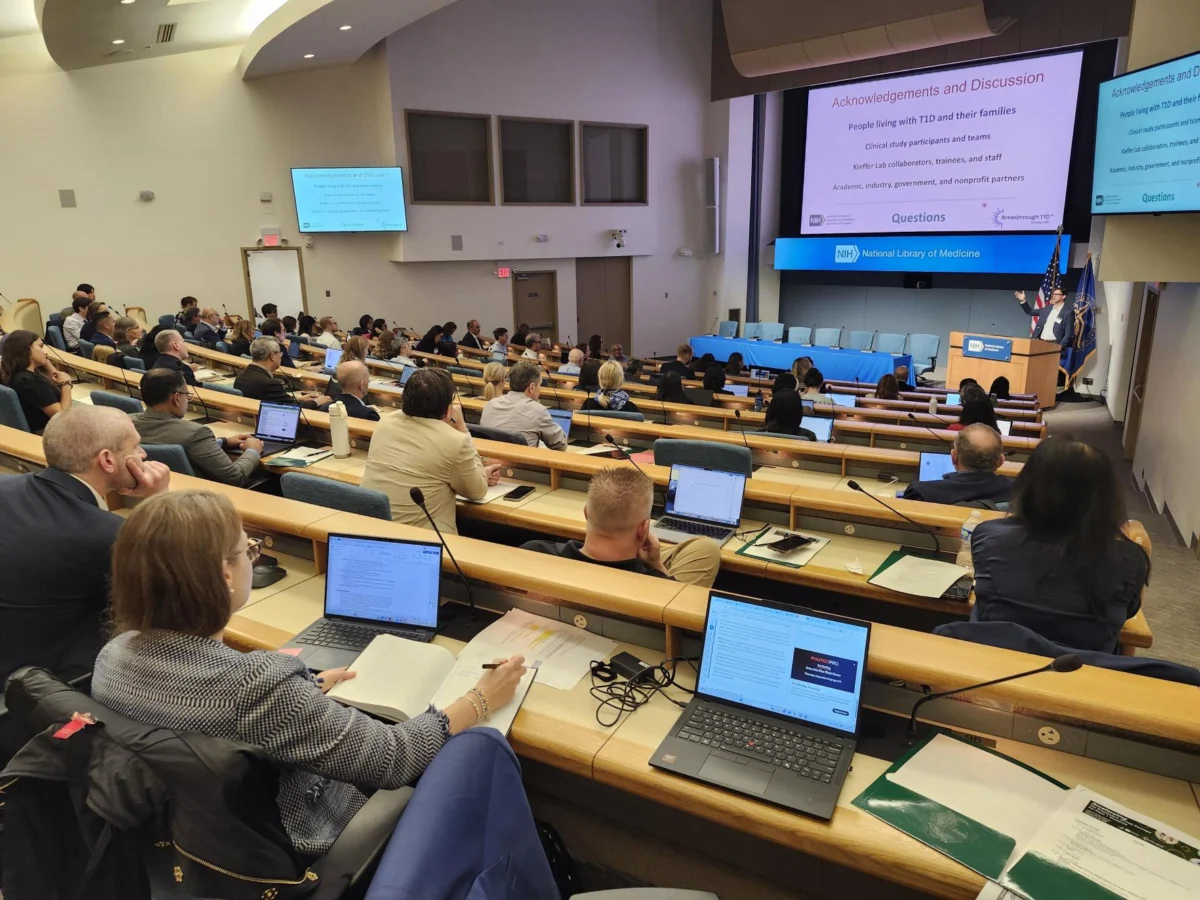
To catalyze this momentum, Breakthrough T1D (formerly JDRF) recently joined forces with the National Institute of Diabetes and Digestive and Kidney Diseases (NIDDK) to host a landmark public workshop: “Accelerating the Translation of Cell Therapy for Type 1 Diabetes.” This gathering served as a strategic summit for researchers, clinicians, industry titans, and regulators from the U.S. Food and Drug Administration (FDA). Their collective mission is to transition islet cell therapies from "boutique" medical procedures to scalable, globally accessible cures.
n
Main Facts: The Shift to Manufactured Solutions
n
The fundamental challenge of Type 1 Diabetes is the autoimmune destruction of insulin-producing islet cells in the pancreas. Islet cell therapy seeks to replace these lost cells, effectively restoring the body’s ability to regulate blood sugar naturally.
n
Currently, the field is bifurcated into two categories:
n
- n
- First-Generation Therapies: These rely on islets harvested from deceased organ donors. While effective, they are hampered by a severe scarcity of donor tissue and the requirement for lifelong immunosuppression. Consequently, these treatments are currently reserved for patients with "hypoglycemia unawareness" or those experiencing life-threatening low blood sugar events.
- Next-Generation Therapies: These involve "manufactured" islet cells derived from stem cells. Because these cells can be grown in laboratories at a massive scale, they offer the potential to treat every person living with T1D. The goal is to move beyond the limitations of donor availability and create a standardized, off-the-shelf product.
n
n
n
The recent workshop highlighted that the transition from first to next-generation therapy is not merely a biological challenge but a logistical, regulatory, and manufacturing one. The consensus among experts is clear: the science works; the current hurdle is the "translation"—moving the science out of the lab and into the lives of millions.
n
Chronology: From the Edmonton Protocol to Stem Cell Synthesis
n
To understand the urgency of the current workshop, one must look at the timeline of islet transplantation.
n
- n
- The 1990s and the "Edmonton Protocol": In 2000, researchers in Edmonton, Alberta, published a breakthrough study showing that a specific protocol of islet transplantation combined with a new steroid-free immunosuppressive regimen could lead to insulin independence. This proved the concept but also highlighted the limitations of relying on cadaveric donors.
- The 2010s: The Rise of Stem Cell Research: Scientists began successfully differentiating human pluripotent stem cells into functional, insulin-producing beta cells. This decade saw the first successful laboratory "growth" of the cells needed to cure the disease.
- 2021–Present: Clinical Validation: Recent clinical trials (notably by companies like Vertex Pharmaceuticals) have demonstrated that manufactured stem-cell-derived islets can successfully engraft in humans, produce insulin, and significantly reduce or eliminate the need for external injections.
- 2024: The Strategic Alignment: The Breakthrough T1D and NIDDK workshop marks a pivotal moment where the focus has shifted from "Can we make these cells?" to "How do we provide them to the 8 million people worldwide living with T1D?"
n
n
n
n
n
Supporting Data: The Three Pillars of Translation
n
The workshop organized the path forward into three distinct "fronts," each requiring specific data-driven strategies to succeed.
n
1. Nonclinical Excellence and Preclinical Modeling
n
Before a therapy reaches a human patient, it must undergo rigorous testing in nonclinical environments. Presenters at the workshop emphasized the need for more accurate T1D models. Historically, mouse models have been the standard, but researchers are now moving toward "organ-on-a-chip" technologies and advanced porcine (pig) models that more closely mimic the human immune system.
n
Data presented at the workshop focused on "cell survival" and "immune protection." One of the greatest hurdles is the immune system’s tendency to reject foreign cells. Researchers shared data on novel encapsulation techniques—creating a microscopic "shield" around the islets—and gene-editing (using CRISPR) to create "stealth cells" that the immune system simply cannot see.
n
2. The Manufacturing Revolution
n
Scaling up from a laboratory petri dish to a global supply chain is a monumental task. Manufacturing islets is significantly more complex than manufacturing traditional drugs. These are living products that must remain viable, sterile, and consistent.
n
Key data points discussed included:
n
- n
- Consistency: Ensuring that a batch of cells produced in October is identical to a batch produced in May.
- Scalability: Moving from "2D" culture (flat plates) to "3D" bioreactors that can grow billions of cells simultaneously.
- Regulatory Compliance: The FDA requires "Current Good Manufacturing Practice" (cGMP) compliance, which becomes increasingly stringent as a therapy moves from Phase I to Phase III trials.
n
n
3. Clinical Trial Design and the "Benefit-Risk" Ratio
The workshop addressed a critical psychological and medical threshold: the benefit-risk calculation. For a patient with severe, life-threatening complications, the risk of taking immunosuppressive drugs is easily justified. However, for a healthy teenager managing T1D with an insulin pump, that risk is harder to swallow.
Clinical data presented suggested that the next generation of trials must expand inclusion criteria. This means including younger populations and those with well-managed T1D, provided the therapies become safer (i.e., through encapsulation or gene editing that removes the need for heavy immunosuppression).
The Role of Artificial Intelligence (AI)
A novel addition to the conversation was the integration of AI. Data scientists are now using machine learning algorithms to:
- Predict Outcomes: Forecasting how a specific patient’s blood sugar will respond a year after transplant.
- Optimize Growth: AI monitors bioreactors in real-time, adjusting nutrient levels and temperature to ensure maximum cell health.
- Smart Islets: Designing "intelligent" cells that can sense an impending immune attack and release localized anti-inflammatory signals to protect themselves.
Official Responses: A Unified Regulatory and Scientific Front
The presence of the FDA at the workshop signaled a high level of regulatory engagement. Official contributors emphasized that the path to approval is not just about showing that the cells produce insulin, but proving they do so safely over the long term.
Breakthrough T1D Leadership: Representatives stated that their role is to act as the "connective tissue" between the various stakeholders. By funding the gap between basic research and commercial viability, they ensure that promising therapies do not die in the "valley of death" (the period between lab discovery and clinical application).
NIDDK Perspective: As a branch of the National Institutes of Health (NIH), the NIDDK focused on the public health imperative. Their representatives highlighted the long-term cost savings of a cure. While islet therapy may be expensive initially, the elimination of complications like kidney failure, blindness, and cardiovascular disease represents a massive net gain for the healthcare system.
The FDA’s Stance: Regulators expressed a willingness to work flexibly with developers of "cellular products," acknowledging that these therapies do not fit the traditional "pill" mold. They encouraged early and frequent "INTERACT" meetings to align on safety endpoints before large-scale trials begin.
Implications: The Human Element and the Road Ahead
Perhaps the most poignant segment of the workshop involved the "lived experience" of the T1D community. For patients, the implication of this research is a profound shift in identity.
One panelist noted that even a "partial" success is a life-changing victory. For example, a patient who still requires one small injection of insulin a day but no longer fears overnight hypoglycemia (low blood sugar) experiences a "dramatically positive outcome." The goal is not just the absence of disease, but the restoration of freedom.
Future Outlook
The implications of the Breakthrough T1D/NIDDK workshop are far-reaching:
- Democratization of the Cure: If manufacturing can be scaled as discussed, islet therapy will move from elite university hospitals to local infusion centers.
- The End of Immunosuppression: The heavy focus on "stealth cells" suggests that the future of this therapy will not require the cocktail of anti-rejection drugs that currently limits the procedure’s reach.
- A Template for Other Diseases: The "roadmap" being built for T1D islet cells—incorporating AI, large-scale bioreactors, and patient-centered trial design—will likely serve as a blueprint for treating other conditions, such as Parkinson’s or liver failure.
In conclusion, the momentum toward a scalable cure for Type 1 Diabetes is no longer a matter of "if," but "when." By bringing together the regulators who approve the drugs, the scientists who invent them, the companies that build them, and the patients who use them, the T1D community is ensuring that the next generation of islet cell therapies will be more than just a medical marvel—they will be a reality for all.

