
Introduction: A Month of Awareness and Action
n
September marks National Childhood Obesity Month, a period designated by health organizations and advocacy groups to shine a light on one of the most pressing public health challenges in the United States. While the national conversation often centers on clinical data, policy changes, and preventative measures, the lived experience of the children and families behind the statistics is frequently overlooked.
n
For Jeannie, a mother of two, the month is not merely a calendar event but a reflection of her family’s daily reality. Her daughters, Annie and Abbie, have grown up in a society that often views obesity through a lens of judgment rather than medical complexity. Their journey—marked by the sting of weight bias, the struggle for equitable healthcare, and the eventual discovery of a supportive community—serves as a poignant case study in the necessity of compassionate, comprehensive care.
n
As the nation grapples with rising rates of pediatric obesity, the stories of Annie and Abbie highlight a critical truth: the battle against obesity is as much about psychological resilience and social justice as it is about metabolic health.
n
n
I. Main Facts: The Intersection of Health and Identity
n
The core of the narrative surrounding Annie and Abbie is the pervasive nature of weight bias. Weight bias refers to the negative ideologies and stereotypes associated with being affected by obesity. For these two young women, this bias manifested in three primary arenas: the classroom, the sports field, and the doctor’s office.
n
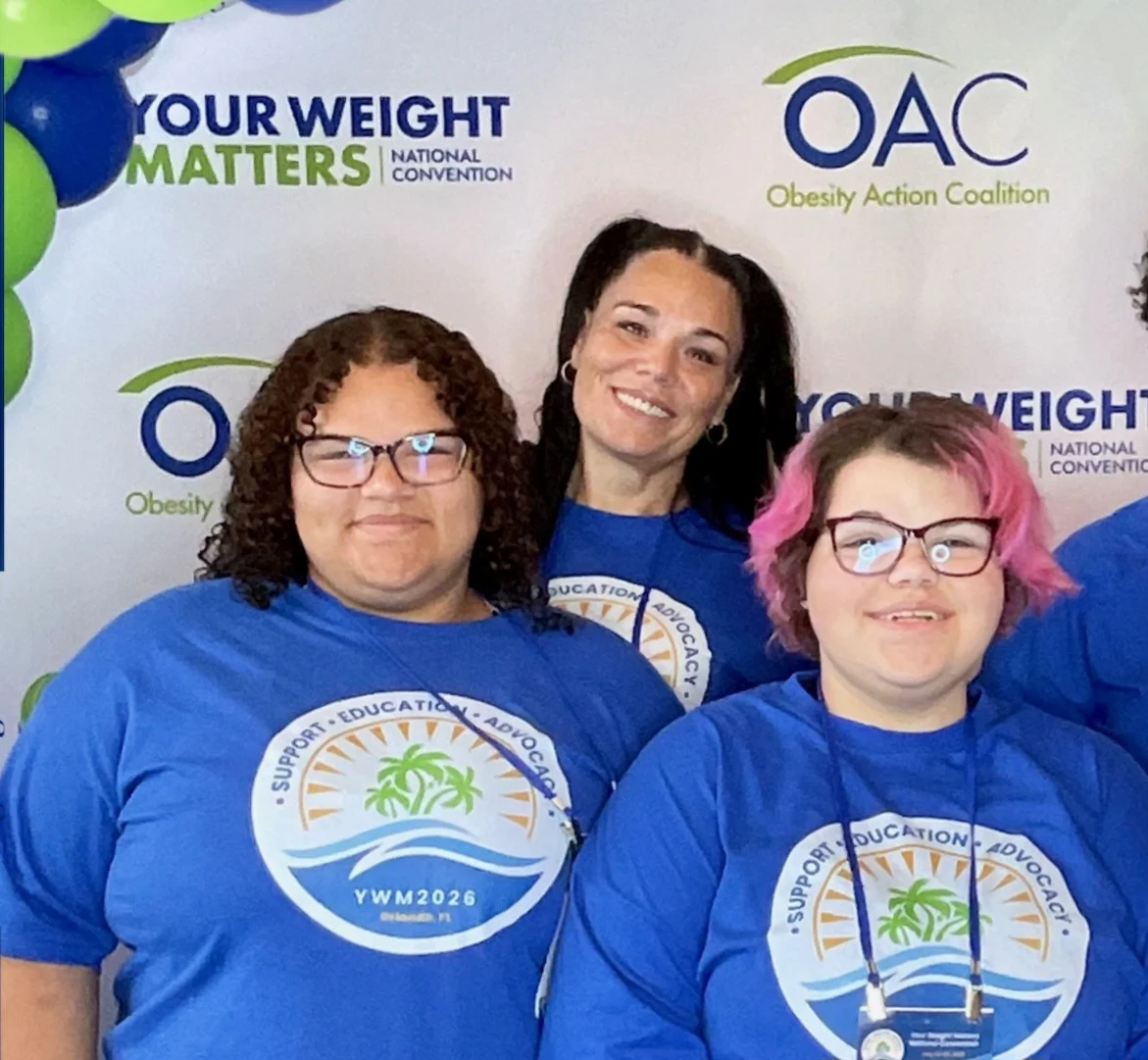
The Thrive Together InitiativenCentral to the family’s journey is their involvement with the Obesity Action Coalition (OAC) and its "Thrive Together" program. This initiative is designed specifically for teenagers and young adults, providing them with a platform to connect with peers who share similar experiences. Through the OAC, Annie and Abbie attended the "Your Weight Matters" National Convention, an event that Jeannie credits with transforming her daughters’ perspectives.
n
Challenging StereotypesnThe sisters’ experiences debunk several common myths. Abbie, a dedicated athlete, has consistently challenged the assumption that body size is a direct indicator of physical capability. Meanwhile, Annie has had to navigate the emotional toll of being "othered" by her peers. Their stories emphasize that obesity does not define a child’s potential, interests, or worth.
n
n
II. Chronology: From Isolation to Advocacy
n
The timeline of Annie and Abbie’s development offers a roadmap of the challenges faced by children with obesity as they move through different developmental stages.
n
Early Years and Middle School HurdlesnThe difficulties began in earnest during middle school—a developmental period notoriously fraught with social pressures. Annie recalls a distinct sense of isolation, finding it difficult to be accepted by peers who did not share her health journey. The teasing she endured was not just a social hurdle; it was a psychological weight that began to erode her confidence in her appearance and her willingness to engage in physical activities.
n
When Annie sought help from adults, the response was often inadequate. Rather than receiving support, she frequently encountered a lack of understanding, which further reinforced the idea that her struggles were her own fault. This period was characterized by "hiding"—a common defense mechanism where children try to make themselves invisible to avoid scrutiny.
n
The Turning Point: Digital Representation and CommunitynThe transition from isolation to empowerment began with the discovery of positive representation. In an era where social media often exacerbates body dissatisfaction, Annie found "body-positive" communities online. Seeing individuals who embraced their bodies and refused to hide gave her the permission to do the same.
n
Simultaneously, the family joined the OAC. The "Thrive Together" program provided a safe harbor. By meeting other teens who understood the nuances of navigating a world built for smaller bodies, Annie and Abbie began to shift their internal dialogue. They were no longer "victims" of their weight; they were advocates for their health.
n
Current State: The Emergence of ResiliencenToday, Jeannie observes her daughters with a sense of pride. They have transitioned from being underestimated by teachers and peers to being young women who recognize bias when they see it and have the vocabulary to challenge it. Abbie continues to excel in sports, proving her detractors wrong through performance, while Annie uses her voice to advocate for "whole-person" healthcare.

n
n
III. Supporting Data: The Magnitude of the Challenge
n
To understand the context of Annie and Abbie’s story, one must look at the broader epidemiological landscape of childhood obesity in the United States.
n
National StatisticsnAccording to the Centers for Disease Control and Prevention (CDC), the prevalence of childhood obesity has remained alarmingly high. Approximately 1 in 5 children and adolescents in the U.S. (roughly 14.7 million individuals) are affected by obesity. The data shows that the issue is not evenly distributed, with higher prevalences often seen in lower-income communities and among certain ethnic groups, highlighting the role of social determinants of health.
n
The Impact of Weight StigmanResearch published in the journal Pediatrics indicates that weight stigma is one of the last "socially acceptable" forms of discrimination. For children, the consequences of this stigma are profound:
n
- Mental Health: Children experiencing weight-based teasing are at a significantly higher risk for depression, anxiety, and low self-esteem.
- Academic Performance: Stigmatized students may experience lower academic achievement due to the stress of bullying and the resulting school avoidance.
- Health Outcomes: Paradoxically, weight stigma often leads to increased cortisol levels and maladaptive eating behaviors, which can exacerbate weight gain rather than encourage healthy changes.
Healthcare Bias
A study by the Rudd Center for Food Policy and Health found that healthcare providers often hold implicit biases against patients with obesity. This can lead to shorter appointment times, less patient-centered communication, and a tendency to attribute all health complaints to weight, potentially missing other underlying medical issues. This validates Annie’s wish for doctors to look at her as a "whole person."
IV. Official Responses: Shifting the Paradigm
The medical and advocacy communities have begun to respond to these challenges with new guidelines and frameworks aimed at improving the lives of children like Annie and Abbie.
The American Academy of Pediatrics (AAP) 2023 Guidelines
In a landmark move, the AAP released updated clinical practice guidelines for the treatment of childhood obesity. These guidelines represent a shift from "watchful waiting" to early, intensive intervention. Crucially, the AAP emphasizes that obesity is a complex, chronic disease influenced by genetics, physiology, and environment—not a failure of willpower.
The guidelines advocate for:
- Intensive Health Behavior and Lifestyle Treatment (IHBLT): Comprehensive programs that involve the whole family.
- Pharmacotherapy and Metabolic/Bariatric Surgery: Options to be considered for adolescents with severe obesity, acknowledging that lifestyle changes alone are sometimes insufficient.
- A Focus on Comorbidities: Treating the whole child, including mental health and metabolic complications.
The Role of the Obesity Action Coalition (OAC)
The OAC remains a leading voice in the fight against weight bias. Their "Stop Weight Bias" campaign aims to educate the public, media, and policymakers on the harm caused by stigma. Their stance is clear: every individual deserves respect and access to evidence-based healthcare regardless of their weight. Programs like "Thrive Together" are essential because they fill the gap between clinical treatment and social-emotional support.
V. Implications: The Path Forward for Families and Society
The story of Jeannie, Annie, and Abbie provides a blueprint for how families and institutions can better support children affected by obesity.
The "Safe Place" Strategy
Jeannie’s advice to other parents is perhaps the most critical takeaway: "Be your child’s safe place." In a world that can be hostile and judgmental, the home must be a sanctuary. This involves:
- Open Communication: Encouraging children to express their feelings about their weight and their social interactions without fear of judgment.
- Family-Centered Health: Making healthy changes as a collective unit rather than singling out the child affected by obesity.
- Education: Parents must educate themselves on the biology of obesity to move away from the "shame and blame" cycle.
Educational and Institutional Reform
There is a pressing need for schools to include weight-based bullying in their anti-harassment policies. Teachers and coaches require training to recognize their own implicit biases so they do not inadvertently underestimate or discourage students based on their size.
Medical Advocacy
The healthcare system must evolve to provide "weight-neutral" care where appropriate, ensuring that patients receive thorough diagnostic evaluations that aren’t overshadowed by their BMI. As Annie noted, patients are more than a number on a scale; they are individuals with complex health histories.
Conclusion: More Than a Diagnosis
As National Childhood Obesity Month concludes, the focus must remain on the human element. Annie and Abbie are not just statistics; they are athletes, sisters, students, and advocates. Their resilience is a testament to the power of family support and community connection.
The ultimate goal of obesity awareness should not be to shame children into changing their bodies, but to change the world around them—creating a society where every child, regardless of their weight, feels they have the right to "take up space" and the opportunity to thrive. Through a combination of early medical intervention, the elimination of social stigma, and the fostering of supportive home environments, we can ensure that the next generation of children affected by obesity grows up with the confidence and care they deserve.

