
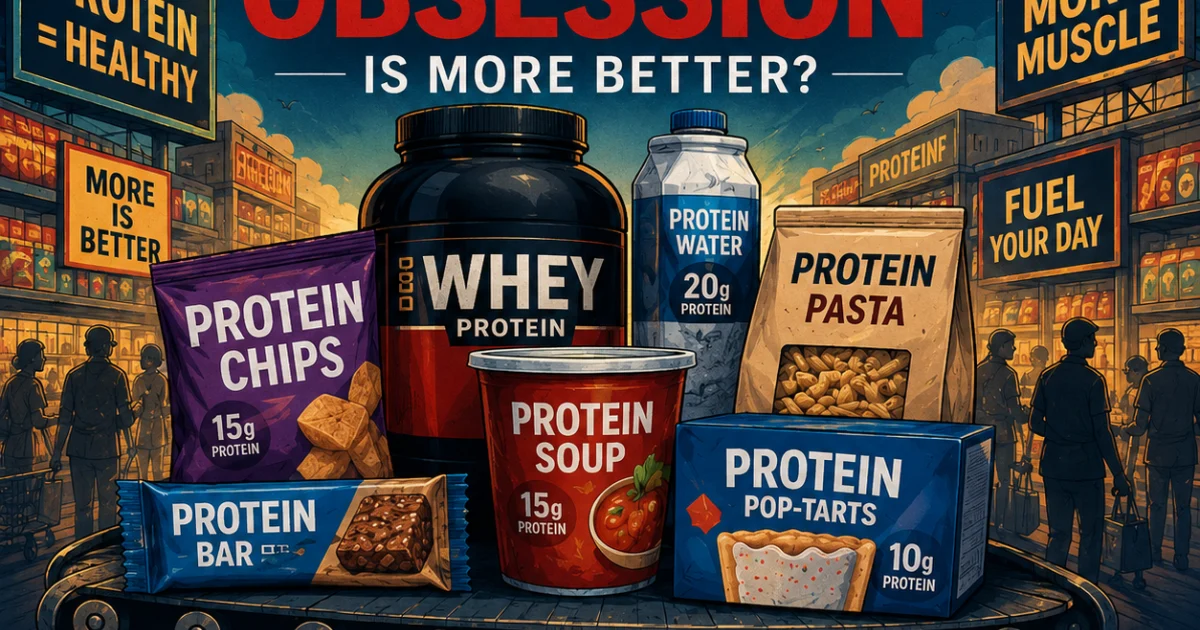
The ubiquitous "high protein" label has become a powerful marketing tool, but emerging research suggests this nutrient fixation may be misguided, potentially even detrimental.
n
In the ever-evolving landscape of nutrition, protein has ascended to the status of a dietary superhero. From fortified cereals to seemingly indulgent desserts, the word "protein" is now stamped across an astonishing array of food products, acting as a potent shorthand for "healthy." This pervasive messaging has fueled a national obsession, leading many Americans to believe that more protein equates to better health. However, a growing body of scientific inquiry is beginning to challenge this simplistic equation, raising a compelling counter-question: rather than needing more protein, could we actually benefit from less?
n
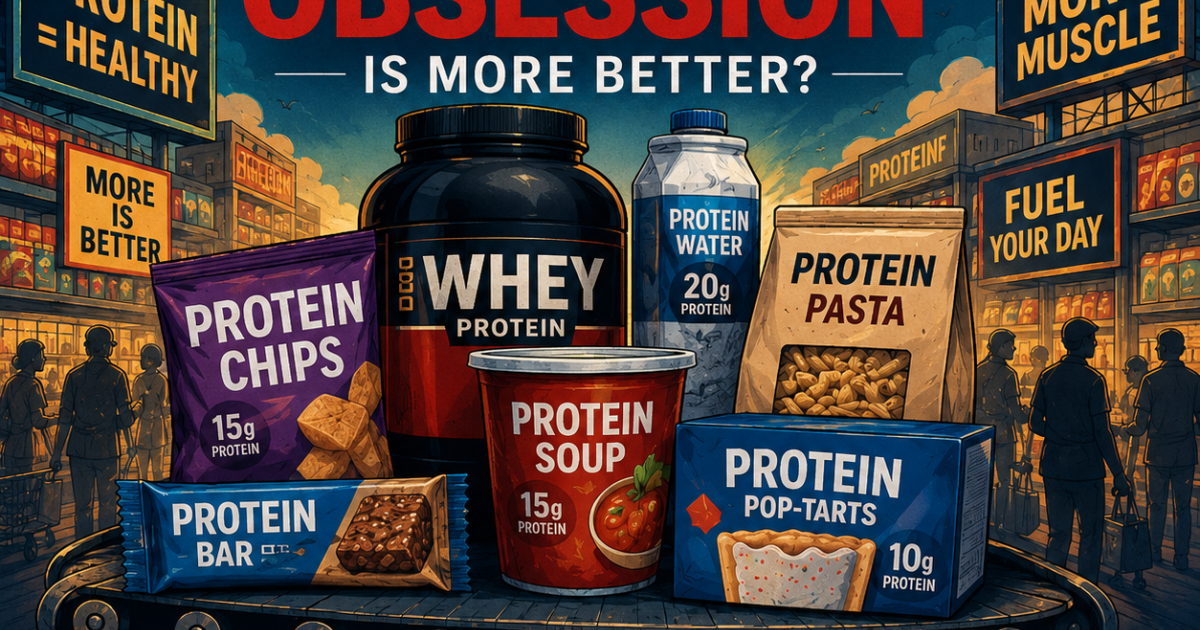
The market’s response to this perceived demand has been nothing short of explosive. A decade ago, protein supplements were largely confined to the realm of serious athletes, characterized by chalky whey powders and bars that offered little in the way of palatable flavor. Today, the landscape has transformed dramatically. The quality and taste of protein products have significantly improved, but the marketing has become even more sophisticated and, arguably, more misleading. Companies are now strategically infusing protein into everyday staples like pasta, chips, soup, and even water, transforming them into perceived health elixirs.
n
This trend is not merely anecdotal; the numbers paint a stark picture. In 2024, the U.S. protein supplement market experienced a growth of over 9%. Surveys consistently reveal that protein is the nutrient consumers most frequently prioritize, with approximately 70% of respondents in market research indicating they actively seek it out. This pursuit often leads to a conflation of "healthy food" with "good source of protein." The sheer volume of protein-marketed products available in American supermarkets is staggering, with estimates nearing 39,000 distinct items. This demand has, in turn, driven the price of 80% whey protein concentrate to record highs. Even iconic treats like Pop-Tarts have entered the fray, with their "Protein" version offering 10 grams of protein per serving. However, this perceived nutritional upgrade is delivered alongside a substantial 31 grams of sugar and approximately 380 calories, highlighting how added protein can be a Trojan horse for less desirable nutritional components.
n
This pervasive "health halo" surrounding protein products masks two critical issues. The first concerns the quality and potential contaminants within these heavily marketed foods, while the second, and perhaps more fundamental, question probes whether our collective pursuit of increased protein intake is truly beneficial.
n
The Protein Hype: A Closer Look at Product Quality
n
The notion of protein as an infallible health marker is further complicated by concerning findings regarding the quality of many protein-enriched products. A comprehensive investigation by Consumer Reports, which tested 23 dairy-based, plant-based, and beef-based protein products, revealed elevated levels of lead in over two-thirds of the samples. Notably, plant-based products exhibited significantly higher concentrations of lead, averaging nine times the levels found in their dairy-based counterparts. Furthermore, three products exceeded the organization’s thresholds for concern regarding cadmium and inorganic arsenic.
n
While it is important to acknowledge that this investigation was not peer-reviewed, and industry groups have raised valid points about the strictness of California’s Proposition 65 standards compared to FDA guidelines, these findings are not entirely isolated. They align with previous peer-reviewed research that has identified undeclared stimulants, prohormones, and anabolic agents in various sports supplement categories, including those that feature protein products. The presence of such contaminants raises serious questions about the oversight and regulation of these rapidly expanding product lines.
n
However, the issue of contamination, while significant, can distract from a more profound question: even if every protein product were impeccably pure, why has our society become so fixated on consuming ever-increasing amounts of it? Protein is undeniably vital for muscle synthesis and repair, as well as for the production of enzymes and antibodies. The intuitive leap to "more is better" feels logical. Yet, a groundbreaking 2026 review published in Cell Press Blue proposes a radical counter-argument: that reducing protein intake, rather than increasing it, might offer a more promising pathway to enhanced longevity. This emerging research compels us to examine how we arrived at our current protein-centric dietary paradigm.
n
The Rise of the "High Protein" Diet: A Market-Driven Phenomenon
n
The perception of protein as a dietary panacea is not a sudden development but rather a trend that has steadily gained momentum, driven by both consumer interest and savvy marketing. An Italian study conducted in 2024, which analyzed retail data, observed a substantial 21.6% surge in sales of products explicitly labeled "High Protein" during the first three quarters of 2022 compared to the same period in 2021. This growth spanned a wide range of product categories, including yogurt, bars, cereal, cheese, pasta, and beverages, with fresh protein desserts experiencing the most dramatic increase at 48.4%.
n
This pattern is not confined to Italy. The International Food Information Council’s 2025 survey revealed that 70% of Americans reported actively trying to consume more protein, a significant jump from 59% in 2022. For the fifth consecutive year, protein has topped the list of nutrients people aim to increase in their diets. The "high protein" diet pattern has become the most prevalent, and for the first time, the phrase "good source of protein" has surpassed all other criteria in defining what consumers consider a healthy food.
n
Despite this widespread emphasis on protein, a significant gap exists between consumer intention and actual knowledge. In the same IFIC survey, a considerable 35% of Americans stated they had increased their protein intake over the past year. However, a staggering 53% admitted they did not know the recommended daily intake, and an additional 26% were unsure. Furthermore, a substantial portion of the population (29%) relies on informal sources like friends and family for nutritional advice regarding protein, a figure that surpasses the 25% who consult healthcare professionals.
n
Compounding this knowledge deficit, a study published in the journal Nutrients evaluated 36 protein-enriched processed foods. While protein content varied widely, ranging from 10% to 88%, nearly all these products also featured claims such as "no added sugar" or "low carb." Among the 139 individuals surveyed who consumed these products, 36.7% cited perceived healthiness as their primary reason for choosing them, while only 10.8% made their decision based on professional guidance. Paradoxically, 80.6% of these same consumers acknowledged that excessive protein consumption could pose health risks.
n
These figures underscore a peculiar disconnect: while people proclaim the importance of protein, their decision-making process regarding its consumption often appears decoupled from established nutritional science. Protein has transcended its role as a mere nutrient and has morphed into a powerful marketing emblem. Brands can command premium prices for "High Protein" labels, often while maintaining or even increasing levels of sugar, sodium, and saturated fat.
n
The Question of Necessity: Do Americans Actually Need More Protein?
n
The pervasive notion that Americans are protein deficient is not supported by available data. National dietary surveys consistently show that men aged 20 to 59 consume an average of 97.3 grams of protein daily, while women in the same age bracket average 70.2 grams. Both figures already exceed the widely accepted baseline recommendation of 0.8 grams of protein per kilogram of body weight per day for healthy adults.
n
How Much Protein Do We Truly Need?
n
Globally, nutritional guidelines generally converge on the recommendation of approximately 0.8 grams of protein per kilogram of body weight per day for healthy adults. While individual needs can increase with age, physical activity levels, and specific goals, such as preserving muscle mass during periods of weight loss, this baseline is readily achievable through ordinary dietary practices. For instance, a 60 kg adult requires around 48 grams of protein daily, a target easily met by consuming a balanced diet without resorting to specialized "high protein" products.
n
A comprehensive workshop held at Indiana University’s School of Public Health, which reviewed 11 commonly held beliefs about protein requirements, identified a few well-supported tenets. These include the existence of a minimum protein requirement for health, the benefit of higher protein intake for preserving lean body mass during calorie deficits, and the superior quality of certain protein sources, particularly those derived from animal products. However, critical questions regarding optimal protein intake per meal, the timing of protein consumption, and the long-term health consequences of exceptionally high-protein diets remain far less settled than public discourse often suggests. It is noteworthy that the funding for this workshop came from various "protein producers," including prominent industry players, underscoring the potential for industry influence on nutritional narratives.
n
The overarching conclusion is that for the majority of individuals, ultra-processed "high protein" products are not essential for meeting daily protein requirements, even if they are perceived as a convenient option.
n
Emerging Research: Could Less Protein Lead to a Longer Life?
n
Intriguing new research is beginning to explore the potential benefits of protein restriction, particularly in the context of aging. A significant review examining the effects of protein restriction and the limitation of specific amino acids on aging biology has yielded compelling results in animal models. Studies involving fruit flies and rodents have demonstrated that protein restriction can extend lifespan and improve key metabolic markers, including adiposity, energy expenditure, and glucose regulation. These benefits have been observed even when the dietary intervention is initiated later in life. In aged mice, reducing protein or isoleucine intake has been shown to ameliorate frailty markers and delay the molecular signs of aging.
n
The impact of protein restriction on mitochondria, the cellular powerhouses responsible for energy production, presents a more complex picture. Some research suggests that protein restriction may reduce reactive oxygen species and enhance mitochondrial function. Conversely, high-protein diets have, in certain models, been associated with detrimental effects on skeletal muscle mitochondria. The variability of these findings across different tissues and species makes it challenging to draw definitive conclusions at this stage.
n
The most pronounced tension arises in the context of healthy aging. While some older adults are advised to increase protein intake to combat muscle loss (sarcopenia) and observational data has linked higher protein consumption to a reduced risk of frailty, other studies present a more nuanced view. For example, a study involving over 3,000 British twins aged 60 and above found that individuals consuming more than 1.3 g/kg/day of protein exhibited less muscle mass and greater muscle wasting. While the cross-sectional design of this study precludes definitive causal inferences, it raises important questions about optimal protein levels in older populations. Differences in protein source and body composition may also contribute to these varied findings.
n
The role of specific amino acids, such as methionine, isoleucine, and valine, in the aging process is also under active investigation. Their restriction has replicated several benefits of broader protein restriction in animal models, but human evidence remains limited and, at times, contradictory.
n
It is crucial to emphasize that current research does not definitively prove that reducing protein intake extends human life. The majority of compelling evidence stems from animal studies, and human data primarily focuses on metabolic markers and short-term interventions, not lifespan itself. Therefore, advocating for a deliberate reduction in protein intake based on this nascent research would be premature and potentially ill-advised for individuals with elevated protein needs, including children, pregnant women, those recovering from illness, or older adults at risk of muscle loss.
n
Protein in Perspective: A Nutrient, Not a Verdict
n
The honest truth about protein is perhaps less sensational than the headlines suggest. Protein rightfully occupies a significant place in our dietary considerations, but it should not be placed on an elevated pedestal as the sole arbiter of health. While protein is undeniably crucial for maintaining muscle mass, especially during aging or weight loss, it is not a standalone indicator of a healthy diet. A truly healthy dietary pattern encompasses a rich array of fiber, vitamins, minerals, and other beneficial compounds found in fruits, vegetables, legumes, and whole grains.
n
Furthermore, while protein restriction offers intriguing insights into the biological processes of aging, the current evidence is far from robust enough to warrant widespread recommendations for reduced protein intake in the pursuit of longevity.
The more significant takeaway from our current protein obsession is a simpler, yet profound, realization: protein is a nutrient, not a definitive nutritional verdict. An "enrobed" cookie, even if fortified with an extra ten grams of protein, remains a cookie. The added protein does not negate the presence of sugar, sodium, saturated fat, or the overall caloric content. Perhaps the most beneficial shift in our approach to nutrition is not to meticulously increase or decrease our protein intake, but to fundamentally reframe our understanding of "high protein" labels, recognizing that they do not inherently equate to "healthy." The true path to well-being lies in a balanced, whole-foods-based diet, rather than the uncritical embrace of a single nutrient as a cure-all.

