
Introduction
n
As the 2027 health insurance enrollment period approaches, American consumers are navigating a significantly altered landscape of federal assistance. The Affordable Care Act (ACA), which remains the cornerstone of the individual insurance market, continues to offer a complex framework of sliding-scale subsidies designed to mitigate the rising costs of premiums and out-of-pocket expenses. However, the regulatory environment has undergone a profound transformation following the expiration of pandemic-era enhancements and the implementation of the 2025 federal budget reconciliation law, colloquially known as "The One Big Beautiful Bill Act."
n
This report provides a detailed analysis of the financial assistance mechanisms available to Marketplace enrollees in 2027, the legislative shifts that have redefined eligibility, and the economic implications for millions of households.
n
n
I. Main Facts: The Dual Pillars of Marketplace Assistance
n
Financial assistance within the health insurance Marketplaces (or exchanges) is bifurcated into two distinct categories: Premium Tax Credits (PTC) and Cost-Sharing Reductions (CSR). To access either, individuals must purchase coverage through government-run platforms like Healthcare.gov or state-based equivalents.
n
1. Premium Tax Credits (PTC)
n
The Premium Tax Credit is a refundable credit that assists taxpayers and their families with the cost of their monthly insurance premiums. These credits are versatile; they can be applied to plans across all "metal" levels—Bronze, Silver, Gold, and Platinum.
n
- n
- Bronze Plans: Characterized by the lowest premiums but the highest deductibles, often leaving enrollees with substantial out-of-pocket costs at the point of care.
- Platinum Plans: Feature the highest premiums but provide the most comprehensive coverage with minimal out-of-pocket requirements.
- Exclusions: Notably, credits cannot be applied to "Catastrophic" plans, which are generally reserved for individuals under 30 or those with specific hardship exemptions.
n
n
n
n
2. Cost-Sharing Reductions (CSR)
n
While the PTC addresses the monthly cost of "owning" insurance, Cost-Sharing Reductions address the cost of "using" it. CSRs lower the amount an enrollee pays for deductibles, copayments, and coinsurance. Crucially, CSRs are only available to those who enroll in a Silver-level plan. By choosing Silver, eligible lower-income individuals effectively receive the benefits of a Gold or Platinum plan at a Silver price point.
n
n
II. Chronology: From Enhancement to Recalibration (2021–2027)
n
The trajectory of health insurance affordability over the last seven years has been marked by dramatic peaks and subsequent retrenchment.
n
- n
- 2021–2025: The Era of Enhanced Subsidies. In response to the economic disruptions of the COVID-19 pandemic, the American Rescue Plan Act (2021) and the subsequent Inflation Reduction Act (2022) introduced "enhanced" subsidies. During this period, the 400% Federal Poverty Level (FPL) income cap was eliminated, and many low-income families qualified for zero-premium benchmark plans.
- Late 2025: The Sunset of Enhancements. On December 31, 2025, the enhanced subsidies expired. This resulted in a "subsidy cliff" for middle-income earners and a significant reduction in assistance for those at the lower end of the income scale.
- 2025–2026: The Legislative Pivot. The passage of the 2025 federal budget reconciliation law introduced rigorous new standards for subsidy reconciliation and immigration-based eligibility.
- 2027: The Current Framework. Entering the 2027 plan year, the market has stabilized into a "new normal" characterized by higher consumer costs. Data indicates that between 2025 and 2026, average premium payments surged by 58%, while deductibles rose by approximately 37% (an average increase of $1,000) as consumers migrated to higher-deductible plans to manage monthly costs.
n
n
n
n
n
n
III. Supporting Data: Eligibility and Financial Thresholds for 2027
n
Eligibility for 2027 assistance is governed by a strict set of income, employment, and residency criteria.
n
Income Thresholds and the 400% FPL Cap
n
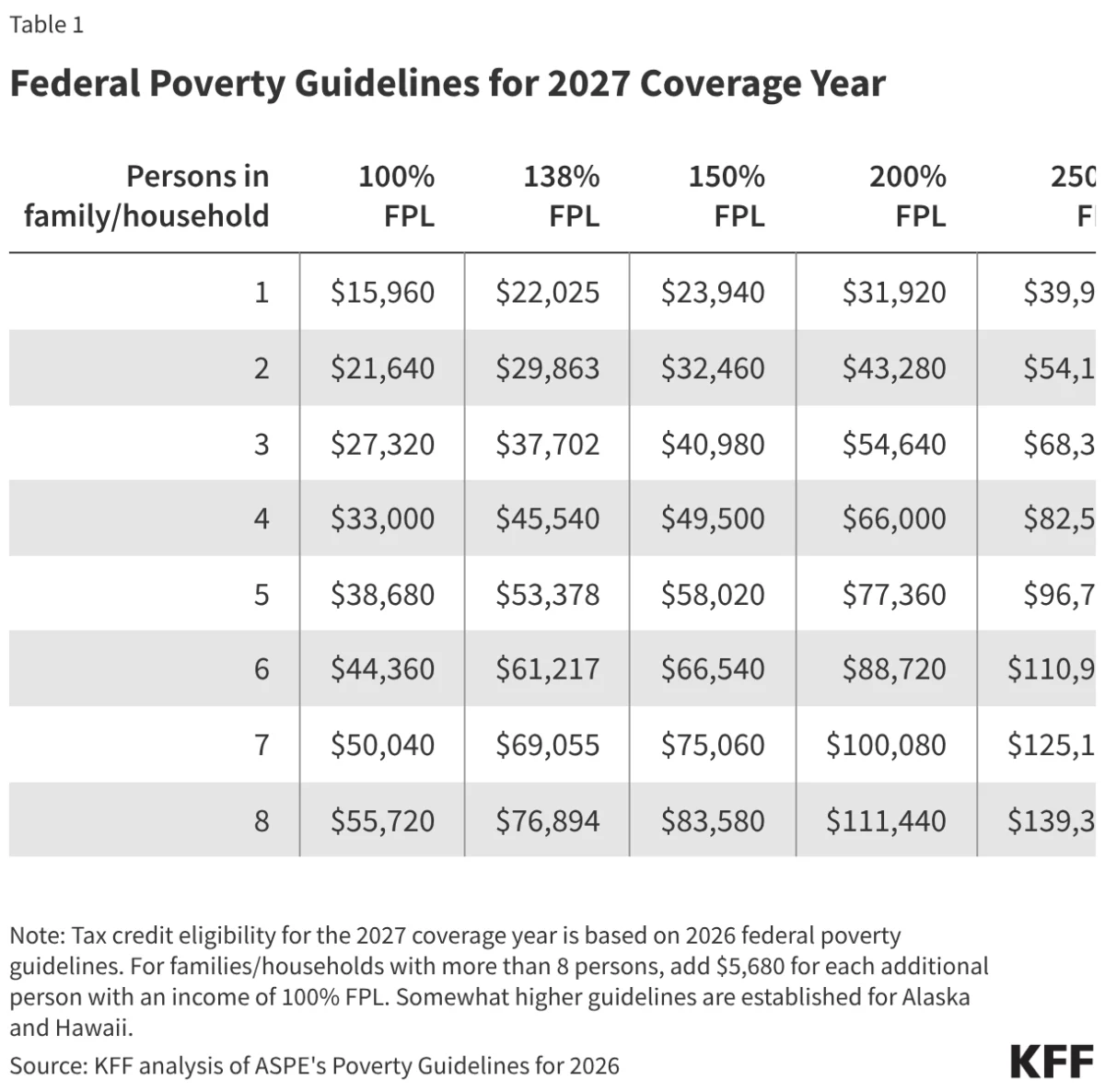
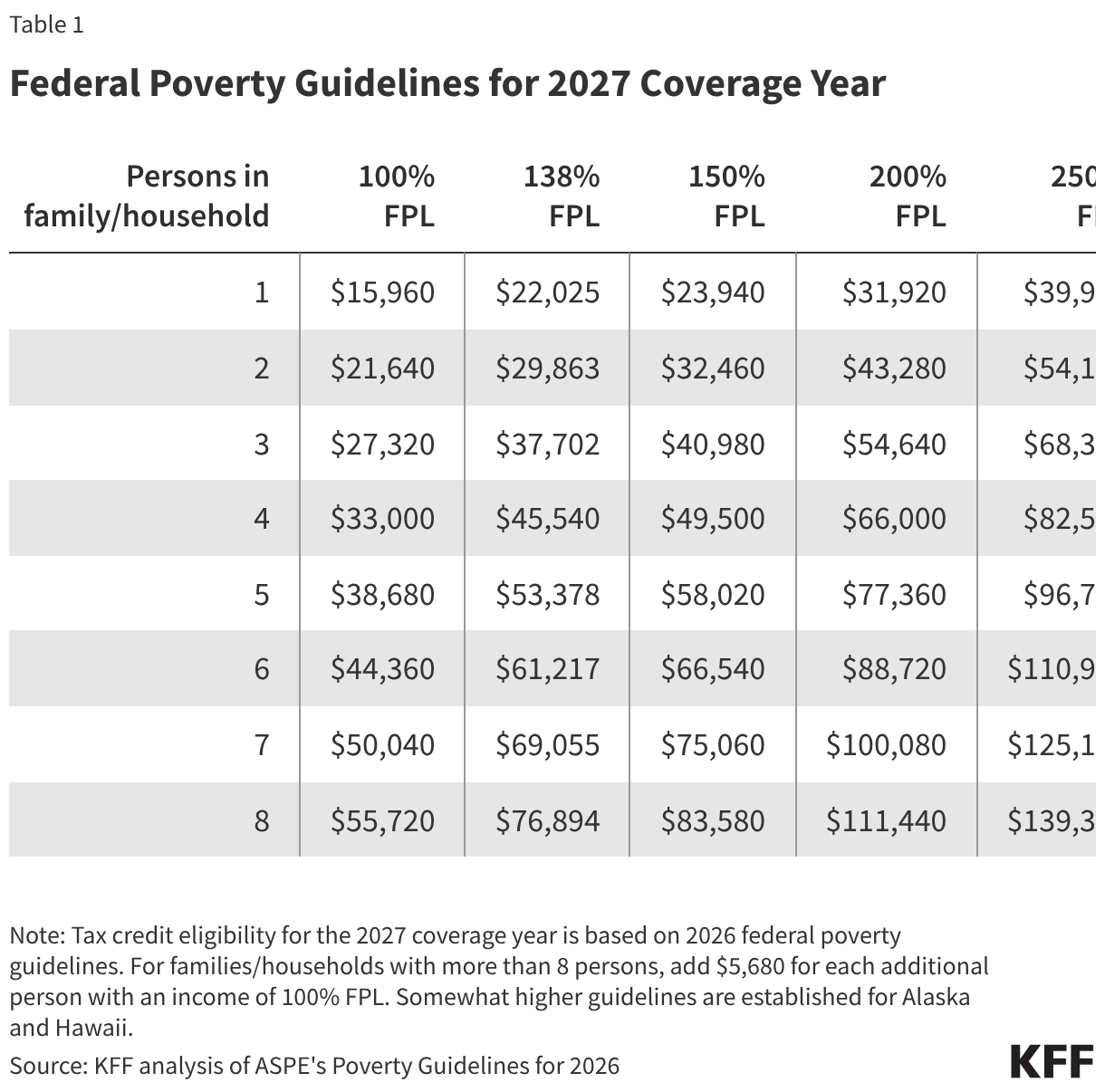
In 2027, the "subsidy cliff" has returned in full force. Only individuals with household incomes between 100% and 400% of the Federal Poverty Level (FPL) qualify for premium tax credits.
n
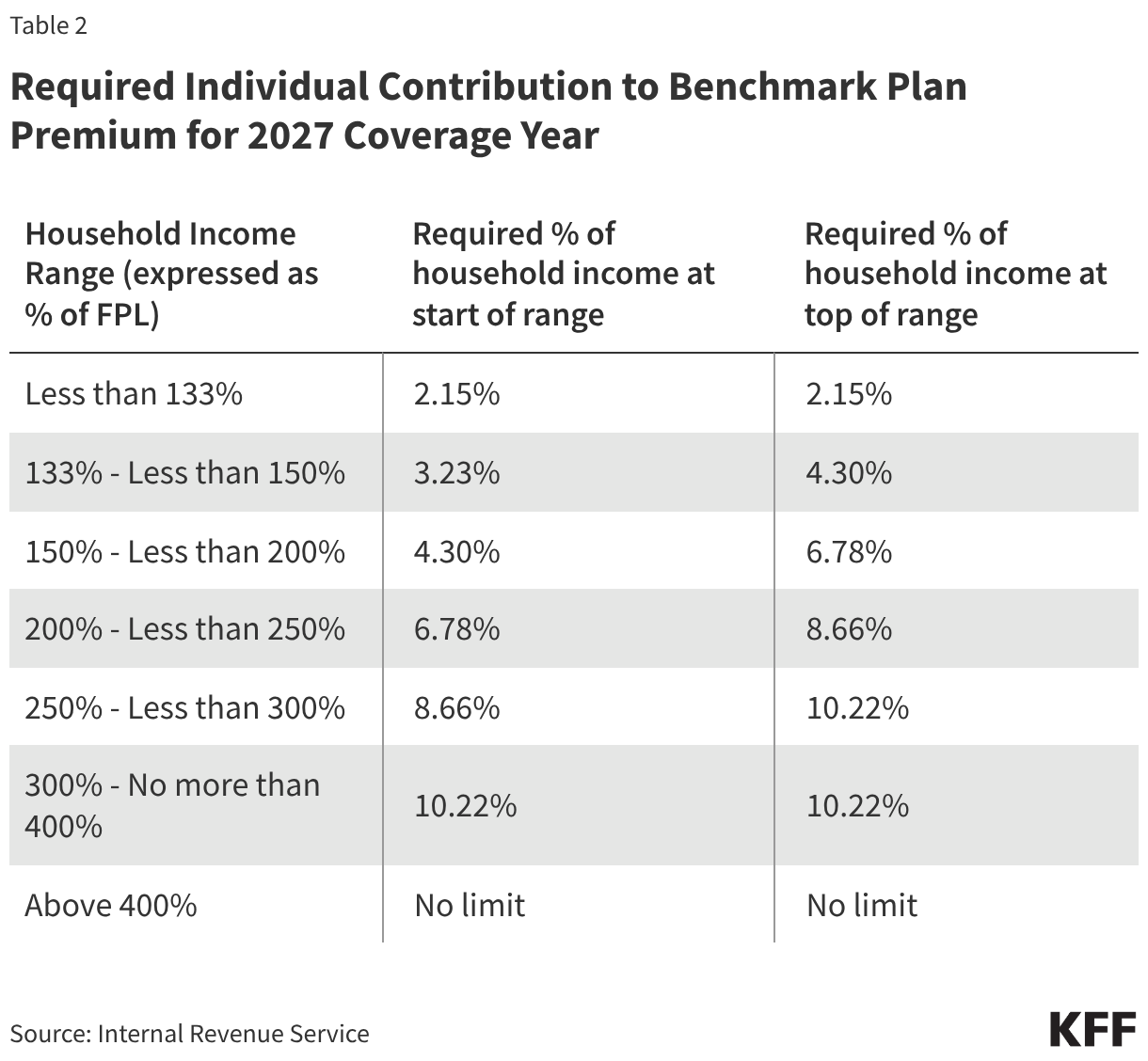
- 133% FPL: The required individual contribution toward a benchmark plan is 2.15% of household income.
- 300%–400% FPL: The required contribution rises to 10.22%.
- Above 400% FPL: No federal tax credits are available, leaving these individuals to face the full market price of insurance.
The "Affordability" Standard for Employer Coverage
A significant barrier to Marketplace subsidies is the "employer mandate." If an individual is offered "affordable" coverage through an employer, they are ineligible for Marketplace tax credits. In 2027, employer coverage is deemed affordable if the employee’s contribution for self-only coverage does not exceed 10.22% of household income.
The "Family Glitch" fix remains in effect: if the cost for family coverage exceeds 10.22% of income—even if self-only coverage is affordable—dependents may still qualify for subsidized Marketplace plans.
Out-of-Pocket Maximums
To comply with ACA regulations, all plans in 2027 must adhere to an annual out-of-pocket (OOP) limit. For self-only coverage, the limit is $12,000, and for family coverage, it is $24,000. These figures represent the absolute ceiling an enrollee will pay for covered essential health benefits (EHB) in a calendar year.
IV. Official Responses and Regulatory Mechanisms
Federal agencies, including the IRS and the Centers for Medicare & Medicaid Services (CMS), have updated their enforcement protocols to align with the 2025 reconciliation law.
The End of Repayment Caps
One of the most significant changes for the 2027 tax year involves the reconciliation of the Advance Premium Tax Credit (APTC). Previously, lower-income individuals who underestimated their income were protected by "repayment caps," limiting the amount they had to pay back to the IRS if their actual income ended up being higher than their estimate.
The 2025 law eliminated these caps. Starting in the 2026 tax year (filed in 2027), all consumers—regardless of income level—must repay the entirety of any excess APTC received. This shift has prompted warnings from consumer advocates regarding the financial risk of income underestimation.
Abortion Benefits and the "Dollar Premium"
Under current federal law, premium tax credits cannot be used to cover "non-Hyde" abortion services. Consequently, Marketplace plans that include abortion coverage must charge a separate $1 monthly premium. Even enrollees who qualify for a "zero-premium" plan via subsidies must still pay this $1 out-of-pocket if their plan includes these benefits.
V. Implications: The Human and Economic Impact
The 2027 framework presents several critical implications for the American public, particularly concerning the "coverage gap" and immigrant communities.
1. The Medicaid Expansion Gap
In states that have declined to expand Medicaid, a persistent "coverage gap" exists. Adults earning less than 100% FPL are generally ineligible for both Medicaid and Marketplace subsidies. KFF estimates that approximately 1.2 million Americans fall into this category, possessing too much income for traditional Medicaid but too little to qualify for federal tax credits.
2. Immigration Status Restrictions
The 2025 reconciliation law significantly tightened the rules for immigrant eligibility. Beginning in 2027, only specific "qualified" statuses—such as Lawful Permanent Residents (Green Card holders), COFA migrants, and Cuban/Haitian entrants—can access financial assistance.
Notably, lawfully present immigrants who have been in the U.S. for less than five years and are ineligible for Medicaid no longer qualify for tax credits as of the 2026 plan year. Furthermore, DACA recipients remain entirely excluded from Marketplace enrollment and subsidies.
3. The Shift to High-Deductible Living
The expiration of enhanced subsidies has forced a behavioral shift in the market. With benchmark Silver plan premiums becoming prohibitively expensive for those near the 400% FPL mark, there has been a mass migration toward Bronze plans. While this keeps monthly premiums manageable, it exposes households to the "average $1,000 increase" in deductibles noted by market analysts. For many, this transition means that while they are "insured," the high cost of the deductible acts as a functional barrier to accessing non-preventive care.
4. The Impact of Tobacco Surcharges and Non-EHB Benefits
Consumers must also account for costs that subsidies do not touch. Tobacco surcharges, which can significantly inflate premiums, are not offset by tax credits. Similarly, benefits not classified as Essential Health Benefits (EHB)—such as adult dental or vision care—must be paid for entirely by the consumer.
Conclusion
The 2027 Marketplace represents a return to a more restrictive and fiscally rigorous version of the ACA. While the core promise of the Act—guaranteed issue regardless of pre-existing conditions—remains, the financial bridge to that coverage has narrowed. With the elimination of repayment caps and the tightening of immigration and income requirements, the burden of accuracy in financial reporting and the necessity of plan-comparison literacy have never been higher for the American consumer. As premiums and deductibles continue their upward trajectory, the debate over the long-term sustainability of the current subsidy model is likely to intensify in the halls of Congress.

