In the United States, the infrastructure of long-term care serves as a critical pillar for approximately 1.2 million individuals, comprising both older adults and younger people with disabilities. These residents are housed across roughly 14,700 nursing facilities nationwide. According to data from the Department of Health and Human Services (HHS), the reliance on these institutions is widespread; more than one-third of adults over the age of 65 will require some form of nursing home care during their lives, ranging from temporary post-acute rehabilitation to permanent long-term residency. Despite their necessity, the quality of care within these facilities has remained a contentious and persistent issue for decades. This concern reached a boiling point during the COVID-19 pandemic, where a staggering mortality rate—exceeding 200,000 residents and staff—exposed deep-seated systemic vulnerabilities and the lethal consequences of substandard care.
The oversight of these facilities is governed by a complex federal-state partnership, yet this system has recently faced significant regulatory shifts and operational hurdles. Under various administrative transitions, policies regarding staffing mandates, inspection priorities, and ownership transparency have fluctuated, creating a volatile environment for both providers and patient advocates. As of mid-2026, new data reveals that while the majority of nursing home deficiencies do not result in immediate physical injury, a significant and troubling percentage of facilities continue to struggle with "immediate jeopardy" scenarios, often linked directly to inadequate staffing levels.
The Regulatory Framework: A Federal-State Partnership
To participate in and receive funding from the Medicare and Medicaid programs, nursing homes must adhere to a strict set of "Conditions of Participation." These are federal health and safety standards designed to ensure a baseline of dignity and medical competence. The enforcement of these standards is managed by the Centers for Medicare & Medicaid Services (CMS) in collaboration with state-level health agencies.
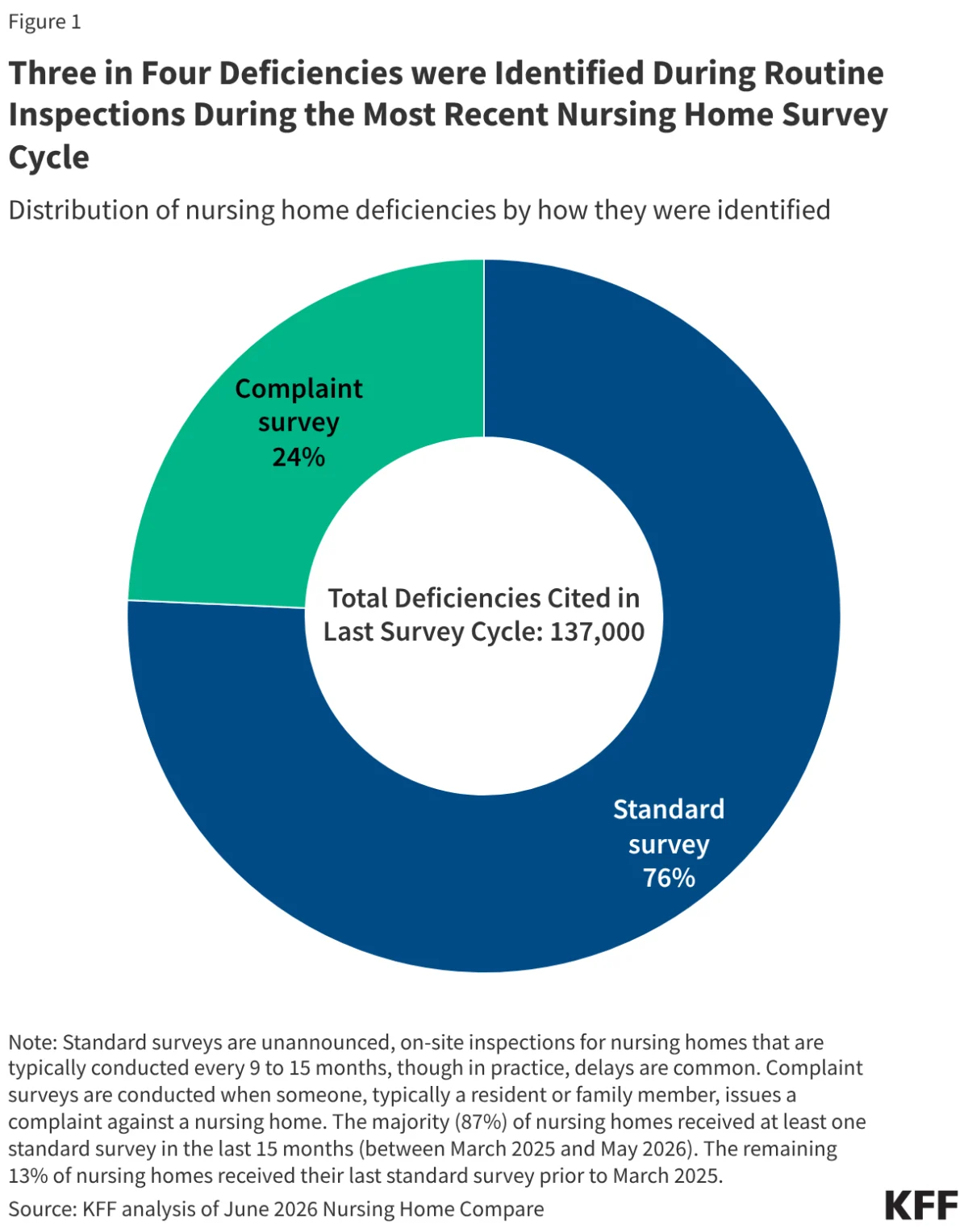
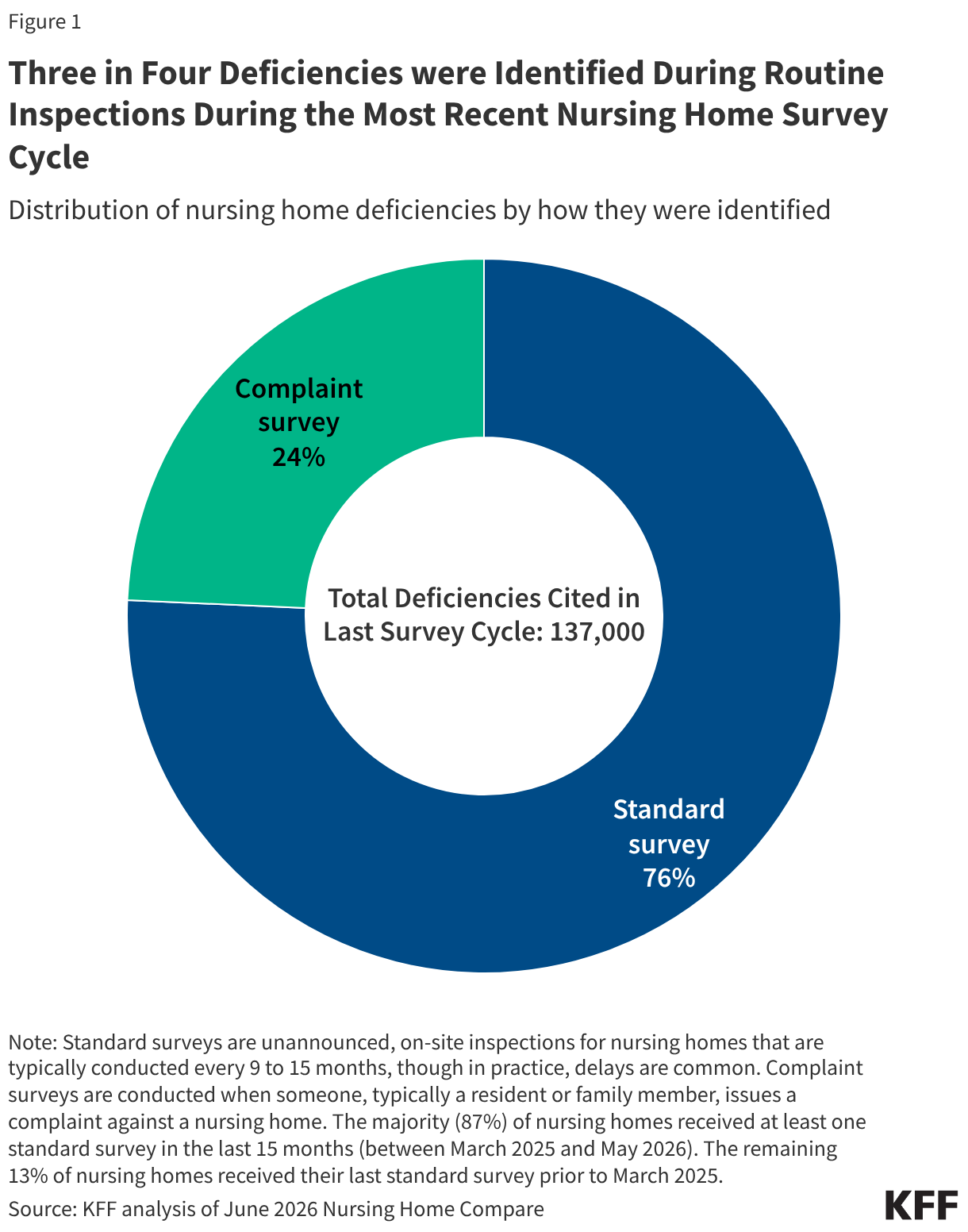
The primary tool for enforcement is the "standard survey," an unannounced, on-site inspection. Federal law mandates that every nursing home undergo a standard survey at least once every nine to fifteen months. However, the reality of these inspections often lags behind the statutory requirements. Recent analysis indicates that while 87% of facilities received a survey within the 15-month window between early 2025 and mid-2026, nearly 10% were delayed by several months, and 3% had not been inspected in over two years. These delays are frequently attributed to chronic staffing shortages within state regulatory agencies and the lingering backlogs created by the pandemic.
Beyond routine inspections, the system relies on complaint-driven surveys. These are triggered by reports from residents, family members, or whistleblowers regarding specific incidents of neglect or abuse. In the most recent survey cycle, approximately 25% of all identified health deficiencies were uncovered through these complaint-based investigations, highlighting the vital role that family and resident advocacy plays in the oversight ecosystem.
Measuring Quality: The Scope and Severity Matrix
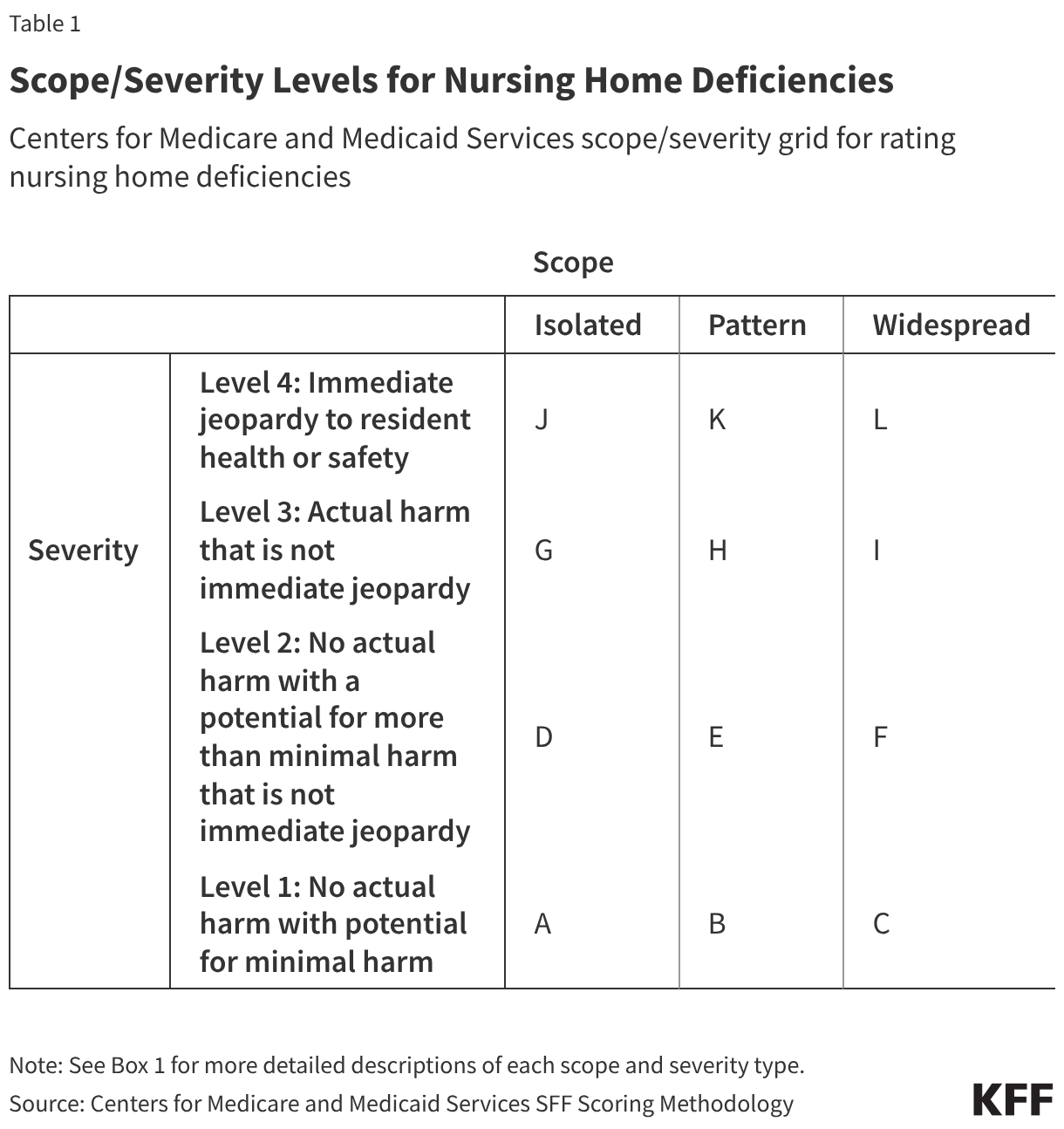
When inspectors identify a failure to meet federal requirements, it is cited as a "deficiency." To provide a standardized method for evaluating the risk these deficiencies pose, CMS utilizes a Scope and Severity matrix. This system assigns a letter grade ranging from A to L, which helps policymakers and the public distinguish between minor administrative errors and life-threatening negligence.
The Four Levels of Severity
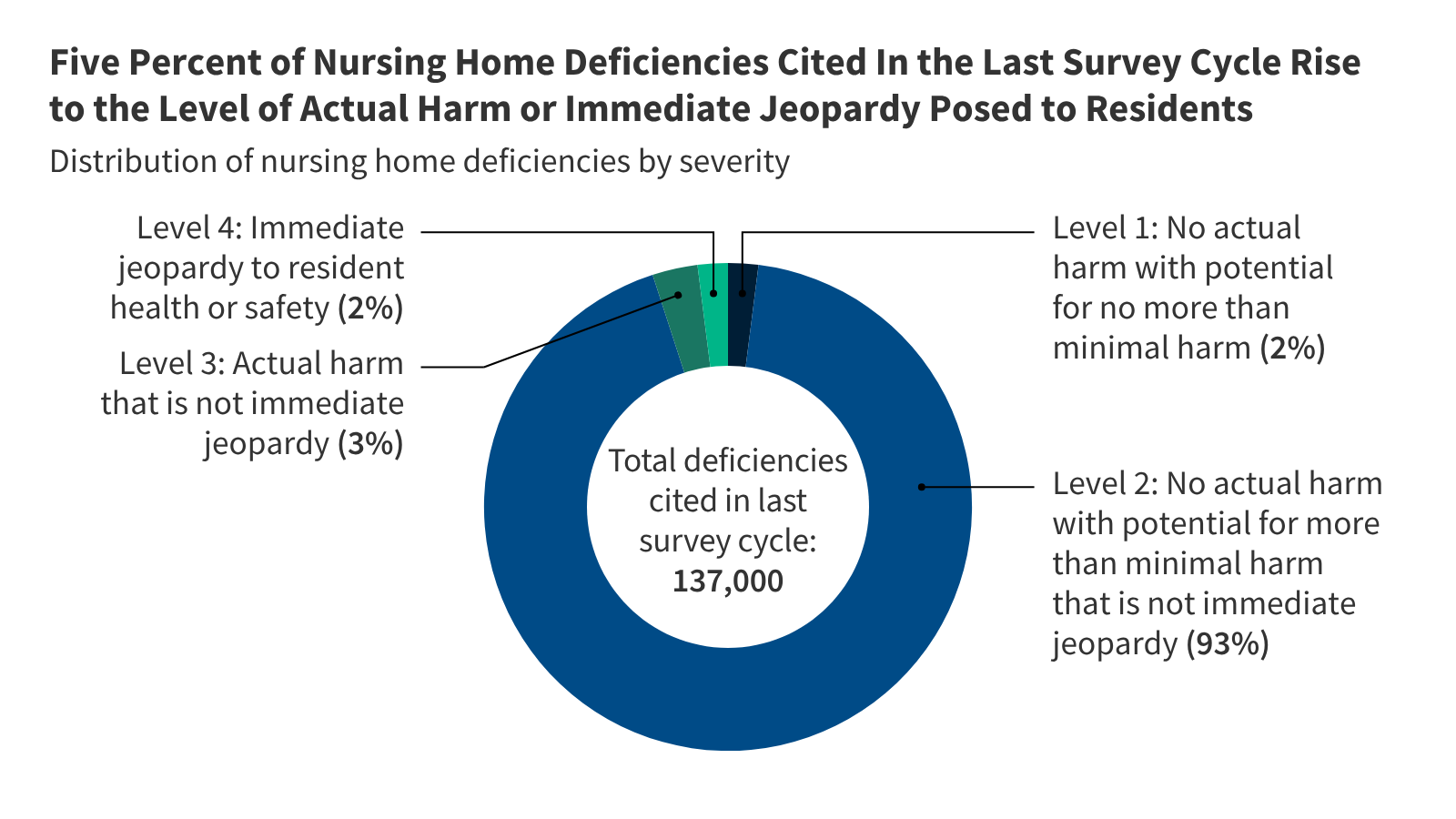
- Level 1 (No Actual Harm): Deficiencies that have the potential for causing no more than a minor negative impact on a resident.
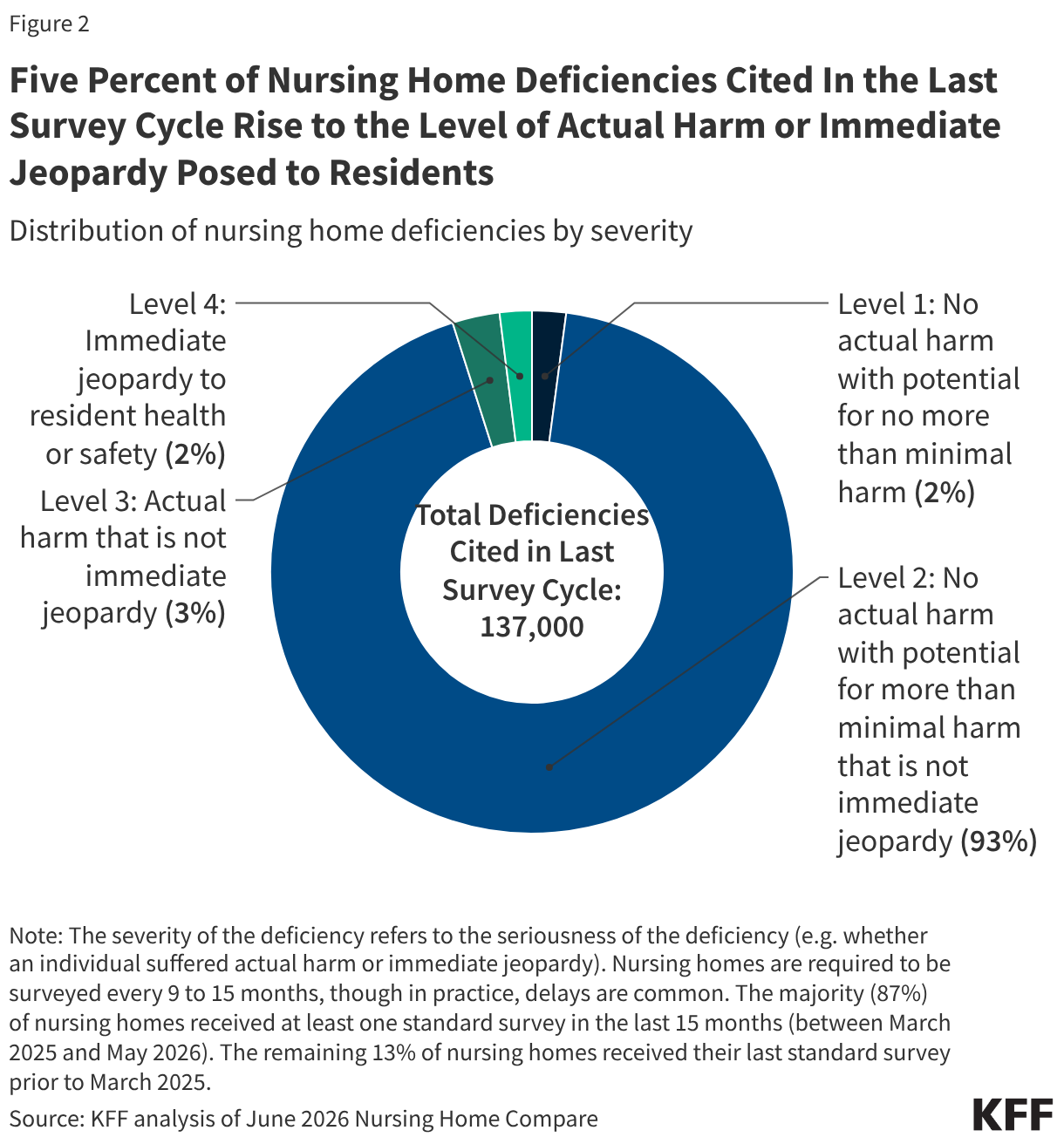
- Level 2 (Potential for More Than Minimal Harm): These represent noncompliance that results in minimal discomfort or has the potential to compromise a resident’s ability to reach their highest practicable well-being. This is the most common category, accounting for 93% of all citations.
- Level 3 (Actual Harm): This level is cited when noncompliance results in a negative outcome that has compromised a resident’s clinical or psychological status.
- Level 4 (Immediate Jeopardy): The most severe rating, reserved for situations where immediate corrective action is necessary to prevent serious injury, impairment, or death.
The Three Dimensions of Scope
- Isolated: The issue affects only a very limited number of residents or a specific location within the facility.
- Pattern: The issue is not pervasive but occurs in multiple locations or affects more than a few residents.
- Widespread: The deficiency is systemic, representing a failure that affects a large portion or all of the facility’s residents.
Findings from the Recent Survey Cycle
The data from the 2024–2026 inspection cycle paints a complex picture of the American nursing home landscape. While only about 5% of deficiencies rise to the level of "Actual Harm" or "Immediate Jeopardy" (Levels 3 and 4), the real-world implications of these citations are harrowing. In total, approximately 6,700 deficiencies were categorized in these top tiers, and nearly 28% of all nursing homes in the U.S. reported at least one such deficiency in 2026.
Case reports from these inspections provide a window into the human cost of these failures. One facility was cited for failing to ensure a resident’s bedside rail was properly raised, leading to a fall that resulted in a fractured femur. Another report detailed a "Level 4" isolated incident where a facility failed to provide nectar-thick liquids to a cognitively impaired resident, a critical error that can lead to aspiration and fatal pneumonia. Other severe citations included the failure to maintain credentialed respiratory staff for residents requiring ventilators and systemic failures in monitoring nutritional status, leading to dangerous weight loss among vulnerable patients.
Conversely, Level 2 deficiencies, while less immediately life-threatening, often reflect a breakdown in the quality of daily life. Common citations in this category include the failure of staff to answer call bells in a timely manner, delays in delivering essential medications from the pharmacy, and failure to investigate altercations between residents. While these may be labeled as having only the "potential" for harm, they contribute to an environment of neglect that erodes the mental and physical health of residents over time.
The Staffing Crisis: A Direct Correlation to Safety
Perhaps the most significant finding in recent quality analyses is the undeniable link between staffing levels and the severity of deficiencies. The debate over federal staffing mandates has been a central theme in nursing home policy, with the Biden administration moving to implement minimum staffing rules and the Trump administration previously rescinding or relaxing such standards.
Data reveals that facilities with low staffing levels are significantly more likely to report severe or widespread deficiencies. Specifically:
- Level 3 Severity: 32% of low-staffed facilities reported "Actual Harm" deficiencies, compared to only 18% of high-staffed facilities.
- Level 4 Severity: 27% of low-staffed facilities reported "Immediate Jeopardy" citations, more than double the 10% rate seen in high-staffed homes.
- Widespread Issues: 67% of low-staffed facilities exhibited widespread patterns of deficiency, compared to 38% for their higher-staffed counterparts.
This correlation suggests that many safety failures are not merely the result of individual error, but are systemic outcomes of an overextended workforce. When fewer nurses and aides are responsible for more residents, the likelihood of missed medication, unobserved falls, and neglected hygiene increases exponentially.
Chronology of Recent Oversight Challenges
The landscape of nursing home regulation has been marked by several key events over the last two years that have impacted how facilities are monitored:
- September 2019 – May 2024: A period of fluctuating oversight focus, where the federal government shifted between prioritizing routine inspections and responding to the emergency conditions created by the pandemic.
- January 2024: CMS intensified its focus on ownership transparency, requiring facilities to report more detailed information about private equity involvement, though deadlines for this reporting were later suspended during administrative shifts.
- May 2025: A federal government shutdown occurred, which significantly disrupted the "Federal Monitoring Surveys." CMS later issued guidance noting that there would be fewer "validation inspections" in 2026 as a direct result of the funding gap.
- June 2026: The release of the most recent "Nursing Home Compare" dataset, which forms the basis for current analysis of health deficiencies and staffing correlations.
Implications and Future Outlook
The current state of nursing home oversight suggests a system under immense pressure. While the federal-state partnership provides a robust framework for identifying problems, the execution is often hampered by bureaucratic delays and labor shortages. The fact that nearly one in three nursing homes has reported a deficiency involving actual harm or immediate jeopardy indicates that the "Conditions of Participation" are frequently aspirational rather than guaranteed.
Furthermore, the impact of the 2025 federal shutdown continues to reverberate through the system. With fewer "validation inspections"—the process by which the federal government checks the accuracy of state-level surveys—there is an increased risk that state agencies may overlook or under-report serious issues. This "oversight of the overseers" is crucial for maintaining a consistent national standard of care.
As the U.S. population continues to age, the demand for nursing home beds is projected to grow. Policy experts argue that without a stabilized workforce and consistent, well-funded inspection protocols, the quality gap between high-staffed and low-staffed facilities will only widen. For residents and their families, the data underscores a sobering reality: the safety and well-being of a loved one often depend less on the federal rules on the books and more on the number of staff members present on the floor during a given shift. Moving forward, the focus of national health policy will likely remain fixed on how to bridge the gap between regulatory requirements and the operational realities of the long-term care industry.