
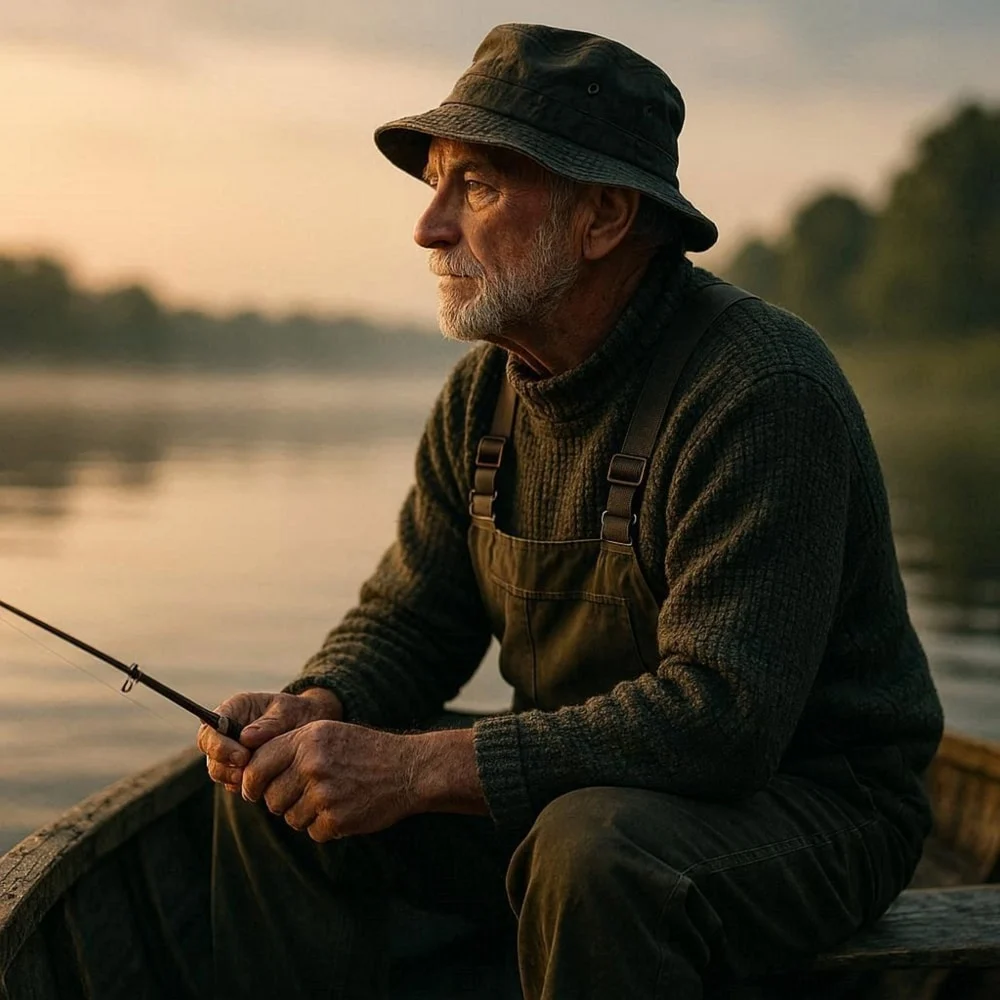
In the quiet ripples of a Massachusetts stream, a revolution in addiction recovery is taking place—one cast at a time. While traditional clinical settings rely on talk therapy and pharmacological intervention, a growing movement is looking toward the water to address the ritualistic and psychological voids left by substance use disorders (SUD). At the heart of this movement is "Adam’s Parachute," a non-profit organization that utilizes the intricate art of fly fishing to help those in recovery find a new sense of purpose, mindfulness, and "displacement."
n
Main Facts: The Intersection of Sport and Sobriety
n
The concept of "fishing as therapy" is not merely a sentimental notion; it is grounded in the psychological principles of substitution and displacement. For individuals battling addiction, the "ritual" of use—the preparation, the hand motions, and the sensory cues—is often as difficult to break as the chemical dependency itself.
n
Adam’s Parachute, founded by Jim Faust, addresses this by teaching the complex skills of fly fishing and fly-tying to individuals in recovery. The organization’s name is a double entendre, referring both to the "Adams Parachute"—the world’s most versatile dry fly for trout—and to Faust’s son, Adam, who tragically lost his life to a drug overdose.
n
The program operates on the premise that the "high" of the catch and the meditative focus required to navigate a river can serve as a healthy substitute for the dopamine spikes provided by illicit substances. In 2025, the program successfully trained 100 individuals in recovery, and as of mid-2026, it is on track to double that reach. The initiative has gained national attention, including a feature on NPR’s All Things Considered, highlighting a shift in how society views holistic recovery methods.
n
Chronology: From Personal Tragedy to National Movement
n
The journey of Adam’s Parachute began with a father’s grief. Jim Faust, an avid angler, lost his son Adam to the opioid epidemic—a crisis that continues to claim tens of thousands of lives annually. Seeking a way to honor his son’s memory and process his own loss, Faust began volunteering at a local recovery center near his home in Massachusetts.
n
- n
- 2023–2024: Faust began teaching fly-tying—the meticulous process of creating artificial lures from feathers, silk, and fur—to residents at recovery centers. He noticed that the "fidgety" energy common in early sobriety was funneled into the precision of the craft.
- 2025: Adam’s Parachute was formally established as a non-profit. The organization expanded from indoor fly-tying workshops to outdoor excursions, teaching 100 recovering addicts the "catch and release" philosophy.
- July 2026: National Public Radio (NPR) featured Faust’s story, catapulting the organization into the national spotlight. The segment detailed how the "Adams Parachute" fly—designed to sit high on the water’s surface—symbolized the hope of staying "above water" during the tumultuous stages of recovery.
- August 2026: The organization announced plans to expand its curriculum to include high-stress addiction healthcare workers, recognizing that "compassion fatigue" among providers is a major hurdle in the quality of addiction care.
n
n
n
n
n
Supporting Data: The Science of Displacement and Substitution
n
To understand why fishing works as a clinical intervention, one must look at the mechanics of addiction. Substance use is often tied to "ritualized motions." For example, a 2016 study published in Psychology of Addictive Behaviors found that visual imagery of vaping products increased the urge to smoke because it mimicked the hand-to-mouth ritual. Conversely, watching someone drink water—a different hand-to-mouth motion—did not trigger the same urge.
n
The Power of Substitution
n
For a therapy to serve as an effective substitute, it must satisfy the sensory and cognitive "itches" created by addiction.
n
- n
- Hand-Eye Coordination: Much like the preparation of drug paraphernalia, fly fishing requires intricate manual tasks. Tying a knot or "matching the hatch" (selecting the right fly for the insects present) provides a tactile outlet for nervous energy.
- The Dopamine Loop: Fishing offers a "variable ratio reinforcement schedule." You don’t catch a fish every time you cast, but the possibility of a catch keeps the brain engaged. This mirrors the "chase" of addiction but rewards the participant with a sense of accomplishment rather than a chemical crash.
n
n
n
Displacement Theory
n
Displacement involves channeling "overflow stress" into repetitive, soothing activities. In a clinical sense, the rhythmic "10 o’clock to 2 o’clock" motion of a fly rod acts as a form of somatic experiencing. It grounds the individual in their body and the present moment, a core tenet of mindfulness-based relapse prevention (MBRP).
n
Official Responses and Philosophical Perspectives
n
The success of Adam’s Parachute has prompted experts to weigh in on the philosophical and psychological underpinnings of "play" in adult life.
n
C. Thi Nguyen, a professor of philosophy at the University of Utah and author of the Objectionable blog, argues that humans are "designed to play games." In an August 2026 piece for the Financial Times, Nguyen explored the idea that the difficulty of fishing is precisely what makes it healing.
n
"When you fly fish, you don’t just want a fish," Nguyen writes. "You are playing a game: you want to get that fish by a specific, difficult, and fascinating technique." This philosophy is vital for recovery. In the "game" of fishing, the struggle is the point. For someone in recovery, learning to embrace a difficult process without seeking an immediate, artificial shortcut is a monumental cognitive shift.
n
Jim Faust echoed this sentiment in his NPR interview: "Fly fishing offers a unique opportunity to step away from past and present worries and focus on the moment. It empowers those in recovery to find healing, focus, and peace."
n
Medical professionals in the field of addiction have also begun to take note. Many "Adventure Therapy" programs are now being integrated into traditional 12-step or clinical models, citing that the "great outdoors" reduces cortisol levels and improves the efficacy of traditional talk therapy.
n
Implications: A Holistic Future for Addiction Care
The rise of organizations like Adam’s Parachute suggests a broader shift in the American healthcare landscape toward "Ecotherapy." As the limitations of purely pharmaceutical approaches to mental health become more apparent, outdoor-based interventions are moving from the periphery to the mainstream.
Impact on the Recovery Community
For the individual in recovery, fishing provides a "sober social network." It replaces the isolation of drug use with a community of anglers. The "catch and release" ethos of fly fishing also mirrors the recovery journey: it’s about the experience, the respect for life, and the understanding that the "prize" is the journey itself, not the possession of the result.
Support for Caregivers
Perhaps the most significant implication of Faust’s 2026 expansion is the inclusion of addiction care workers. With burnout rates in the addiction treatment field reaching record highs, providing these professionals with a "meditative escape" ensures the longevity of the workforce. By helping the healers, Adam’s Parachute is strengthening the entire infrastructure of recovery.
The "Game" of Life
As Dr. Nguyen suggests, the "struggle" of the game is what gives life meaning. For decades, addiction has been treated as a moral failing or a simple chemical imbalance. The success of fishing-based therapy suggests it is also a "disorder of meaning." By providing a complex, rewarding, and ritualistic "game" like fly fishing, programs like Adam’s Parachute are giving people a reason to stay engaged with reality.
In the end, the therapeutic power of the water lies in its ability to demand total presence. When a trout rises to a fly, there is no room for the past or the future. There is only the line, the water, and the breath. For those who have spent years lost in the fog of substance use, that moment of clarity is more than just a hobby—it is a lifeline.
Sources and References:
- “Exposure to electronic nicotine delivery systems (ENDS) visual imagery increases smoking urge and desire,” Psychology of Addictive Behaviors, 2016.
- “He lost his son. Now he’s teaching fly fishing to help others suffering from addiction,” All Things Considered, NPR, July 20, 2026.
- “The grasshopper was right all along: Why play is at the core of a meaningful life,” Financial Times, August 8, 2026.
- Adam’s Parachute Official Mission Statement and 2025-2026 Impact Reports.
- C. Thi Nguyen, Professor of Philosophy, University of Utah – Perspectives on Game Theory and Mental Health.

