
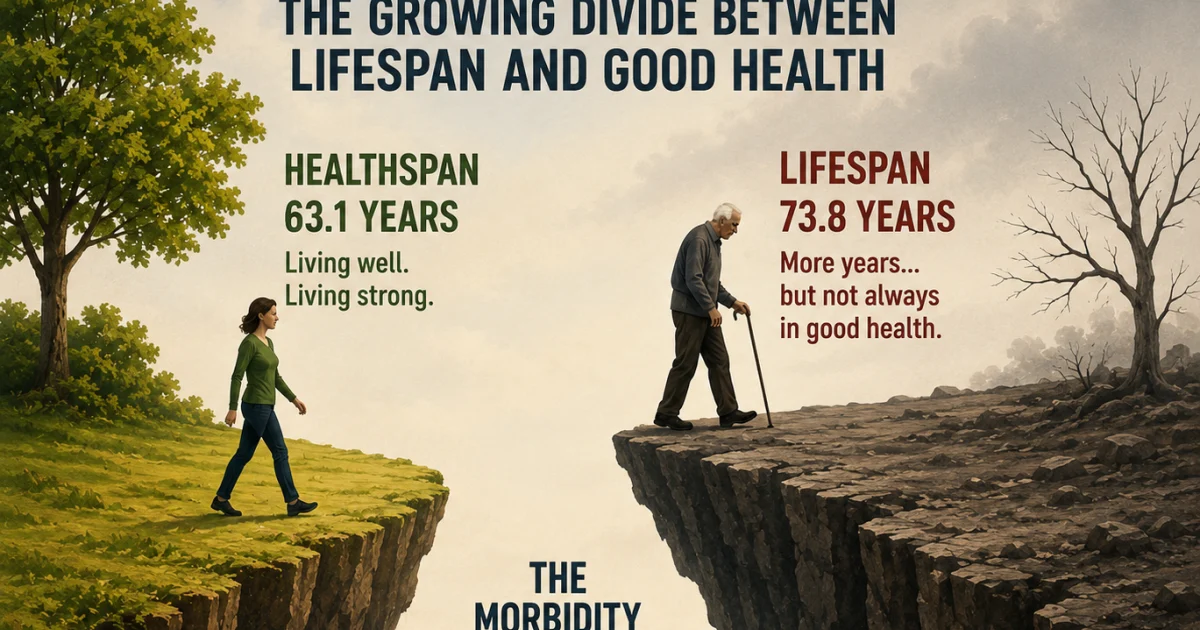
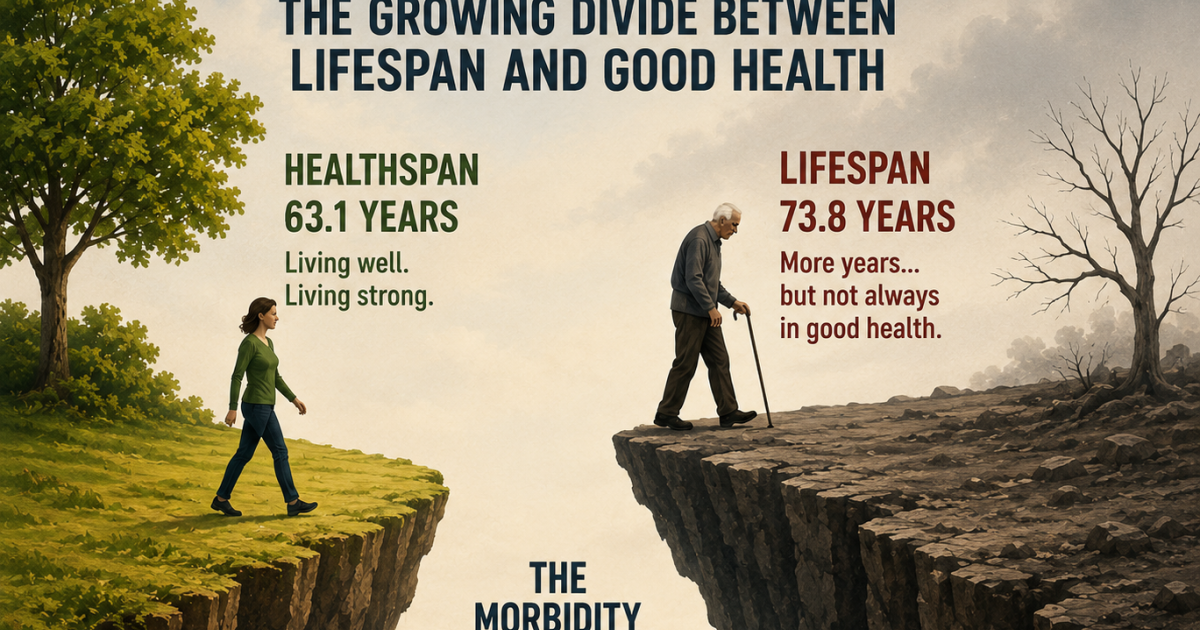
A groundbreaking study in The Lancet reveals a troubling disparity: while medical advancements have dramatically extended human lifespans over the past three decades, the years spent in good health have lagged significantly behind. This growing "morbidity gap" means many individuals are now living for over a decade in a state of diminished well-being. This has profound implications for individuals, healthcare systems, and societal structures, prompting a critical re-evaluation of how we define and pursue healthy aging.
n
The Alarming Rise of the Morbidity Gap
n
For generations, the primary goal of medicine has been to combat mortality, to stave off death and extend life. This relentless pursuit has yielded remarkable successes. We are living longer than ever before, a testament to breakthroughs in disease prevention, diagnostics, and treatment. However, this triumph of longevity has cast a long shadow: the quality of those added years.
n
A comprehensive analysis published in The Lancet, titled "Global, regional, and national trends in the morbidity gap and contributing diseases, injuries, and risk factors, 1990–2023," paints a stark picture. The study, a deep dive into the Global Burden of Disease (GBD) for 2023, reveals that improvements in survival have outpaced reductions in non-fatal health loss on a global scale. This imbalance has created a significant "morbidity gap" – the difference between a person’s total lifespan and their "healthspan," the period of life spent in good health. In many parts of the world, this gap now stretches to over a decade, a period often characterized by chronic illness, disability, and reduced quality of life.
n
The implications are far-reaching. It suggests that while we are getting better at keeping people alive, we are not necessarily getting better at keeping them healthy and functional. This raises critical questions: What is the true measure of progress in public health? And how can we shift our focus from merely prolonging life to enhancing the quality of those years?
n
A Tale of Two Metrics: Lifespan vs. Healthspan
n
The distinction between lifespan and healthspan is crucial. Lifespan is the objective measure of how long a person lives. Healthspan, however, is a more nuanced concept, referring to the period of life lived free from debilitating diseases and functional limitations. The ideal scenario, and the aspiration of modern healthcare, is to achieve a high degree of congruence between these two metrics.
n
The Lancet study highlights a concerning divergence. While global mortality rates from many conditions have declined, leading to increased lifespans, the burden of non-fatal health conditions, such as chronic diseases, mental health disorders, and age-related impairments, has not diminished proportionally. This means that as people live longer, they are more likely to experience a prolonged period of ill health.
n
The Development Paradox: High Income, High Morbidity Gap
n
Perhaps one of the most striking findings of the study is the correlation between national development and the size of the morbidity gap. Counterintuitively, highly developed nations, despite their advanced healthcare systems and access to cutting-edge medical technologies, often exhibit the largest morbidity gaps.
n
The study introduces the concept of the Socio-demographic Index (SDI), a composite score that considers factors like female educational attainment, fertility rates, and per capita income. High SDI nations, which include wealthy, industrialized countries, have been remarkably successful at averting premature deaths. However, this success comes with a trade-off: their populations tend to endure a longer overall duration of chronic illness.
n
The United States, for instance, is identified as having the greatest morbidity gap globally, estimated at a staggering 14 years. This means the average American can expect to live for 14 years with compromised health. In stark contrast, countries in sub-Saharan Africa, with lower SDI scores, exhibit smaller morbidity gaps.
n
However, this comparison is not a simple endorsement of lower development. While the gap between being healthy and dying may be smaller in low-SDI nations, this can also reflect healthcare systems primarily geared towards treating acute illnesses rather than managing the complexities of chronic conditions. The challenge, therefore, is not to regress in development, but to leverage advanced capabilities to improve healthspan.
n
Understanding the Roots of the American Morbidity Gap
n
The substantial morbidity gap in the United States is not a monolithic issue. The Lancet study, along with other analyses, points to a complex interplay of factors. While the US healthcare system excels at intervening in acute, life-threatening events and preventing early deaths, its effectiveness in promoting long-term wellness and managing chronic conditions is less pronounced.
n
Consider the example of breast cancer. In the 1980s, a diagnosis of breast cancer often carried a grim prognosis, with 20-year survival rates hovering around 40-45%. Today, thanks to advancements in screening, early detection, and treatment, these survival rates have doubled. This is an extraordinary medical achievement. However, the extended survival brings its own set of challenges. Many breast cancer survivors experience long-term side effects from treatments like chemotherapy and radiation, including increased cardiovascular risk, treatment-induced menopause, metabolic shifts leading to weight gain and muscle loss, and neurological issues such as chemo-brain fog. Earlier generations rarely survived long enough for these chronic morbidities to manifest. Modern medicine is now grappling with the "morbidity gap" that emerges from successful long-term survivorship, including the specific sequelae of treatments and the general frailties associated with advanced age.
n
Individual Responsibility and the Public Health Imperative
n
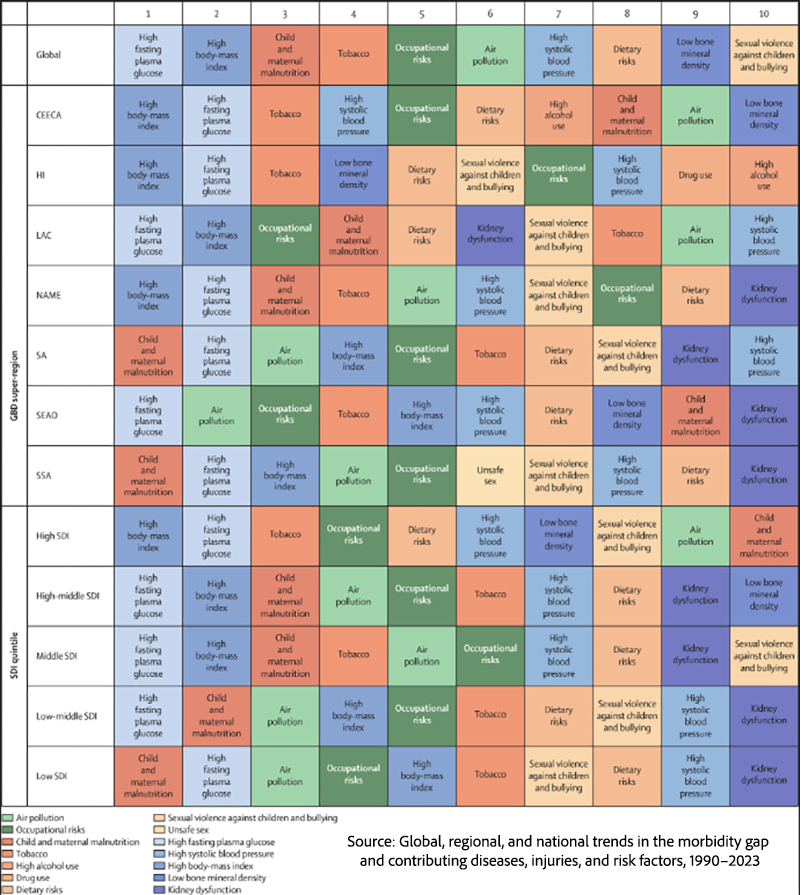
The factors contributing to the morbidity gap are multifaceted, encompassing both individual behaviors and broader societal influences. The Lancet study highlights that a significant portion of unhealthy years are attributable to modifiable lifestyle factors.
n
In the United States, the primary drivers of the morbidity gap include:
n
- n
- Dietary Habits: Unhealthy eating patterns contribute significantly to a range of chronic diseases, including obesity, type 2 diabetes, and cardiovascular disease.
- Tobacco Use: Despite public health campaigns and increased awareness, smoking remains a major preventable cause of morbidity and mortality.
- Occupational Risks: While less prominent than diet and tobacco, certain occupations still carry inherent risks that can lead to long-term health problems.
n
n
n
n
The study emphasizes that a substantial portion of these leading contributors to the morbidity gap are within an individual’s immediate control. Simple, yet challenging, interventions like adopting a balanced diet, engaging in regular physical activity, and abstaining from tobacco can have a profound impact on healthspan.
n
However, attributing the entire burden to individual responsibility is an oversimplification. While the authors acknowledge the importance of personal accountability, they also implicitly recognize the role of social determinants of health, environmental factors, and systemic influences that shape these behaviors. As Dr. Charles Dinerstein, Director of Medicine at the American Council on Science and Health, notes, changing ingrained behaviors is a formidable challenge, even with the best intentions and medical support.
n
The Unmet Needs: Beyond Acute Care
n
Beyond lifestyle choices, the study also points to areas where healthcare systems and social structures can play a more proactive role in enhancing healthspan. These include:
n
- n
- Sensory Impairments: While healthcare systems can identify needs related to hearing and sight loss, the mitigation strategies often fall outside traditional medical interventions. Providing hearing aids, treating cataracts and glaucoma, and offering adaptive visual aids like audiobooks and large-print materials are crucial for maintaining independence and quality of life.
- Home Safety and Accessibility: The risk of falls, a major cause of injury and disability in older adults, is predictable. However, adapting home environments with necessary infrastructure, such as ramps, handrails, and improved lighting, often requires a coordinated effort between healthcare providers, social services, and family members.
- Social Isolation and Mental Well-being: The loneliness and isolation that can accompany aging can lead to depression and anxiety. While physicians can identify these issues, addressing them effectively often requires robust social support networks, intergenerational housing solutions, and community engagement initiatives.
A Call for a Paradigm Shift in Healthcare
The findings of the Lancet study serve as a powerful wake-up call. Extending human life without concurrently safeguarding functional well-being represents a bittersweet triumph of modern medicine. As the focus of healthcare continues to shift from acute, fatal events to the management of long-term chronic conditions, the metrics of public health performance must evolve. Longevity alone is no longer a sufficient measure of success.
Dr. Christopher Murray, senior author of the study and Director of the Institute for Health Metrics and Evaluation (IHME), succinctly articulates this imperative: "Progress in healthy aging should be measured not only by lifespan, but by healthspan, with greater investment in prevention, long-term disease management, and chronic care to reduce years lived in poor health."
Achieving a longer healthspan will require more than just incremental adjustments to existing healthcare models. It demands a fundamental paradigm shift. This involves:
- Prioritizing Prevention: Investing heavily in public health initiatives that promote healthy lifestyles, early disease detection, and risk factor management.
- Strengthening Chronic Care: Developing integrated, patient-centered models for managing chronic conditions, focusing on optimizing function and quality of life over the long term.
- Addressing Social Determinants: Recognizing and actively working to mitigate the impact of social, economic, and environmental factors that influence health outcomes.
- Fostering Individual Agency: Empowering individuals with the knowledge, resources, and support to make informed choices about their health.
- Reimagining Social Support: Building stronger communities and family structures that can provide the essential social and emotional support needed for healthy aging.
The journey to a future where increased lifespan is synonymous with increased healthspan is complex. It will require a concerted effort from individuals, healthcare providers, policymakers, and society as a whole. As the study powerfully concludes, "Healthy aging will not come solely from pills and potions; it requires individuals to manage controllable lifestyle risks and for societies to find ways to ‘strengthen the feeble hands, steady the knees that give way.’ That will require more than a shifting focus by healthcare systems." It demands a profound reorientation of our values and priorities, ensuring that as we live longer, we also live better.

