
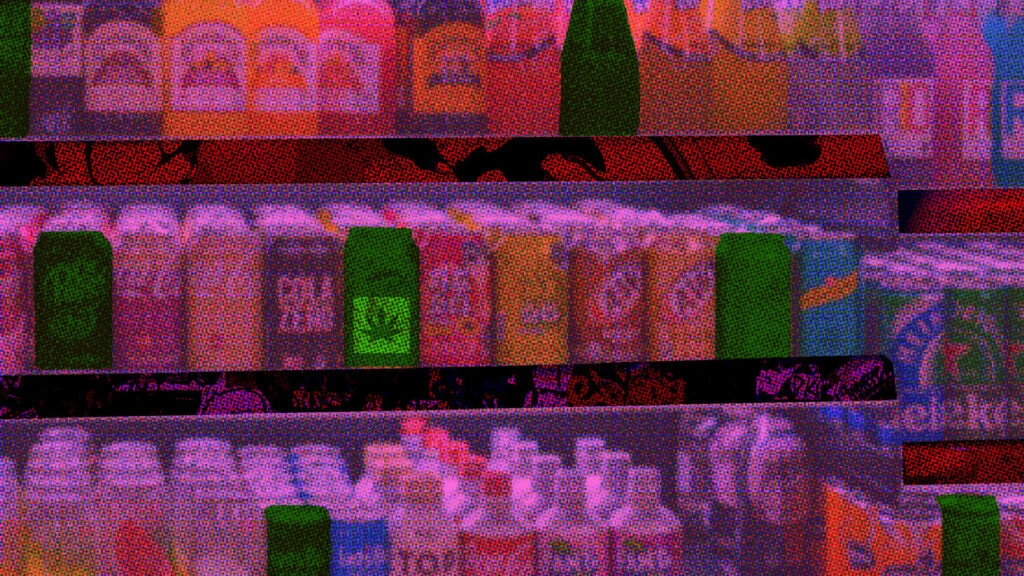
NEW YORK, NY – A quiet revolution is unfolding in the refrigerated aisles of New York City’s grocery stores, bodegas, and delis, one that carries significant implications for public health and safety. Amidst the familiar array of iced teas, sparkling waters, and "wellness-coded" probiotic sodas, a new category of beverages has seamlessly integrated itself: high-potency drinks infused with Tetrahydrocannabinol (THC), the primary psychoactive compound in cannabis. These brightly packaged cans, bearing names like Oasis, Cann, Milonga, and Mighty Kind, are often indistinguishable from their non-intoxicating counterparts, creating a deceptive landscape where consumers, including minors, can easily stumble upon powerful cannabis products with little warning or oversight.
n
Despite explicit New York state regulations limiting hemp-derived THC beverages to a mere 1 milligram per serving, a recent investigation across South Brooklyn revealed widespread availability of drinks containing up to 100 times that amount. From upscale gourmet delis in affluent Brooklyn Heights to large supermarkets bordering Prospect Park, beverages ranging from a casual 5-10 mg dose—standard for recreational users—to potent 50, 60, or even 100 mg concentrations, capable of overwhelming all but the most seasoned cannabis consumers, were openly sold. Alarmingly, most of the surveyed stores, some situated mere blocks from schools, displayed no signage indicating the intoxicating nature of these products, nor did they require age verification upon purchase. This unchecked proliferation has ignited a fierce debate among industry stakeholders, public health advocates, and lawmakers, highlighting a critical regulatory vacuum that endangers unsuspecting consumers and vulnerable populations.
n
The Rise of the Unregulated Market: A Chronology of the THC Beverage Boom
n
The current landscape of readily available THC beverages in mainstream retail stores is a direct, albeit unintended, consequence of a pivotal piece of federal legislation: the 2018 Farm Bill. This landmark bill aimed to boost the agricultural sector by legalizing hemp, defined as cannabis with less than 0.3% Delta-9 THC on a dry weight basis. Crucially, it removed hemp and its derivatives from the Controlled Substances Act, inadvertently creating a loophole that allowed for the legal sale of products containing hemp-derived cannabinoids, including Delta-8 THC and even small amounts of Delta-9 THC, as long as the source material remained within the legal hemp threshold.
n
Following the Farm Bill’s passage, entrepreneurs quickly capitalized on this regulatory ambiguity. Initially, the market was dominated by CBD products, but it soon expanded to include psychoactive cannabinoids derived from hemp. The past few years have witnessed an explosion in the popularity of these THC-infused beverages across the U.S., a trend that aligns with a broader societal shift away from alcohol consumption. Industry estimates suggest between 500 and 750 brands are now vying for a share of a market projected to reach $1.4 billion in sales by 2026. This burgeoning sector has attracted considerable investment and retail interest, with major chains like Target, Circle K, and Sprouts increasingly incorporating these drinks into their product offerings, signaling a growing mainstream acceptance despite the murky regulatory waters.
n
However, the very loophole that enabled this rapid growth is now poised to close. The upcoming reauthorization of the Farm Bill in November 2024 is expected to address the unregulated hemp-derived cannabinoid market, potentially bringing an end to the widespread retail sale of high-potency THC products outside of state-licensed cannabis dispensaries. This looming deadline has created a palpable tension within the industry. While some companies are diversifying into non-THC beverages as a hedge, the prevailing sentiment among many manufacturers and distributors, as articulated by Christopher Lackner, head of the Hemp Beverage Alliance, remains one of optimism. "It’s not allowed," Lackner concedes regarding the current situation in New York, "but it’s still happening." He and others in the industry express confidence that a legislative "solution" will be found, perhaps in the form of new regulatory pathways or state opt-out options, preventing a complete ban and allowing the lucrative market to continue its expansion.
n
A Hidden Hazard: Supporting Data Reveals Alarming Public Health Risks
n
The widespread, unregulated availability of these THC beverages, coupled with their deceptive packaging and lack of clear labeling, has become a significant public safety concern for medical professionals, researchers, and advocacy groups alike. The data underscores a growing crisis, particularly among vulnerable populations such as children and adolescents.
n
Deceptive Marketing and Consumer Confusion:nThe initial observation in New York City’s retail outlets highlights a critical aspect of the problem: the intentional blurring of lines between intoxicating and non-intoxicating drinks. Cans designed with vibrant colors and sleek aesthetics, bearing names that evoke health and wellness, sit alongside actual probiotic sodas, iced teas, and energy drinks. The crucial information—that they contain THC—is often relegated to small, "squint-worthy" font sizes, easily overlooked by a hurried shopper. Jessica Kruger, a health educator at the University of Buffalo who researches cannabis use, emphasizes this point: "People don’t know nutrition labels. They do not understand cannabis labels or milligrams." This lack of clarity transforms a simple grocery run into a potential game of Russian roulette, where accidental ingestion by an uninformed consumer is a very real possibility.
n
A Surge in Pediatric Poisonings:nPerhaps the most alarming consequence of this unregulated market is the dramatic increase in accidental ingestions by children. Matthew Rossheim, an associate professor of health administration and policy at UNT Health Fort Worth, notes a "notable increase in pediatric poisonings" since the availability of hemp-derived cannabis products spiked over the last five years. Stark statistics paint a grim picture: a recent study published in the Journal of Addiction Medicine revealed that calls to U.S. poison centers concerning cannabis exposure in children under age 6 skyrocketed by over 6,000% between 2009 and 2024. For children aged 6 to 12, the increase was even more staggering, exceeding 13,000% during the same period.
n
Dr. Rudy Kink, a pediatric emergency physician at Le Bonheur Children’s Hospital in Memphis, Tennessee, provides a harrowing firsthand account. He estimates his hospital sees four to five cases a week involving children who have ingested THC drinks. These cases range from curious toddlers attracted to colorful packaging to teenagers experimenting with cannabis, and occasionally, a teen who mistakenly consumed a cannabis drink believing it to be a regular soda. The symptoms are severe: children arrive at the emergency room lethargic, confused, nauseous, vomiting, and sometimes even in a nearly comatose state. Parents are often mystified, unaware of the cause until blood and urine tests reveal the presence of THC. "I don’t think that teenagers quite understand the effects of THC and how it can cause some of the other problems medically, like vomiting and altered mental status," Kink states, advocating for unequivocally clear labeling to prevent such tragic misunderstandings.
n
Acute Health Risks and Psychosis:nThe risks extend beyond accidental ingestion. Tory Spindle, an associate professor at Johns Hopkins Medicine who studies the pharmacological and behavioral effects of cannabis, highlights the unique dangers posed by THC beverages compared to other cannabis products. His research indicates that drinks produce effects much faster—within 15 to 20 minutes, peaking around 30-45 minutes—compared to traditional edibles like gummies or brownies, which can take an hour to kick in and peak much later. Furthermore, a 10-mg beverage appears to be significantly more potent than a 10-mg gummy. This rapid onset and heightened potency mean that even individuals who knowingly consume these drinks might underestimate their effects, leading to impaired judgment and response times, a particularly dangerous scenario if they then attempt to drive. "The worst-case scenario," Spindle warns, "is that someone would buy one and not know that it has THC in it at all, and then you get intoxicated and drive while under the influence."
n
Beyond immediate impairment, long-term and acute mental health risks are also emerging. Rossheim points to a rise in ER visits for cannabis-induced psychosis. A large cohort study of Northern California teens revealed a "significantly higher risk" of psychotic and bipolar disorders linked to cannabis use. Diane Carlson, co-founder of the advocacy group One Chance to Grow Up, recounts heartbreaking cases: "We had parents that thought that their child was buying CBD, and their child thought they were buying CBD, until they developed psychosis." In Ohio, a director of outpatient psychiatric services at Licking Memorial Hospital reported an increase in ER visits from patients experiencing "actively psychotic" episodes attributed to the THC drink boom. These incidents are mirrored in online forums like Reddit, where users recount mistakenly mixing medications with "bougie soda" THC drinks, accidentally consuming excessive doses, or fearing a failed mandatory drug screening due to unwitting ingestion.
n
Lack of Regulatory Oversight and Product Integrity:nAdding another layer of concern is the complete absence of regulatory oversight for hemp-derived THC products sold outside state-licensed dispensaries. Unlike regulated cannabis products, these beverages are not subject to the same rigorous testing for contaminants, accurate potency, or proper labeling. "You don’t know if there’s contaminants, you don’t know what the ratio is" of THC to CBD, Kruger explains, highlighting that manufacturers "can claim whatever the heck they want." Spindle’s research on cannabis products consistently shows inaccurate labeling, with THC concentrations often under- or over-estimated. He expects similar inaccuracies in THC beverage labeling, posing a serious risk to consumers who rely on these labels for dosing and safety information.

n
Official Responses and the Enforcement Challenge
n
The current situation reveals a significant disconnect between existing legal frameworks and on-the-ground retail practices, exacerbated by fragmented official responses and challenges in enforcement.
n
New York State’s Stance and Enforcement Gaps:nNew York state law, specifically regulations adopted in 2023, clearly restricts hemp-derived cannabinoid products to a maximum of 1 milligram of THC per serving when sold in general retail stores. However, the recent investigation unequivocally demonstrates that this law is routinely flouted. The New York Office of Cannabis Management (OCM), tasked with overseeing cannabis regulations, did not respond to requests for comment regarding the widespread presence of these illicitly potent drinks in retail stores. This silence underscores the broader challenge of enforcing regulations in a rapidly evolving market, especially when products are designed to blend seamlessly into everyday consumer goods.
n
Industry Self-Regulation vs. Public Safety:nChristopher Lackner of the Hemp Beverage Alliance acknowledges the need for clearer guidelines. His organization advocates for THC beverages to be marketed, labeled, and shelved similarly to other adult beverages, requiring ID checks for purchasers over 21. If shelved alongside non-alcoholic drinks, he argues for prominent signage alerting customers to the THC content. However, he admits that in many states, the industry operates largely under a "self-regulatory scheme for the reputable retailers." This reliance on voluntary compliance is precisely what public health advocates find problematic, as it leaves ample room for less scrupulous vendors to disregard safety protocols.
n
Varied Retailer Approaches:nThe contrast in retail practices is stark. While the surveyed Brooklyn delis and grocery stores often stocked THC drinks indistinguishably among regular beverages, without ID checks or warning signs, some major national chains have adopted more responsible practices. Target, which sells THC drinks in states like Florida, Illinois, Minnesota, and Texas, informed STAT that it requires IDs for purchase, displays the beverages with other adult drinks, and utilizes "dedicated signage up in stores that carry THC products (even when it’s not required by state law)." An observation at a Target store in Austin, Texas, confirmed this: THC drinks were displayed prominently on an end cap, accompanied by a large, eye-level sign marking them as THC-infused, a smaller warning label about age restrictions and impaired driving, and thin green strips along the shelves reiterating the THC content. This demonstrates that responsible retail practices are possible, but they are far from universal.
n
The National Grocers Association, representing independent grocers, offered a cautious statement, emphasizing that regulations on hemp-derived beverages vary by state and encouraging retailers "to follow all applicable federal, state, and local laws and to work closely with regulators and suppliers to ensure products are marketed and labeled in accordance with those requirements." This general advice, however, does little to address the immediate enforcement gaps and public safety risks.
n
State-Level Regulatory Struggles:nEfforts to regulate or ban these products at the state level have met with mixed success. Ohio, for instance, implemented a ban on most intoxicating hemp products earlier this year, specifically targeting THC beverages, only for a federal judge to temporarily block the law, allowing some drinks to reappear in stores. States like Alaska and Washington have had more success in limiting the availability of THC products outside of state-licensed dispensaries, but even there, Rossheim notes, "enforcement for these types of laws is very low." This patchwork of regulations and inconsistent enforcement creates an environment ripe for confusion and exploitation, making it difficult for both consumers and retailers to navigate the legal landscape responsibly.
n
Implications: The Future of THC Beverages and the Policy Debate
The current situation regarding THC beverages presents a complex intersection of economic opportunity, consumer demand, public health concerns, and regulatory challenges. As the November Farm Bill reauthorization deadline approaches, the future of this burgeoning industry hangs in the balance, prompting intense debate and strategic maneuvers from all sides.
Economic Promise vs. Public Health Imperative:
For many, THC beverages represent a lucrative market, appealing to a generation increasingly opting for alternatives to alcohol. Kruger notes that responsible cannabis use could even serve as a harm reduction alternative to alcohol, citing a study where daily THC drink users consumed less alcohol and engaged in less binge drinking. The alcohol industry itself is divided, with some manufacturers exploring entry into the cannabis drink market, while others advocate for stricter regulations to protect their traditional sales. Many liquor stores and breweries, facing declining alcohol consumption, view THC drinks as a potential revenue stream to offset losses.
However, this economic promise is weighed heavily against the clear and present public health risks. The lack of long-term data on the health impacts of daily THC beverage consumption, hampered by federal restrictions on cannabis research, means that the full scope of potential consequences remains unknown. This uncertainty, coupled with the documented increase in pediatric poisonings and cannabis-induced psychosis, creates an urgent imperative for robust regulation.
The Looming Federal Decision and Industry Optimism:
The impending closure of the Farm Bill loophole in November is the most immediate threat to the unregulated THC beverage market. Several pieces of legislation have been introduced in Congress, proposing various "fixes"—from delaying the ban, to creating entirely new regulatory pathways for THC drinks, to offering states opt-out options. Christopher Lackner remains "very confident that cooler heads will prevail," believing Congress will ultimately "kick cans down the road" rather than enacting an outright ban. This optimism is evident in the industry’s continued high-volume production of THC drinks and the recent hemp beverage expo in Austin, Texas, which attracted over 100 distributors—a clear signal of belief in the market’s longevity. Some brands, like Cann and Cantrip, are strategically rolling out non-THC alternatives, but the overall sentiment suggests a strong belief that a regulatory compromise will be reached.
Towards a Balanced Future:
The challenge lies in crafting a regulatory framework that acknowledges consumer demand and economic potential while rigorously safeguarding public health. This requires a multi-pronged approach:
- Clear Federal Guidelines: The Farm Bill reauthorization must provide definitive federal guidance on hemp-derived cannabinoids, ideally establishing a clear regulatory pathway that ensures product safety, accurate labeling, and age restrictions.
- Robust State Enforcement: States need to implement and actively enforce consistent regulations that align with federal guidelines, including mandatory ID checks, clear signage, and severe penalties for non-compliance.
- Mandatory Product Testing and Labeling Standards: All THC beverages, regardless of their derivation, should be subject to rigorous third-party testing for potency, contaminants, and accurate ingredient lists. Labels must be unambiguous, prominently displaying THC content, serving sizes, and explicit warnings about intoxicating effects and potential health risks.
- Public Education Campaigns: Comprehensive public awareness campaigns are crucial to educate consumers about the psychoactive nature of THC, the delayed onset and increased potency of beverages, and the dangers of accidental ingestion, especially by children.
- Continued Research: Federal restrictions on cannabis research must be eased to allow for comprehensive studies on the long-term health impacts of THC beverages, their interactions with medications, and their role in harm reduction compared to alcohol.
Without decisive action, the current free-for-all in the THC beverage market risks escalating into a public health crisis, leaving countless individuals, particularly the young and uninformed, vulnerable to accidental ingestion, acute intoxication, and severe health consequences. The choice between unchecked market growth and responsible public safety measures is becoming increasingly urgent.

