
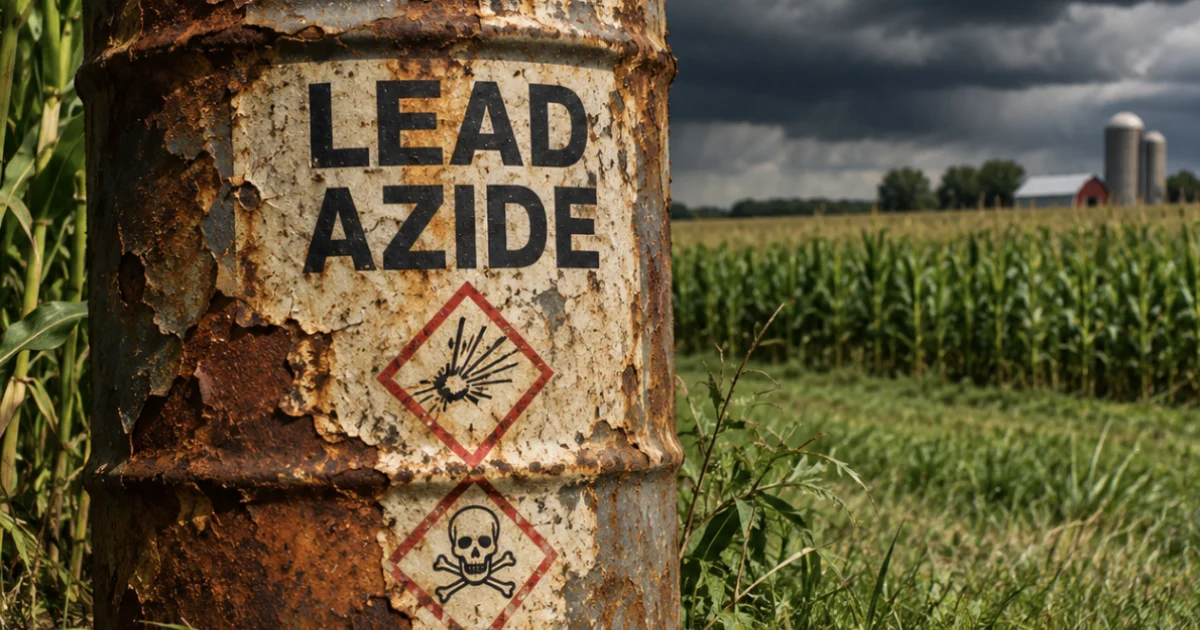
Middletown, Iowa – In a high-stakes operation that underscores the inherent dangers of aging military stockpiles, the U.S. Army carried out the controlled detonation of over 9,700 pounds of highly unstable lead azide at the Iowa Army Ammunition Plant near Middletown. The decision to detonate, while seemingly the least perilous of a trio of grim options, has ignited debate and raised significant environmental questions regarding the potential for widespread lead contamination.
n
The explosive compound, a cornerstone of military ordnance for its ability to reliably initiate the detonation of less sensitive explosives, had been stored in deteriorating barrels, some dating back to the 1940s. The Army had been aware of the material’s degradation for at least two decades, creating a ticking time bomb in the heart of rural Iowa. Faced with a stark choice between chemical neutralization, risky transportation, or a controlled explosion, the Army ultimately opted for the latter, a decision that prioritized immediate safety but left lingering concerns about the long-term environmental impact.
n
The Perilous Nature of Lead Azide: A Chemist’s Nightmare
n
The chemical compound "lead azide" is a term that commands immediate attention within the scientific community, particularly among chemists. While lead, a well-known toxic heavy metal, is generally recognized as a substance to be avoided, its association with azide dramatically elevates the danger. Azides, as a class of compounds, are notorious for their instability and explosive potential. Silver azide, copper azide, mercury azide, and the compound in question, lead azide, all share this dangerous characteristic.
n
Lead azide, specifically, is classified as a primary explosive. This means it is highly sensitive to mechanical shock, friction, and heat, making it ideal for initiating the detonation of secondary explosives like TNT, which require a more substantial jolt to combust. Its sensitivity is precisely what makes it so effective in military applications, enabling the reliable firing of ammunition. However, this very property transforms it into an extreme hazard when stored improperly or allowed to degrade over time.

n
A Decades-Long Legacy of Danger: The Iowa Stockpile
n
The 9,700 pounds of lead azide in question represented a significant and persistent threat. The material had been stored in 68 barrels, with some of the oldest dating back to the World War II era. The Department of Defense acknowledged the material’s deterioration as early as 2004, meaning the unstable compound had been festering for over two decades, its inherent risks amplified by time and environmental factors.
n
Polymorphism: A Hidden Complication
n
Adding another layer of complexity to the already precarious situation was the phenomenon of polymorphism. Lead azide is known to exist in at least four distinct crystalline forms: alpha, beta, gamma, and delta. These different crystal structures can exhibit variations in their physical properties, including sensitivity and stability. The Army observed both needle- and plate-shaped crystals on the exterior of the barrels. While crystal morphology alone does not definitively identify the specific polymorphs present, their visible presence was a stark indicator of the material’s compromised state and heightened sensitivity. This visual evidence likely contributed to the Army’s apprehension about attempting any intervention that involved disturbing the barrels.
n
The Unpalatable Choices: A No-Win Scenario
n
The Army found itself in a precarious position, confronting a situation with no easy answers. The presence of such a large quantity of degraded, highly explosive material in proximity to a civilian population demanded immediate action, yet each potential solution carried significant risks.
n
Option 1: Chemical Neutralization – A Risky Proposition
n
For a period, chemical neutralization was considered the preferred method for dealing with the lead azide. The proposed strategy involved converting the explosive hazard into a less dangerous form and mitigating the environmental risks associated with lead. The plan was to transform the lead azide into lead sulfide, a compound that is both non-explosive and virtually insoluble in water. This approach appeared scientifically sound, promising to neutralize the explosive threat and stabilize the toxic lead component.
n
However, the critical flaw in this plan lay in the condition of the barrels. With crystalline lead azide visible on the exterior of some containers, opening them to initiate the chemical treatment would have been an extraordinarily dangerous undertaking. Disturbing a shock-sensitive explosive, especially one in a degraded state, carried an unacceptably high risk of accidental detonation. This option, therefore, was largely relegated to the realm of the "you do it" pile – a task too perilous to contemplate.
n
Option 2: Transportation – A Mobile Catastrophe
n
Another theoretical option was to move the lead azide to a different, more suitable location for disposal. However, the inherent instability of the material rendered this approach fraught with peril. The mere act of loading the barrels onto a transport vehicle would have presented a substantial risk of detonation. Furthermore, simply burying the explosive material elsewhere would not have eliminated its dangerous properties or its toxicity; it would have merely relocated the problem, potentially creating a new hazardous site. This option was deemed too risky and impractical.
n
Option 3: Controlled Detonation – The Least Bad Outcome
n
Ultimately, the Army selected the option of controlled detonation. This decision, while addressing the immediate explosive threat, introduced a new set of significant concerns: the potential for widespread lead contamination. The 9,700 pounds of lead azide contained approximately 6,900 pounds of lead. While the explosion would effectively destroy the azide component, the lead itself would not be eliminated. The critical questions that emerged were: how much of this lead would become airborne, how far would it travel, what would happen to the remaining lead, and what would be the extent of the necessary cleanup? The answers to these questions would be pivotal in determining whether the Army’s choice was the correct one or simply the least disastrous.
n
Mitigating the Fallout: The Army’s Response
n
To its credit, the Army did not proceed with the detonation without implementing measures to mitigate the potential environmental impact. Recognizing the significant risk of lead dispersal, the operation incorporated several protective strategies. These included the deployment of physical barriers, the use of foam, and water sprays to suppress airborne particles. Furthermore, the Army, in conjunction with the Environmental Protection Agency (EPA), committed to extensive air, soil, and water testing in the aftermath of the detonation. The government also pledged to cover the costs of any necessary cleanup where lead contamination was found to exceed specified limits. These measures, while designed to minimize the dispersal of lead, leave the ultimate success of the operation subject to the results of the ongoing environmental monitoring.

n
The Lingering Questions: Environmental Scrutiny and Future Implications
n
The controlled detonation of the lead azide in Iowa has brought to the forefront critical issues surrounding the management of aging military hazardous materials. While the Army’s swift action averted an immediate catastrophic explosion, the long-term environmental consequences remain a significant concern. The fate of nearly 7,000 pounds of lead is now a subject of intense scrutiny.
n
The effectiveness of the mitigation measures employed during the detonation will be a key factor in assessing the overall success of the operation. The comprehensive testing planned by the Army and EPA will provide crucial data on the extent of lead contamination in the surrounding environment. This data will not only determine the scope of any required remediation efforts but will also inform future decisions regarding the handling and disposal of similar hazardous stockpiles.
n
The incident serves as a stark reminder of the enduring challenges associated with maintaining a vast military arsenal. The deterioration of materials over time, coupled with the inherent dangers of explosive compounds, necessitates constant vigilance and proactive management. The Iowa lead azide detonation underscores the complex interplay between national security imperatives and environmental stewardship, highlighting the need for robust strategies that prioritize both immediate safety and long-term ecological health. The full implications of this event will unfold as the environmental monitoring progresses and the cleanup efforts, if necessary, commence. The question of whether the Army made the "right" choice will ultimately be answered by the scientific data and the demonstrable impact on the health of the Iowa landscape and its inhabitants.
nnnnnn

