
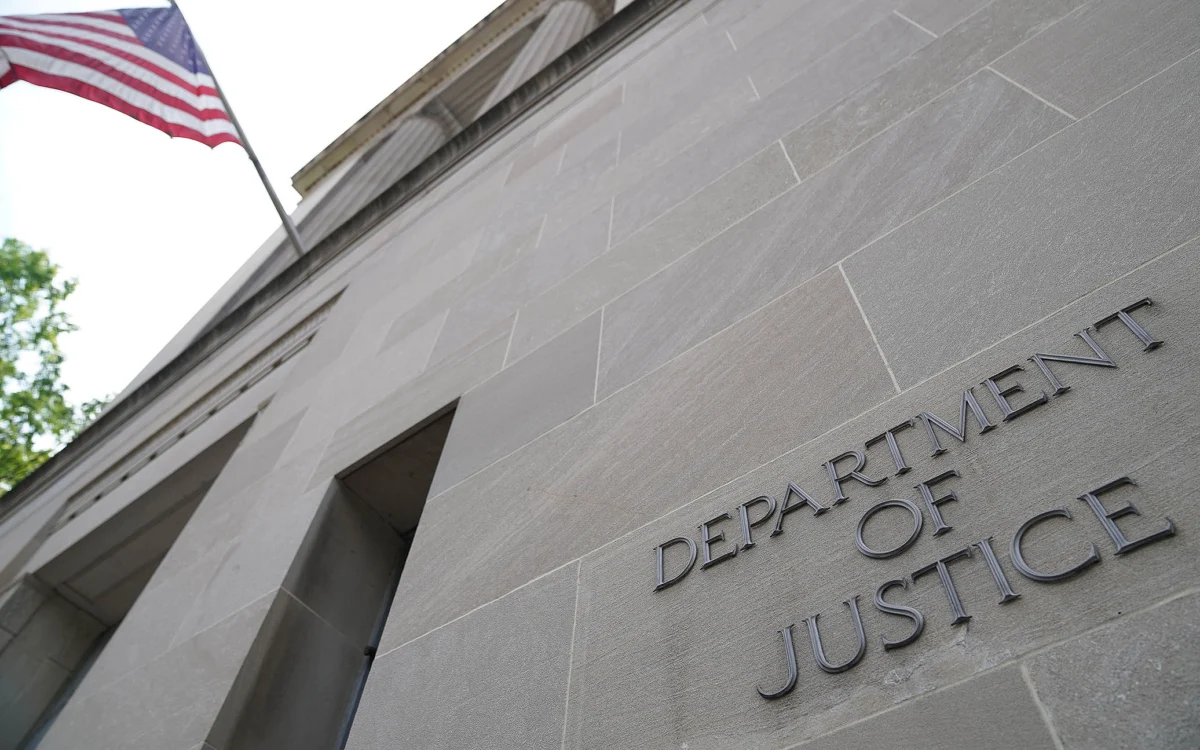
Washington D.C. – Federal officials are sending shockwaves through the disability rights community with a series of dramatic reversals on long-held legal positions concerning the right of people with disabilities to access home and community-based services. These actions, spearheaded by the U.S. Department of Justice (DOJ), are fueling widespread concerns among advocates and legal experts that the nation is at risk of regressing to an era of widespread institutionalization, where individuals with disabilities were often confined to facilities, isolated from society, and denied basic autonomy.
n
In recent weeks, the DOJ has not only withdrawn from a significant disability rights case but has also fundamentally altered its legal argument in another, signaling a potential paradigm shift that could profoundly impact the lives of thousands of people across the country. This unprecedented move is being interpreted as a direct challenge to the foundational principles established by the Americans with Disabilities Act (ADA) and the landmark 1999 Supreme Court decision, Olmstead v. L.C.
n
"These are very significant reversals of DOJ’s position, representing a profound departure from decades of established policy and legal precedent," stated Eve Hill, a civil rights attorney who previously served as deputy assistant attorney general for civil rights in the Obama administration. Hill voiced grave concerns, adding, "We are at risk of returning to the terrible conditions people with disabilities were forced to endure when they were locked away out of sight and out of mind, denied their fundamental right to live with dignity in their communities."
n
The Core of the Contention: Community Integration vs. Institutionalization
n
At the heart of this unfolding controversy lies the principle of community integration. For decades, disability rights advocacy has fought to ensure that individuals with disabilities have the option to live in the "most integrated setting appropriate to their needs," rather than being segregated in institutions. This principle is enshrined in federal law through the ADA and Section 504 of the Rehabilitation Act, and it was powerfully affirmed by the Supreme Court in Olmstead.
n
The Olmstead decision clarified that states are obligated to provide community-based treatment for persons with mental disabilities when such placement is appropriate, when the affected persons do not oppose it, and when the placement can be reasonably accommodated. This ruling was a monumental victory, shifting the legal landscape from one that implicitly accepted institutionalization to one that actively promoted community living. The DOJ, historically, has been a vigorous enforcer of this integration mandate, initiating and intervening in cases across the nation to ensure states comply with their Olmstead obligations.
n
However, the recent actions suggest a dramatic shift in this enforcement posture, threatening to dismantle the progress made and undermine the very foundation of community integration for people with disabilities.
n
A Troubling Chronology of Retreat
n
The current wave of concern began to crest with a pivotal internal memo and has since manifested in concrete legal maneuvers:
n
The OLC Memo: A Precursor to Change
n
The catalyst for these sweeping changes was a memo issued in June by the Justice Department’s Office of Legal Counsel (OLC). This memo asserted a startling new interpretation, claiming that neither the Americans with Disabilities Act nor Section 504 of the Rehabilitation Act "require states to treat mentally disabled patients in the most integrated setting appropriate to their needs."
n
This assertion directly contradicted established interpretations of Olmstead v. L.C., which clearly found that "states are required to provide community-based treatment for persons with mental disabilities" if certain conditions are met. Even more remarkably, the OLC memo itself acknowledged that its novel view of Olmstead "is out of step with the common understanding of that decision within the federal courts." This admission underscored the radical departure from established legal consensus.
n
Following the issuance of this memo, the Justice Department subsequently announced that it would no longer enforce its long-standing guidance on the ADA’s integration mandate and Olmstead. While an OLC memo does not legally alter the law itself, it represents the official legal position of the United States government and serves as a directive for federal agencies, including the DOJ, on how to interpret and enforce federal statutes. This shift in internal guidance has now translated into tangible actions in federal courts.
n
Florida Case: Abandoning Vulnerable Children
n
One of the most immediate and alarming manifestations of this new stance occurred last week when the Justice Department informed a federal appeals court in Florida of its intention to change its position in a critical case. This case involves the rights of children with complex medical needs to live and receive services at home, rather than being confined to nursing homes.
n
The Justice Department originally initiated the lawsuit against the state of Florida, advocating on behalf of these vulnerable children. Earlier this year, an appeals court upheld a lower court’s order, requiring the state to undertake significant measures to improve and expand community-based care options for children with severe disabilities. This ruling was a victory for the children and their families, affirming their right to live in the least restrictive environment.
n
Now, however, federal officials are asserting that the matter should be sent back to a lower court for reconsideration. Most troubling, the Justice Department explicitly stated its opposition to protections for children who are merely at risk of entering institutions. This represents a significant weakening of the integration mandate, as it ignores the preventive aspect of Olmstead – the idea that states must act to prevent unnecessary institutionalization, not just react to it after the fact.
n
Harmeet K. Dhillon, assistant attorney general for civil rights, articulated the DOJ’s new stance in the court filing, stating, "There is little reason to keep in place injunctive relief where, as here, the plaintiff no longer defends the legal theory on which the injunction was sought and based." This statement effectively declares the DOJ’s abandonment of the very legal theory it had previously championed.
n
Steward v. Abbot: Withdrawal from a Key Case
n
In a separate development this month, the Justice Department formally withdrew from Steward v. Abbot, a case initially brought by private plaintiffs. This case centers on the inappropriate placement of individuals with intellectual and developmental disabilities in nursing homes across Texas – a clear violation of the Olmstead mandate. The DOJ’s withdrawal leaves these private plaintiffs to carry the burden of litigation alone, without the significant resources and legal weight of the federal government.
n
Jennifer Mathis, who served as deputy assistant attorney general for the Justice Department’s Civil Rights Division under the Biden administration and is now deputy director at the Bazelon Center for Mental Health Law, anticipates further withdrawals. "We anticipate that DOJ will attempt to walk away from other Olmstead matters as well," Mathis warned. She pointed to "ominous" notices filed by the DOJ in cases where they have existing settlements with Maine and Rhode Island. These notices indicate that the DOJ’s findings in those cases had cited guidance that they are "no longer relying on." While the exact implications for these settlements remain unclear, the notices signal a potential unraveling of long-standing agreements aimed at ensuring community integration.
n
Texas v. Kennedy: The Looming Threat to Section 504 Regulations
n
Further anxieties are mounting regarding the federal government’s posture in Texas v. Kennedy, a multi-state lawsuit challenging a 2024 update to regulations related to Section 504 of the Rehabilitation Act. These updated regulations are crucial, requiring entities funded by the Department of Health and Human Services to provide services to people with disabilities in the most integrated setting appropriate. Critically, the rule also specifies that it can be a violation if people are placed at serious risk of unnecessary institutionalization, reinforcing the preventive aspect of Olmstead.
n
"If DOJ stops defending the rule, there may be no one left in the case arguing for the federal community-integration requirement," explained Michelle Uzeta, executive director of the Disability Rights Education & Defense Fund. The government is expected to file an update in that case by the end of the month, and disability advocates are holding their breath, understanding that the DOJ’s decision could effectively gut federal protections designed to keep people with disabilities out of institutions.
n
Supporting Data and the Erosion of Rights
n
The DOJ’s recent actions represent a significant departure from decades of legal interpretation and enforcement, threatening to roll back hard-won rights for people with disabilities. To understand the gravity of this shift, it’s essential to revisit the foundational legal frameworks at play.
n
The Americans with Disabilities Act (ADA) and Section 504
n
The ADA, enacted in 1990, is a comprehensive civil rights law that prohibits discrimination based on disability. Title II of the ADA specifically prohibits discrimination by state and local government entities, including the discriminatory segregation of individuals with disabilities in institutions when community-based alternatives are appropriate. Section 504 of the Rehabilitation Act of 1973 predates the ADA and prohibits discrimination on the basis of disability by recipients of federal financial assistance. Both laws form the bedrock of the integration mandate.
n
Historically, the DOJ has played a critical role in interpreting and enforcing these statutes, issuing guidance documents, conducting investigations, and filing lawsuits to ensure compliance. This federal oversight has been instrumental in driving systemic change, compelling states to develop and expand community-based services, and preventing the unnecessary institutionalization of individuals with disabilities. The withdrawal of the DOJ from this active enforcement role leaves a significant void.
n
The Spirit and Intent of Olmstead
The Olmstead v. L.C. decision was not merely a technical legal ruling; it was a profound affirmation of human dignity and civil rights. The Supreme Court recognized that "institutional placement of persons who can handle and benefit from community settings perpetuates unwarranted assumptions that persons so isolated are incapable or unworthy of participating in community life." The decision articulated a "strong preference" for community integration, emphasizing that "unjustified isolation is inherently discriminatory."
The DOJ’s current position, particularly its opposition to protecting individuals "at risk" of institutionalization, directly undermines the preventive spirit of Olmstead. The very purpose of the integration mandate is to empower individuals to live full lives in their communities, avoiding the trauma and limitations of institutionalization altogether. By narrowing the scope of protection, the DOJ risks creating a system where intervention only occurs once an individual is already in an institution, rather than proactively ensuring community access.
The Human Cost of Institutionalization
The debate over community integration is not abstract; it has profound human consequences. Before Olmstead and the robust enforcement of the ADA, millions of Americans with disabilities lived in state institutions, often facing neglect, abuse, and a complete lack of personal autonomy. These facilities were frequently characterized by:
- Isolation: Residents were cut off from families, friends, and the broader community.
- Lack of Personal Choice: Decisions about daily life – what to eat, when to sleep, what activities to pursue – were made by staff, not individuals.
- Limited Opportunities: Access to education, employment, and social engagement was severely restricted.
- Substandard Care: Many institutions were understaffed and underfunded, leading to poor health outcomes and human rights abuses.
The shift to community-based services has allowed countless individuals to live in their own homes, access personalized support, pursue education and employment, build relationships, and participate actively in civic life. A return to institutionalization would mean reversing this progress, condemning individuals to lives of isolation and dependency.
Economic Realities: Community Care vs. Institutions
Beyond the moral and legal arguments, there is a compelling economic case for community-based services. Numerous studies have demonstrated that, in many cases, providing support in community settings is more cost-effective than institutional care. While initial investments in community infrastructure and support systems are necessary, the long-term costs associated with large institutions – including staffing, facility maintenance, and overhead – often far exceed those of individualized, community-based programs. The DOJ’s shift could inadvertently lead to higher costs for states, even as it diminishes the quality of life for individuals with disabilities.
Official Responses and Deafening Silence
Justice Department officials have conspicuously declined to respond to requests for comment regarding their recent actions or to provide any clarity on what further changes might be on the horizon. This silence has only amplified concerns within the disability community, leaving advocates to speculate on the motivations behind these abrupt and far-reaching policy shifts.
The lack of official explanation for such a significant departure from established legal precedent and historical enforcement posture is itself a cause for alarm. It leaves the public, and especially the millions of Americans with disabilities and their families, without answers regarding the future of their civil rights.
Far-Reaching Implications for a Vulnerable Population
The implications of the Justice Department’s retreat are vast and multi-faceted, potentially impacting every aspect of life for people with disabilities across the United States.
Weakened Enforcement and Increased Burden on Individuals
Perhaps the most immediate and significant implication is the weakening of federal enforcement. The DOJ has historically been a powerful force for systemic change, capable of investigating entire state systems and compelling comprehensive reforms through litigation or settlement agreements. Its resources, legal expertise, and authority are unmatched by individual families or small non-profit organizations.
"For people with disabilities, the stakes are enormous," emphasized Michelle Uzeta. "Although Olmstead is still the law, the regulations remain in effect and disabled people can still bring cases in court, the Justice Department was uniquely positioned to investigate entire state systems and compel them to change. Individual families and small nonprofits simply cannot do that on the same scale."
Without the DOJ’s active involvement, the burden of upholding Olmstead and other disability rights laws will fall disproportionately on individuals, their families, and under-resourced advocacy groups. This will likely lead to a piecemeal approach to enforcement, with uneven outcomes across states and a higher barrier to justice for those seeking community integration.
A Chilling Effect on State Compliance
States, which are often under fiscal pressure, may interpret the DOJ’s withdrawal as a signal that federal oversight on Olmstead compliance is diminishing. This could lead to a slowdown, or even a reversal, in efforts to expand community-based services and transition individuals out of institutions. Without the threat of federal litigation or intervention, some states might deprioritize disability rights initiatives, potentially leading to increased institutionalization and decreased quality of life for residents.
Erosion of the Integration Mandate
The DOJ’s stance against protecting individuals "at risk" of institutionalization directly challenges the preventative nature of the Olmstead mandate. If this position prevails, it could narrow the scope of the integration mandate, forcing individuals and their advocates to wait until a person is already institutionalized before legal remedies can be sought. This "wait-and-see" approach fundamentally misunderstands the trauma and harm associated with unnecessary institutionalization and makes it significantly harder to uphold the spirit of Olmstead.
Impact on Other Civil Rights Areas
The precedent set by the DOJ’s actions in disability rights cases could also have broader implications for other civil rights protections. If the federal government demonstrates a willingness to abandon long-standing interpretations and enforcement roles in one area, it could embolden challenges to other civil rights statutes and regulations, potentially leading to a wider erosion of protections for various marginalized groups.
Uncertainty and Fear within the Disability Community
The uncertainty created by these shifts is generating significant fear and anxiety within the disability community. Families who have fought tirelessly to secure community-based services for their loved ones are now grappling with the possibility that these hard-won gains could be undone. The prospect of a return to an era of institutionalization is a terrifying thought for many, representing a threat to their autonomy, dignity, and fundamental human rights.
As the federal government continues to navigate this new legal landscape, the eyes of the nation’s disability community, civil rights advocates, and legal experts remain fixed on the Justice Department, awaiting further actions and explanations that could define the future of disability rights in America for decades to come. The stakes, as repeatedly emphasized by those on the front lines, could not be higher.

