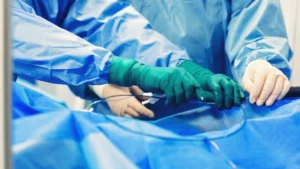
The landscape of modern healthcare is increasingly defined by miniaturization, precision, and the transition toward remote patient management. At the heart of this evolution lies a component often invisible to the naked eye but fundamental to the survival and quality of life of millions: ultra-fine medical-grade wire. Alleima, a global leader in advanced stainless steels and special alloys, has emerged as a pivotal force in this sector, providing the foundational technology for next-generation medical devices including continuous glucose monitors (CGMs), pacemakers, and neurostimulation systems. By bridging the gap between metallurgy and medicine, the Swedish-based company is enabling a new era of minimally invasive procedures and sophisticated home-based care.
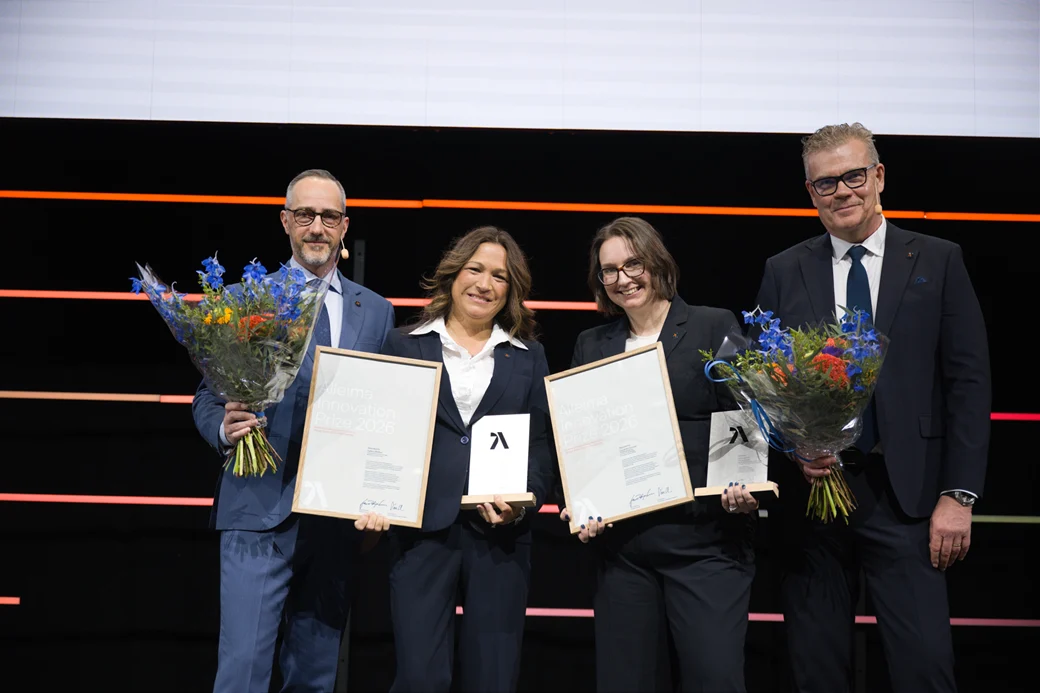
In a recent recognition of internal excellence, Alleima presented its prestigious annual Innovation Prize to a multidisciplinary team that has demonstrated exceptional prowess in product and process development. The 2026 award recipients—Cacie McDorman, Gary Davies, Timothy Tacionis, and Katina Whitten—represent the diverse expertise required to maintain a competitive edge in the highly regulated and technically demanding medical device manufacturing (MDM) market. Their collective work highlights the critical intersection of engineering, strategic business development, and workforce training in the pursuit of life-changing healthcare solutions.
The Critical Role of Precision Wire in Modern Diagnostics and Therapy
The demand for advanced medical wire is driven by the global rise in chronic conditions, particularly diabetes and cardiovascular diseases. According to recent healthcare data, the global continuous glucose monitoring market is projected to grow at a compound annual growth rate (CAGR) of over 10% through the end of the decade. This growth is mirrored by the increasing adoption of implantable cardioverter-defibrillators (ICDs) and neurostimulators used to treat chronic pain and neurological disorders such as Parkinson’s disease.
For these devices to function effectively, they require wire-based sensor-enabled components that can withstand the harsh environment of the human body while maintaining high electrical conductivity and mechanical integrity. As Cacie McDorman, PhD, Global Product Manager for Wire Technologies at Alleima, explains, the requirements for these wires are as varied as the applications themselves. In the context of a CGM, the wire must be thin enough to ensure patient comfort during insertion and wear, yet robust enough to provide accurate, real-time electrochemical feedback to the user’s smartphone or receiver. Conversely, for a pacemaker, the wire—often referred to as a "lead"—must possess extraordinary fatigue resistance to endure the constant motion of a beating heart, which can exceed 100,000 contractions per day.
Alleima’s ability to tailor materials—adjusting resistance, mechanical properties, biocompatible coatings, and form factors—allows original equipment manufacturers (OEMs) to push the boundaries of device design. This customization is essential as the industry moves toward "smarter" implants that do not just provide therapy but also collect and transmit data to clinicians, facilitating a "Hospital at Home" model that reduces the burden on traditional healthcare infrastructure.
A Chronology of Innovation and Strategic Expansion
The success of Alleima’s medical business unit is the result of decades of specialized development. While Alleima became an independent entity following its spin-off from Sandvik in 2022, its heritage in materials science spans over 160 years. This historical foundation has allowed the medical unit to scale rapidly in response to the technological shifts of the 21st century.
Over the past five years, the medical unit has faced an unprecedented surge in demand. This period saw the company transition from a traditional materials supplier to a strategic partner for global medical OEMs. The timeline of this evolution is marked by significant investments in both "greenfield" projects—starting new operations from the ground up—and inorganic growth through strategic acquisitions. This expansion has resulted in a global footprint with engineering and production facilities located in five different countries, ensuring a resilient supply chain for critical healthcare components.
Gary Davies, Vice President of Strategic Business Development, has been a key architect of this growth during his 24-year tenure. His career path from R&D and quality control to strategic leadership reflects the company’s internal philosophy of deep technical integration. By focusing on unique material solutions, Davies and his team have enabled the commercialization of devices that were once considered theoretical, such as advanced brain-computer interfaces (BCIs) and robotic surgical tools that require high-strength, micro-diameter cables to navigate complex anatomical structures.
Engineering the Human Interface: Challenges and Solutions
The engineering challenges inherent in medical wire production are immense. When dealing with wires measured in fractions of a millimeter—often thinner than a human hair—the margin for error is non-existent. The 35-strong engineering team at Alleima must account for factors such as biocompatibility (ensuring the body does not reject the material), radiopacity (ensuring the wire is visible under X-ray or fluoroscopy), and signal integrity.
The Innovation Prize awarded to McDorman, Tacionis, and their colleagues underscores the complexity of these tasks. Lead Engineer Timothy Tacionis has been instrumental in refining the manufacturing processes that allow for the mass production of these delicate components without sacrificing the rigorous quality standards mandated by regulatory bodies like the FDA and EMA.
The team’s work often involves the use of exotic alloys and multi-filar configurations, where multiple strands of different metals are braided or coiled together to achieve a specific balance of properties. For instance, a silver core might be used for high conductivity, encased in a stainless steel or MP35N jacket for strength and corrosion resistance. Such innovations are the silent enablers of neurostimulation systems that help paralyzed patients regain movement or chronic pain sufferers find relief without the need for opioid-based medications.
Human Capital and the Scaling of Quality
As demand for medical technology increases, the bottleneck often shifts from raw material availability to human expertise. Katina Whitten, Training and Development Manager at Alleima, emphasizes that scaling production is as much about people as it is about machinery. Having spent three decades with the organization across various departments including supply chain and human resources, Whitten has spearheaded the effort to build a workforce capable of meeting the stringent requirements of the medical sector.
Maintaining quality during a period of rapid scaling requires a culture of continuous learning and precision. The "Alleima Way" involves cross-functional collaboration where production managers work in tandem with sales and engineering to ensure that the voice of the customer is integrated into every stage of the manufacturing process. This focus on human capital is a strategic differentiator in an industry where specialized knowledge in micro-drawing and coating is rare.
"What motivates me is knowing that the products we make have a real and positive impact on people’s lives," Whitten stated, echoing a sentiment shared by the entire award-winning team. This mission-driven approach is vital for retaining talent in a competitive global market and ensures that every employee understands the life-critical nature of the components they produce.
Future Horizons: BCI, Robotics, and Integrated Sensors
Looking toward the future, Alleima identifies several key trends that will redefine the medical wire market. The first is the rise of the Brain-Computer Interface (BCI). Companies like Neuralink and various academic spin-offs are developing implants that require thousands of individual electrodes to record neural activity. These electrodes rely on ultra-fine, highly conductive wires that must be flexible enough to move with the brain’s natural pulsations while remaining stable for years or even decades.
Secondly, the shift toward robotic surgery is increasing the demand for high-performance cables that can transmit power and data to robotic "wrists" and effectors with zero latency. These cables must withstand millions of flex cycles as the robot performs intricate maneuvers inside the patient’s body.
Finally, the trend toward "data-rich" healthcare means that standard medical devices are becoming increasingly sensor-heavy. Future pacemakers and stents may incorporate sensors that monitor blood pressure, oxygen levels, or local inflammation, all of which will require sophisticated wiring to relay information back to a central processor.
Conclusion: The Broader Impact of Material Science
The work of McDorman, Davies, Tacionis, and Whitten illustrates that the "miracles" of modern medicine are often built on a foundation of rigorous material science and industrial discipline. While the patient sees only a small patch for a CGM or a tiny scar from a pacemaker implantation, the underlying technology represents a triumph of engineering.
By continuing to invest in innovation and workforce development, Alleima is not merely keeping pace with the medical device industry but is actively shaping its trajectory. The implications of this work extend beyond corporate success; they represent a fundamental shift in how chronic diseases are managed, moving away from reactive hospital-based interventions toward proactive, data-driven, and patient-centric care. As medical devices continue to shrink in size and grow in capability, the role of the ultra-fine wire will remain a cornerstone of global healthcare advancement, proving that in the world of medical innovation, the smallest components often make the greatest difference.