The completion of patient enrollment in the Venus-PowerX PREVAILS study marks a significant milestone for Venus Medtech, a global leader in transcatheter heart valve solutions, as it seeks to solidify its presence in the competitive structural heart disease market. This confirmatory clinical trial is a pivotal step toward securing regulatory approvals for the Venus-PowerX transcatheter aortic valve replacement (TAVR) system in both China and Europe. By focusing on the safety, efficacy, and device performance of this next-generation technology, the study addresses the critical needs of patients suffering from severe aortic stenosis, a condition that remains a leading cause of cardiovascular morbidity and mortality among the elderly.
The Venus-PowerX system represents a technological leap in the field of interventional cardiology. It is recognized as the world’s first self-expanding dry-valve TAVR device that offers both full release and complete retrieval capability after total deployment. This feature is particularly significant, as it provides clinicians with unprecedented control during the valve implantation process, allowing for repositioning or removal if the initial placement is not optimal. The PREVAILS study, a multi-center, prospective, objective performance criterion (OPC), single-arm trial, is meticulously designed to provide the robust clinical evidence required by the National Medical Products Administration (NMPA) in China and for CE marking in the European Union.
Technical Innovation and Clinical Advantages of the Venus-PowerX
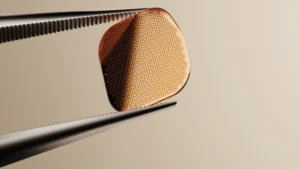
The Venus-PowerX distinguishes itself through several key engineering advancements. Central to its design is the "dry-valve" technology. Traditional TAVR valves are often stored in a glutaraldehyde solution, requiring a meticulous rinsing process in the operating room before they can be implanted. In contrast, dry-valve technology allows the device to be pre-packaged and ready for use, streamlining the surgical workflow and reducing the potential for preparation errors. Furthermore, dry-tissue technology is associated with improved durability and reduced calcification, potentially extending the lifespan of the prosthetic valve.
The most transformative aspect of the Venus-PowerX, however, is its "fully controllable" deployment mechanism. In standard TAVR procedures, once a valve is released beyond a certain point (the "point of no return"), it cannot be pulled back or repositioned. If the valve is misplaced, it can lead to complications such as paravalvular leak (PVL), coronary artery obstruction, or interference with the heart’s electrical conduction system, often necessitating the permanent placement of a pacemaker. The Venus-PowerX’s ability to be fully retrieved even after total deployment allows the operator to assess the valve’s function and position with 100% confidence before final release.
Ma Renzheng, Chief Technology Officer of Venus Medtech, emphasized the importance of this control, stating that the company is committed to advancing structural heart interventions from "partially controllable" to "fully controllable" at every stage of the procedure. This shift is expected to lower the threshold for TAVR adoption among less experienced operators and improve outcomes in complex patient anatomies.
The Global Burden of Severe Aortic Stenosis
The urgency behind the development of the Venus-PowerX is driven by the growing prevalence of aortic stenosis (AS). Aortic stenosis occurs when the heart’s aortic valve narrows, preventing the valve from opening fully. This obstructs blood flow from the left ventricle into the aorta and the rest of the body. When the stenosis becomes severe, the heart must work significantly harder to pump blood, eventually leading to heart failure and death if left untreated.
Clinical data suggests that the prognosis for symptomatic severe AS is poor, with a survival rate of only 50% at two years and 20% at five years without surgical or transcatheter intervention. While surgical aortic valve replacement (SAVR) was long the gold standard, TAVR has emerged over the last decade as a preferred alternative, particularly for patients deemed at high or intermediate risk for open-heart surgery. As clinical evidence grows, TAVR is increasingly being utilized for low-risk patients as well.
In China, the aging population has led to a surge in AS cases. Market analysts estimate that millions of elderly Chinese citizens suffer from some form of valvular heart disease, yet the penetration rate of TAVR remains relatively low compared to Western markets. By completing the enrollment for the Venus-PowerX trial, Venus Medtech is positioning itself to capture a larger share of this expanding market while offering a solution that minimizes the risks associated with the procedure.
Chronology of Development and International Expansion
Venus Medtech’s journey with the Venus-PowerX system has been characterized by a strategic "global-first" approach. Before focusing on the confirmatory trials in China and Europe, the company sought and obtained regulatory approvals in South American markets.

- Initial Research and Development: Leveraging R&D centers in China, Israel, and the United States, Venus Medtech developed the dry-valve and retrieval technology over several years, focusing on overcoming the limitations of first-generation TAVR devices.
- South American Commercialization: The Venus-PowerX obtained regulatory approvals in Argentina, Chile, and Venezuela. It is currently available commercially in these regions, providing a steady stream of real-world clinical data.
- Real-World Data Integration: Venus Medtech has been actively using performance data from South America to refine its training protocols and support its regulatory submissions in other jurisdictions. This real-world evidence complements the controlled environment of the PREVAILS study.
- US Market Progress: In June 2024, the company made headlines by completing the first implantation of its VenusP-Valve system in the United States as part of the PROTEUS investigational device exemption (IDE) pivotal clinical study. While the VenusP-Valve is designed for the pulmonary position, its progress in the US underscores the company’s capability to navigate the rigorous FDA regulatory pathway.
- Completion of PREVAILS Enrollment: The recent announcement regarding the Venus-PowerX PREVAILS study in China signifies the final push toward large-scale commercialization in the world’s most populous regions.
Supporting Data and Study Design
The PREVAILS study is not merely a safety trial; it is a comprehensive assessment of how a "fully controllable" system performs across diverse clinical settings. As an objective performance criterion (OPC) study, the results will be compared against established benchmarks for TAVR performance rather than a randomized control group. This methodology is often used for high-risk medical devices where the standard of care is well-documented.
The study tracks several primary and secondary endpoints, including:
- All-cause mortality: Assessing survival rates at 30 days and one year.
- Stroke incidence: Monitoring for neurological complications, which are a major concern in TAVR.
- Paravalvular Leak (PVL): Measuring the effectiveness of the valve seal to prevent blood from leaking around the edges of the prosthetic.
- Device Success: Defined by the successful delivery and placement of the valve with intended functional performance.
- Pacemaker Implantation Rates: Evaluating whether the retrievability and precise placement of the Venus-PowerX reduce the need for permanent pacemakers.
Early data from the South American cohorts and pilot studies have suggested that the Venus-PowerX maintains a high level of hemodynamic performance, with low pressure gradients across the valve and minimal leakage.
Broader Impact on the Medical Device Industry
The completion of enrollment for the Venus-PowerX trial is a signal to the global medical device industry that Chinese innovation is moving beyond "fast-follower" status to "first-in-class" breakthroughs. For years, the TAVR market has been dominated by multinational giants such as Edwards Lifesciences and Medtronic. However, Venus Medtech’s introduction of the first self-expanding dry-valve with full retrievability places it at the forefront of the next wave of structural heart technology.
The move toward dry-valve technology is expected to influence future product pipelines across the industry. As hospitals look to optimize logistics and reduce costs, devices that offer easier storage and faster preparation will have a competitive advantage. Furthermore, the emphasis on "full controllability" is likely to become a standard requirement for next-generation TAVR systems, as the medical community strives to achieve "zero-complication" procedures.
Future Outlook and Regulatory Timeline
With the enrollment phase complete, the focus now shifts to the follow-up period and data analysis. The results from the PREVAILS study will be instrumental in the submission of a Premarket Approval (PMA) application to the NMPA in China. Simultaneously, the data will form the backbone of the clinical evaluation report required for CE marking under the European Union’s Medical Device Regulation (MDR).
If approved, the Venus-PowerX will join Venus Medtech’s existing portfolio, which includes the VenusA-Valve (the first TAVR device approved in China) and the VenusP-Valve (the first self-expanding transcatheter pulmonary valve approved in Europe and China). This comprehensive suite of products positions the company as a total solution provider for valvular heart disease.
The success of the Venus-PowerX also has implications for the broader adoption of TAVR in developing healthcare systems. By providing a device that is more "forgiving" and easier to deploy accurately, Venus Medtech may facilitate the expansion of TAVR programs in hospitals that currently lack the high-volume experience typically required for successful outcomes with older-generation devices.
In conclusion, the conclusion of patient enrollment for the Venus-PowerX confirmatory trial is a watershed moment for Venus Medtech. It represents the culmination of global collaborative R&D and a bold step toward redefining the standard of care for aortic stenosis. As the medical world awaits the final results of the PREVAILS study, the Venus-PowerX stands as a testament to the potential of advanced engineering to improve patient safety and clinical precision in the high-stakes field of structural heart intervention.