Science Corporation, a leading developer of brain-computer interface (BCI) technology, has officially announced the commercial launch of its Prima system in Europe following the receipt of a CE mark from the notified body DEKRA. Granted under the European Union’s Medical Device Regulation (MDR), this regulatory milestone authorizes the use of the Prima implant across 30 European countries, marking a transformative moment for the field of ophthalmology and neural engineering. The Prima system is recognized as the first BCI device capable of restoring functional central vision in patients suffering from geographic atrophy (GA), an advanced form of age-related macular degeneration (AMD) that has historically been considered untreatable.
The authorization follows a rigorous review of clinical data and manufacturing standards, positioning Science Corporation at the forefront of the commercial BCI market. For millions of individuals whose lives have been upended by the progressive loss of central vision, the Prima system offers a pathway to regaining independence. The device is specifically engineered for those who have lost the ability to perform essential daily tasks, such as reading, recognizing faces, and navigating environments safely. With the CE mark in hand, Science Corporation has confirmed that country-specific reimbursement applications and clinical site activations are already underway, with Germany expected to host the first commercial surgical implantation in the near future.
Understanding Geographic Atrophy and the Limitations of Current Care
To appreciate the significance of the Prima system, one must understand the devastating impact of geographic atrophy. GA is the "dry" or non-exudative form of advanced age-related macular degeneration, affecting more than five million people globally. It is characterized by the gradual and irreversible destruction of photoreceptors in the macula—the central portion of the retina responsible for sharp, detailed vision.
As these light-sensing cells die, patients develop expanding "blind spots" known as scotomas. These spots occur directly in the center of the field of vision, making it impossible to see what is directly in front of the eye. While peripheral vision often remains intact, the loss of central vision prevents patients from reading books, viewing digital screens, or identifying the features of loved ones. Until recently, pharmaceutical interventions for GA were limited to slowing the progression of the disease rather than restoring lost function. The Prima system represents a shift from "slowing decay" to "active restoration," utilizing neural stimulation to bypass damaged biological components.
The Technical Architecture of the Prima System
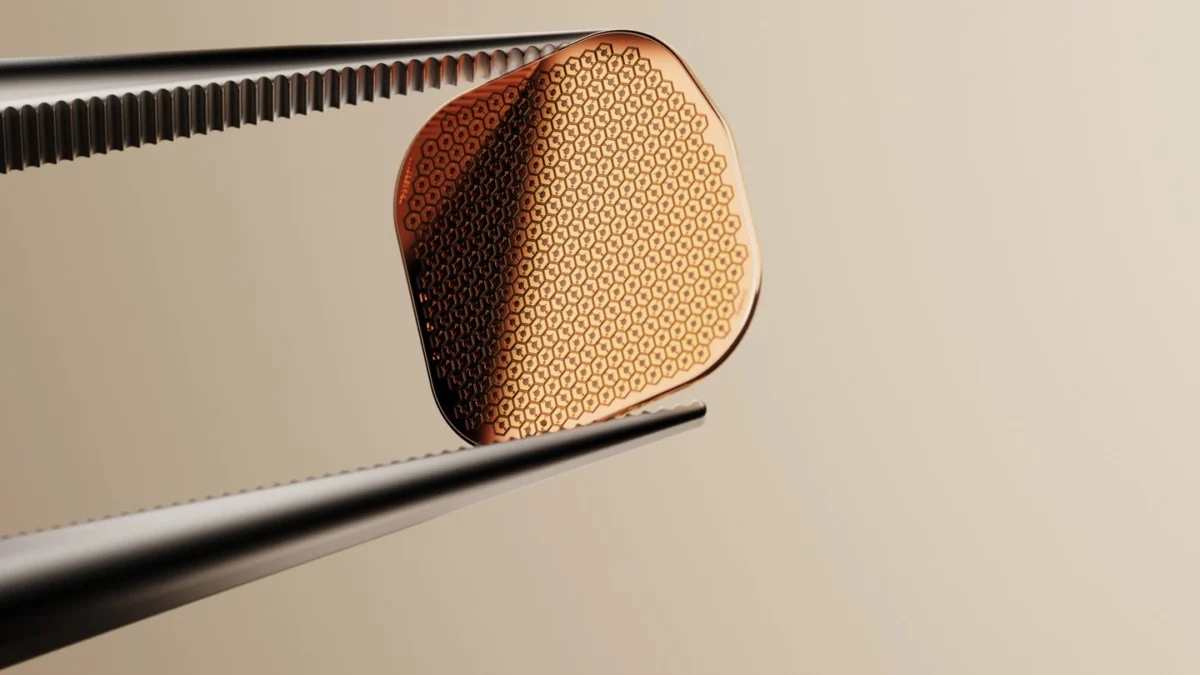
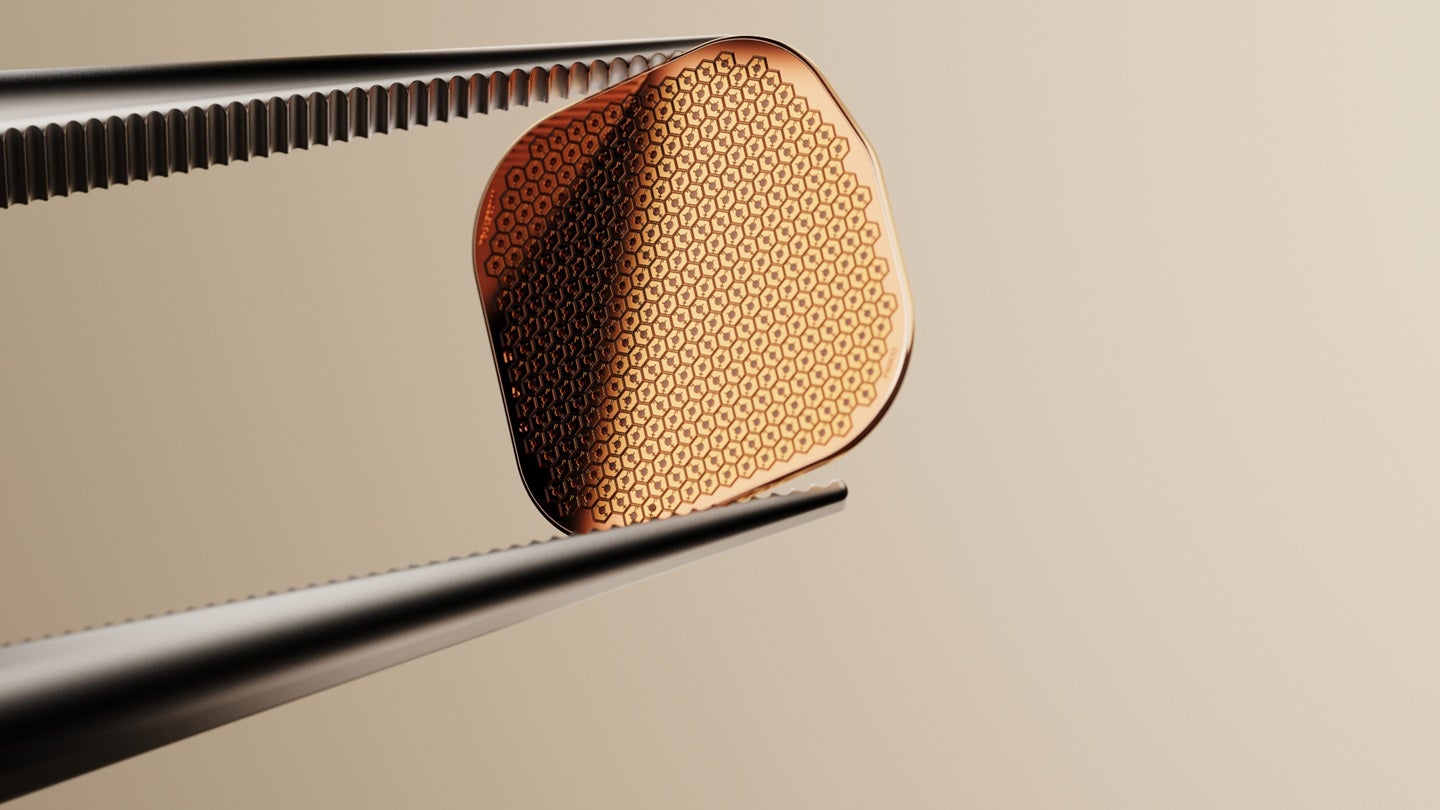
The Prima device is a sophisticated bionic vision system that utilizes a subretinal photovoltaic implant. Unlike earlier generations of retinal prosthetics that required bulky external wiring or complex surgeries, the Prima implant is a tiny, wireless chip—measuring approximately 2 millimeters square and 30 microns thick—that is surgically placed beneath the atrophic macula.
The system operates through a three-part mechanism:
- The Subretinal Implant: This chip contains 378 independent light-sensing pixels. Each pixel acts as a tiny solar cell that converts light into electrical pulses.
- Augmented Reality Glasses: The patient wears a specialized pair of glasses equipped with a high-resolution camera and a near-infrared digital projector.
- Visual Processing: The camera captures the patient’s surroundings, and the internal processor converts these images into near-infrared light patterns. These patterns are then projected onto the implant in the back of the eye.
When the infrared light hits the photovoltaic pixels, they generate electrical stimulation that triggers the remaining healthy neurons in the retina (the bipolar and ganglion cells). These neurons transmit the visual information to the brain via the optic nerve, allowing the user to perceive patterns of light and shape. Notably, the glasses feature a magnification function, which allows patients to "zoom in" on text or objects, further enhancing their ability to recognize fine details that were previously lost to the disease.
Clinical Validation: The PRIMAvera Study Results
The CE mark was granted based on the compelling results of the PRIMAvera multi-center pivotal trial. This study involved 38 participants across 17 clinical locations in five countries, including France, Germany, the United Kingdom, the Netherlands, and Italy. The primary objective was to evaluate the safety and efficacy of the system in patients with end-stage GA who had no other treatment options.
The results, which were statistically significant at p<0.001, demonstrated a profound improvement in visual function:
- Letter Recognition: On average, patients experienced an improvement of 25.5 letters on the ETDRS (Early Treatment Diabetic Retinopathy Study) chart. This translates to more than five full lines of improvement, a level of gain rarely seen in vision restoration trials.
- Functional Success: Approximately 84% of study participants regained the ability to recognize letters, numbers, and words that were previously invisible to them.
- Significant Gains: 80% of patients achieved a gain of at least logMAR 0.2 (equivalent to 10 letters or two lines) after 12 months of using the device.
- Safety Profile: A critical finding of the study was that the implantation procedure did not lead to a decline in the patients’ remaining natural peripheral vision. This is essential for GA patients, as they rely heavily on their peripheral sight for spatial orientation.
The Strategic Acquisition of Pixium Vision Assets
The commercial launch of Prima is also a story of strategic corporate maneuvering. In April 2024, Science Corporation—founded by Max Hodak, the former president and co-founder of Neuralink—announced the acquisition of the intellectual property and clinical assets of Pixium Vision. Pixium, a French bioelectronics company, had been the original developer of the Prima technology but faced financial headwinds that threatened the future of the project.
Science Corporation’s acquisition ensured that the years of research and clinical progress made by Pixium would not be lost. By integrating the Prima technology into its own portfolio, Science Corporation has diversified its approach to brain-computer interfaces. While many BCI companies focus on high-bandwidth cortical implants for paralysis or communication, Science Corporation has successfully brought a sensory-focused BCI to the commercial market, proving the viability of neural interfaces for sensory restoration.
Global Regulatory Outlook and the Path to the US Market
While the CE mark opens the doors to the European market, Science Corporation is also making significant strides in the United States. The Prima system has already received Breakthrough Device Designation and Humanitarian Use Device (HUD) designation from the U.S. Food and Drug Administration (FDA). These designations are reserved for medical devices that provide for more effective treatment of life-threatening or irreversibly debilitating diseases and allow for an expedited review process.
The company is currently in active discussions with the FDA regarding the pathway for market access in the U.S. Given the high prevalence of AMD in the aging American population, the demand for the Prima system is expected to be substantial. The successful clinical outcomes from the European PRIMAvera trial will likely serve as a foundational component of the company’s Premarket Approval (PMA) application to the FDA.
Implications for the Future of Neural Engineering
The commercialization of the Prima system is a landmark event for the broader medical technology industry. It represents one of the first instances where a sophisticated neural interface has transitioned from a laboratory concept to a regulated, commercially available medical product.
Industry analysts suggest that the success of Prima could catalyze further investment in the BCI sector, particularly in applications targeting the peripheral nervous system and sensory organs. Furthermore, the integration of wireless photovoltaic technology sets a new standard for implant design, reducing the risk of infection and mechanical failure associated with transcutaneous wires.
For patients, the implication is a restoration of autonomy. The ability to read a letter, recognize a grandchild’s face, or view a menu at a restaurant is not merely a clinical metric; it is a profound improvement in quality of life. As Science Corporation begins its rollout in Germany and expands across the 30-nation European economic area, the medical community will be watching closely to see how the device performs in real-world clinical settings.
The journey of the Prima system—from its origins at Pixium Vision to its commercial birth under Science Corporation—highlights the complex but rewarding path of medical innovation. With the first commercial surgeries imminent, the era of functional vision restoration for geographic atrophy has officially begun, offering a new horizon for millions living in the shadow of blindness.