
The intersection of metabolic medicine and digital health has reached a critical turning point. As the pharmaceutical industry continues to roll out a new generation of highly effective obesity medications—specifically GLP-1 receptor agonists—the delivery of care is moving beyond the pharmacy counter and into the palm of the patient’s hand.
n
Recent research released by the Obesity Action Coalition (OAC), coupled with a landmark final guidance from the U.S. Food and Drug Administration (FDA), has placed "prescription companion apps" under a national spotlight. These digital tools, designed to accompany specific prescription drugs, promise to revolutionize treatment adherence and symptom management. However, as the OAC’s findings suggest, the success of these tools depends less on their technical sophistication and more on their alignment with patient needs, privacy expectations, and the desire for medical autonomy.
n
Main Facts: The Rise of the Prescription Companion App
n
In the current healthcare landscape, a "prescription companion app" is defined as a software application designed to support a patient’s journey with a specific medication. Unlike general wellness or fitness apps, these tools are often developed or sponsored by pharmaceutical companies to assist with the complexities of modern treatment regimens.
n
For patients treating obesity, these apps serve several functions:
n
- n
- Dosing and Titration Schedules: Helping patients manage the incremental dosage increases common in obesity medications.
- Symptom Tracking: Recording gastrointestinal side effects or other physiological responses to provide data for healthcare providers.
- Educational Support: Offering clear instructions on how to administer injectable medications.
- Data Integration: Syncing with scales or wearable devices to provide a holistic view of a patient’s metabolic health.
n
n
n
n
n
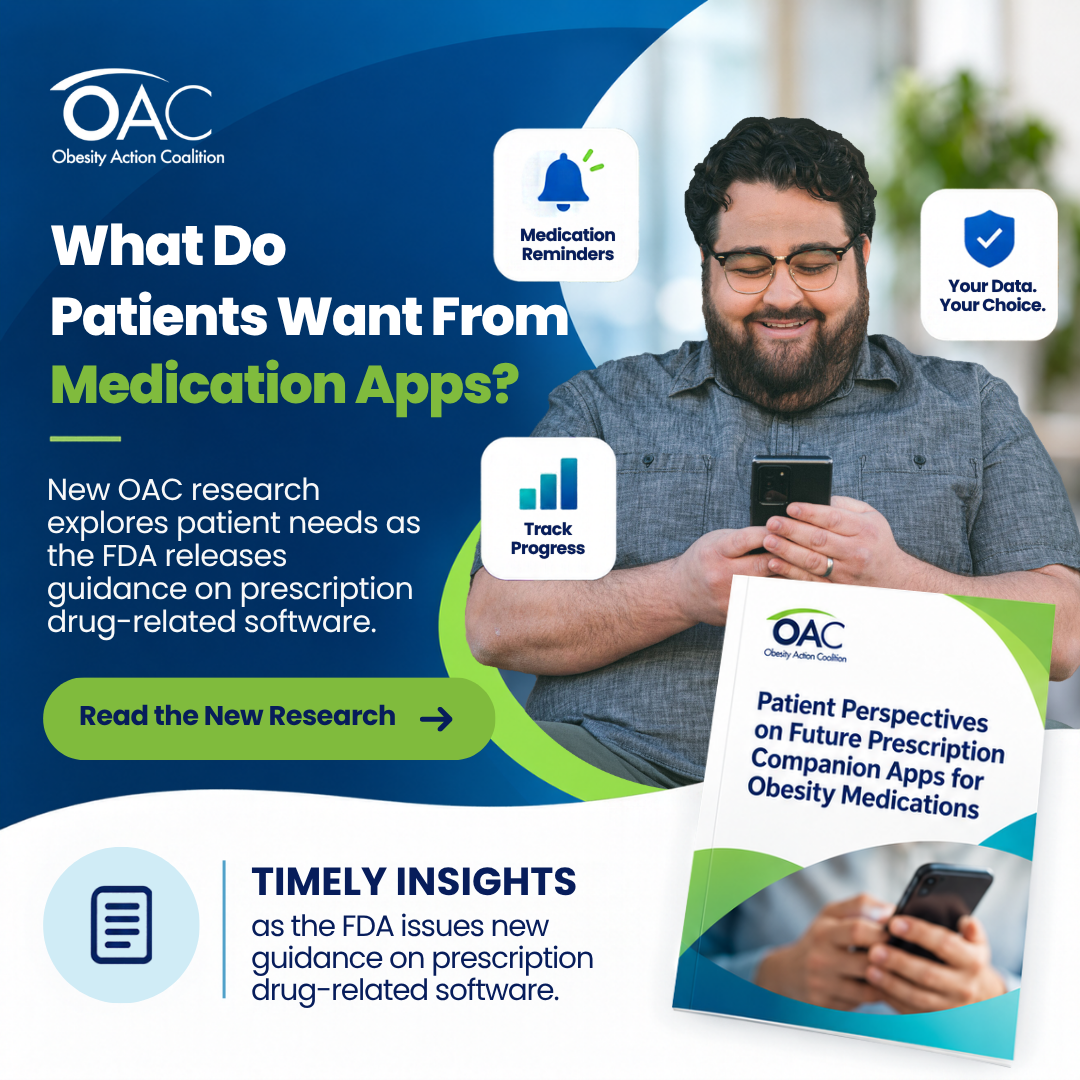
The OAC’s latest report underscores a fundamental shift: while technology offers the potential for enhanced care, there is a growing demand for these tools to be regulated, transparent, and—above all—optional. The core of the OAC’s research reveals that 90% of patients prioritize clear instructions above all other features, while nearly 90% demand rigorous data privacy and control over what information is shared with their clinical teams.
n
Chronology: From Simple Trackers to Regulated Medical Software
n
The evolution of digital health tools in obesity care has moved rapidly over the last decade, transitioning from unregulated novelty to a central component of the therapeutic ecosystem.
n
2010–2018: The Era of General Wellness
n
Early digital tools for weight management were largely consumer-facing apps like MyFitnessPal or Lose It!. These focused on caloric tracking and exercise logs. While popular, they were disconnected from clinical prescriptions and lacked the rigorous oversight of medical regulatory bodies.
n
2019–2023: The GLP-1 Revolution and "Pharma-Digital" Integration
n
With the FDA approval of medications like Wegovy and Zepbound, the complexity of obesity treatment increased. These drugs require specific injection techniques and careful monitoring of side effects. Pharmaceutical companies began developing proprietary "companion" software to ensure patients remained "on-therapy."
n
Late 2024: The FDA and OAC Intervene
n
In September and October 2024, the landscape shifted from "optional innovation" to "regulated reality." The FDA released its final guidance on "Prescription Drug Use-Related Software" (PDURS), clarifying how apps that are essential to a drug’s use must be labeled and reviewed. Simultaneously, the OAC conducted its survey of 133 adults to provide the first comprehensive look at patient sentiment regarding this new digital frontier.
n
Supporting Data: What Patients Actually Want
n
The OAC research provides a data-driven roadmap for developers and policymakers. The survey of 133 adults highlights a sophisticated patient population that is both tech-savvy and cautious.
n
The Priority of Information and Safety
n
- n
- 90% Demand Instruction Clarity: The highest-rated need was for clear, accessible medication instructions. In the context of obesity care, where many medications are self-injected, the risk of "use errors" is high. Patients view the app primarily as a safety manual.
- 86% Value FDA Oversight: A significant majority stated that whether an app had undergone FDA review would directly influence their decision to use it. This suggests that the "FDA-cleared" or "FDA-approved" label carries immense weight in establishing trust in a crowded digital market.
n
n
n
The Privacy Mandate
n
- n
- 89% Require Data Transparency: Patients are increasingly wary of how their health data is monetized or shared. The OAC found that nearly 9 in 10 patients want an explicit, plain-English explanation of data privacy before they even download a companion app.
- 89% Demand Granular Control: Patients do not want an "all-or-nothing" approach to data sharing. They want the ability to choose which specific data points (e.g., weight, side effects, or heart rate) are shared with their doctors and which remain private.
The "App Fatigue" Factor
Perhaps the most telling data point from the OAC research is the qualitative feedback regarding "over-digitalization." A significant portion of respondents expressed concern over:
- Notification Overload: Too many "pings" or reminders can lead to user burnout.
- Burden of Tracking: If an app requires more effort to maintain than the benefit it provides, patients are likely to abandon both the app and, potentially, the treatment consistency.
Official Responses: Regulatory and Advocacy Perspectives
The dual release of the OAC research and the FDA guidance represents a pincer movement aimed at improving the quality of digital health.
The FDA’s Regulatory Stance
The FDA’s final guidance on Prescription Drug Use-Related Software (PDURS) distinguishes between software that is merely "promotional" and software that is "required" for the safe and effective use of a drug.
- Labeling and Oversight: If a companion app provides information that is essential to the drug’s use, it may be considered part of the drug’s labeling. This means the content is subject to the same rigorous standards as the printed pamphlet that comes with a prescription.
- Safety Monitoring: The FDA guidance ensures that drug companies cannot bypass safety disclosures by hiding them within an app’s interface. It mandates a level of consistency between the digital experience and the clinical evidence.
The OAC’s Advocacy Position
The Obesity Action Coalition has taken a firm stand: technology must serve the patient, not the other way around. "New technology can offer helpful features, but those features should fit the needs of the people using them," the OAC stated in their summary. Their position is that digital tools should be an option that enhances the patient-provider relationship, rather than a barrier or a forced requirement for accessing medication.
Implications: The Future of Digital Obesity Care
The findings from the OAC and the new directives from the FDA have profound implications for the future of obesity medicine, healthcare equity, and the "MedTech" industry.
1. The End of "Wellness Wash" in Pharma Apps
For years, pharmaceutical companion apps operated in a gray area, often appearing more like marketing tools than medical devices. The new FDA guidance, backed by patient demand for "FDA review" (as seen in the OAC data), will likely force a consolidation in the market. Only apps that provide genuine clinical value and meet high regulatory bars will survive the scrutiny of both the government and the consumer.
2. Personalization vs. Privacy
The 89% of patients demanding control over their data signals a coming "privacy war" in digital health. As obesity medications become some of the most prescribed drugs in history, the data generated by companion apps becomes incredibly valuable. Companies will need to build "Privacy by Design" into their software—allowing patients to toggle sharing permissions—or risk low adoption rates.
3. Addressing the Digital Divide
While the OAC research focused on adults interested in these tools, a significant implication remains for those who are not tech-literate or lack access to high-speed internet. If companion apps become the primary way to receive instructions or report side effects, there is a risk of further marginalizing underserved populations. The OAC’s finding that "not everyone wants another app" is a vital reminder that physical, human-led care must remain the gold standard.
4. Enhancing the Doctor-Patient Relationship
If designed correctly, these apps can bridge the gap between doctor visits. Instead of a patient trying to remember a month’s worth of side effects during a 15-minute appointment, the app can provide a data-driven "snapshot." This allows for more informed clinical decisions and potentially faster adjustments to treatment plans.
Conclusion: A Patient-Centered Path Forward
The "digitalization" of obesity care is inevitable, but its success is not. The research from the Obesity Action Coalition serves as a sobering reminder that innovation without empathy is often rejected by the very people it is meant to help. Patients are asking for the basics: clarity, privacy, and the right to choose.
As the FDA continues to refine its oversight of medical software, the industry must look to the OAC’s findings as a blueprint. The future of obesity care lies in a hybrid model—one where powerful medications are supported by smart, secure, and non-intrusive digital tools that empower patients rather than overwhelming them.
The OAC’s message is clear: The future of digital obesity care must include patient voices. As we move into 2025 and beyond, the measure of a "good" health app will not be its feature list, but its ability to respect the autonomy and privacy of the person behind the screen.

