
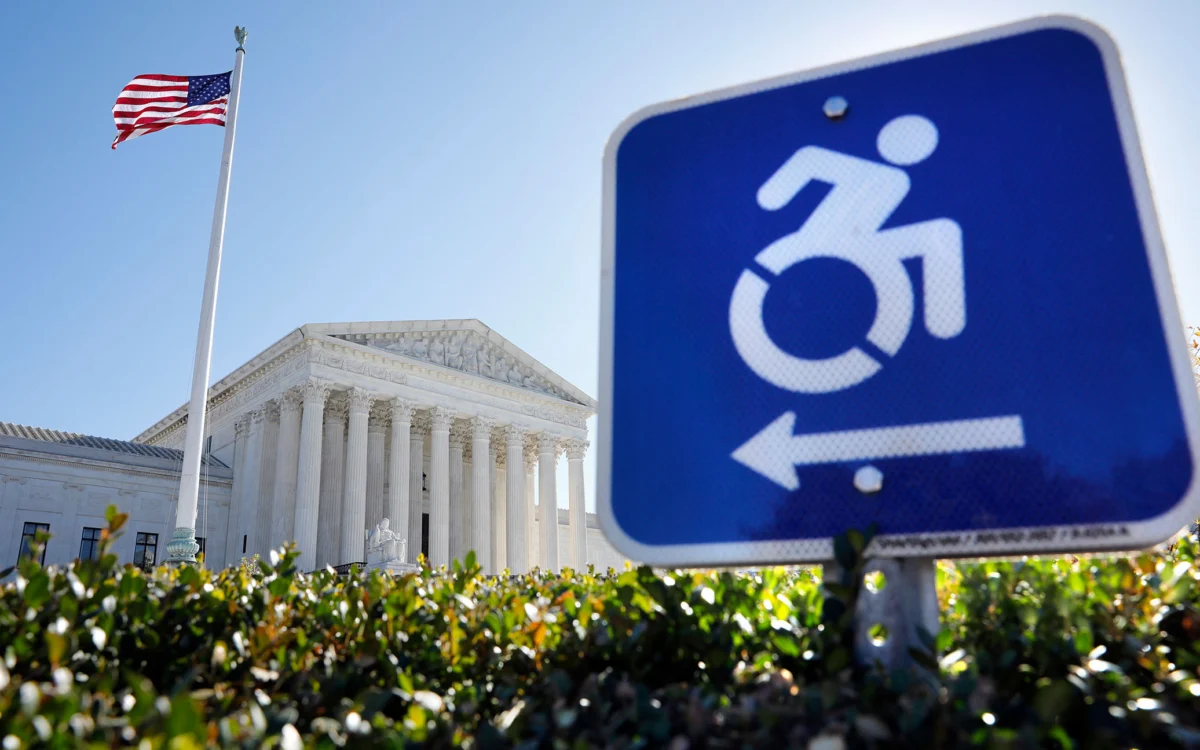
Washington, D.C. – The U.S. Supreme Court is poised to hear a case next week that disability advocates across the nation warn could fundamentally undermine decades of hard-won civil rights for individuals with disabilities. The matter, titled St. Mary Catholic Parish v. Roy, pits religious schools in Colorado against the state’s universal preschool program, with implications extending far beyond early childhood education to the very interpretation of anti-discrimination laws.
n
At its core, the case questions the extent to which states can impose non-discrimination requirements on private religious institutions that choose to receive public funding. While the plaintiffs, a consortium of Catholic schools and parents, initially challenged requirements related to LGBTQ+ protections, their legal arguments have inadvertently drawn the focus of disability rights organizations, who see a grave threat to the foundational principles of equal opportunity.
n
The case has ignited a fierce debate, pitting the constitutional guarantee of religious freedom against the imperative of civil rights and non-discrimination. As the nation watches, legal scholars, civil rights activists, and families of individuals with disabilities are bracing for a decision that could reshape the landscape of public services and protections.
n
Main Facts: A Clash of Rights and Requirements
n
The impending Supreme Court hearing centers on Colorado’s ambitious universal preschool program, designed to provide free early childhood education to all four-year-olds in the state. To facilitate broad access, the program allows both public and private providers, including religious schools, to participate and receive public funding. However, participation comes with a crucial stipulation: all providers must agree not to discriminate against families based on a range of protected characteristics, including race, sexual orientation, gender identity, and disability.
n
The Archdiocese of Denver, several Catholic schools, and a group of parents in Colorado took issue with these non-discrimination clauses. They filed suit, arguing that requiring them to adhere to protections for LGBTQ+ families violates their sincerely held religious beliefs, which do not recognize same-sex marriage or gender identity in the same way secular society might. Their petition to the Supreme Court frames the state’s requirements as an infringement on their First Amendment rights to religious exercise.
n
A critical aspect of the Catholic schools’ argument, and one that has particularly alarmed disability advocates, involves the state’s approach to exemptions within the universal preschool program. The schools point to a specific provision in the student-matching algorithm that prioritizes ensuring students with disabilities receive placements where their Individualized Education Programs (IEPs) can be adequately met. They contend that the Colorado Department of Early Childhood (CDEC) "consistently treats the mandate not as a strict obligation, but as a flexible provision that allows it to take into consideration all kinds of other important interests (e.g., helping kids with disabilities and prioritizing historically discriminated against communities), while nevertheless refusing to accommodate sincere religious exercise."
n
This line of reasoning suggests that if the state can make exceptions for certain interests – such as ensuring services for students with disabilities – it should also be flexible in accommodating religious objections to other non-discrimination mandates. However, disability rights groups contend that equating disability accommodations with "preferential treatment" or an "exception" is a dangerous misinterpretation of civil rights law, threatening to dismantle the very framework of equal opportunity for people with disabilities.
n
Chronology: From State Program to Supreme Court Showdown
n
The journey of St. Mary Catholic Parish v. Roy to the nation’s highest court has unfolded over several years, reflecting a growing national tension between religious freedom claims and anti-discrimination mandates.
n
- n
- 2022: Colorado launched its universal preschool program, a groundbreaking initiative aimed at expanding access to early childhood education across the state. The program, funded by a voter-approved nicotine tax, established clear non-discrimination requirements for all participating providers, whether public or private.
- Late 2022/Early 2023: Shortly after the program’s implementation, the Archdiocese of Denver, several Catholic schools, and a group of parents filed a lawsuit in federal court. Their complaint challenged the state’s non-discrimination requirements, particularly those pertaining to sexual orientation and gender identity, arguing they infringed upon their First Amendment right to free exercise of religion.
- Lower Court Proceedings: The case progressed through the federal court system. While specific details of every lower court ruling are not immediately available in the provided text, it’s typical for such cases to involve preliminary injunction requests, motions to dismiss, and often appeals to a Circuit Court of Appeals before reaching the Supreme Court. The fact that the Supreme Court agreed to hear the case indicates that the lower court decisions likely did not fully resolve the issues to the satisfaction of the plaintiffs, or that there was a significant legal question deemed worthy of the high court’s review.
- Supreme Court Grants Certiorari: In a move that signaled the national importance of the legal questions involved, the U.S. Supreme Court agreed to hear the case, adding it to its docket for the upcoming term. This decision set the stage for a landmark ruling.
- Amicus Briefs Filed: As the Supreme Court prepared for arguments, various organizations filed "amicus curiae" or "friend of the court" briefs, weighing in on the legal arguments. Notably, the Disability Rights Education and Defense Fund (DREDF) and 12 other disability advocacy organizations submitted a powerful brief specifically addressing the schools’ argument regarding disability accommodations.
- Next Week: The Supreme Court is scheduled to hear oral arguments in St. Mary Catholic Parish v. Roy. This session will allow attorneys for both sides to present their cases and answer questions from the nine justices.
- Next Year: A final decision in the case is not expected until the spring or early summer of the following year, typically when the Supreme Court concludes its annual term.
n
n
n
n
n
n
n
n
Supporting Data: The Legal and Historical Context
n
To fully grasp the magnitude of St. Mary Catholic Parish v. Roy, it’s essential to understand the legal and historical frameworks that underpin both religious freedom and disability rights.
n
The First Amendment and Religious Freedom
n
The First Amendment to the U.S. Constitution guarantees, among other things, the "free exercise" of religion. This clause has been a cornerstone of American liberty, protecting individuals and religious institutions from government interference in their religious practices. However, the interpretation of the Free Exercise Clause has evolved significantly, particularly when religious practices conflict with generally applicable laws.
n
- n
- Strict Scrutiny vs. Generally Applicable Laws: For decades, the Supreme Court applied a "strict scrutiny" test, requiring the government to demonstrate a compelling interest and narrowly tailored means when a law burdened religious exercise. This changed with Employment Division v. Smith (1990), which held that neutral, generally applicable laws that incidentally burden religious practice do not violate the Free Exercise Clause.
- Religious Freedom Restoration Act (RFRA): In response to Smith, Congress passed RFRA in 1993, aiming to restore the strict scrutiny standard for federal laws. Many states also passed their own versions of RFRA. However, the application of RFRA to state laws has been contested.
- Recent Precedents: More recently, the Supreme Court has shown a greater willingness to side with religious claimants in cases involving conflicts with anti-discrimination laws, particularly in contexts involving public funding or services. Cases like Fulton v. City of Philadelphia (2021), which involved a Catholic foster care agency refusing to work with same-sex couples, are highly relevant. In Fulton, the Court found that Philadelphia’s refusal to contract with the agency violated the Free Exercise Clause because the city’s contract allowed for exceptions to its non-discrimination policy. The Catholic schools in Colorado appear to be leveraging a similar argument regarding the IEP "exemption."
n
n
n
n
The critical question in St. Mary Catholic Parish v. Roy is whether Colorado’s non-discrimination requirements are a generally applicable law that only incidentally burdens religious exercise, or if the state’s willingness to make certain accommodations (like for IEPs) undermines the "general applicability" of the rule, thereby triggering a higher standard of review.
n
Disability Rights: A History of Equal Opportunity
The concept of disability rights is rooted in the fundamental principle of equal opportunity, recognizing that individuals with disabilities often require specific accommodations or modifications to access opportunities that others take for granted. This is not about "special treatment" but about leveling the playing field.
- Individuals with Disabilities Education Act (IDEA): Enacted in 1975 (originally as the Education for All Handicapped Children Act), IDEA is a landmark federal law that ensures children with disabilities nationwide have the right to a free appropriate public education (FAPE) in the least restrictive environment. A core component of IDEA is the Individualized Education Program (IEP). An IEP is a legally binding document developed for each public school child who needs special education. It outlines the child’s present performance, annual goals, specific special education services, related services (e.g., speech therapy, occupational therapy), accommodations, and modifications needed to access the general curriculum and participate in school activities. The IEP is not a "preference" but a legal mandate to ensure equity.
- Americans with Disabilities Act (ADA): Passed in 1990, the ADA is a comprehensive civil rights law that prohibits discrimination against individuals with disabilities in all areas of public life, including jobs, schools, transportation, and all public and private places that are open to the general public. A central tenet of the ADA is the requirement for "reasonable accommodations" and "accessible infrastructure."
- Reasonable Accommodation vs. Preferential Treatment: As Peter Talkington of DREDF clearly articulates, disability laws "guarantee people with disabilities things like special education, reasonable accommodations and accessible infrastructure in order to guarantee us an equal opportunity to participate in all aspects of society which people without disabilities automatically enjoy." These measures are designed to remove barriers and provide access, not to confer an unfair advantage. A wheelchair ramp is an accommodation, not a preference, allowing a person to access a building that stairs already provide for others. Similarly, an IEP ensures a child with a learning disability can learn alongside their peers, rather than being excluded or falling behind.
The Catholic schools’ argument, by framing IEP accommodations as a "preference" or "exception," fundamentally misinterprets the very nature of disability law. It risks transforming legally mandated supports for equal access into a form of "discrimination" against those who do not require them.
Official Responses: Arguments from Both Sides
The impending Supreme Court hearing will feature robust arguments from all parties involved, each seeking to uphold their interpretation of the law and protect their interests.
The Catholic Schools’ Stance
The plaintiffs – the Archdiocese of Denver, Catholic schools, and parents – maintain that Colorado’s universal preschool program, by imposing non-discrimination requirements that conflict with their religious beliefs, infringes upon their First Amendment right to the free exercise of religion. Their core argument hinges on the idea that they should not be forced to choose between participating in a publicly funded program and adhering to their faith.
As stated in their petition to the Supreme Court, they argue that the state "refus[es] to accommodate sincere religious exercise" while simultaneously demonstrating flexibility for other interests, such as "helping kids with disabilities." This highlights their contention that the state is selectively applying its non-discrimination mandate, making it less "generally applicable" and thus more susceptible to a religious freedom challenge. They are essentially seeking an exemption from specific non-discrimination requirements, particularly those concerning LGBTQ+ families, based on their religious objections, while still participating in the public program.
Colorado Department of Early Childhood’s Defense
While the specific arguments of the Colorado Department of Early Childhood are not detailed in the provided text, their defense would likely center on several key points:
- State’s Compelling Interest: The state has a compelling governmental interest in ensuring that all children, regardless of background or identity, have equal access to publicly funded early childhood education. This includes a strong interest in preventing discrimination.
- Conditions on Public Funds: When the state provides public funds, it has the right to attach reasonable conditions to ensure those funds are used in a manner consistent with public policy and non-discrimination principles. Participation in the universal preschool program is voluntary; schools are not compelled to join if they cannot meet the requirements.
- Equal Opportunity vs. Preference: The state would argue that provisions for students with disabilities, such as those related to IEPs, are not "preferences" but are necessary measures to ensure equal opportunity and comply with existing federal and state disability laws (like IDEA). These are not exemptions to non-discrimination but rather a specific application of the principle of equal access.
- No Targeting of Religion: The non-discrimination requirements are neutral and generally applicable, applying to all participating providers, religious or secular. They are not specifically targeting religious institutions or beliefs.
Disability Advocates’ Urgent Warning
Disability advocacy organizations, including DREDF and The Arc of the United States, have issued a dire warning about the potential consequences of a ruling in favor of the Catholic schools. Their amicus brief and public statements emphasize that the schools’ argument fundamentally misunderstands disability law.
Peter Talkington, Staff Attorney at DREDF, articulated the core concern: "If the Supreme Court agrees with the Catholic schools, disability rights like special education, reasonable accommodations and accessible infrastructure can be challenged as ‘discrimination’ against people without disabilities, erasing decades of disability progress." This interpretation would turn the very tools designed to ensure equal access into a form of reverse discrimination, effectively dismantling the legal framework that supports inclusion.
Shira Wakschlag, Senior Executive Officer for Legal Advocacy and General Counsel at The Arc of the United States, reinforced this, stating, "Disability laws recognize that students with disabilities may need accommodations or services that other students don’t. Providing those supports allows students with disabilities to access the same educational opportunities as their peers. Treating those measures as preferential treatment would misunderstand a basic principle of disability law." The amicus brief itself argues that the IEP preference "merely ensures conformity with" the Individuals with Disabilities Education Act and Colorado’s interest in providing equal opportunity.
These advocates fear that a ruling based on the schools’ reasoning could open the floodgates for challenges to myriad disability protections, from accessible infrastructure in public buildings to specialized instruction in schools, all under the guise of "discrimination" against the non-disabled.
Implications: Far-Reaching Consequences
The Supreme Court’s decision in St. Mary Catholic Parish v. Roy carries profound implications, potentially reshaping the legal landscape for civil rights, religious freedom, and public services.
For Disability Rights
This is the most immediate and alarming implication. If the Supreme Court were to validate the argument that accommodations for students with disabilities (like IEPs) could be considered "discrimination" against non-disabled students, it would create a dangerous precedent.
- Erosion of IDEA and ADA: Such a ruling could invite challenges to core provisions of the Individuals with Disabilities Education Act (IDEA) and the Americans with Disabilities Act (ADA). Schools might argue that providing special education services, assistive technology, or accessible facilities "discriminates" against non-disabled students who do not receive these specific supports.
- Redefining Equal Opportunity: It would fundamentally redefine the concept of equal opportunity, moving away from the understanding that equal access sometimes requires differential treatment (accommodations) to achieve equitable outcomes. Instead, it could promote a narrow view where any deviation from uniform treatment is deemed discriminatory.
- Increased Litigation: The ruling could trigger a wave of litigation, forcing disability advocates to continually defend the legitimacy of fundamental protections.
- Impact on Inclusion: Ultimately, it could hinder efforts towards full inclusion, making it harder for individuals with disabilities to access education, employment, and public life.
For Public Funding of Private and Religious Schools
The case also has significant implications for the relationship between government funding and private, especially religious, institutions.
- Conditions on Public Money: A ruling in favor of the Catholic schools could limit the ability of states to impose non-discrimination conditions on private entities that receive public funds. This could lead to a scenario where religious organizations can access taxpayer money while opting out of generally applicable civil rights laws.
- Expansion of Religious Exemptions: It could embolden other religious organizations to seek similar exemptions from various anti-discrimination laws when participating in publicly funded programs, from social services to healthcare.
- "Establishment Clause" Concerns: While the case focuses on the Free Exercise Clause, an outcome that allows religious organizations to receive public funds without adhering to public non-discrimination mandates could raise concerns under the First Amendment’s Establishment Clause, which prohibits the government from establishing a religion.
For State Authority
The decision will also impact the authority of states to regulate programs designed for the public good.
- Limits on Regulatory Power: If states cannot attach robust non-discrimination clauses to public funding for programs like universal preschool, it could severely limit their ability to ensure equitable access and uphold civil rights within state-funded initiatives.
- Policy Challenges: States might face increased challenges in implementing social programs that rely on partnerships with diverse private providers, if they cannot ensure adherence to basic anti-discrimination principles.
For LGBTQ+ Rights
While disability rights advocates have highlighted the specific threat to their community, the initial complaint from the Catholic schools primarily concerned protections for LGBTQ+ families. A ruling in their favor, based on religious freedom arguments, would undoubtedly create a precedent that could allow religious institutions receiving public funds to discriminate against LGBTQ+ individuals in various contexts. This would further fuel the ongoing national debate about the scope of religious freedom versus LGBTQ+ equality.
As the Supreme Court prepares to hear arguments, the nation awaits a decision that will not only shape the future of Colorado’s preschool program but could also fundamentally alter the balance between religious freedom, civil rights, and the very meaning of equal opportunity for all Americans. The stakes, particularly for the disability community, could not be higher.

