
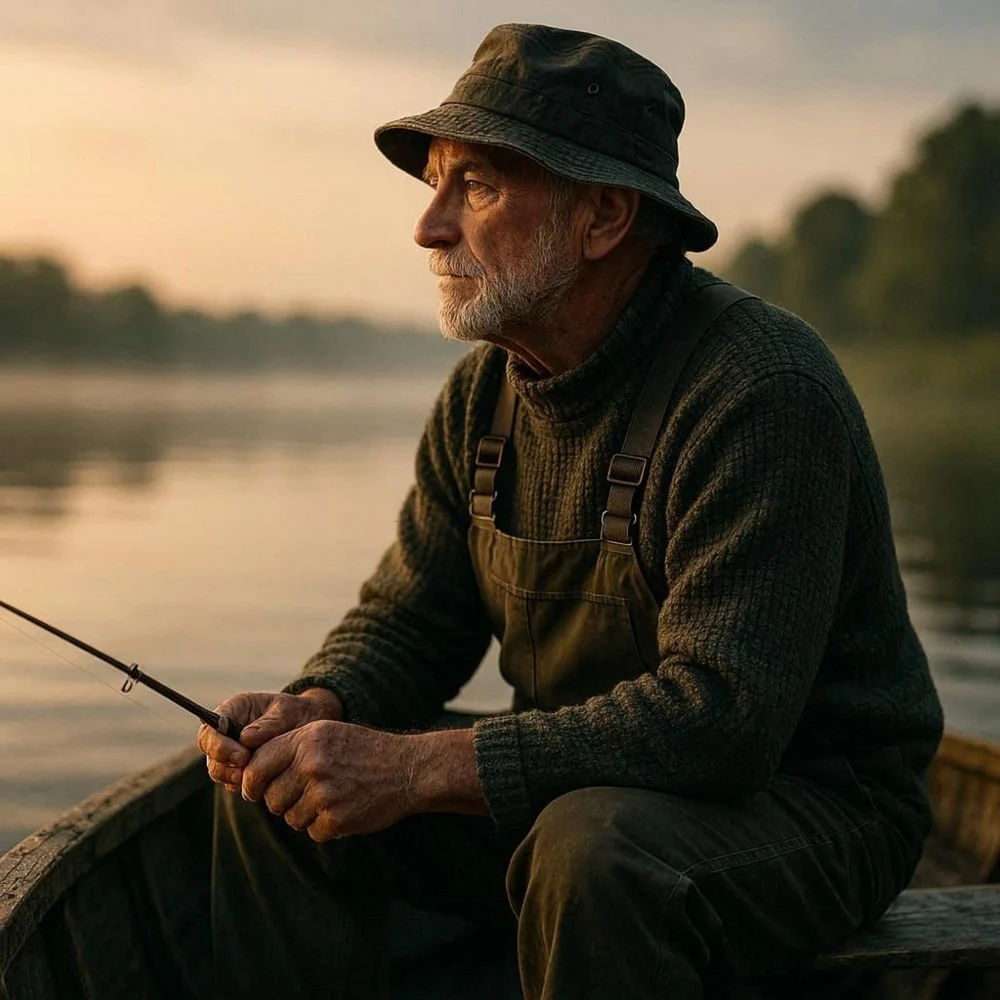
The landscape of substance use disorder (SUD) treatment is undergoing a quiet but profound evolution. While clinical interventions like Medication-Assisted Treatment (MAT) and cognitive-behavioral therapy remain the bedrock of recovery, a growing body of evidence suggests that "recreational displacement"—the act of replacing addictive rituals with constructive, complex, and soothing physical activities—is a critical component of long-term sobriety. Central to this movement is an ancient pastime: fishing.
n
From the tactile precision of fly tying to the meditative rhythm of casting into a current, fishing offers a unique psychological framework that addresses the "void" left by addiction. Organizations like Adam’s Parachute are now formalizing these benefits, proving that for many in recovery, the path to healing is found not in a sterile office, but on the water.
n
Main Facts: The Science of Substitution and Displacement
n
The efficacy of fishing as a treatment for addiction is rooted in the psychological principle of displacement. This theory posits that when an individual experiences overflow stress or the absence of a deeply ingrained habit, they naturally seek repetitive, soothing activities to channel that energy. For those struggling with SUD, the "ritual" of the addiction—the preparation, the hand motions, the sensory cues—is often as difficult to break as the chemical dependency itself.
n
Research indicates that successful recovery often requires a "substitution" that satisfies the same sensory and ritualistic urges found in addictive behavior. For example, the success of certain smoking cessation tools is frequently attributed to their ability to mimic the hand-to-mouth motion and the inhale-exhale cycle of a cigarette. A 2016 study published in Psychology of Addictive Behaviors demonstrated that visual imagery associated with vaping could trigger smoking urges precisely because the physical rituals are so similar.
n
Fishing, and specifically fly fishing, provides a near-perfect behavioral substitute. It involves:
n
- n
- Intricate Planning: Selecting the right fly, checking weather patterns, and scouting locations.
- Tactile Engagement: Constant use of the hands for knot tying, casting, and reel manipulation.
- Anticipation and Tension Release: The long periods of waiting (mindfulness) followed by the sudden, intense physical engagement of a strike.
n
n
n
n
By engaging the brain’s reward system through a "game" rather than a substance, fishing helps rewire the neural pathways associated with pleasure and achievement.
n
Chronology: The Rise of Adam’s Parachute
n
The intersection of fly fishing and formal addiction recovery gained significant national attention in mid-2026, though its roots trace back to personal tragedy.
n
2024–2025: The Genesis of a MovementnJim Faust, a grieving father, founded Adam’s Parachute following the death of his son, Adam, to a drug overdose. Faust, an avid fly fisherman, began volunteering at a recovery center near his home in Massachusetts. He discovered that teaching the intricate art of fly tying provided residents with a rare sense of calm and focus. The "Parachute Adams"—the world’s most popular dry fly—became the namesake and symbol for the organization, representing a safety net for those in freefall.
n
2025: Proof of ConceptnThroughout 2025, Adam’s Parachute expanded its reach. Faust and his team of volunteers taught approximately 100 individuals in recovery the fundamentals of fly fishing. The program focused not just on the catch, but on the "mindfulness of the stream"—teaching participants to read the water and remain present in the moment.
n
July 2026: National RecognitionnIn July 2026, the organization was featured on National Public Radio’s All Things Considered. The segment highlighted how the program had become a lifeline for both those in recovery and the high-stress healthcare workers who treat them.
n
August 2026: Scaling the MissionnBy August 2026, Adam’s Parachute announced ambitious goals to double its intake, aiming to serve over 200 participants by the end of the year. The organization has begun partnering with clinical facilities to integrate fly fishing into standard "aftercare" protocols, recognizing that the period following intensive treatment is when the risk of relapse is highest.
n
Supporting Data: The Psychology of Ritual and "Blue Space"
n
The therapeutic value of fishing is supported by two distinct areas of research: the psychology of ritualized motion and the "Blue Space" theory of environmental psychology.
n
Ritualized Motion and Sensory Substitution
n
In addiction science, "cues" are the environmental or physical triggers that lead to cravings. A significant portion of these cues are tactile. Chewing gum is frequently recommended to those quitting smoking because it mimics the jaw movement and oral fixation of the habit.
n
Fishing offers a more complex version of this substitution. The "hand-to-mouth" cycle is replaced by the "cast-and-retrieve" cycle. According to clinical observations from recovery centers utilizing the Adam’s Parachute model, the repetitive motion of casting acts as a form of "bilateral stimulation," similar to techniques used in EMDR (Eye Movement Desensitization and Reprocessing) therapy to treat trauma. This helps regulate the nervous system and reduce the "fight or flight" response common in early sobriety.
n
The "Blue Space" Effect
n
Ecopsychology has long recognized that proximity to water—"Blue Space"—lowers cortisol levels and heart rates. For a person in recovery, whose brain is often hyper-sensitized to stress, the sensory input of a river (the sound of flowing water, the cool temperature, the visual scanning of the horizon) provides a natural sedative. Unlike the "high" of a substance, which is a sharp spike followed by a crash, the "flow state" achieved during fishing is a sustained, low-intensity state of well-being.
n
Official Responses and Philosophical Perspectives
The success of these programs has caught the attention of both the medical community and the philosophical world, each offering a different lens on why "the tug is the drug" for so many.
The Philosophical View: C. Thi Nguyen
Dr. C. Thi Nguyen, a professor of philosophy at the University of Utah and author of Games: Agency as Art, argues that the human psyche is "designed to play games." In an August 2026 essay for the Financial Times, Nguyen explored how fishing provides a meaningful framework for life.
Nguyen posits that in a world where modern conveniences meet our basic needs, we require "striving play"—challenges that we take on for their own sake. "When you fly fish, you don’t just want a fish," Nguyen writes. "You are playing a game: you want to get that fish by a specific, difficult and fascinating technique." For someone in recovery, this "striving" is essential. It provides a goal that is difficult but achievable, offering a sense of agency that addiction often strips away.
The Practitioner’s View: Jim Faust
Speaking to NPR, Jim Faust emphasized the mindfulness aspect of the sport. "Fly fishing offers a unique opportunity to step away from past and present worries and focus on the moment," Faust stated. He noted that the organization doesn’t just empower those with SUD, but also the "first responders" of addiction care—doctors and counselors who suffer from high rates of burnout and secondary trauma.
Implications: A New Pillar in Holistic Recovery
The rise of programs like Adam’s Parachute suggests a shift toward a more holistic, "lifestyle-based" approach to addiction treatment. The implications for the future of recovery are significant:
- Redefining "Aftercare": Traditional aftercare often involves sedentary meetings. Integrating active, outdoor hobbies could improve retention rates in long-term recovery programs by providing participants with a new identity—that of an "angler" rather than just a "recovering addict."
- Community Building: Fishing is often a social activity. It provides a low-pressure environment for individuals in recovery to build "sober networks," which are statistically the greatest predictor of long-term success.
- Focus on the Journey: As Dr. Nguyen and Jim Faust both suggest, fishing teaches that the "win" isn’t necessarily the fish in the net—it’s the hours spent in the water. This mirrors the recovery process itself, where the goal is not a "cure," but the daily practice of staying present and resilient.
As we move further into 2026, the story of Adam’s Parachute serves as a reminder that sometimes the most complex psychological problems find their solutions in the simplest of places. By picking up a rod and stepping into a stream, those battling addiction are finding a way to cast away their past and reel in a new, more sustainable future.

