
Introduction: The Shifting Landscape of Cannabis and Public Health
n
Cannabis, once relegated to the shadows of illegality, has rapidly transitioned into a mainstream product. Its widespread availability and growing popularity, fueled by evolving legal frameworks across numerous jurisdictions, have prompted a critical examination of its potential health impacts. While recreational and medicinal cannabis use continues to expand, a crucial question lingers: what are the long-term consequences for cardiovascular health? A recent large-scale study, analyzing millions of hospital discharges, has ignited a renewed debate, suggesting a potential association between the legalization of recreational marijuana and an uptick in cardiovascular problems. However, as with many emerging public health issues, the initial findings warrant careful dissection to distinguish correlation from causation. This comprehensive analysis delves into the study’s methodology, its significant findings, inherent limitations, and the broader implications for public health policy and individual well-being.
n
The Evolution of Drug Safety Monitoring: From Clinical Trials to Real-World Data
n
The journey of any pharmaceutical product from laboratory to market is typically a rigorous and multi-stage process. Phase 3 clinical trials, the final hurdle before regulatory approval, involve thousands of participants. This extensive testing aims to identify potential adverse effects and establish efficacy. However, even these large-scale trials have limitations. Rare side effects, occurring in perhaps one in 5,000 or 50,000 individuals, can easily be missed. It is only when a drug is used by millions in real-world settings that these less common but potentially serious adverse events begin to surface.
n
This principle holds true for cannabis, with a significant distinction: unlike prescription drugs, marijuana has not undergone the same stringent FDA-approved clinical trial process before achieving widespread availability. Consequently, much of our understanding of its potential adverse effects is derived from observational studies. These studies, while valuable for identifying trends, often face the challenge of disentangling correlation from causation. It is difficult to definitively attribute observed health outcomes solely to cannabis use when other lifestyle factors may be at play.
n
Unveiling the Study: Methodology and Initial Findings
n
A groundbreaking study published in BMJ Open sought to illuminate the potential link between the legalization of recreational marijuana and cardiovascular disease. Researchers meticulously reviewed a vast dataset encompassing over 50 million hospital discharges between 2012 and 2018. Their objective was to identify any discernible relationship between the implementation of recreational marijuana sales and the incidence of cardiovascular conditions.
n
The study’s approach was particularly innovative, aiming to circumvent the inherent difficulties in directly comparing cannabis users with non-users. The challenge lies in the fact that individuals who use cannabis may also engage in other behaviors that impact cardiovascular health, such as smoking cigarettes, consuming alcohol, or using other substances. Isolating the specific effect of cannabis in such a complex web of lifestyle factors is a formidable task.

n
To address this, the researchers adopted a regional comparison strategy. They designated the entire Western United States as a region where recreational marijuana sales were legalized starting in 2014. It’s important to note that while some Western states had already established legal sales by this time, others had not yet implemented such measures throughout the duration of the study. The core hypothesis was that if cardiovascular hospitalizations increased at a faster rate in the Western region compared to the rest of the country following legalization, then the legalization itself might be a contributing factor.
n
The Results: A Glimmer of Concern
n
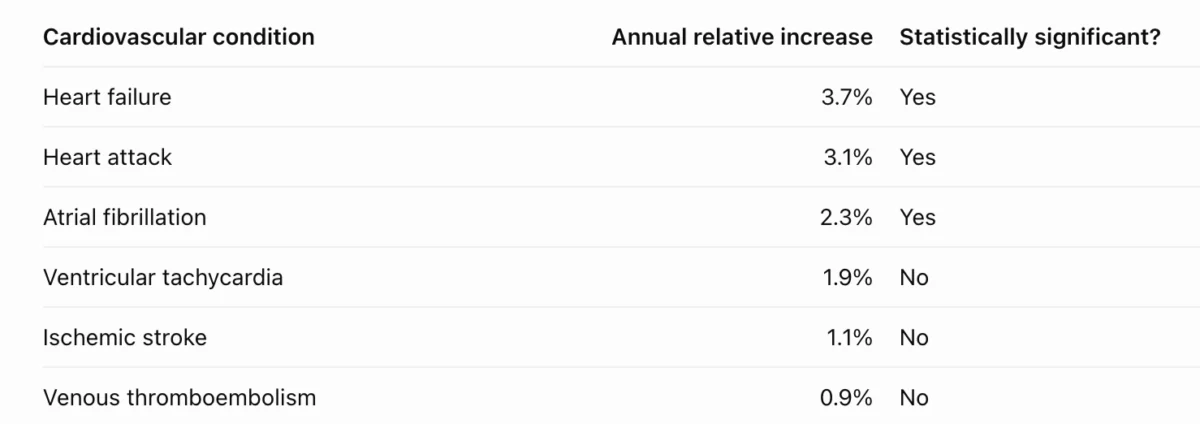
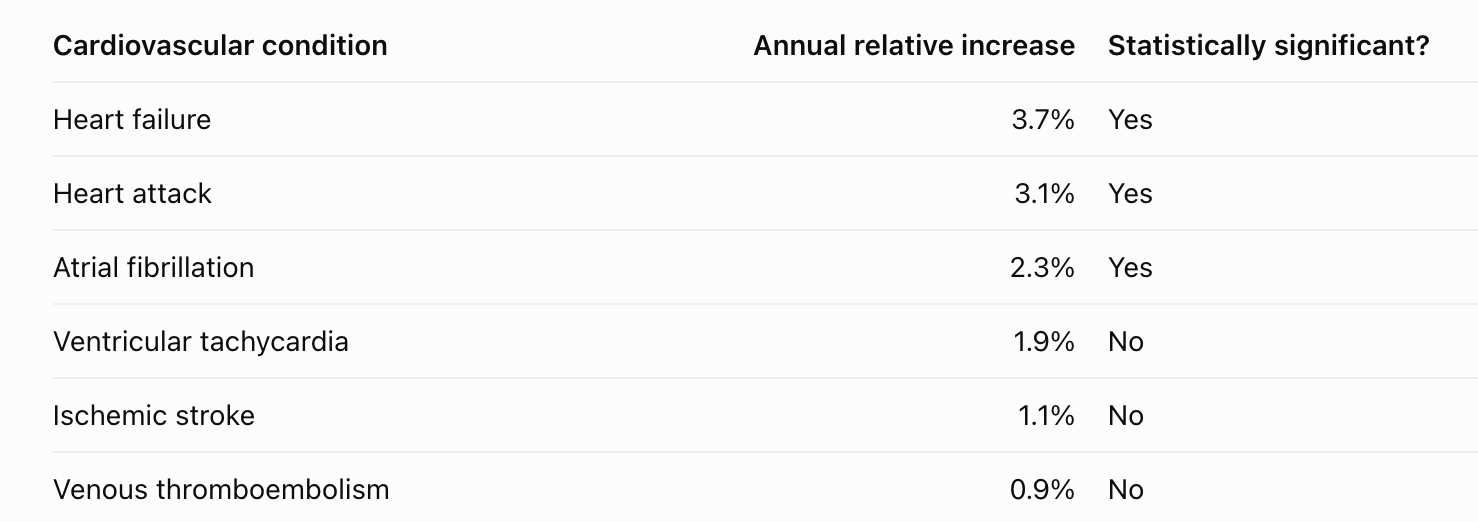
The findings, while not definitive, presented a statistically significant association. The study revealed that for each additional year of legal recreational marijuana sales in the Western U.S., there was a corresponding relative increase in hospitalization rates for several key cardiovascular conditions when compared to national trends. Specifically, the study reported:
n
- n
- Heart Failure: A 3.7% relative increase in hospitalizations.
- Heart Attacks (Myocardial Infarction): A 3.1% relative increase in hospitalizations.
- Atrial Fibrillation: A 2.3% relative increase in hospitalizations.
n
n
n
n
These three findings achieved statistical significance, indicating that the observed increases were unlikely to be due to random chance. While the study also examined trends for stroke and two other cardiovascular conditions, the increases observed for these were not statistically significant. This selective significance adds a layer of complexity to the interpretation of the results.
n
To further bolster the credibility of their cardiovascular findings, the researchers included "negative control" analyses. They examined hospitalization rates for conditions like kidney stones and opioid-related issues. The rationale behind this was that if overall hospitalization rates were simply increasing across the board due to broader societal or healthcare system changes unrelated to marijuana, these control conditions might exhibit similar upward trends. Crucially, neither kidney stone nor opioid-related hospitalizations showed a statistically significant association with marijuana legalization, lending some support to the idea that the observed cardiovascular trends might indeed be linked to the specific policy change.
n
Navigating the Nuances: Limitations and Challenges in Interpretation
n
Despite the intriguing results, the study is not without its significant limitations, which are critical to consider when drawing conclusions.
n
The Crucial Distinction: Legalization vs. Consumption
n
Perhaps the most significant challenge is that the study examined the effects of legalization, not the direct impact of marijuana consumption. The researchers had no direct data on whether the patients hospitalized for cardiovascular problems were actually users of cannabis. This is a pivotal distinction. Legalization may lead to increased use, but it does not guarantee it for all individuals, nor does it account for varying patterns of consumption. The observed association could be influenced by a multitude of factors that accompany legalization beyond direct drug use.
n
The Broad Brushstroke of Regional Classification
n
The study’s classification of the entire Western United States as a region exposed to legal recreational sales beginning in 2014 presents another methodological hurdle. Several Western states, such as Idaho, Utah, and Wyoming, did not have legal recreational sales throughout the study period. Lumping these states together with those that had already established legal markets (like Colorado and Washington) means that the "exposure" variable is not as precise as it could be. While the authors argue that including states without legal sales might dilute any real effect, it undeniably broadens the scope of the "legalization" umbrella beyond actual sales.
n
The Ever-Present Shadow of Confounding Variables
n
The inherent nature of observational studies means that controlling for all potential confounding variables is a near-impossible task. While the researchers made efforts to adjust for various demographic factors, numerous other societal and lifestyle changes could have influenced cardiovascular hospitalization rates during the study period. These include:
n
- n
- Shifting Smoking Rates: Declines or increases in cigarette smoking, a known cardiovascular risk factor.
- Obesity and Diabetes Trends: The prevalence of these chronic conditions, which significantly impact heart health, can fluctuate over time.
- Healthcare Access and Utilization: Changes in insurance coverage, healthcare policies, and patient willingness to seek medical attention can alter hospitalization patterns.
- Hospital Admission Practices: Variations in how hospitals define and admit patients for specific cardiovascular conditions could also play a role.
n
n
While the negative control analyses provide some reassurance, they cannot fully account for all potential alternative explanations for the observed trends.
The Causation Conundrum
Ultimately, the study establishes a correlation between marijuana legalization and increased cardiovascular hospitalizations in a specific region. However, it does not definitively prove that cannabis use itself is the direct cause of these adverse events. The observed association could be a proxy for a more complex interplay of factors that are unleashed or amplified by the policy change.
Potential Mechanisms: How Might Cannabis Affect the Heart?
While this study doesn’t pinpoint specific causal pathways, scientific understanding of cannabis and its effects on the cardiovascular system offers several potential mechanisms that could explain the observed associations:
- Increased Heart Rate and Blood Pressure: THC, the primary psychoactive compound in cannabis, is known to temporarily increase heart rate and blood pressure. For individuals with pre-existing cardiovascular conditions, these acute effects could potentially trigger adverse events.
- Vasoconstriction: Some research suggests that cannabis may cause vasoconstriction (narrowing of blood vessels), which could reduce blood flow and oxygen supply to the heart.
- Inflammatory Responses: Emerging research indicates that cannabis use may be associated with increased inflammatory markers, which are implicated in the development of atherosclerosis (hardening of the arteries).
- Carbon Monoxide Inhalation: Smoking cannabis, like smoking tobacco, involves the inhalation of carbon monoxide and other harmful combustion byproducts, which can negatively impact cardiovascular health.
- Interaction with Other Substances: As mentioned, cannabis users often use other substances. Interactions between cannabis and alcohol or other drugs could have synergistic or additive effects on the cardiovascular system.
Official Responses and Public Health Implications
The findings of this study, while preliminary and requiring further investigation, have significant implications for public health discourse and policy development.
A Call for Continued Research and Vigilance
Public health organizations and regulatory bodies will likely view this study as a critical signal warranting increased vigilance and further research. The scientific community will need to conduct more robust, longitudinal studies that can directly assess the impact of cannabis consumption patterns on cardiovascular health, controlling for a wider array of confounding variables. This might involve prospective cohort studies that track individuals over time, monitoring their cannabis use and cardiovascular outcomes.
The Importance of Clear Public Health Messaging
As cannabis becomes more accessible, clear and evidence-based public health messaging is paramount. This includes educating the public about the potential risks, particularly for individuals with pre-existing cardiovascular conditions. While the study does not advocate for a complete ban or suggest that cannabis use is definitively harmful, it underscores the need for a cautious approach and informed decision-making.
Policy Considerations for a Evolving Landscape
For policymakers, these findings add another layer of complexity to the ongoing debate surrounding cannabis legalization. While the economic and social arguments for legalization are powerful, the potential public health consequences, especially concerning chronic conditions like cardiovascular disease, cannot be overlooked. Future policy decisions may need to incorporate enhanced public health monitoring and research funding to better understand and mitigate any associated risks.
Conclusion: A Measured Approach to Cannabis and Cardiovascular Health
The study published in BMJ Open has shed a critical light on the potential, albeit complex, relationship between the legalization of recreational marijuana and an increase in cardiovascular hospitalizations. While the findings are statistically significant and raise legitimate concerns, it is crucial to approach them with a nuanced understanding of the inherent limitations of observational research. The study does not definitively convict cannabis as the sole culprit behind these observed trends.
Instead, it serves as a compelling call for continued, rigorous scientific inquiry. The evolving landscape of cannabis use necessitates ongoing research to elucidate specific causal pathways, identify vulnerable populations, and inform evidence-based public health strategies. As more data emerges, public health professionals, policymakers, and individuals alike must strive for an informed and measured approach, balancing the expanding accessibility of cannabis with a steadfast commitment to safeguarding cardiovascular well-being. The journey to fully understand the long-term health impacts of this widely adopted substance is far from over, and sustained curiosity, coupled with critical evaluation of emerging evidence, will be essential in navigating this complex terrain.

